
Magnet Applications – Discover How Magnets Power the World
Magnets are essential components in countless industries and everyday life. From powering electric motors and generators to enabling medical imaging, data storage, and renewable energy systems, magnets play a vital role in technology and innovation. They are also widely used in manufacturing, electronics, transportation, recycling, and even creative DIY projects. In this section, explore our in-depth articles on the many ways magnets are applied, and learn how magnetic solutions are shaping the future.
-
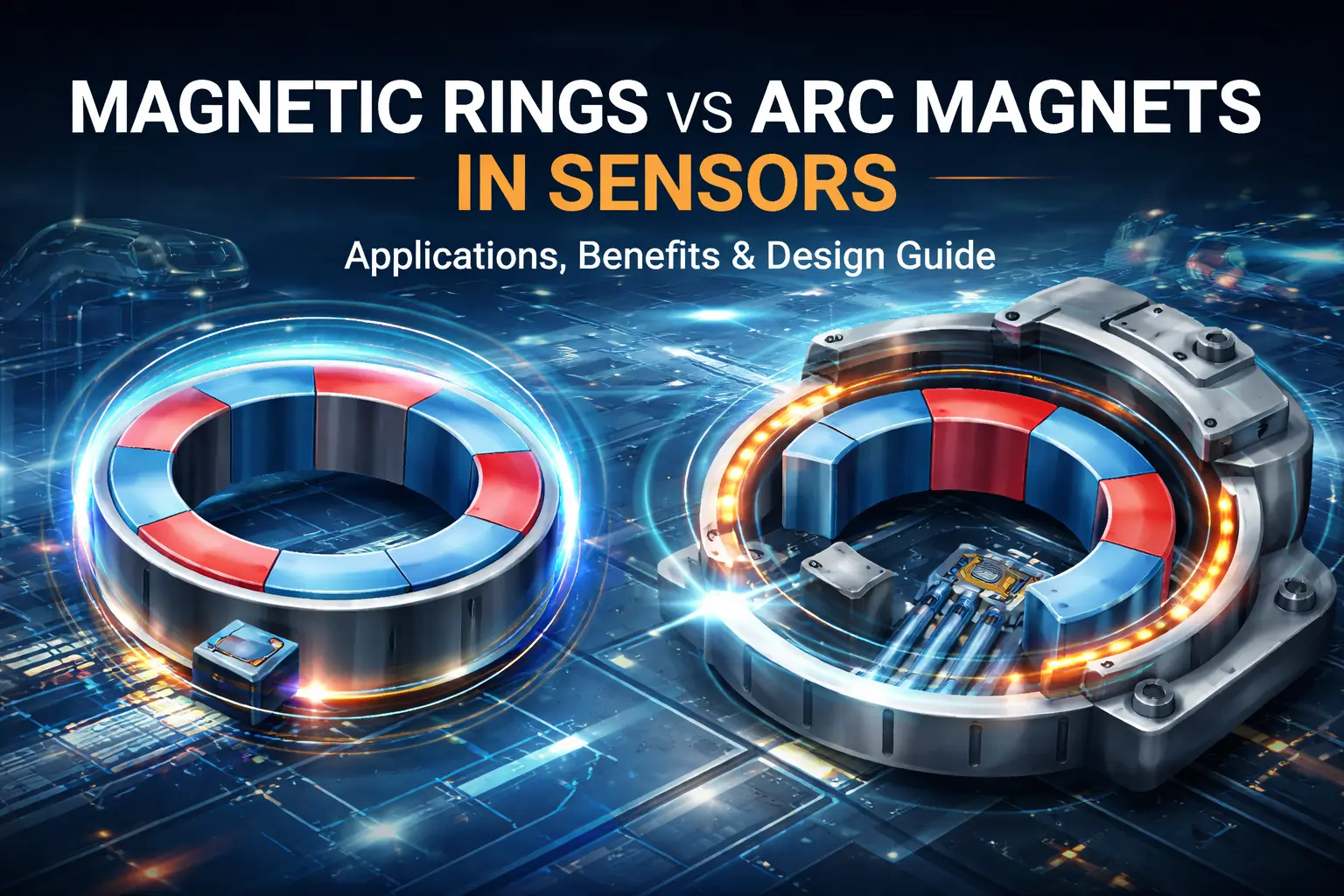
Magnetic Rings vs. Magnetic Tiles in Next-Generation Sensor Applications
As sensor technologies evolve toward higher precision, miniaturization, and energy efficiency, magnetic components are becoming increasingly strategic in system design. Among them, magnetic rings and magnetic tiles (arc magnets) play a critical role in enabling advanced sensing capabilities across automotive, industrial, and consumer electronics sectors. This article provides a structured analysis of how these two…
-
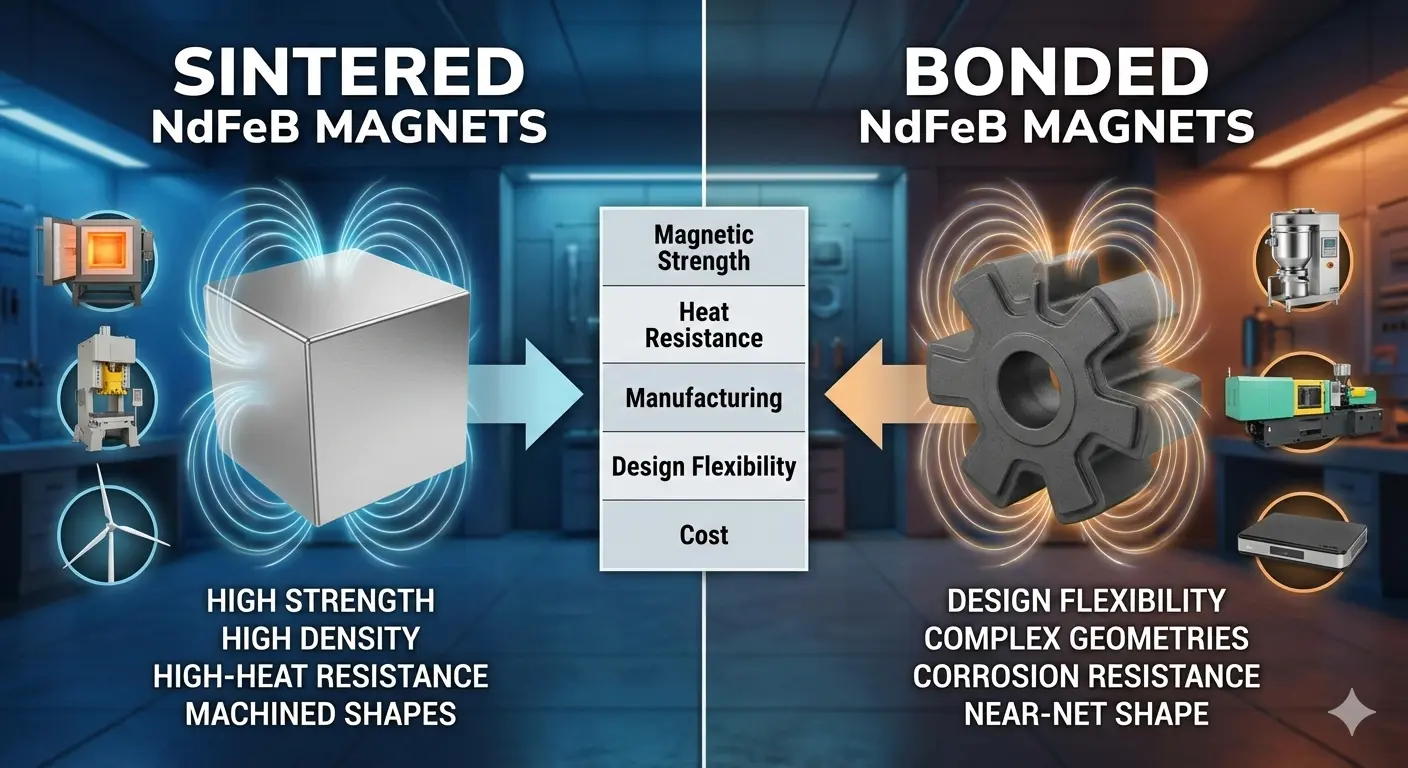
Performance Comparison and Application Differences Between Sintered and Bonded NdFeB Magnets
1. Introduction Since their introduction in the 1980s, Neodymium-Iron-Boron (NdFeB) magnets have become the strongest type of permanent magnets available, often called the “King of Magnets.”Depending on the production process, NdFeB magnets can be classified into two major categories:👉 Sintered NdFeB and Bonded NdFeB. Although both share the same main magnetic phase (Nd₂Fe₁₄B), they differ…
-

What Are Rare Earth Magnets Used For?
Rare earth magnets are a strategic class of permanent magnets known for their exceptionally high magnetic strength relative to size. In an industrial context, they are not niche materials—they are core enablers across manufacturing, energy, electronics, and advanced engineering sectors. As global industries pursue higher efficiency, miniaturization, and electrification, rare earth magnets have become mission-critical…
-
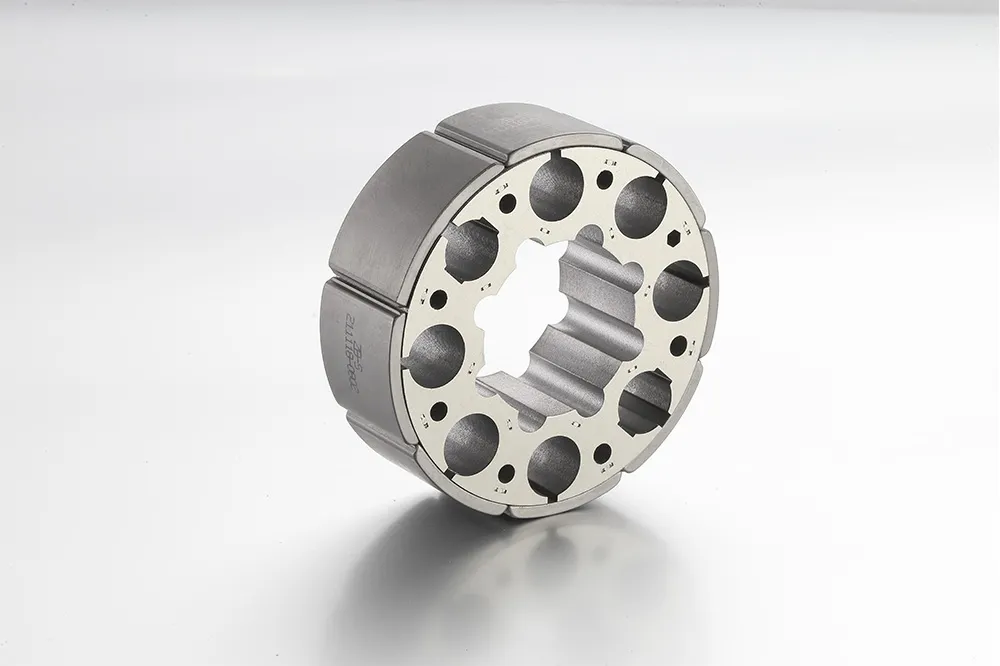
Motor Magnets: Arc Segment Magnets and Rotor Magnets Explained
Motor magnets are a core component in modern electric motors, directly influencing efficiency, torque output, power density, and long-term reliability. As electrification expands across automotive, industrial automation, renewable energy, and consumer electronics, demand for high-performance motor magnet solutions continues to accelerate. Among the most widely used motor magnet forms are arc segment magnets and rotor…
-

How Does a Horseshoe Magnet Work?
A horseshoe magnet is a permanent magnet bent into a U-shaped configuration, strategically engineered to bring its two poles—north and south—closer together. This geometry creates a concentrated magnetic field between the poles, enabling higher magnetic strength and greater holding force. In modern industrial and scientific applications, this compact yet powerful design supports precision tasks where…
-
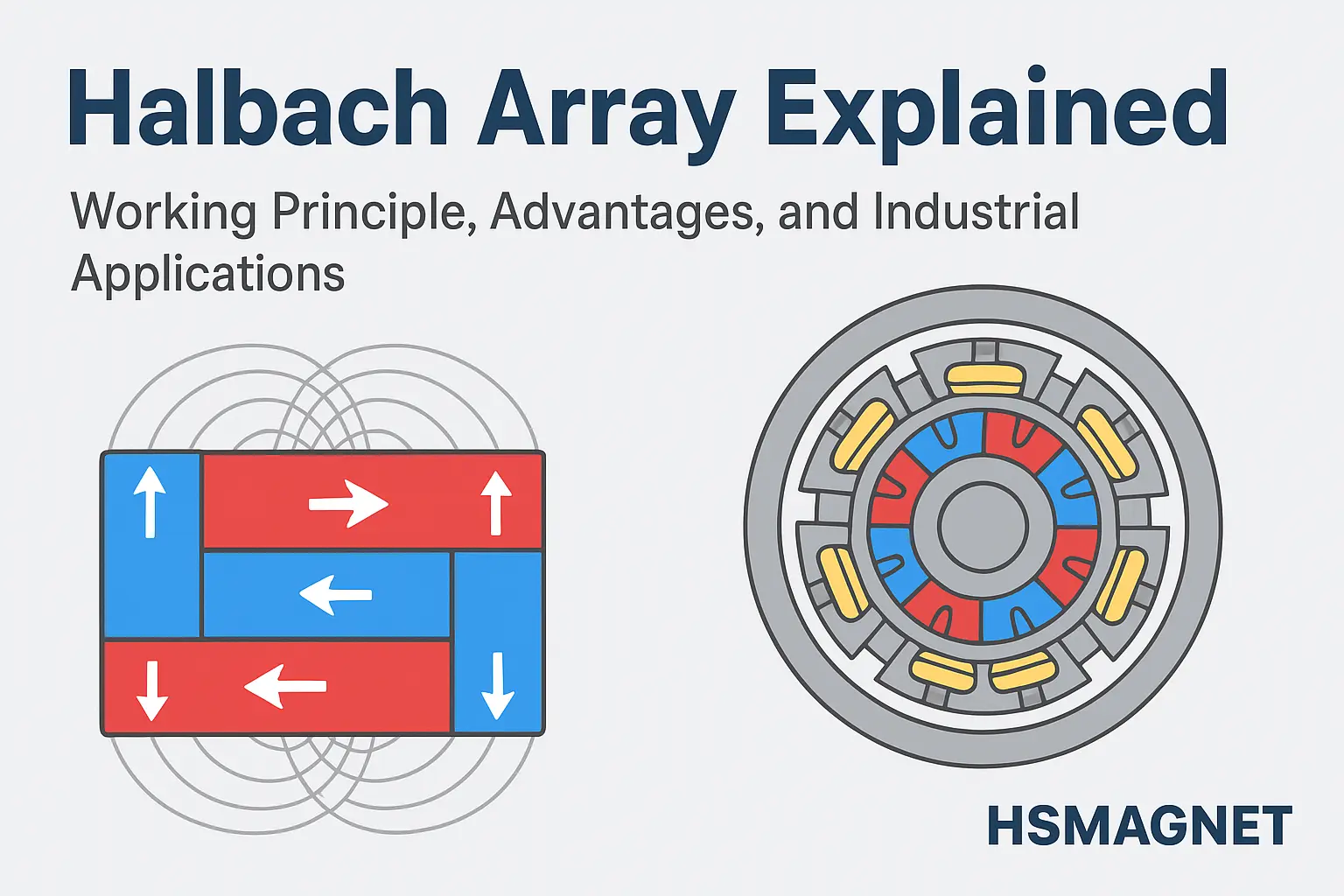
Introduction to the Halbach Array
A Halbach array is a specialized magnetic arrangement that amplifies magnetic field strength on one side while nearly canceling the field on the opposite side. This asymmetric field distribution provides high magnetic efficiency, reduced weight, and exceptional performance in advanced engineering applications. Industries leveraging high-precision magnetics — such as electric motors, linear actuators, maglev systems,…
-

How Do Magnets Work in an Acoustic/Electric Guitar?
Magnets play a central role in shaping the tonal character and amplification capabilities of both acoustic-electric and electric guitars. From a technical perspective, magnetic components translate string vibration into electrical signals that can be shaped, amplified, and projected. Understanding how magnets operate within guitar systems offers clarity for musicians, manufacturers, and technology developers who want…
-
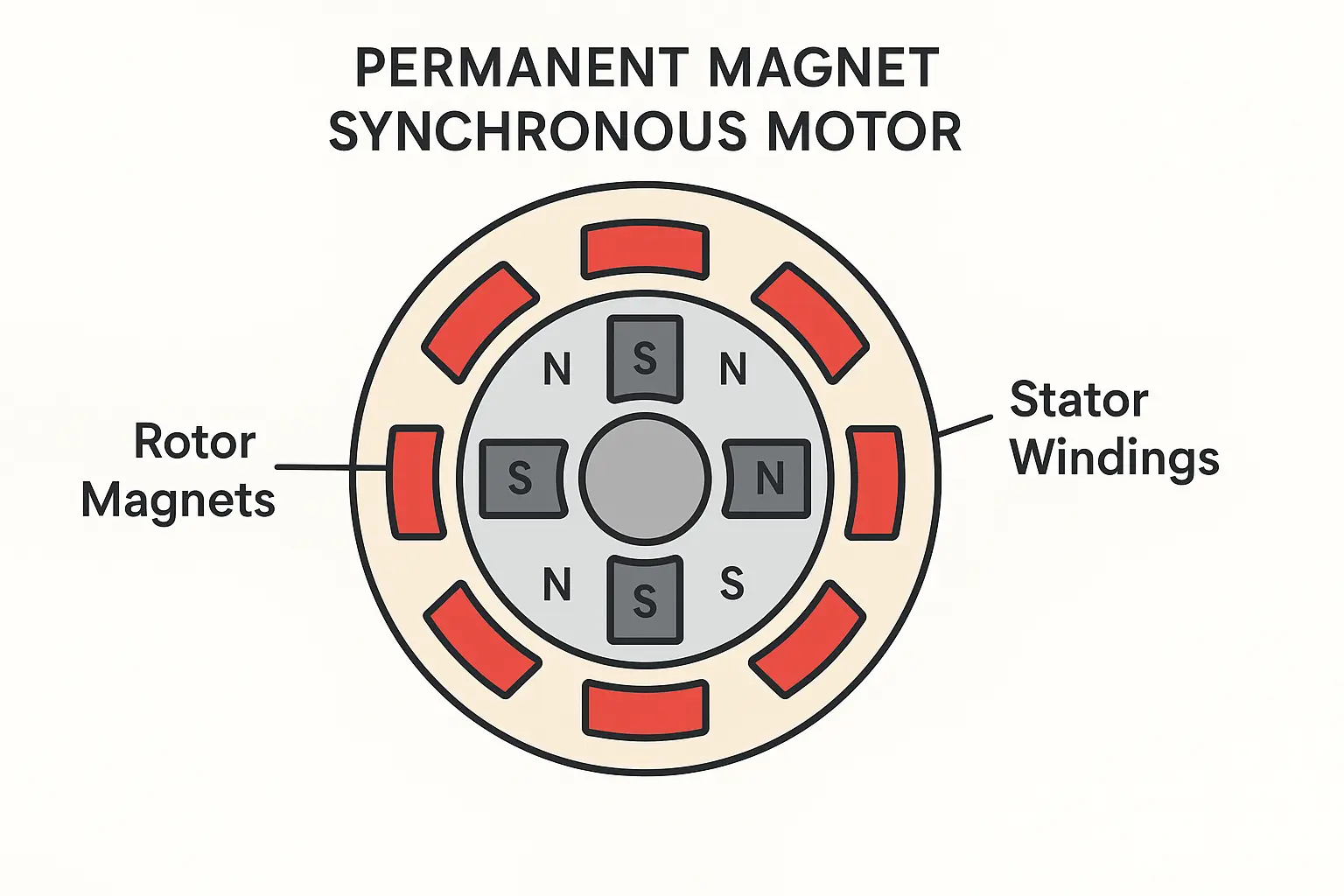
Introduction to Permanent Magnet Synchronous Motors (PMSM)
A Permanent Magnet Synchronous Motor (PMSM) is an advanced electric motor that uses permanent magnets embedded in or attached to the rotor to generate a consistent magnetic field. Unlike induction motors, PMSMs do not rely on induced rotor currents, enabling higher efficiency, lower heat generation, and more precise control. These advantages have positioned PMSMs as…
-

Do Magnets Work in Space?
Magnets play a critical role in engineering, physics, and advanced aerospace systems. But when technology leaves Earth’s atmosphere, many users wonder: do magnets work in space? The short answer is yes — magnets absolutely work in space. Their performance does not depend on gravity or air, and their magnetic fields remain fully functional in the…
-

How Are Electromagnets Used in Everyday Life?
Electromagnets are foundational to modern technology. Their ability to generate controlled magnetic fields allows them to power countless systems that drive convenience, efficiency, and safety in daily life. While most people never see these components directly, electromagnets operate behind the scenes to enable the devices and infrastructure we rely on every day. This article outlines…