
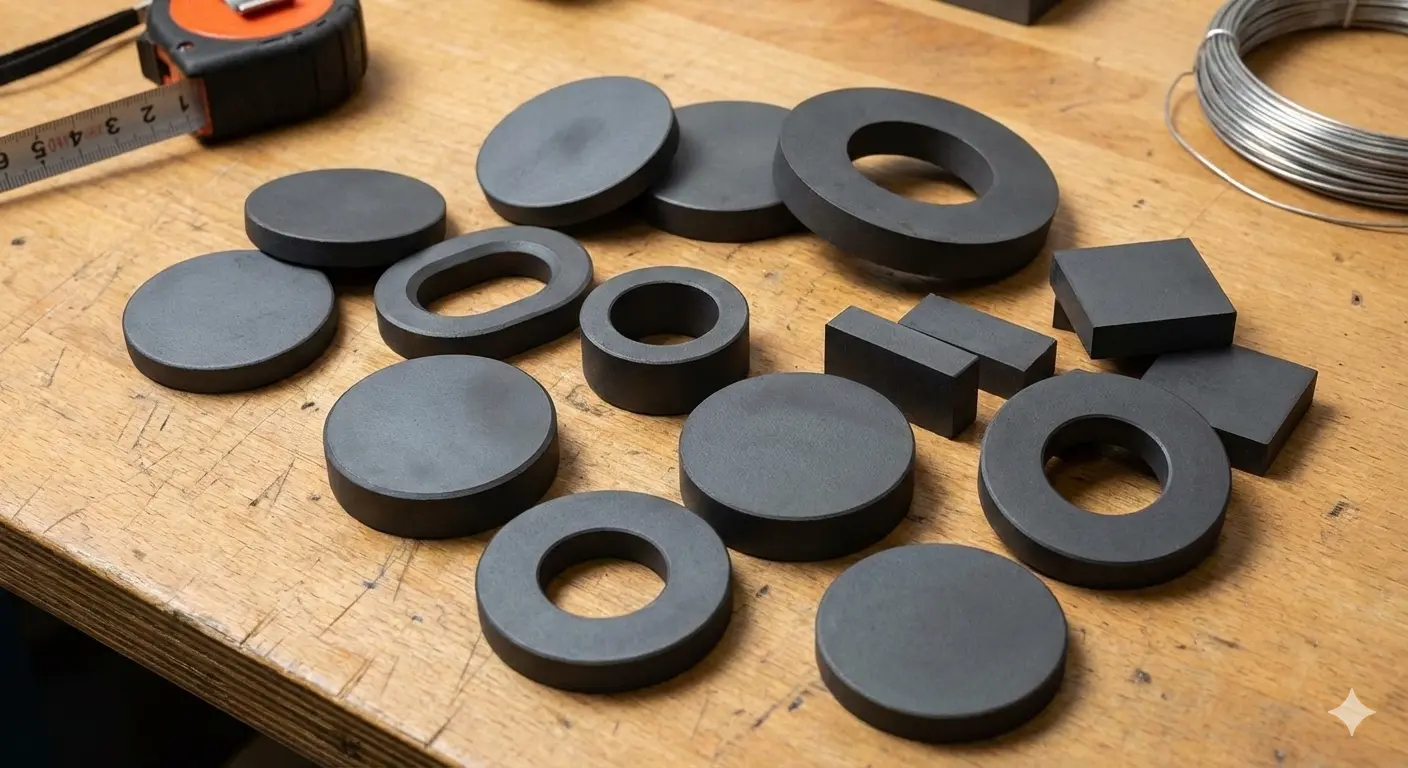
Ceramic magnets, also known as ferrite magnets, are a class of permanent magnets made from iron oxide combined with ceramic materials such as barium carbonate or strontium carbonate. They are among the most widely used magnetic materials globally due to their cost efficiency, corrosion resistance, and long-term magnetic stability. Ceramic magnets play a foundational role in both consumer and industrial applications where reliable magnetic performance is required without high material costs.
Table of Contents
- Composition and Manufacturing Process
- Magnetic Properties and Performance
- Advantages of Ceramic Magnets
- Limitations and Design Considerations
- Common Industrial and Commercial Applications
- Ceramic Magnets vs. Rare-Earth Magnets
- Future Outlook for Ceramic Magnets
- HSMAGNET Capabilities in Ceramic Magnet Supply
Composition and Manufacturing Process
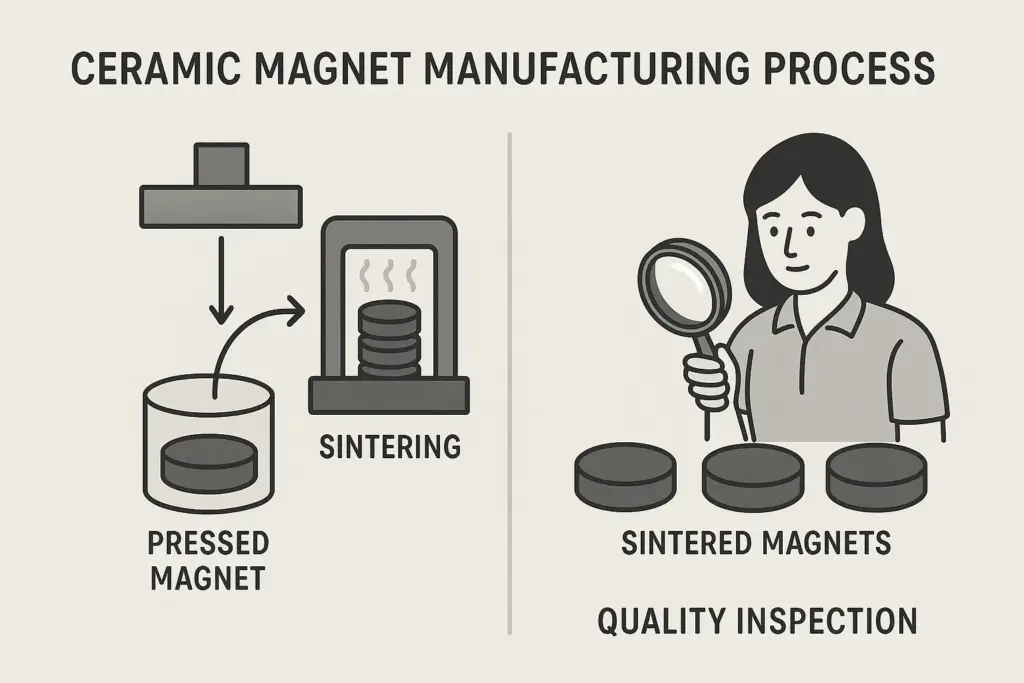
Ceramic magnets are produced through a powder metallurgy process. Raw materials are milled into fine powders, pressed into shape, and then sintered at high temperatures. During this process, the magnetic domains are aligned to create permanent magnetization.
From a manufacturing standpoint, this method allows for high-volume production with consistent quality. Ceramic magnets can be isotropic or anisotropic, with anisotropic variants offering higher magnetic performance when magnetized in a preferred direction.
Magnetic Properties and Performance
Compared to rare-earth magnets, ceramic magnets have lower magnetic strength but offer excellent resistance to demagnetization. Their coercivity is relatively high, meaning they maintain magnetization well even in the presence of opposing magnetic fields.
Key performance characteristics include:
- Moderate magnetic flux density
- Stable operation across a wide temperature range
- Strong resistance to corrosion and oxidation
- Electrically insulating properties, reducing eddy current losses
These attributes make ceramic magnets suitable for environments where durability and stability outweigh the need for maximum magnetic force.
Advantages of Ceramic Magnets
Ceramic magnets deliver a strong value proposition for cost-sensitive and high-volume applications.
Cost Efficiency
They rely on abundant raw materials, avoiding rare-earth elements and associated supply chain risks.
Environmental and Chemical Stability
Ceramic magnets do not require surface coatings, as they naturally resist corrosion, moisture, and most chemicals.
Long Service Life
Once magnetized, ceramic magnets maintain their magnetic properties for decades under normal operating conditions.
Thermal Reliability
They perform reliably at elevated temperatures, typically up to 250°C, depending on grade and application.
Limitations and Design Considerations
While ceramic magnets are highly stable, they are also brittle and prone to chipping or cracking under mechanical stress. Their lower energy product means larger magnet volumes are required to achieve the same holding force as rare-earth alternatives.
Engineers must balance size, weight, and performance when specifying ceramic magnets, particularly in compact or high-efficiency systems.
Common Industrial and Commercial Applications
Ceramic magnets are widely deployed across multiple sectors:
- Electric motors and generators
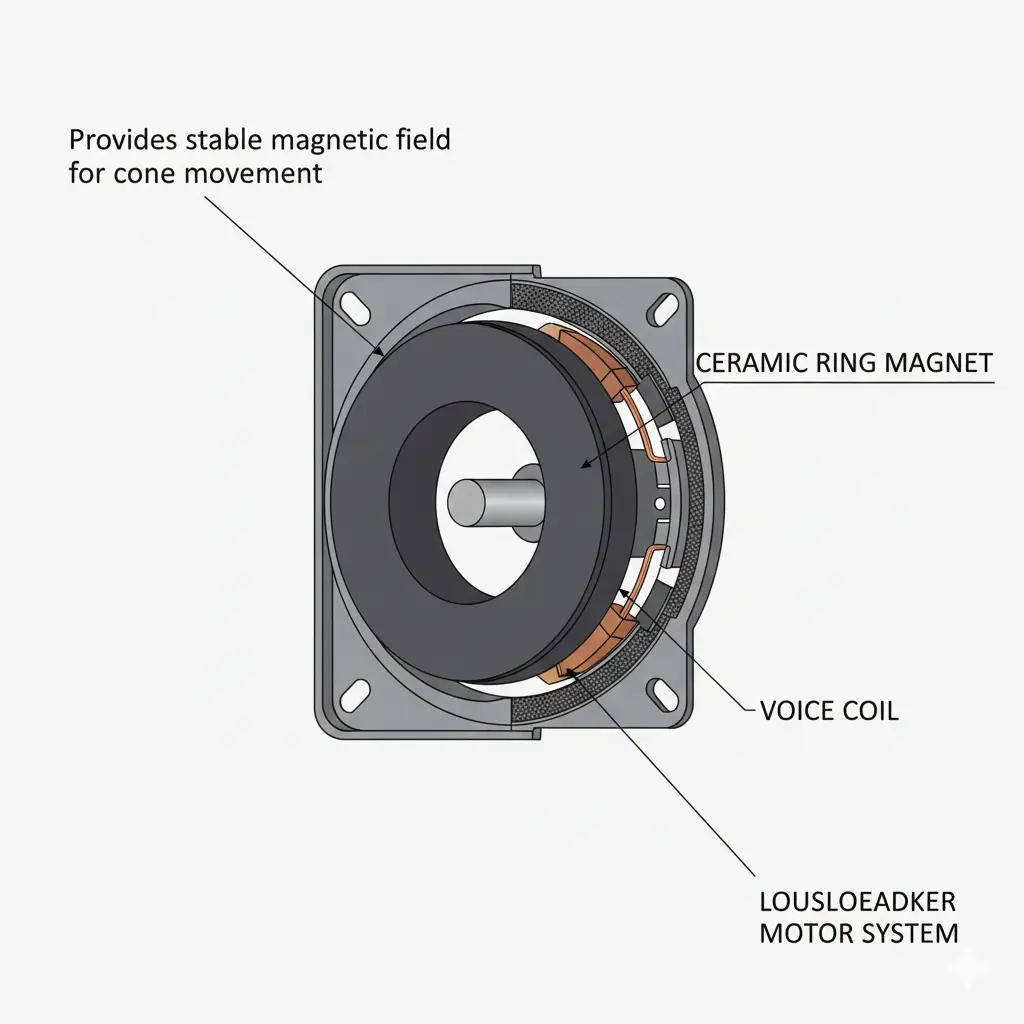
- Loudspeakers and audio systems
- Magnetic separators
- Sensors and instrumentation
- Household appliances
- Educational and demonstration tools
Their predictable performance and low cost make them ideal for mass-market products and industrial equipment.
Ceramic Magnets vs. Rare-Earth Magnets
From a strategic sourcing perspective, ceramic magnets offer supply stability and cost control, while rare-earth magnets provide higher power density. Selecting the appropriate magnet type depends on performance requirements, environmental conditions, and total system cost considerations.
Future Outlook for Ceramic Magnets
As industries focus on supply chain resilience and sustainability, ceramic magnets continue to hold strategic relevance. While advanced applications increasingly rely on rare-earth solutions, ceramic magnets remain essential for high-volume, durability-driven use cases.
HSMAGNET Capabilities in Ceramic Magnet Supply
HSMAGNET manufactures and supplies a wide range of ceramic magnets in standard and custom geometries to support industrial, automotive, and commercial applications. With controlled production processes and strict quality standards, HSMAGNET helps customers achieve consistent magnetic performance, cost efficiency, and long-term reliability across global markets.
Leave a Reply