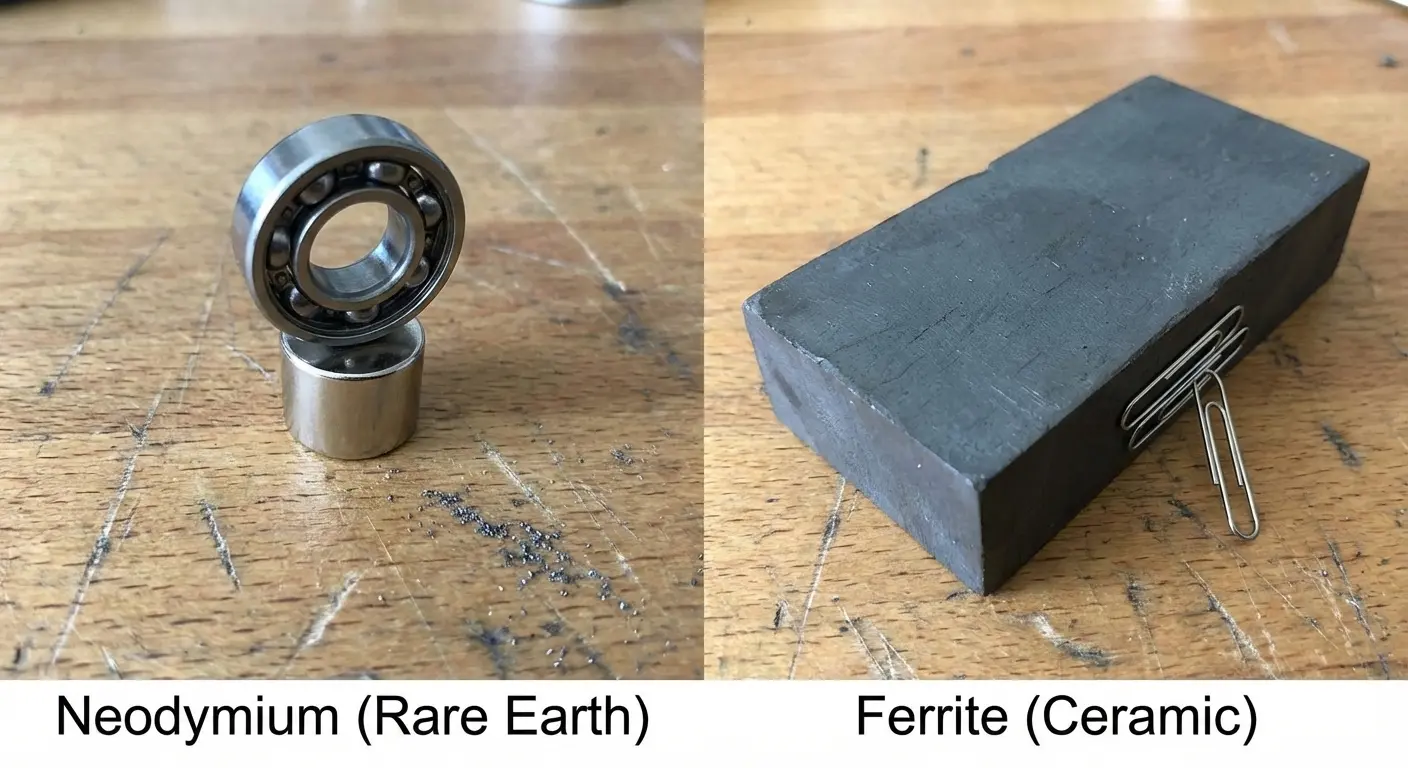
Selecting the right magnet is a strategic engineering and procurement decision. Magnet choice directly affects product performance, cost structure, reliability, and long-term supply risk. Among all options, rare earth magnets and ferrite magnets represent two fundamentally different value propositions.
Understanding their strengths, limitations, and ideal use cases enables manufacturers and OEMs to make informed, application-driven decisions rather than defaulting to material familiarity or unit price alone.
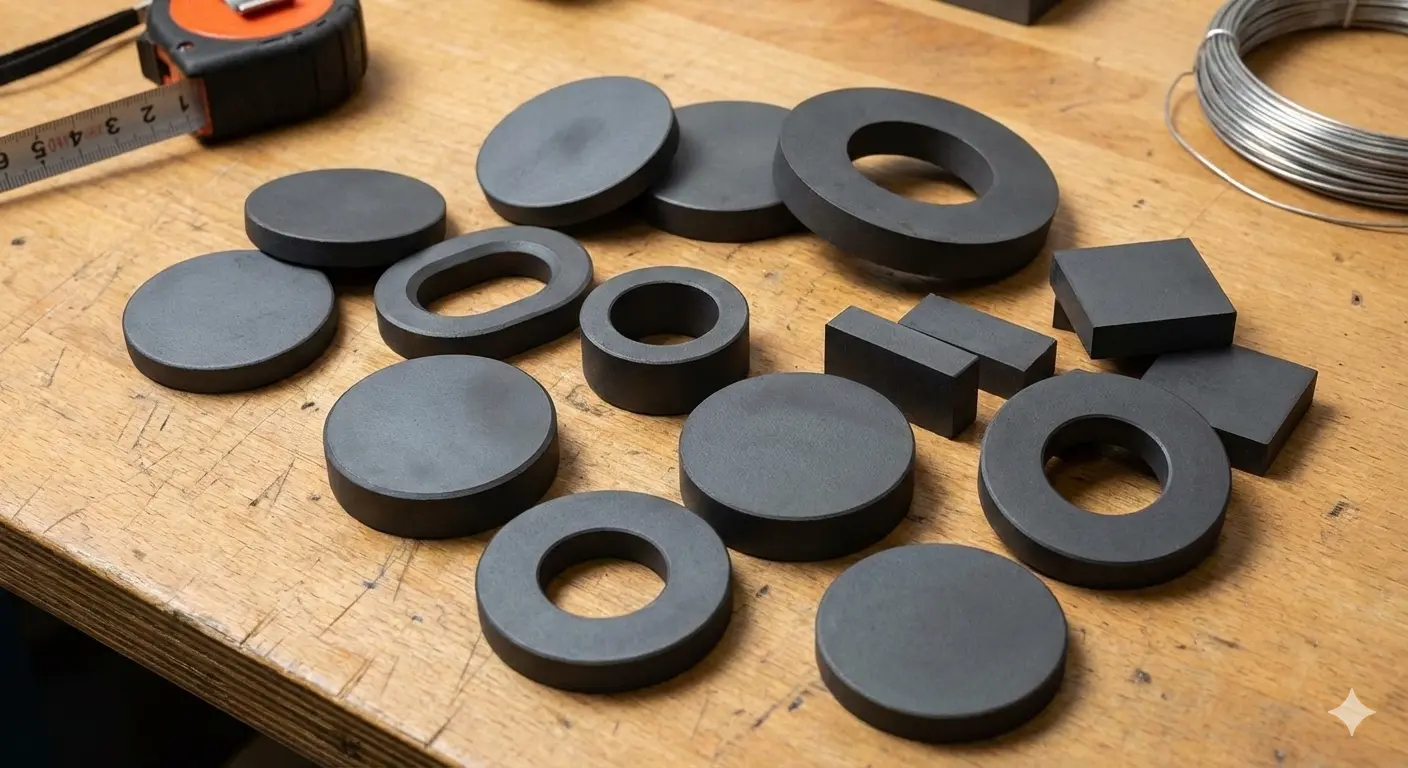
Ceramic magnets, also known as ferrite magnets, are a class of permanent magnets made from iron oxide combined with ceramic materials such as barium carbonate or strontium carbonate. They are among the most widely used magnetic materials globally due to their cost efficiency, corrosion resistance, and long-term magnetic stability. Ceramic magnets play a foundational role in both consumer and industrial applications where reliable magnetic performance is required without high material costs.
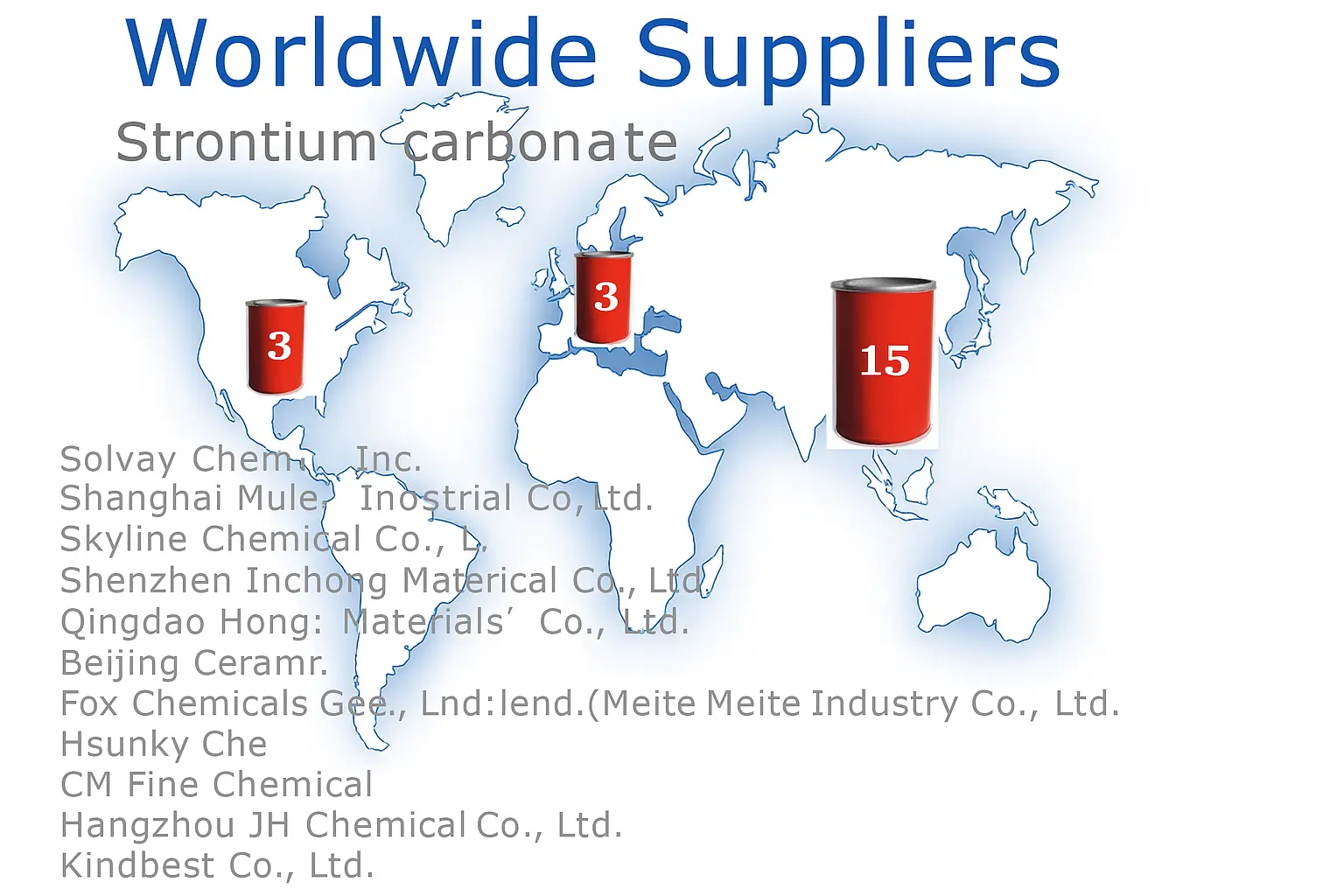
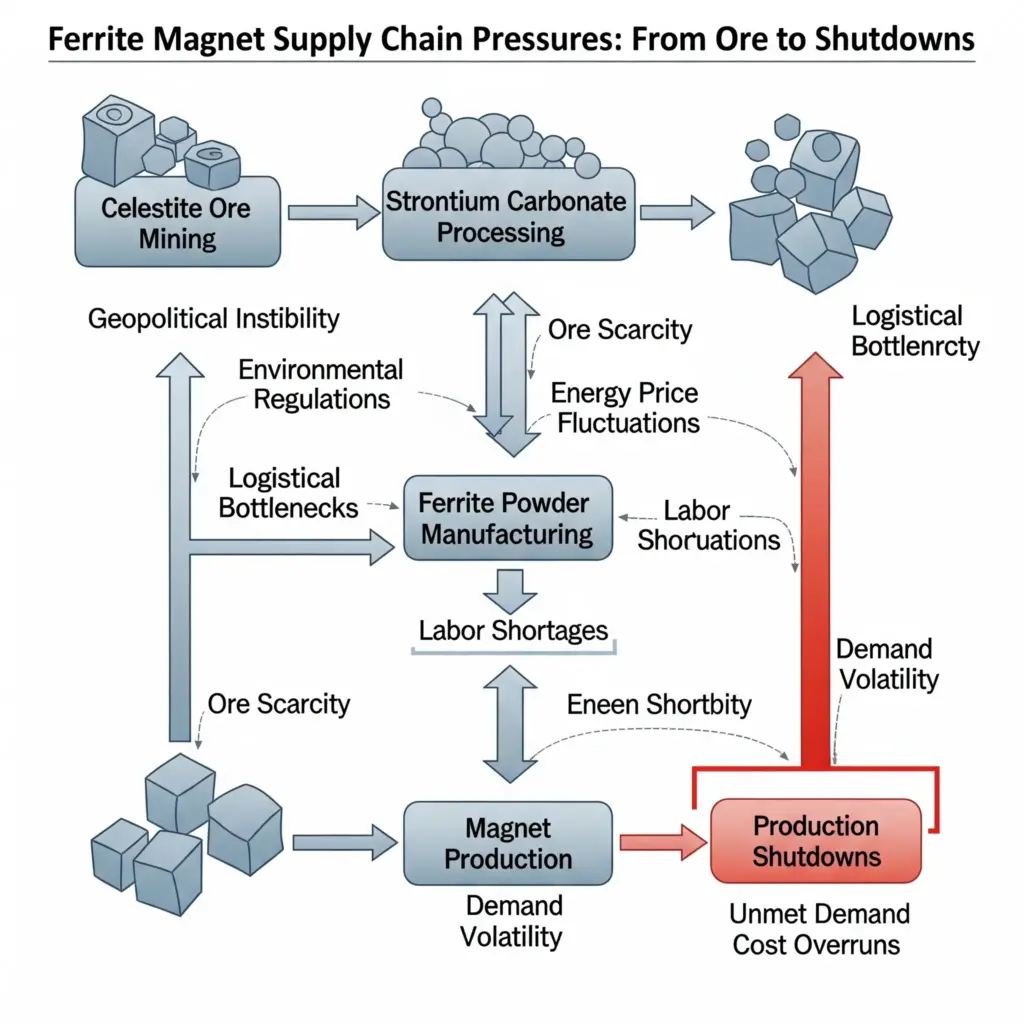
A sudden and severe disruption in the strontium carbonate supply chain — a key raw material for ferrite magnets — is sending shockwaves through the global magnet industry. Prices of ferrite magnets, widely used in motors, speakers, appliances, and industrial equipment, are climbing rapidly as upstream costs spiral out of control.
🔥 The Chain Reaction: From Port Explosion to Magnet Market
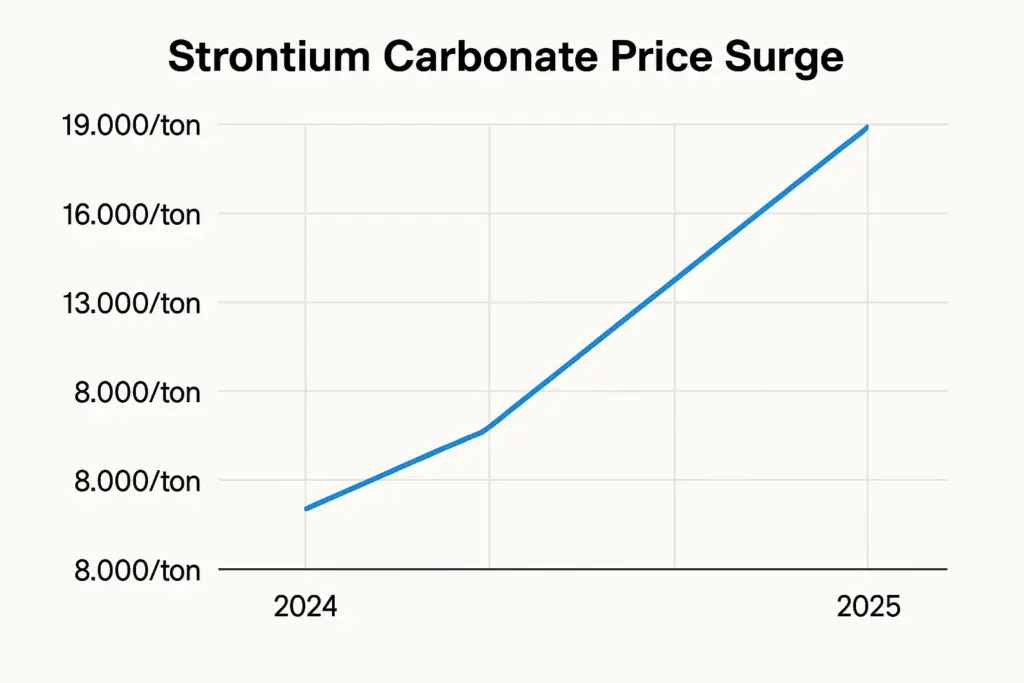
In April 2025, a major explosion at Iran’s Port of Abbas halted large-scale exports of celestite, the high-grade ore (85%+) from which strontium carbonate is refined. China, despite holding about 25% of global celestite reserves, relies heavily on imports due to lower ore grades (35–60%). The sudden loss of Iranian supply has left many Chinese producers scrambling for raw material, triggering a historic price rally.
Aug 2025 (spot offers): RMB 18,000–19,000/ton Analysts warn prices could exceed RMB 20,000/ton in the coming months.
With strontium carbonate accounting for over 50% of ferrite magnet raw material cost, magnet manufacturers are now facing unprecedented production cost hikes.
Compounding Supply Pressures
The ferrite magnet industry is under dual pressure from both raw material shortages and reduced production capacity:
Environmental Policy Upgrades — In March 2024, China’s emergency management authorities ordered the elimination of outdated intermittent carbonization processes, forcing many strontium carbonate plants into costly technical upgrades or shutdowns.
Major Producer Shutdowns — Hebei Xinji Chemical Group, responsible for nearly 29% of China’s strontium carbonate output, entered bankruptcy reorganization in late 2024. Multiple other producers have since halted or reduced output.
International Supply Shocks — Mexico’s Kandelium plant, a major global strontium carbonate supplier, suffered fire damage earlier this year, removing 40,000 tons of annual capacity from the market.
Impact on Ferrite Magnet Prices
Industry insiders report that ferrite magnet prices in China have already risen 20–35% since Q2 2025, with further increases expected if strontium carbonate prices remain elevated. Export-oriented magnet producers are warning overseas customers of price adjustments starting September 2025, citing raw material volatility and extended lead times.
In downstream sectors — including electric motors, home appliances, and automotive components — procurement costs are likely to rise as ferrite magnet contracts are renegotiated.
Outlook: Possible Prolonged Boom
With domestic and overseas raw material supply both constrained, analysts believe the ferrite magnet market may enter a multi-quarter boom period:
Short Term (3–6 months): Expect continued price growth and tight supply.
Medium Term (6–12 months): Market stability will depend on the speed of Iranian port recovery, Mexican capacity restoration, and Chinese plant upgrades.
Long Term (12+ months): If environmental compliance costs remain high, structural magnet price increases may become the “new normal.”
Conclusion:
The ferrite magnet industry is now directly exposed to the global strontium carbonate crisis. Buyers, distributors, and end-users should prepare for sustained cost pressures and consider early procurement or long-term contracts to mitigate further price risks.
Ferrite magnets, also called ceramic magnets, are permanent magnets made from iron oxide (Fe₂O₃) combined with strontium (Sr) or barium (Ba). They are affordable, corrosion-resistant, and heat-tolerant—making them one of the most widely used magnets in the world.
In this guide, we’ll cover:
What ferrite magnets are
Their key industrial applications
Main advantages over rare-earth magnets
Why manufacturers choose them for cost-effective solutions
Ferrite magnets are especially loved in industry because they are:
Low-cost – up to 90% cheaper than neodymium magnets
Heat-resistant – perform well up to 250°C (and even higher for certain grades)
Corrosion-proof – no coating needed, unlike NdFeB magnets
Long-lasting – magnetic strength remains stable for decades
1. Ferrite Magnets in Motors & Generators
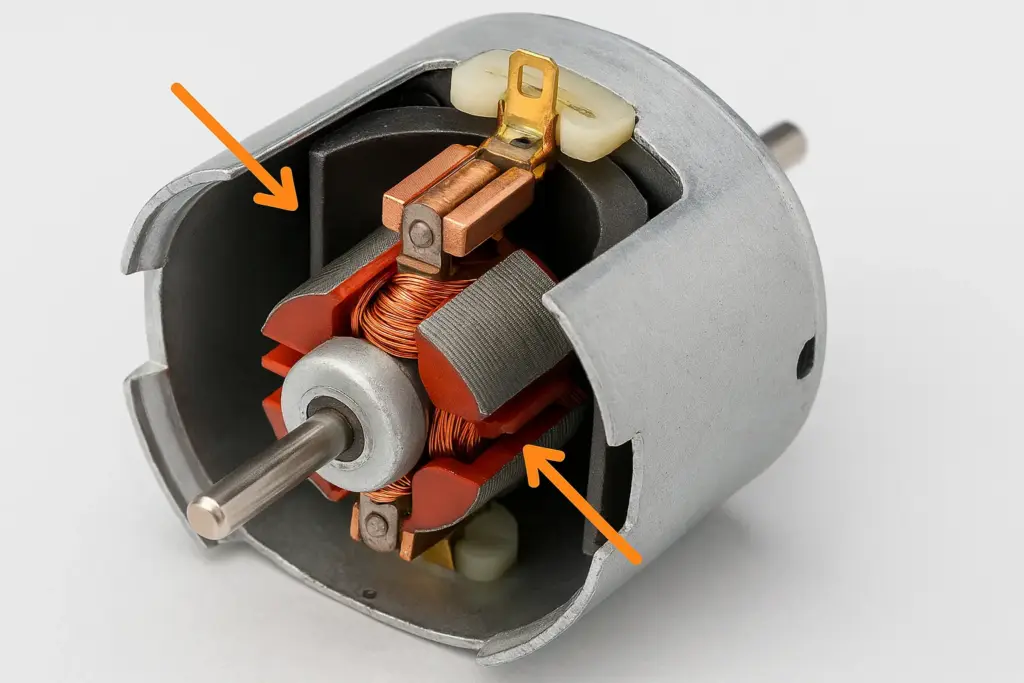
Ferrite magnets are the backbone of many electrical motors thanks to their heat resistance and stability.
Common Uses:
Household appliances – washing machines, fans, air conditioners
Automotive motors – windshield wipers, power windows, seat adjusters
Industrial motors – pumps, conveyor systems, small machinery
Why choose ferrite magnets for motors?
Withstand high operating temperatures
Resist demagnetization in harsh environments
Significantly cheaper than rare-earth alternatives
2. Ferrite Magnets in Speakers & Audio Equipment
Ferrite magnets provide the stable magnetic fields that speakers need for clear, balanced sound.
Applications:
Woofers for deep bass
Tweeters for crisp high frequencies
Headphones and budget-friendly audio systems
Benefits:
High magnetic permeability for efficient sound conversion
Low cost for mass production
Minimal performance loss over time
3. Ferrite Magnets in Magnetic Separation & Recycling
In heavy industry, ferrite magnets are vital for separating and recovering ferrous materials.
Applications:
Mining – extract magnetic minerals like magnetite
Food & pharma – remove metal contaminants for safety
Recycling – recover iron from scrap and e-waste
Benefits:
Resistant to moisture and chemicals
Durable and low maintenance
Reliable in 24/7 operations
4. Ferrite Magnets in Sensors & Electronics
Ferrite magnets power many sensing and measuring devices.
Applications:
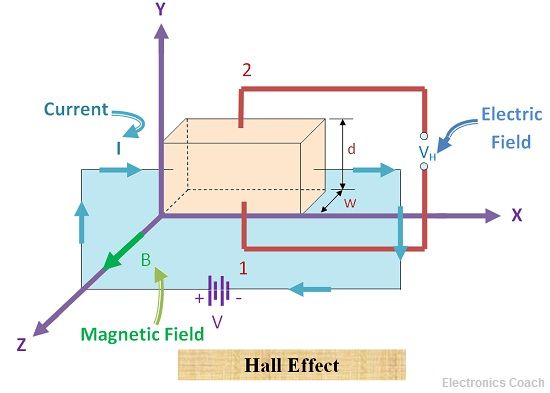
Hall effect sensors for position/speed detection
Magnetic encoders for robotics and CNC machines
Reed switches in alarms, security systems, and door sensors
Benefits:
Stable magnetic properties
Reliable performance in varying temperatures
Cost-effective for high-volume production
5. Ferrite Magnets in Medical & Healthcare Devices
Although rare-earth magnets dominate MRI machines, ferrite magnets still play a role in smaller medical tools.
Applications:
Magnetic therapy pads for pain relief
Motors in dental tools, infusion pumps, and lab mixers
Benefits:
Non-toxic and safe
Resistant to sterilization processes
6. Other Industrial Uses
Ferrite magnets also serve in:
Magnetic holders and clamps for machining
Magnetic seals in vacuum systems
Educational kits and toy magnets (safe for kids)
Conclusion – The Smart Choice for Cost-Effective Magnet Solutions
Ferrite magnets may not be as strong as neodymium magnets, but they win on price, durability, and temperature stability. For industries needing affordable, corrosion-proof, and long-lasting magnets, ferrite remains the go-to choice.
FAQ: Ferrite Magnets
Q: Are ferrite magnets strong?
A: They are not as strong as neodymium magnets but are strong enough for most industrial and household uses.
Q: Do ferrite magnets rust?
A: No – they are naturally corrosion-resistant and do not require protective coatings.
Q: How hot can ferrite magnets get?
A: Most can operate up to 250°C without losing significant strength.
Magnetic chess isn’t just a single game—it’s a clever twist on traditional chess and other board games that incorporates magnets for added excitement and practicality. These sets use magnetic pieces or balls to create stable, portable gameplay, making them ideal for families, travelers, and educators. Whether you’re looking for a simple activity for kids or a reliable travel companion for classic chess, magnetic chess offers versatility and fun. In this guide, we’ll explore two main types of magnetic chess games, the magnets used, board designs, rules, and key pros and cons. Let’s dive in!
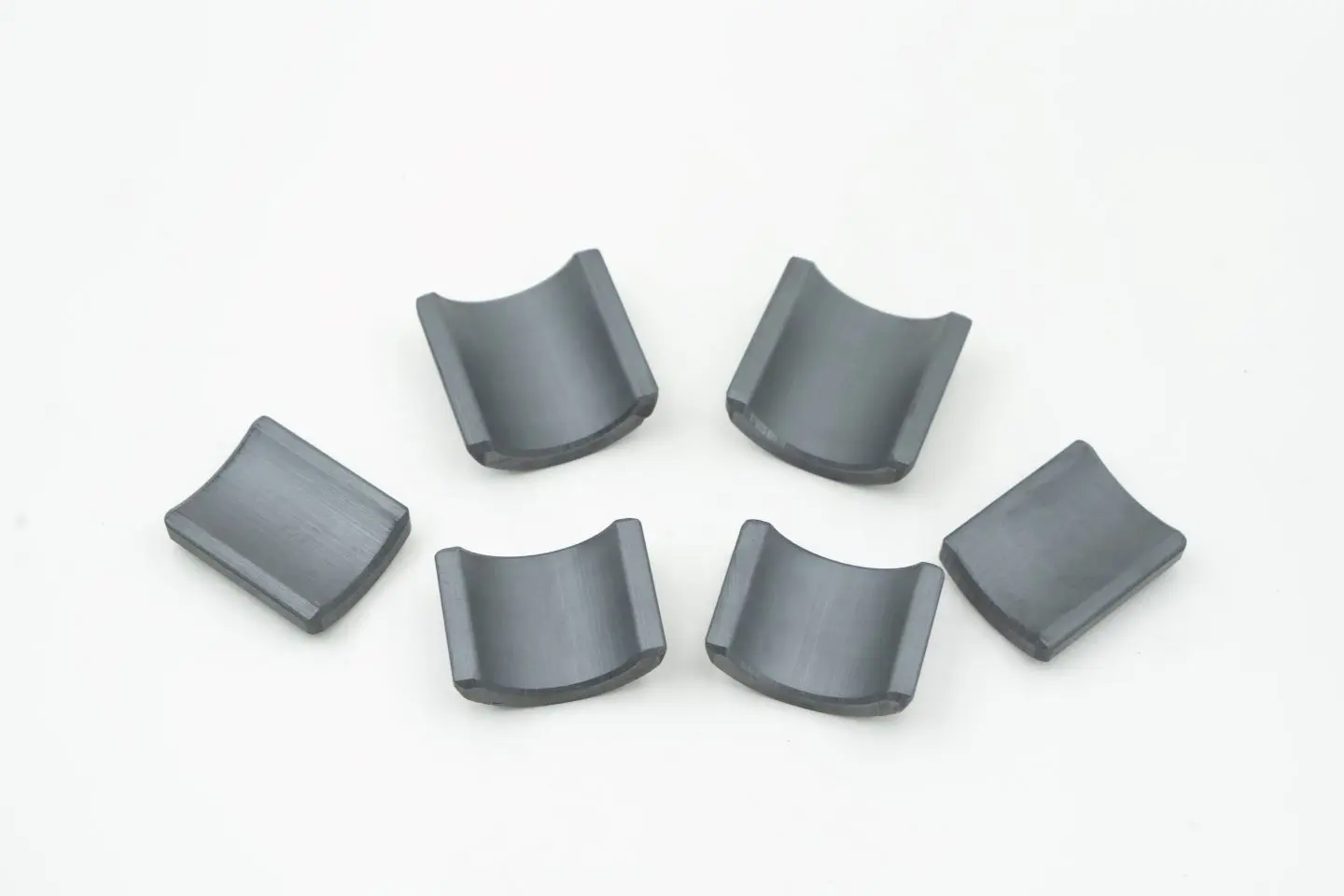
Ferrite arc magnets, also known as ceramic arc magnets, are affordable, curved-shaped magnets made from iron oxide and other metallic compounds. Their arc design concentrates the magnetic field, making them ideal for applications requiring a focused force in a compact form. Commonly used in low-power devices, education, and DIY projects, these magnets offer a budget-friendly alternative to stronger types like neodymium. In this guide, we’ll explore their key applications, advantages, and limitations to help you decide if they’re right for your needs.
To provide the best experiences, we use technologies like cookies to store and/or access device information. Consenting to these technologies will allow us to process data such as browsing behavior or unique IDs on this site. Not consenting or withdrawing consent, may adversely affect certain features and functions.
Functional
Always active
The technical storage or access is strictly necessary for the legitimate purpose of enabling the use of a specific service explicitly requested by the subscriber or user, or for the sole purpose of carrying out the transmission of a communication over an electronic communications network.
Preferences
The technical storage or access is necessary for the legitimate purpose of storing preferences that are not requested by the subscriber or user.
Statistics
The technical storage or access that is used exclusively for statistical purposes.The technical storage or access that is used exclusively for anonymous statistical purposes. Without a subpoena, voluntary compliance on the part of your Internet Service Provider, or additional records from a third party, information stored or retrieved for this purpose alone cannot usually be used to identify you.
Marketing
The technical storage or access is required to create user profiles to send advertising, or to track the user on a website or across several websites for similar marketing purposes.