Author: Seny Shen

  • Understanding BH Curves: A Practical Guide for Engineers

    Understanding BH Curves: A Practical Guide for Engineers

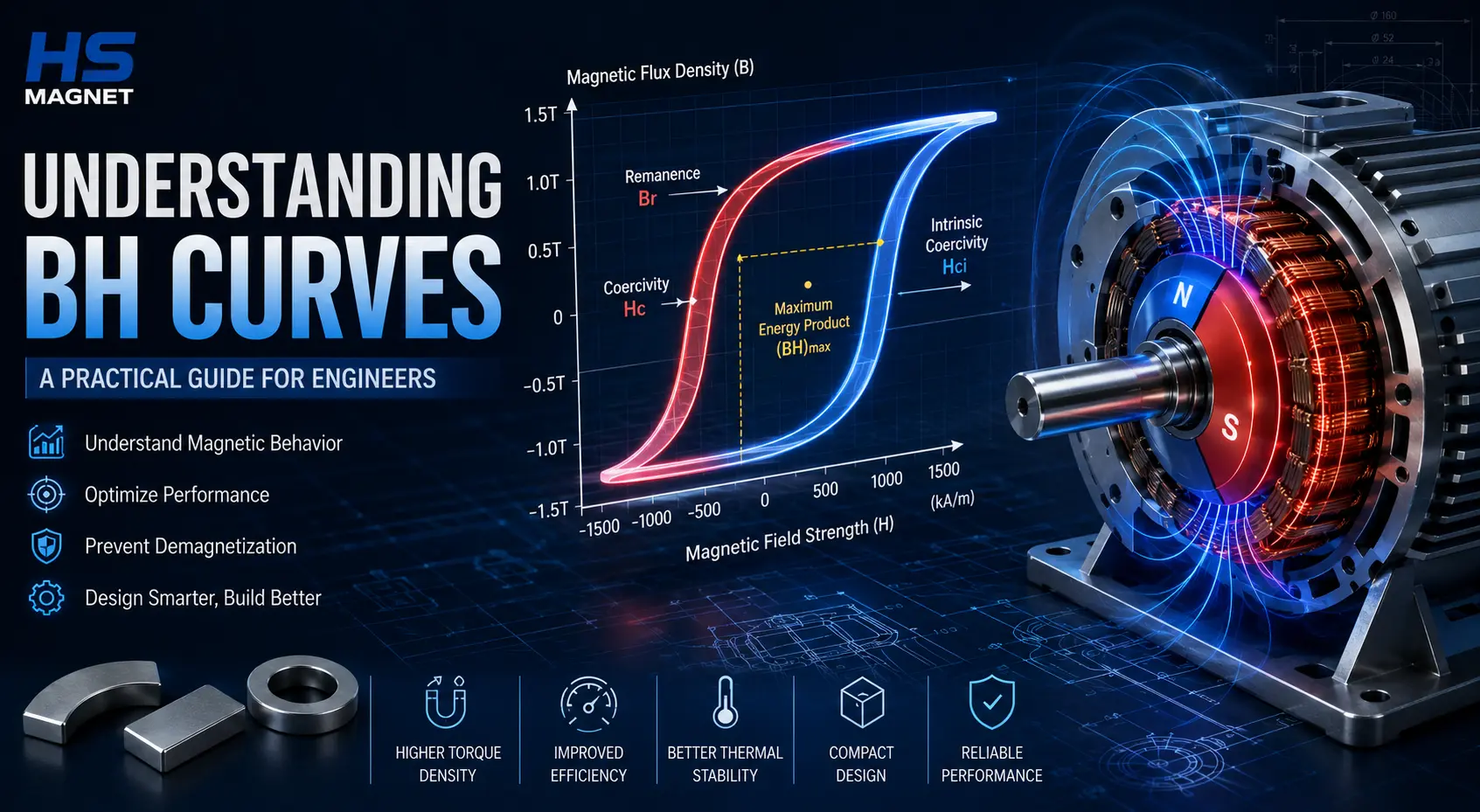
    In permanent magnet engineering, few concepts are more important—or more misunderstood—than the BH curve. Whether you are designing electric motors, magnetic assemblies, sensors, or industrial equipment, understanding BH characteristics is essential for optimizing magnetic performance, thermal stability, and system reliability.

    This practical guide explains BH curves from an engineering perspective, focusing on how they influence real-world magnet selection and application design.

    (more…)
  • Rare Earth Permanent Magnet Supply & Cost Analysis

    Rare Earth Permanent Magnet Supply & Cost Analysis

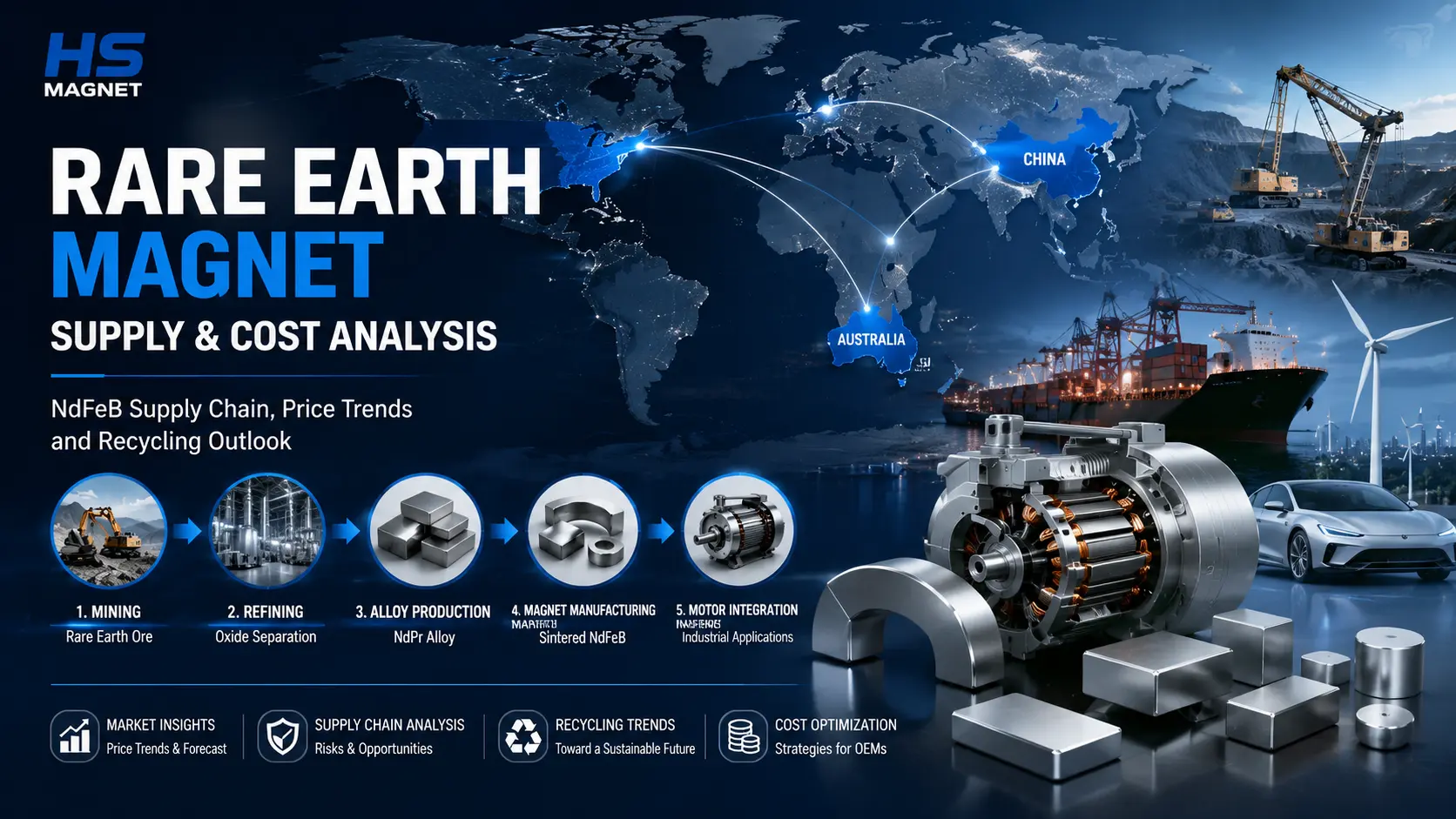
    In today’s electrification-driven economy, rare earth permanent magnets—especially NdFeB—have evolved from commodity materials into strategic industrial assets. For motor manufacturers and OEM procurement teams, understanding supply chain dynamics and cost drivers is critical for maintaining competitiveness and mitigating risk.

    This analysis outlines the upstream structure, pricing mechanisms, and emerging recycling trends shaping the NdFeB magnet market.

    (more…)
  • Permanent Magnet Types for Electric Motors: A Selection Guide for High-Efficiency Designs

    Permanent Magnet Types for Electric Motors: A Selection Guide for High-Efficiency Designs

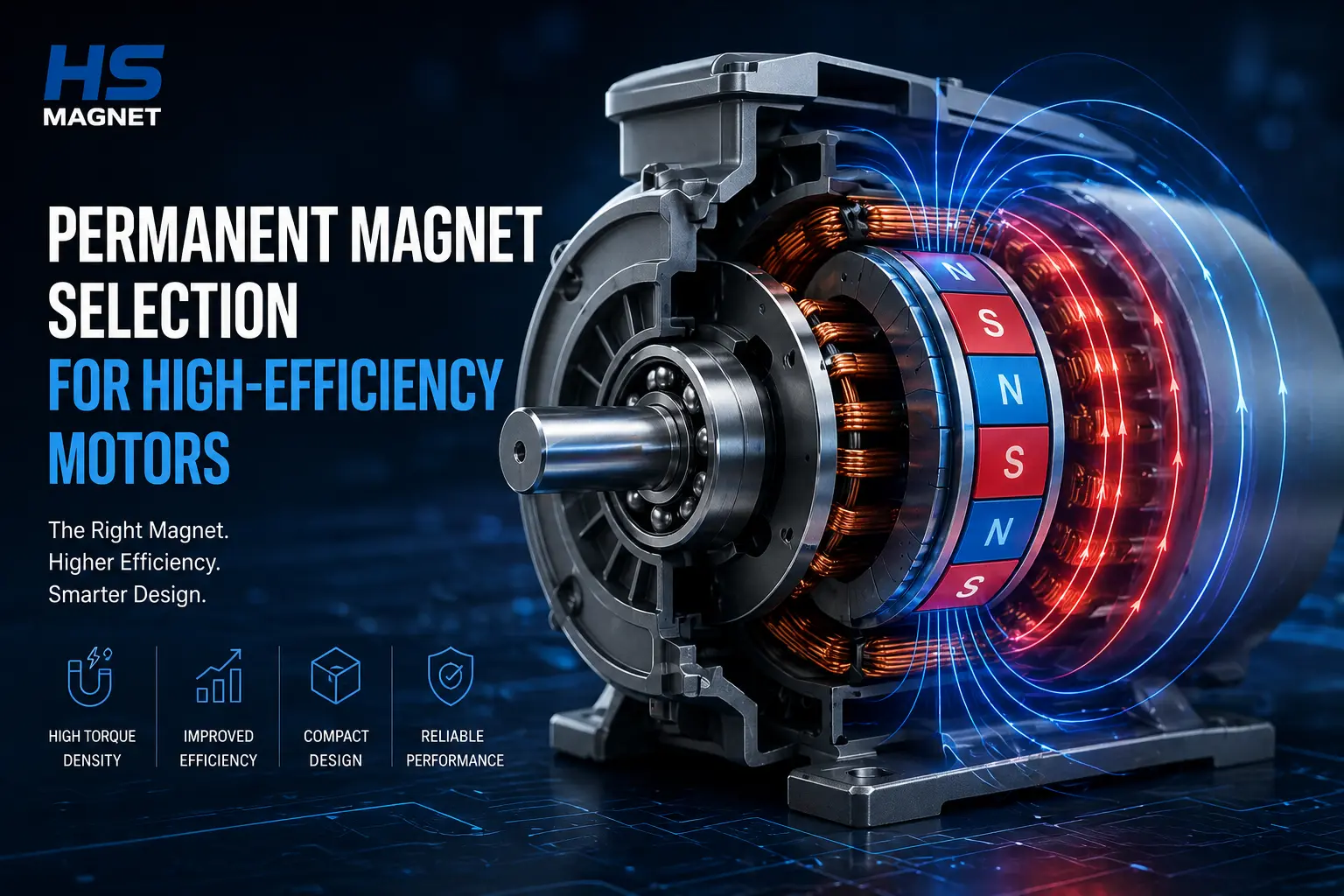
    Electric motor efficiency is no longer a marginal optimization—it is a core competitive lever across EVs, industrial automation, HVAC systems, and precision equipment. At the center of this performance equation lies the permanent magnet. Selecting the right magnet type directly impacts torque density, thermal stability, lifecycle cost, and supply chain resilience.

    This guide provides a structured framework for choosing the optimal permanent magnet for high-efficiency motor designs, with a focus on practical engineering trade-offs and procurement strategy.

    (more…)
  • How Magnetic Adhesion Sensors Work: Principles, Design Logic, and Industry Use Cases

    How Magnetic Adhesion Sensors Work: Principles, Design Logic, and Industry Use Cases

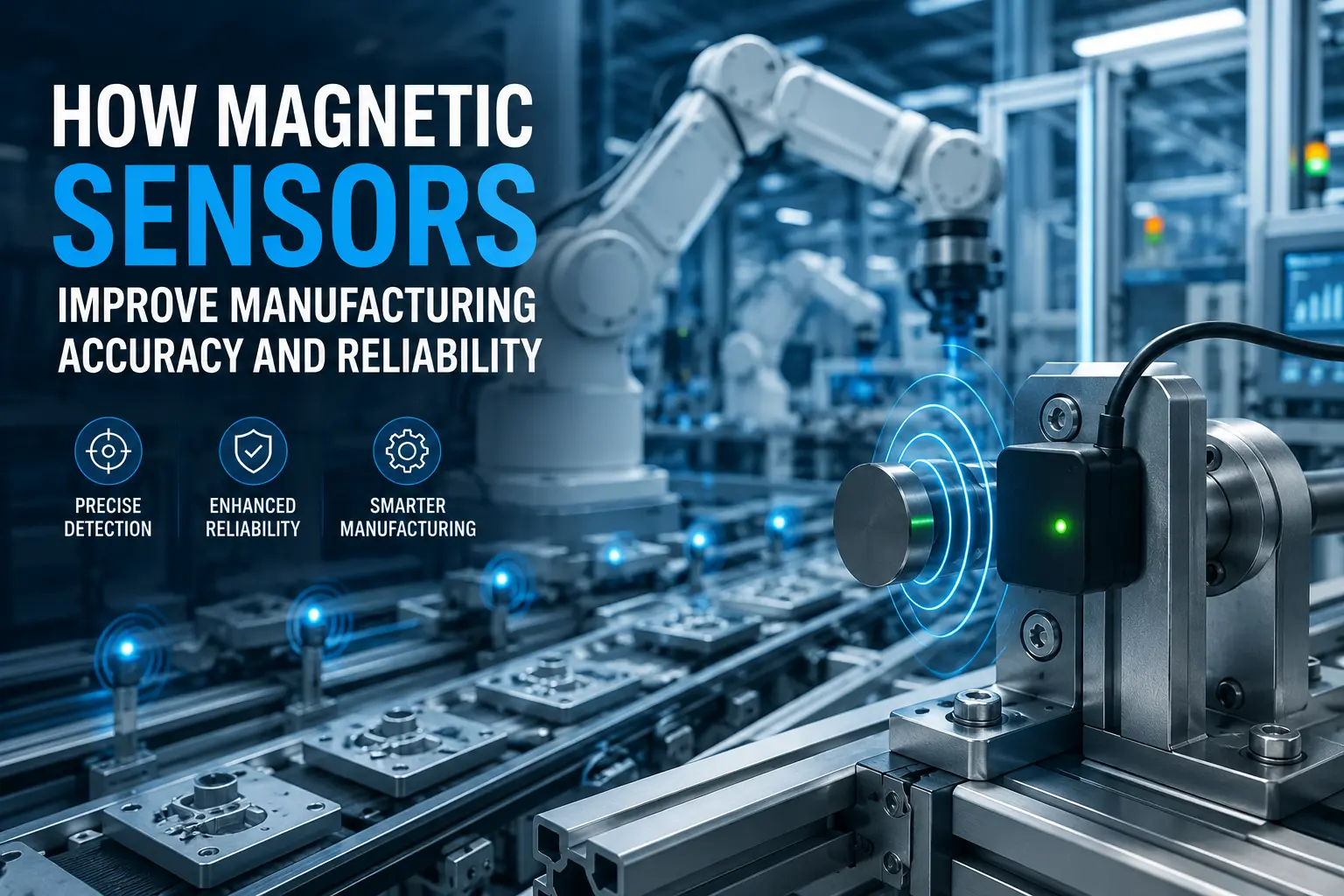
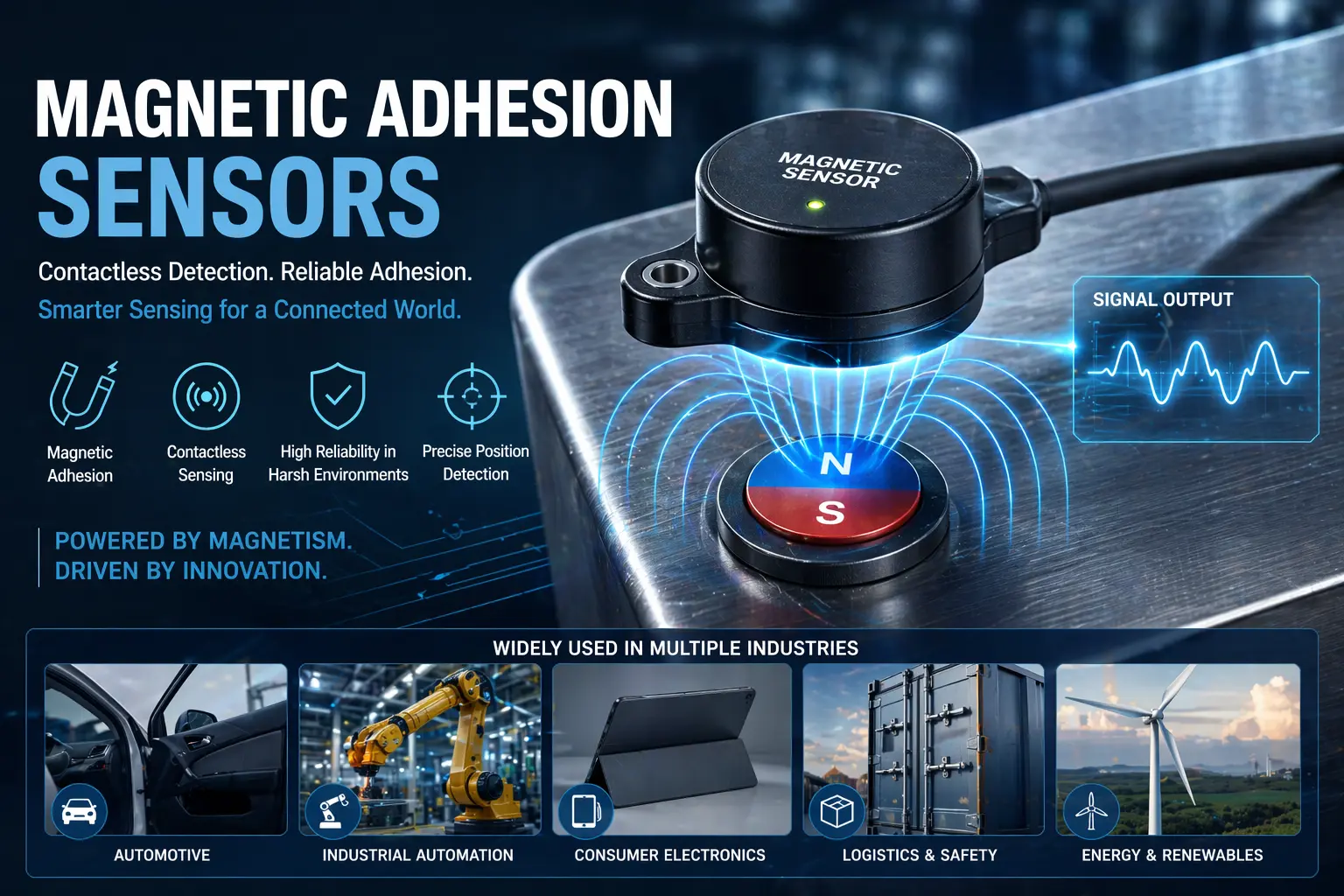
    Magnetic adhesion sensors are emerging as a high-reliability solution for contactless detection, attachment verification, and position monitoring across multiple industries. By leveraging controlled magnetic fields and sensing elements such as Hall-effect or magnetoresistive chips, these sensors deliver stable performance in environments where traditional mechanical or optical sensing fails.

    This article outlines the working principles, system architecture, and real-world deployment scenarios of magnetic adhesion sensors, with a focus on scalability and industrial applicability.

    (more…)
  • Magnetic Rings vs. Magnetic Tiles in Next-Generation Sensor Applications

    Magnetic Rings vs. Magnetic Tiles in Next-Generation Sensor Applications

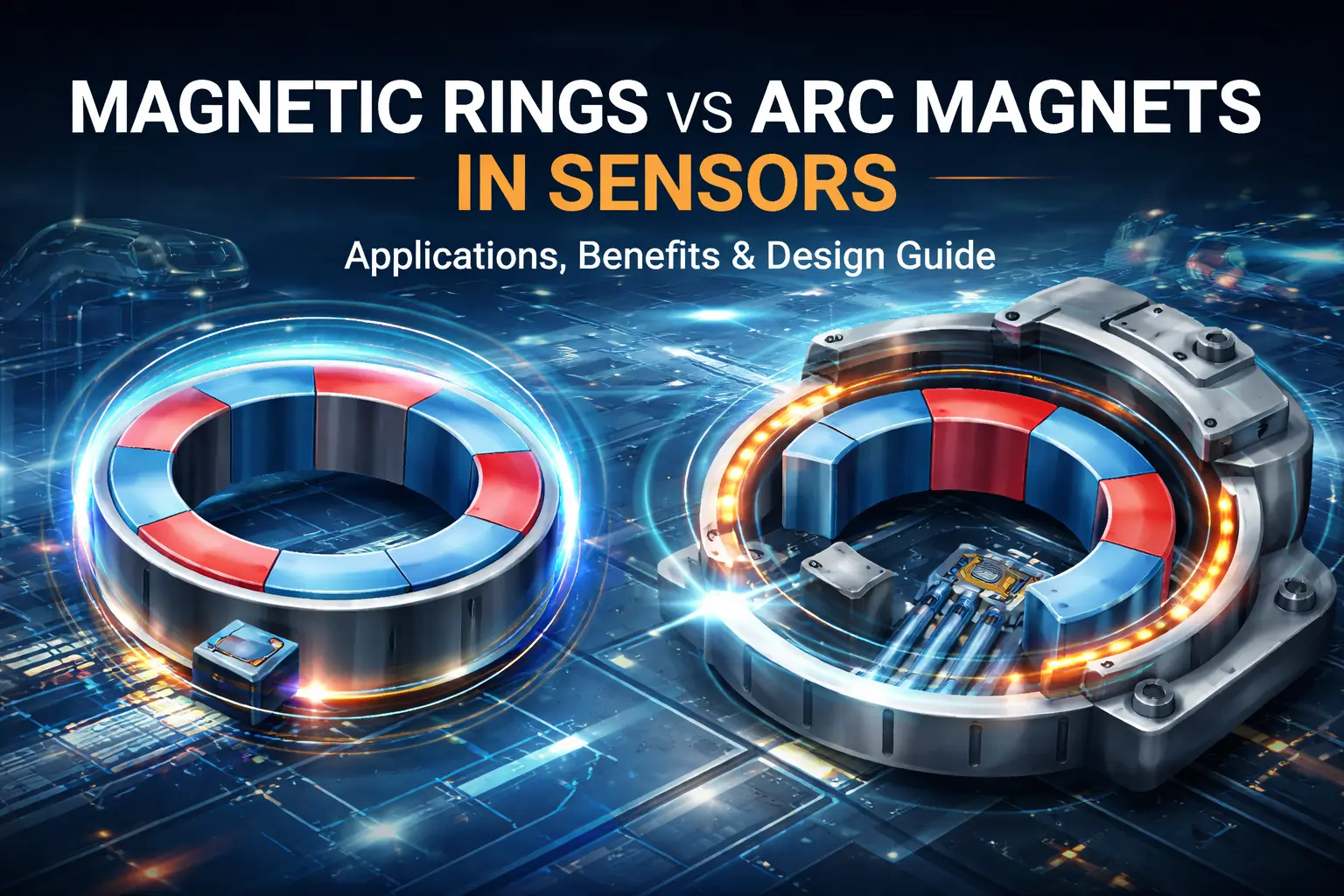
    As sensor technologies evolve toward higher precision, miniaturization, and energy efficiency, magnetic components are becoming increasingly strategic in system design. Among them, magnetic rings and magnetic tiles (arc magnets) play a critical role in enabling advanced sensing capabilities across automotive, industrial, and consumer electronics sectors.

    This article provides a structured analysis of how these two magnet geometries are applied in next-generation sensors, highlighting their functional advantages, limitations, and emerging trends.

    (more…)
  • Why Are Rare Earth Magnets So Expensive? Market & Material Analysis

    Why Are Rare Earth Magnets So Expensive? Market & Material Analysis

    Rare earth magnets—especially NdFeB (neodymium-iron-boron)—are essential for high-performance applications such as electric vehicles, wind turbines, robotics, and industrial motors. Despite their small size, they often represent a significant portion of system cost.

    Understanding why these magnets are expensive requires analyzing both material fundamentals and global market dynamics. For procurement teams and engineers, this insight is critical for cost control and supply chain strategy.

    (more…)
  • What Is the Difference Between Isotropic and Anisotropic Magnets?

    What Is the Difference Between Isotropic and Anisotropic Magnets?

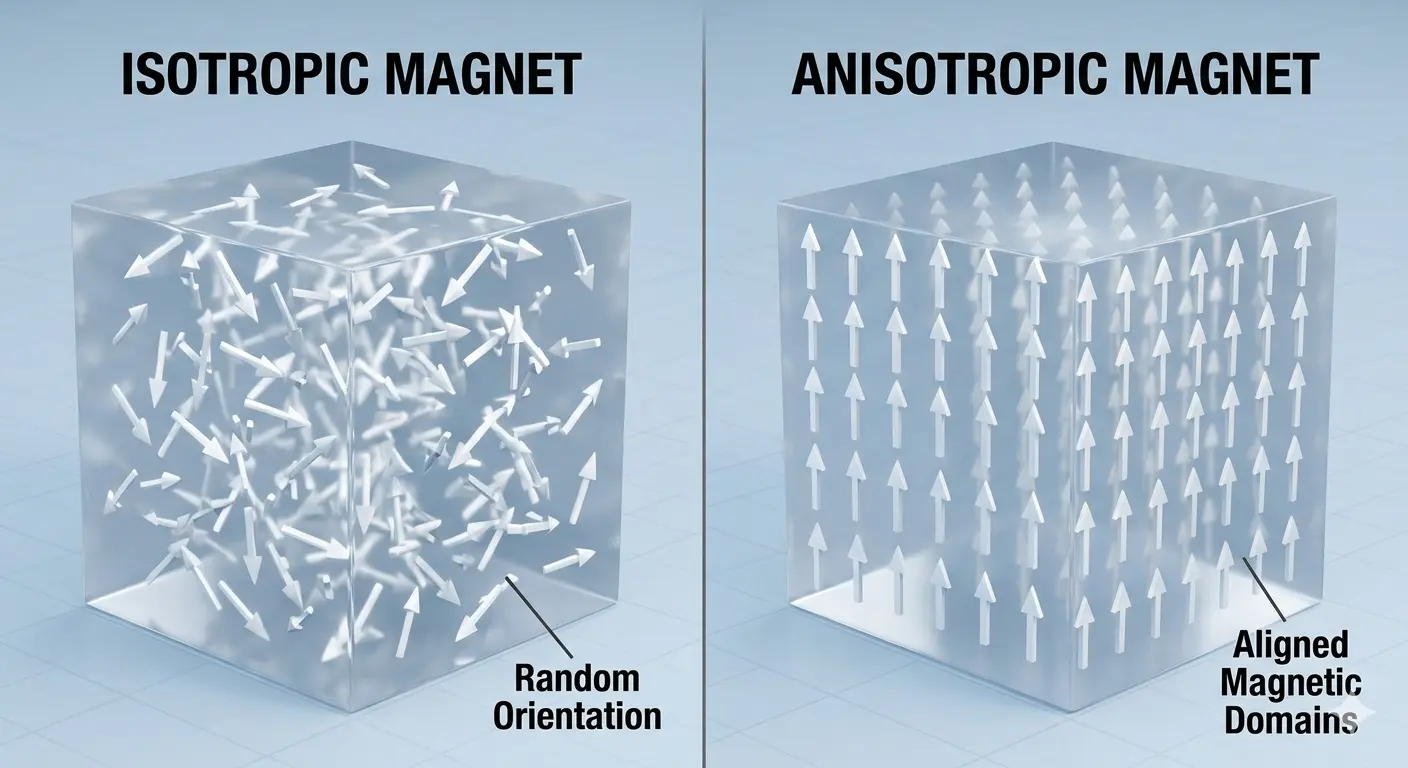
    In permanent magnet selection, understanding material structure is just as important as choosing the right magnet grade. One of the most fundamental distinctions is between isotropic and anisotropic magnets. This difference directly affects magnetic performance, cost, and application suitability.

    For engineers and buyers, selecting the right type can significantly impact product efficiency and overall system cost.

    (more…)
  • Magnetic Tools for Construction: Holding, Lifting, and Fixing Solutions

    Magnetic Tools for Construction: Holding, Lifting, and Fixing Solutions

    In modern construction, efficiency, safety, and precision are critical performance drivers. Magnetic tools have emerged as highly effective solutions for handling ferrous materials, reducing manual labor, and improving job-site productivity. From steel beam lifting to temporary fixing and alignment, magnetic systems offer a versatile and cost-effective alternative to traditional mechanical methods.

    This article explores how magnetic tools are used in construction, focusing on holding, lifting, and fixing applications, along with their key advantages and selection considerations.

    (more…)
  • Recycling Neodymium Magnets: Challenges and Opportunities for Sustainability

    Recycling Neodymium Magnets: Challenges and Opportunities for Sustainability

    Neodymium magnets are critical components in many modern technologies, including electric vehicles, wind turbines, consumer electronics, and industrial motors. As global demand for these high-performance magnets continues to grow, concerns about rare earth resource sustainability are increasing. Recycling neodymium magnets provides an important pathway to reduce environmental impact, improve material efficiency, and support a more resilient supply chain.

    However, while recycling offers clear benefits, it also presents several technical and economic challenges.

    (more…)
  • How Long Do Permanent Magnets Last? The Science of Magnetic Decay

    How Long Do Permanent Magnets Last? The Science of Magnetic Decay

    Permanent magnets are widely used in motors, sensors, medical equipment, and industrial automation systems. A common question from engineers and buyers is: How long do permanent magnets actually last?

    Under normal conditions, high-quality permanent magnets can maintain their magnetic strength for decades. However, their lifespan depends on several factors, including temperature, external magnetic fields, mechanical stress, and environmental conditions. Understanding the science behind magnetic decay helps users design reliable systems and avoid unnecessary performance loss.

    (more…)