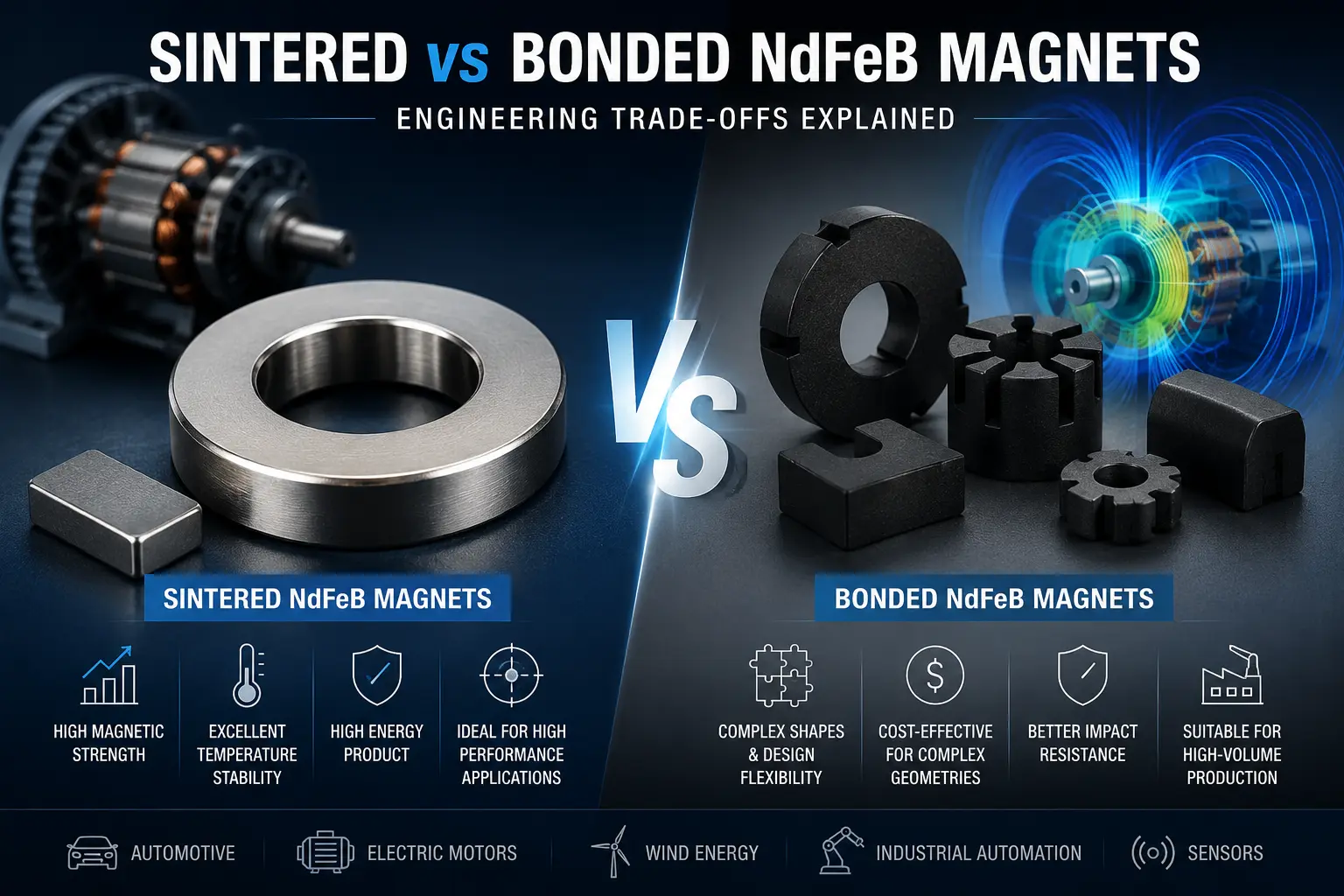
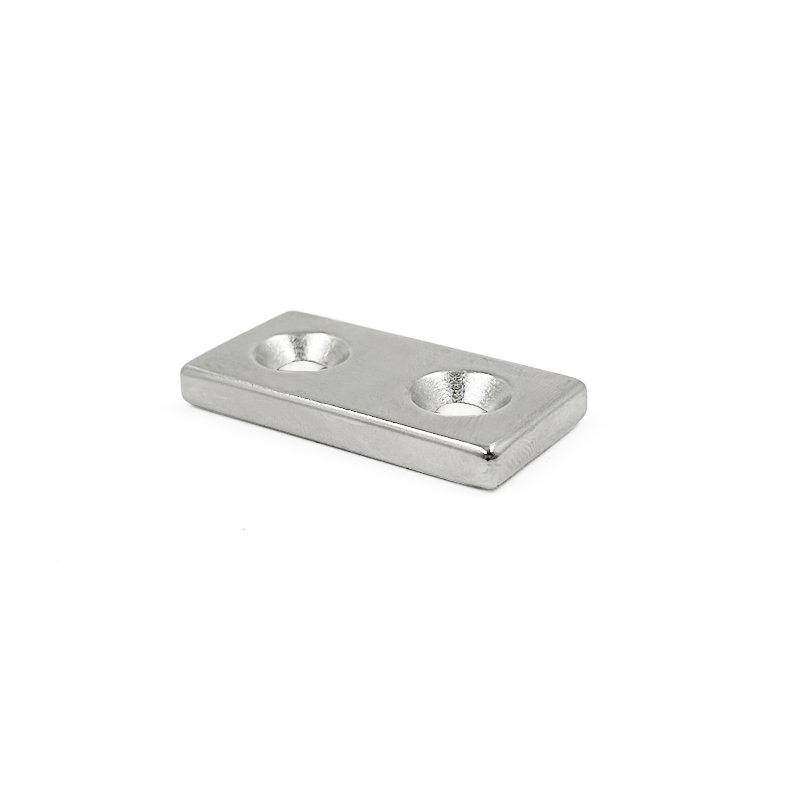
Neodymium Iron Boron (NdFeB) magnets are among the strongest permanent magnets available today and are widely used in electric motors, sensors, automotive systems, consumer electronics, and industrial automation. However, not all NdFeB magnets are manufactured in the same way. The two primary categories are sintered NdFeB magnets and bonded NdFeB magnets, each offering distinct advantages and limitations.
Understanding the engineering trade-offs between these magnet types is essential for selecting the most suitable solution for your application.
In today’s electrification-driven economy, rare earth permanent magnets—especially NdFeB—have evolved from commodity materials into strategic industrial assets. For motor manufacturers and OEM procurement teams, understanding supply chain dynamics and cost drivers is critical for maintaining competitiveness and mitigating risk.
This analysis outlines the upstream structure, pricing mechanisms, and emerging recycling trends shaping the NdFeB magnet market.
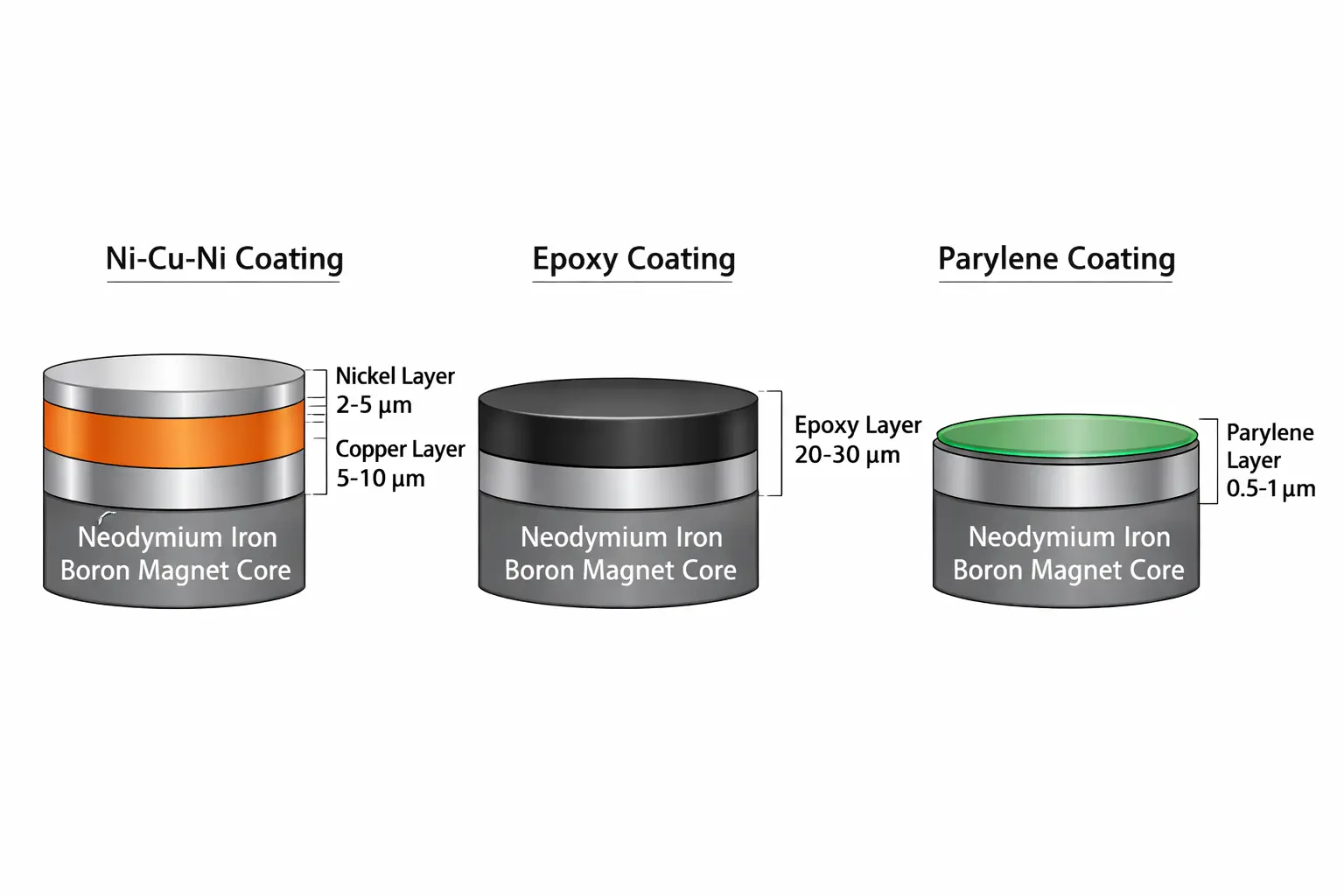
In high-performance magnetic applications, coating selection is not a cosmetic decision—it is a risk management strategy. For permanent magnets such as Neodymium Iron Boron (NdFeB), surface protection directly impacts durability, corrosion resistance, and long-term magnetic stability.
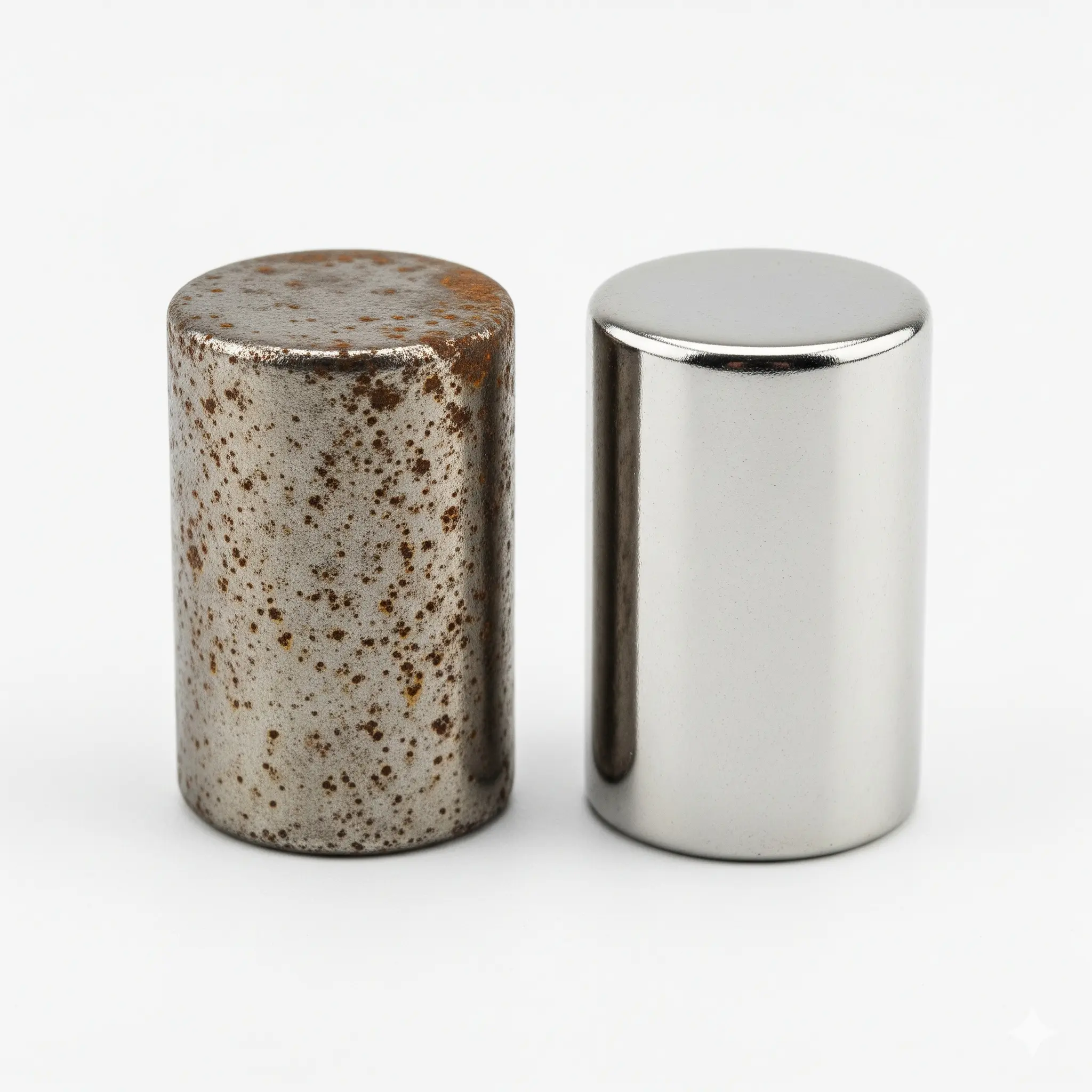
NdFeB magnets are highly susceptible to oxidation due to their iron content. Without proper surface treatment, environmental exposure can lead to corrosion, structural degradation, and performance loss.
This guide provides a structured comparison of the three most widely used coatings:
Nickel-Copper-Nickel (Ni-Cu-Ni)
Epoxy
Parylene
Each serves a different operational priority. The optimal choice depends on your environment, regulatory requirements, and lifecycle expectations.
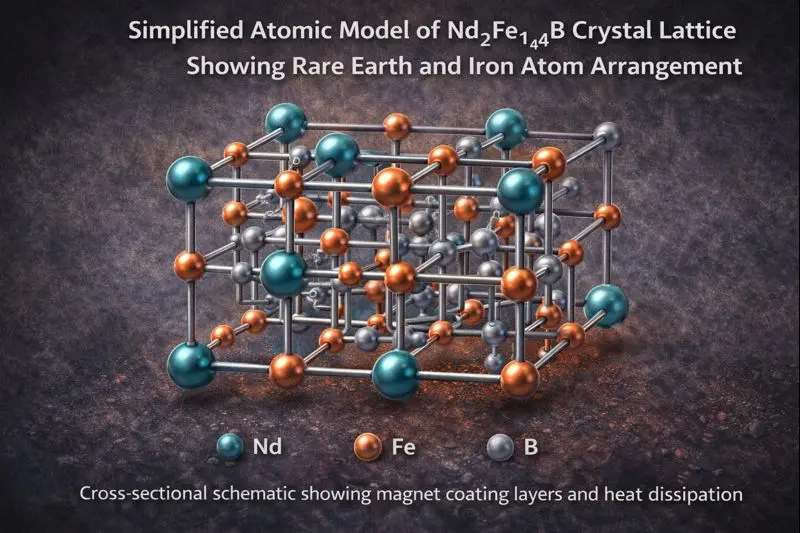
Neodymium–Iron–Boron (NdFeB) magnets are the most powerful permanent magnets available today and are essential components in electric vehicles, wind turbines, industrial motors, robotics, and aerospace systems.
However, standard NdFeB magnets suffer from performance degradation at elevated temperatures, particularly due to a rapid loss of coercivity. To address this limitation, manufacturers often introduce heavy rare earth (HRE) elements, such as dysprosium (Dy) and terbium (Tb).
This article explains how heavy rare earth elements improve the high-temperature stability of NdFeB magnets, the mechanisms behind coercivity enhancement, and the trade-offs involved.
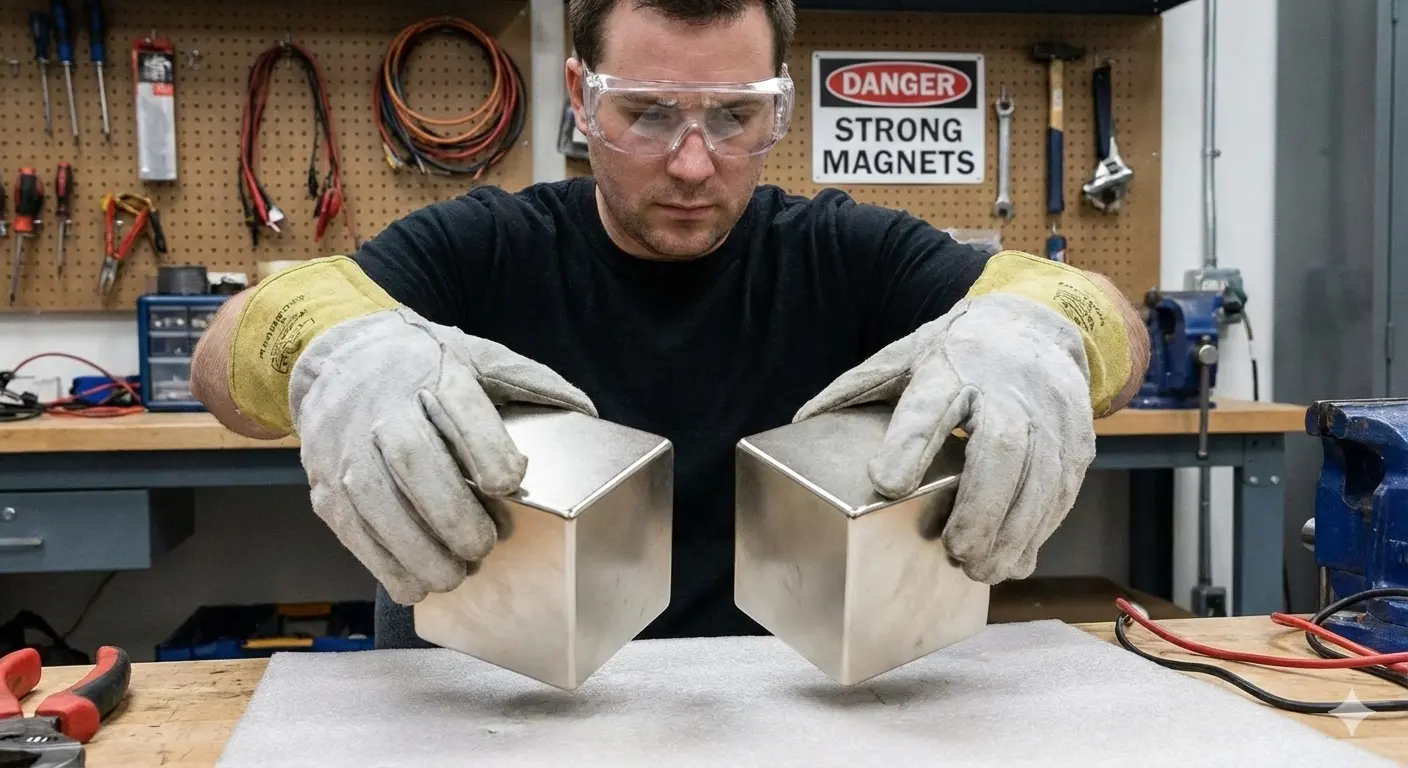
Neodymium magnets, also known as NdFeB magnets, are the strongest commercially available permanent magnets in the world. Their exceptional magnetic force makes them indispensable in industrial manufacturing, automation, electronics, energy systems, and medical devices. However, that same strength introduces safety risks if they are handled without proper controls.
From a risk-management and operational standpoint, understanding neodymium magnet safety is essential. Proper handling not only protects personnel but also prevents equipment damage, product loss, and unplanned downtime.
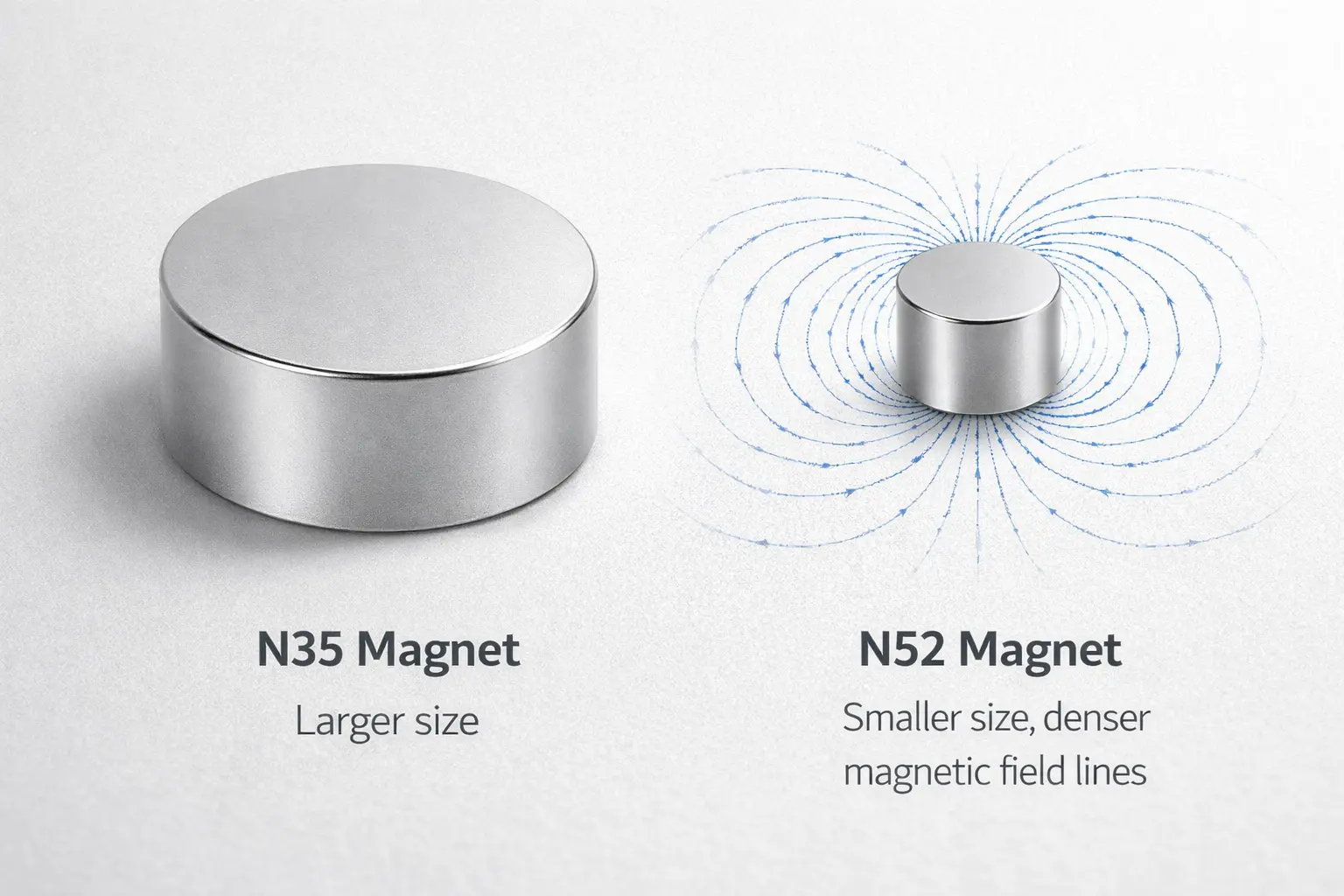
Neodymium magnets, commonly referred to as NdFeB magnets, are the strongest commercially available permanent magnets. However, not all neodymium magnets deliver the same performance. Magnet grades define their magnetic strength, thermal stability, and suitability for specific operating environments. For engineers, designers, and procurement teams, understanding magnet grades is essential to optimizing performance, reliability, and total system cost.
Selecting the correct grade directly influences torque output in motors, holding force in assemblies, and long-term resistance to demagnetization.
Neodymium magnets, known for their incredible strength, are widely used in industries like electronics, automotive, and renewable energy. However, these powerful magnets require a protective coating to maintain their performance and longevity. In this article, we explore why neodymium magnet coating is essential, the types of coatings available, and their specific benefits.
Neodymium magnets, made from an alloy of neodymium, iron, and boron (NdFeB), are highly susceptible to corrosion, especially in humid or moist environments. Without proper protection, they can oxidize, leading to rust and a significant loss of magnetic strength. A coating acts as a barrier, shielding the magnet from environmental factors like moisture, chemicals, and physical damage. Additionally, coatings prevent chipping or cracking, which can occur due to the brittle nature of neodymium magnets, ensuring durability and sustained performance.
Key Reasons for Coating Neodymium Magnets
Corrosion Protection: Prevents oxidation in humid or harsh environments.
Enhanced Durability: Reduces the risk of chipping or cracking.
Maintained Magnetic Strength: Preserves the magnet’s performance over time.
Aesthetic Appeal: Provides a polished, professional look for commercial applications.
Common Types of Neodymium Magnet Coatings
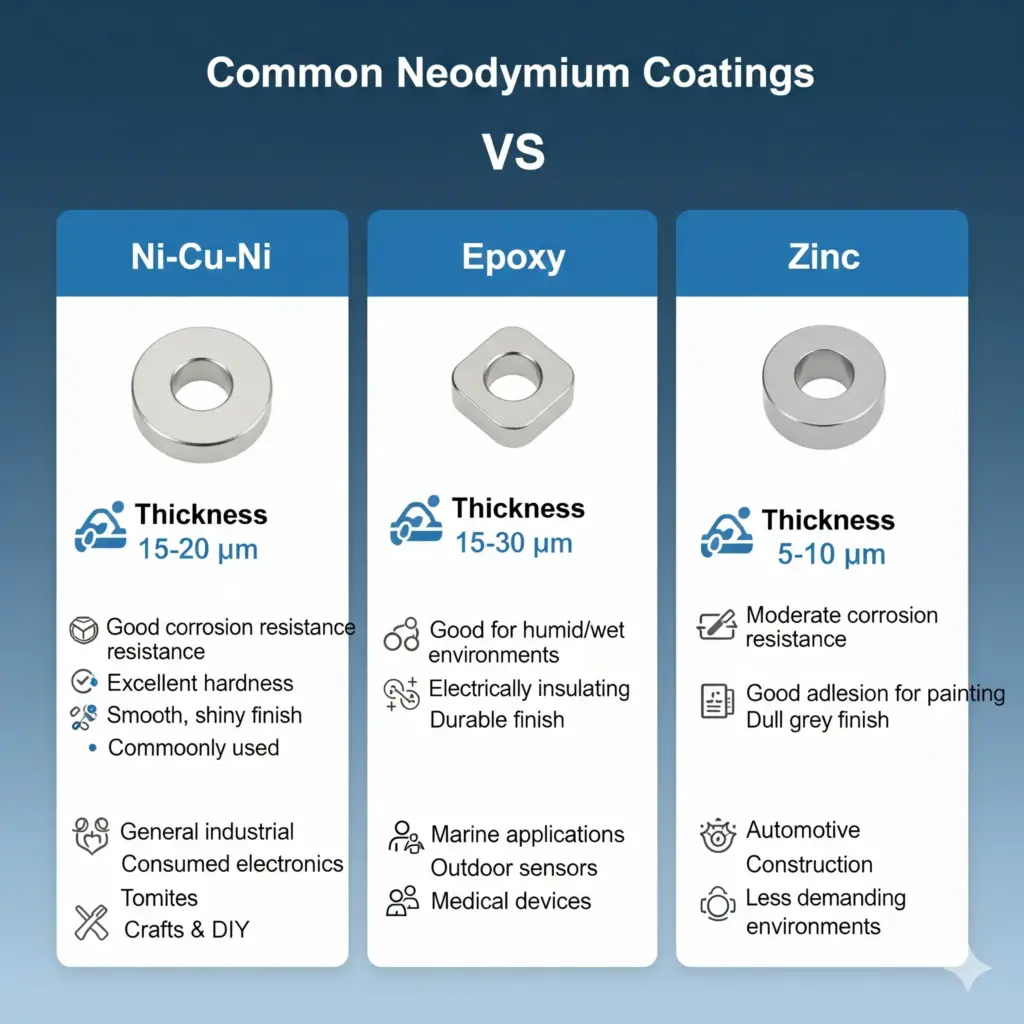
Several coatings are used to protect neodymium magnets, each offering unique advantages depending on the application. Below, we break down the most popular options: Nickel-Copper-Nickel (Ni-Cu-Ni), epoxy, and zinc.
1. Nickel-Copper-Nickel (Ni-Cu-Ni) Coating
The Ni-Cu-Ni coating is the most widely used for neodymium magnets due to its balance of protection and aesthetics.
Corrosion Resistance: Offers excellent protection against rust and oxidation, ideal for indoor and mild outdoor use.
Aesthetic Appeal: Provides a shiny, silver finish, making it visually appealing for consumer products.
Thin Profile: Maintains strong magnetic performance due to its thin yet effective layers.
Applications: Commonly used in electronics, jewelry, and magnetic assemblies.
2. Epoxy Coating
Epoxy coatings are thicker and more robust, making them suitable for demanding environments.
Durability: Provides a strong barrier against physical wear and tear.
Chemical Resistance: Protects against exposure to chemicals, perfect for industrial settings.
Custom Colors: Available in various colors for aesthetic customization or branding.
Applications: Ideal for marine environments, medical devices, and heavy-duty industrial uses.
3. Zinc Coating
Zinc is a cost-effective option for neodymium magnet coating, though it may not offer the same longevity as Ni-Cu-Ni or epoxy.
Cost-Effective: A budget-friendly choice for less demanding applications.
Basic Corrosion Resistance: Provides decent protection but may wear faster in humid conditions.
Applications: Suitable for short-term projects or cost-sensitive applications.
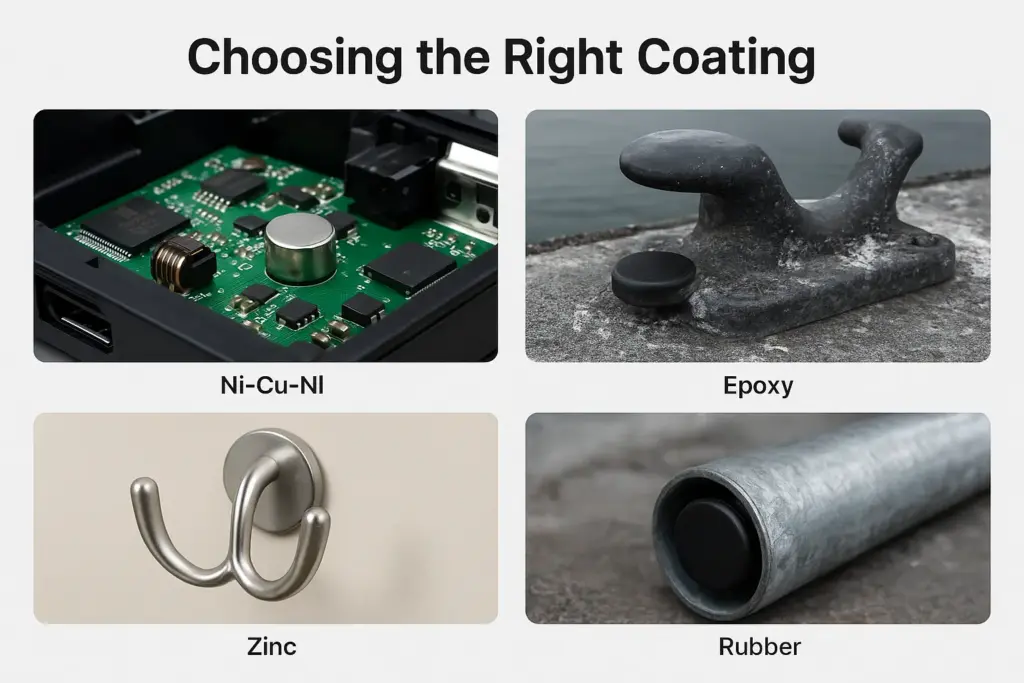
Choosing the Right Coating for Your Neodymium Magnet
Selecting the appropriate coating depends on your specific needs:
Environment: Harsh or humid conditions may require epoxy for superior protection.
Budget: Zinc is ideal for cost-conscious projects, while Ni-Cu-Ni offers a balance of cost and performance.
Aesthetics: Ni-Cu-Ni or colored epoxy coatings enhance visual appeal for consumer-facing products.
Application: Industrial or chemical-heavy settings benefit from epoxy, while electronics often use Ni-Cu-Ni.
Conclusion
Coating neodymium magnets is critical to protect them from corrosion, enhance durability, and maintain their magnetic strength. Whether you choose the versatile Ni-Cu-Ni, robust epoxy, or cost-effective zinc, the right coating ensures your magnets perform optimally in their intended environment. By understanding the benefits of each coating type, you can make an informed decision for your project or application.
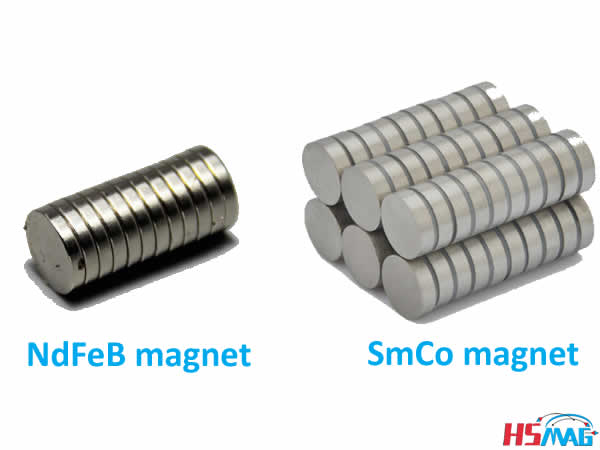
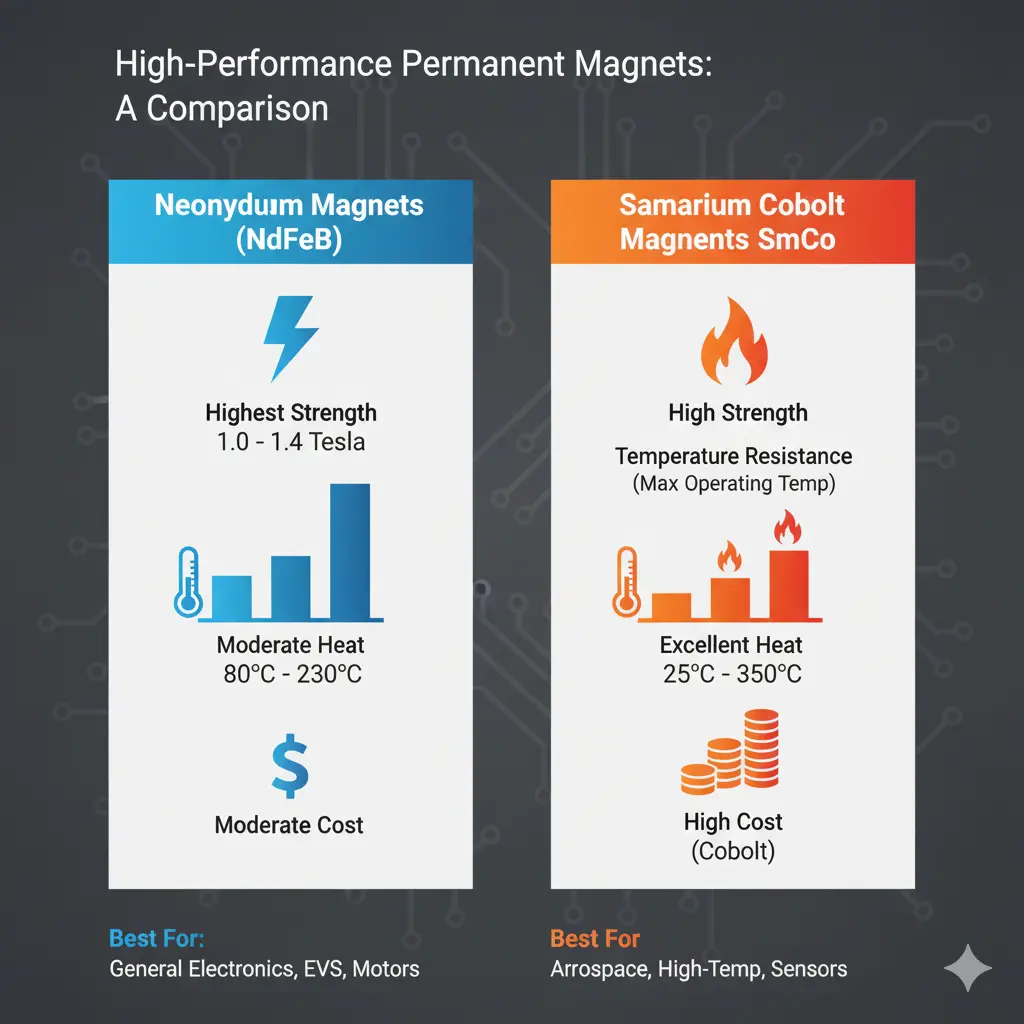
Permanent magnets are the backbone of modern technology, powering everything from small electronic devices to high-performance motors. Among the strongest and most widely used are Samarium Cobalt (SmCo) magnets and Neodymium Iron Boron (NdFeB) magnets. While both belong to the rare earth magnet family, they differ significantly in their manufacturing processes, features, advantages, limitations, and applications.
In this article, we’ll compare Samarium Cobalt vs. Neodymium magnets to help engineers, designers, and buyers choose the right material for their specific needs.
Composed mainly of samarium (Sm) and cobalt (Co), with small additions of iron, copper, or zirconium.
Manufactured through powder metallurgy (sintering), which involves pressing powdered alloy into shapes and then sintering at high temperatures.
The process is complex and more expensive due to the high cost of raw materials (especially cobalt).
SmCo magnets are relatively brittle and require careful machining, usually with diamond grinding tools.
Neodymium Magnets (NdFeB)
Made from neodymium (Nd), iron (Fe), and boron (B), plus additives like dysprosium for higher temperature grades.
Produced by powder metallurgy or hot pressing techniques.
Easier to process into different shapes compared to SmCo.
To protect against corrosion, they often require surface coatings (nickel, epoxy, or zinc).
2. Magnetic Properties
Property
Samarium Cobalt (SmCo)
Neodymium (NdFeB)
Maximum Energy Product (BHmax)
20–32 MGOe
35–52 MGOe
Curie Temperature
~700–800°C
~310–400°C
Operating Temperature
Up to 350°C
Standard: up to 80–150°C (special grades up to 200–220°C)
Corrosion Resistance
Excellent (no coating needed)
Poor (requires coating)
Mechanical Strength
Brittle, hard to machine
Stronger, but can chip or crack
Cost
High (due to cobalt)
More affordable (widely available)
3. Key Features
Advantages of Samarium Cobalt Magnets
Superior thermal stability – can operate in very high temperatures without losing magnetism.
Excellent corrosion resistance – naturally resistant to oxidation and rust.
High coercivity – resists demagnetization even in strong magnetic fields.
Advantages of Neodymium Magnets
Highest magnetic strength among commercially available magnets.
Compact size & lightweight design due to strong magnetic field.
Cost-effective – more affordable than SmCo for most applications.
Versatile – available in many shapes, coatings, and grades.
4. Limitations
Samarium Cobalt: Brittle, more expensive, limited availability compared to NdFeB.
Neodymium: Poor corrosion resistance, lower temperature tolerance, prone to oxidation if coating is damaged.
5. Applications
Samarium Cobalt Magnet Applications
Aerospace and defense systems (missiles, satellites).
High-temperature motors and sensors.
Medical devices (implants, MRI-compatible applications).
Oil and gas exploration equipment.
Neodymium Magnet Applications
Consumer electronics (headphones, smartphones, hard drives).
Electric motors for EVs, drones, and robotics.
Wind turbine generators.
Magnetic separators and industrial lifting.
6. Which One Should You Choose?
Choose Samarium Cobalt magnets if:
Your application requires high temperature resistance (>200°C).
You need excellent corrosion resistance without coatings.
Long-term stability and reliability are critical.
Choose Neodymium magnets if:
You need the strongest magnetic power in a compact size.
Your application runs in moderate temperatures (below 150–200°C).
Cost-effectiveness and wide availability matter.
Conclusion
Both Samarium Cobalt (SmCo) magnets and Neodymium (NdFeB) magnets have unique advantages that make them essential in modern industries. Neodymium offers unmatched strength and affordability, while Samarium Cobalt provides superior stability in extreme environments.
When selecting between SmCo and NdFeB magnets, consider the operating temperature, corrosion conditions, cost, and performance requirements of your application.
Whether you are designing aerospace equipment, renewable energy solutions, or consumer electronics, understanding the differences between Samarium Cobalt vs. Neodymium magnets will ensure you choose the right material for long-lasting performance.
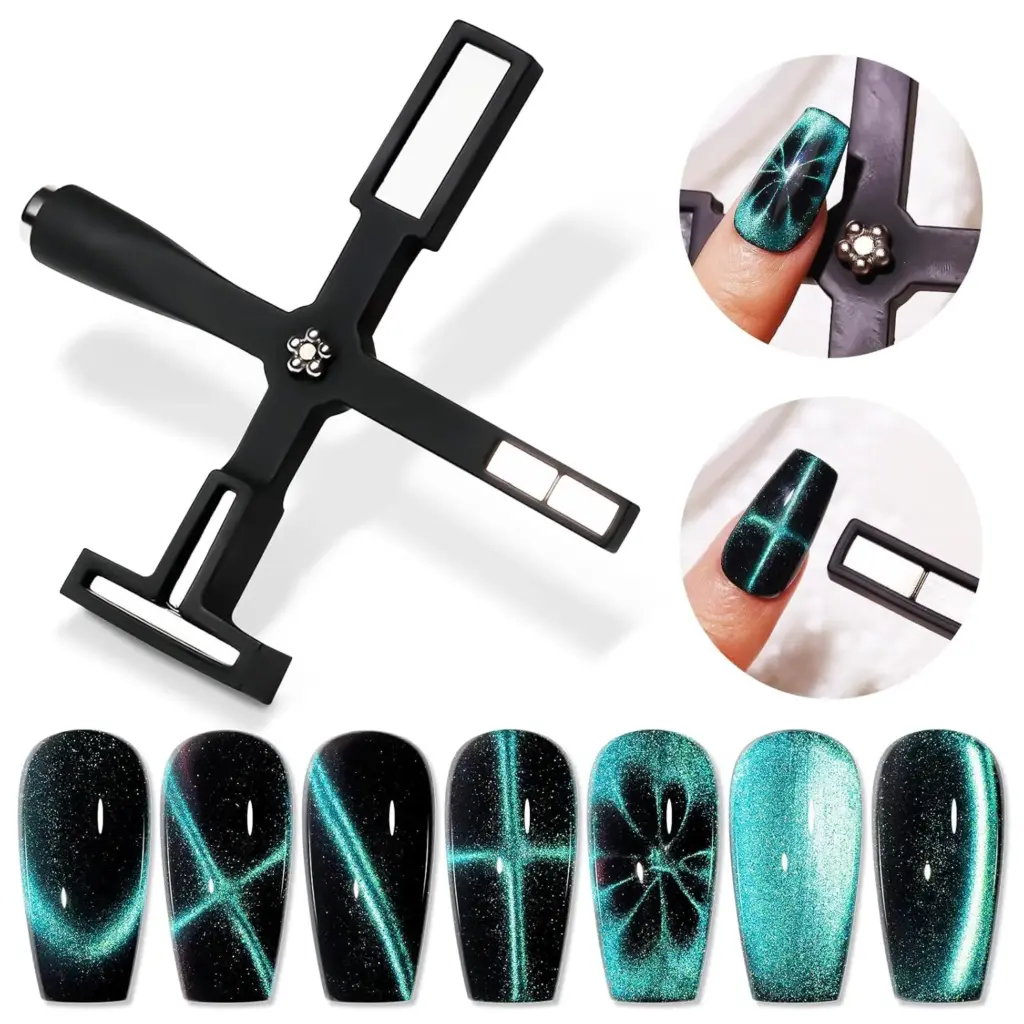
Discover how NdFeB magnets are revolutionizing nail art with stunning cat eye effects. These powerful nail art magnets let you create mesmerizing designs that shift with light and angle. Whether you’re a professional nail artist or a DIY enthusiast, learn how to use magnetic nail polish tools to elevate your manicures with ease.
Cat eye nail magnets, typically made from NdFeB (Neodymium Iron Boron) magnets, are innovative tools that create dynamic patterns in magnetic nail polish. The strong magnetic field of NdFeB magnets interacts with metallic particles in cat eye gel polish, aligning them to form a striking, reflective “cat eye” effect. This unique nail art technique adds depth and movement to your designs, making them stand out.
How to Use NdFeB Magnets for Stunning Nail Art
Creating cat eye nail art with NdFeB magnets is simple and fun. Follow these steps for professional-looking results:
Prepare Your Nails: Start with clean, dry nails. Apply a base coat and let it cure completely.
Apply Magnetic Gel Polish: Brush on a thin layer of cat eye magnetic gel polish. Keep it wet for the next step.
Use the NdFeB Magnet: Hold the NdFeB magnet close to the nail (without touching) for 10-15 seconds. Position it at different angles to create unique patterns.
Cure and Finish: Cure the polish under a UV/LED lamp, then seal with a top coat to lock in the vibrant cat eye effect.
Pro tip: Experiment with magnet placement—try diagonals, curves, or multiple angles for one-of-a-kind designs!
Why Choose NdFeB Magnets for Nail Art?
NdFeB magnets are the perfect choice for cat eye nail art due to their unmatched benefits:
Versatility: Achieve a range of effects, from subtle shimmers to bold, multidimensional patterns.
Quick and Easy: Transform your nails in minutes with minimal effort.
Long-Lasting Results: Pair with quality gel polish for durable, chip-resistant designs.
Powerful Performance: The strong magnetic field of NdFeB magnets ensures precise particle alignment for a flawless finish.
Creative Nail Art Ideas with Magnetic Nail Polish
With NdFeB magnets, the possibilities for nail art designs are endless. Try these ideas to spark your creativity:
Classic Cat Eye: Use a single-color magnetic gel polish for a sleek, elegant look.
Galaxy Vibes: Combine multiple gel colors and magnet angles for a cosmic, swirling effect.
Ombre Magic: Blend two shades of magnetic nail polish and use the magnet to create a gradient cat eye design.
Experiment with bold colors like deep blues, vibrant purples, or metallic silvers to make your nail art pop!
Why NdFeB Magnets Are a Must-Have for Nail Artists
NdFeB magnets are small but mighty tools that bring nail art to the next level. Their affordability, ease of use, and ability to create professional-grade cat eye effects make them a favorite among beauty enthusiasts. Whether you’re upgrading your salon services or trying DIY nail art at home, these magnetic nail tools deliver stunning results every time.
Get Started with NdFeB Magnets Today
Ready to create breathtaking cat eye nail designs? Shop our high-quality NdFeB magnets and start experimenting with magnetic nail polish today. Visit our store to find the perfect nail art magnets for your next manicure masterpiece!
Manage Consent
To provide the best experiences, we use technologies like cookies to store and/or access device information. Consenting to these technologies will allow us to process data such as browsing behavior or unique IDs on this site. Not consenting or withdrawing consent, may adversely affect certain features and functions.
Functional
Always active
The technical storage or access is strictly necessary for the legitimate purpose of enabling the use of a specific service explicitly requested by the subscriber or user, or for the sole purpose of carrying out the transmission of a communication over an electronic communications network.
Preferences
The technical storage or access is necessary for the legitimate purpose of storing preferences that are not requested by the subscriber or user.
Statistics
The technical storage or access that is used exclusively for statistical purposes.The technical storage or access that is used exclusively for anonymous statistical purposes. Without a subpoena, voluntary compliance on the part of your Internet Service Provider, or additional records from a third party, information stored or retrieved for this purpose alone cannot usually be used to identify you.
Marketing
The technical storage or access is required to create user profiles to send advertising, or to track the user on a website or across several websites for similar marketing purposes.