
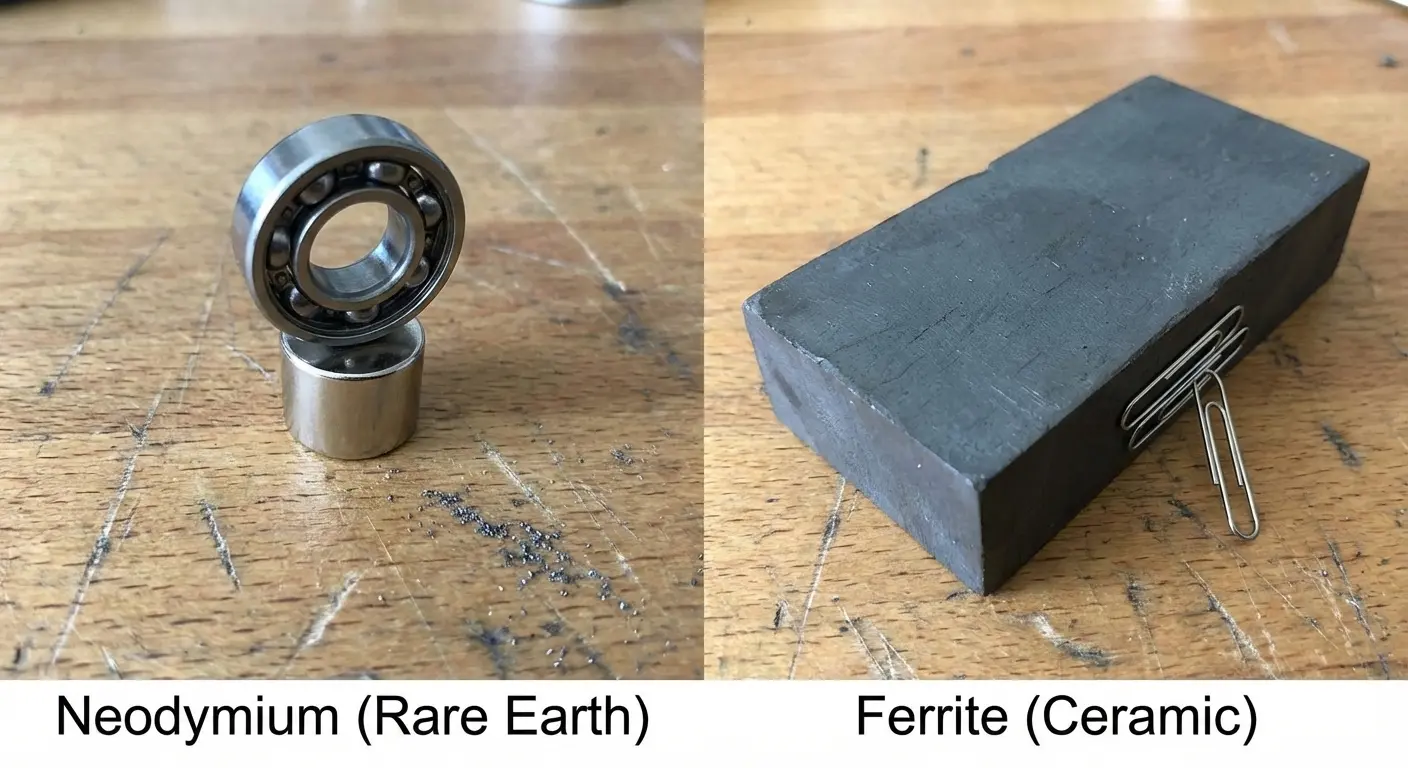
Selecting the right magnet is a strategic engineering and procurement decision. Magnet choice directly affects product performance, cost structure, reliability, and long-term supply risk. Among all options, rare earth magnets and ferrite magnets represent two fundamentally different value propositions.
Understanding their strengths, limitations, and ideal use cases enables manufacturers and OEMs to make informed, application-driven decisions rather than defaulting to material familiarity or unit price alone.
Overview of Rare Earth Magnets
Rare earth magnets are high-performance permanent magnets primarily made from:
They deliver exceptionally high magnetic strength relative to size, making them indispensable in compact, high-efficiency designs.
Key Advantages
- Extremely high magnetic energy density
- Enables miniaturization and lightweight designs
- Strong holding force even in small geometries
Key Limitations
- Higher material and processing costs
- Sensitivity to corrosion without proper coating
- NdFeB magnets have temperature limits depending on grade
Rare earth magnets are typically selected when performance, space efficiency, and energy optimization outweigh cost considerations.
Overview of Ferrite Magnets
Ferrite magnets, also known as ceramic magnets, are made from iron oxide combined with strontium or barium.
They are among the most widely used magnets globally due to their stability and cost efficiency.
Key Advantages
- Low raw material cost
- Excellent corrosion resistance
- Stable performance in a wide range of environments
Key Limitations
- Much lower magnetic strength compared to rare earth magnets
- Larger size required to achieve similar holding force
- Limited suitability for compact or high-performance applications
Ferrite magnets are ideal for cost-sensitive, high-volume products where space and weight are less critical.
Performance Comparison: Strength and Efficiency
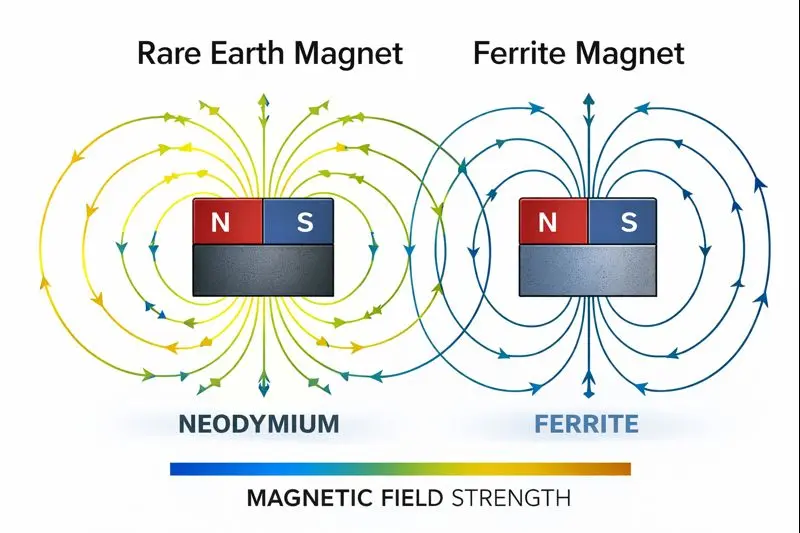
From a performance standpoint, rare earth magnets significantly outperform ferrite magnets.
- Rare earth magnets can be 5–10 times stronger than ferrite magnets of the same size
- Ferrite magnets require larger volume to deliver comparable force
- Rare earth magnets improve motor efficiency and power density
For applications where efficiency, torque, or miniaturization is critical, rare earth magnets offer a clear advantage.
Cost and Supply Chain Considerations
Rare Earth Magnets
- Higher upfront cost
- Pricing influenced by rare earth material markets
- Potential exposure to geopolitical and regulatory risk
Ferrite Magnets
- Lower and more stable pricing
- Broad global availability
- Lower supply chain risk
From a procurement perspective, ferrite magnets provide predictability, while rare earth magnets require more active supply chain management.
Environmental and Sustainability Factors
Ferrite magnets generally have a lower environmental footprint due to simpler production processes and abundant raw materials.
Rare earth magnets face:
- More complex mining and refining processes
- Increasing ESG and regulatory scrutiny
- Growing focus on recycling and material reduction
However, the higher efficiency enabled by rare earth magnets can offset some sustainability concerns at the system level, particularly in energy-saving applications.
Typical Applications by Magnet Type
Common Uses of Rare Earth Magnets
- Electric vehicle motors
- Wind turbine generators
- Robotics and automation systems
- Medical and aerospace equipment
- Compact consumer electronics
Common Uses of Ferrite Magnets
- Loudspeakers and audio equipment
- Household appliances
- Magnetic separators
- Educational and promotional products
- Automotive sensors and accessories
Application requirements, not material trends, should drive magnet selection.
How to Choose the Right Magnet
When deciding between rare earth magnets and ferrite magnets, decision-makers should evaluate:
- Required magnetic strength and efficiency
- Available space and weight constraints
- Operating temperature and environment
- Cost targets and production volumes
- Long-term supply chain and regulatory exposure
In many cases, a hybrid strategy—using rare earth magnets only where performance is critical and ferrite magnets elsewhere—delivers the best overall value.
Conclusion
Rare earth magnets and ferrite magnets each serve distinct roles in modern manufacturing. Rare earth magnets enable high-performance, compact, and energy-efficient designs, while ferrite magnets offer cost-effective, stable solutions for less demanding applications.
The optimal choice is not about which magnet is “better,” but which magnet best aligns with your technical requirements, cost structure, and long-term business strategy.
Leave a Reply