

Magnets are integral to many modern technologies, yet uncontrolled exposure to magnetic fields can pose serious risks to electronic goods. From consumer devices to industrial control systems, electronic components rely on precise electrical signals and data storage mechanisms. Strong magnetic fields can disrupt these systems, leading to data loss, malfunction, or permanent damage. Understanding these risks is essential for manufacturers, engineers, and end users operating in technology-driven environments.
Table of Contents
- How Magnets Interact with Electronic Components
- Risk to Data Storage Devices
- Impact on Electronic Sensors and Circuits
- Effects on Consumer Electronics
- Industrial and Medical Equipment Considerations
- Safety and Reliability Implications
- Best Practices for Magnet Handling Near Electronics
- Strategic Perspective on Magnet Use
- HSMAGNET Commitment to Responsible Magnet Solutions
How Magnets Interact with Electronic Components
Electronic devices function through controlled electrical currents and electromagnetic signals. When an external magnetic field is introduced, it can interfere with these signals by inducing unwanted currents or altering magnetic states within components. This interference can compromise accuracy, stability, and performance, particularly in sensitive electronics.
In high-field scenarios, magnets may also physically affect components such as relays, sensors, and miniature motors, altering their intended behavior.

Risk to Data Storage Devices
One of the most well-known risks of magnetic exposure involves data storage. Traditional hard disk drives, magnetic tapes, and some legacy storage systems store information using magnetic domains. A strong external magnet can reorient these domains, resulting in partial or complete data loss.
Although modern solid-state drives are less vulnerable, supporting systems and peripheral equipment may still contain magnetically sensitive elements, making risk mitigation necessary.
Impact on Electronic Sensors and Circuits
Many electronic goods rely on sensors such as Hall effect sensors, compasses, gyroscopes, and magnetometers. External magnetic fields can distort sensor readings, leading to inaccurate outputs and system errors.
Additionally, magnets can induce voltages in conductive paths, potentially causing signal noise, overheating, or unexpected system behavior. In precision electronics, even minor magnetic interference can undermine performance standards.
Effects on Consumer Electronics
Everyday devices including smartphones, laptops, speakers, and televisions may contain components sensitive to magnetic fields. Strong magnets can affect:
- Speaker performance and sound distortion
- Display accuracy in CRT and legacy monitors
- Internal sensors used for navigation and orientation
- Charging and power management systems
In extreme cases, magnets can cause irreversible hardware damage.
Industrial and Medical Equipment Considerations
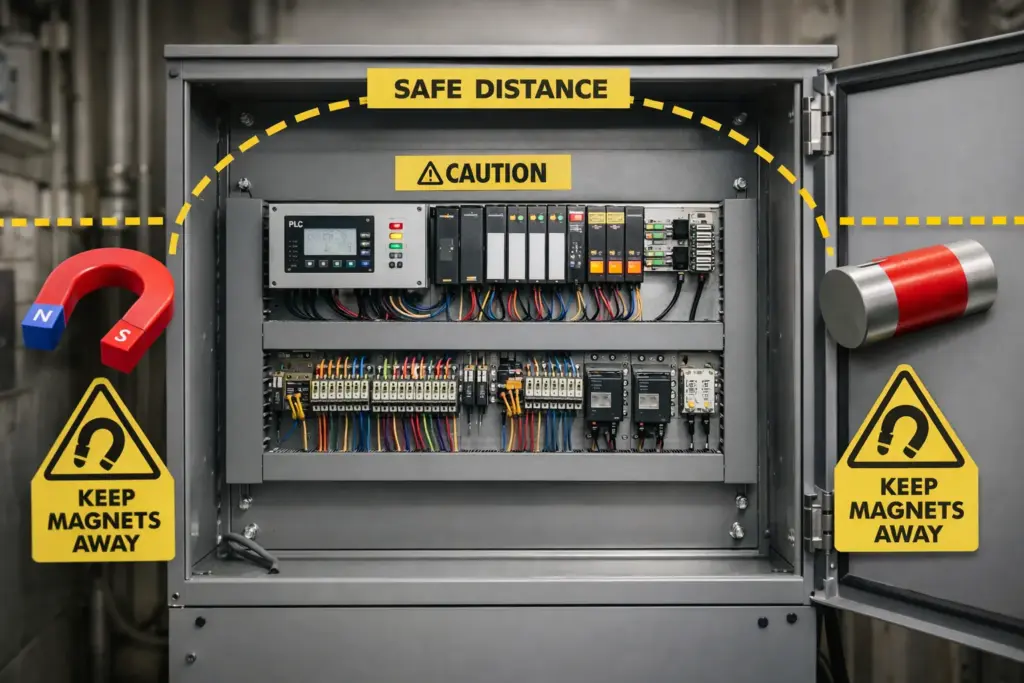
In industrial automation, magnets near electronic control units, PLCs, and measurement instruments can disrupt signal integrity and lead to operational downtime. In medical environments, the risks are even higher. Equipment such as monitors, imaging systems, and implantable devices must operate in strictly controlled electromagnetic conditions to ensure patient safety and regulatory compliance.
Safety and Reliability Implications
From a risk management perspective, unintended magnetic exposure introduces avoidable failure points. Equipment downtime, data corruption, and warranty claims can all result from improper magnet handling. For manufacturers and system integrators, maintaining adequate separation between magnets and electronic goods is a key part of quality assurance and operational safety protocols.
Best Practices for Magnet Handling Near Electronics
To minimize risk, organizations should adopt the following practices:
- Maintain safe distance between magnets and electronic devices
- Use magnetic shielding where close proximity is unavoidable
- Follow manufacturer guidelines for magnetic field exposure limits
- Store and transport strong magnets in protective packaging
- Educate personnel on magnetic safety procedures
These measures support both product integrity and workplace safety.
Strategic Perspective on Magnet Use
As magnets become stronger and more widely used in advanced applications, awareness of electromagnetic compatibility is increasingly important. Effective system design balances magnetic performance with electronic protection, ensuring reliable operation across integrated technologies.
HSMAGNET Commitment to Responsible Magnet Solutions
HSMAGNET manufactures high-performance permanent magnets designed to meet industrial and commercial requirements while supporting safe integration into electronic systems. By providing clear technical guidance and application-specific solutions, HSMAGNET helps customers mitigate magnetic interference risks and maintain system reliability across diverse use cases.
Leave a Reply