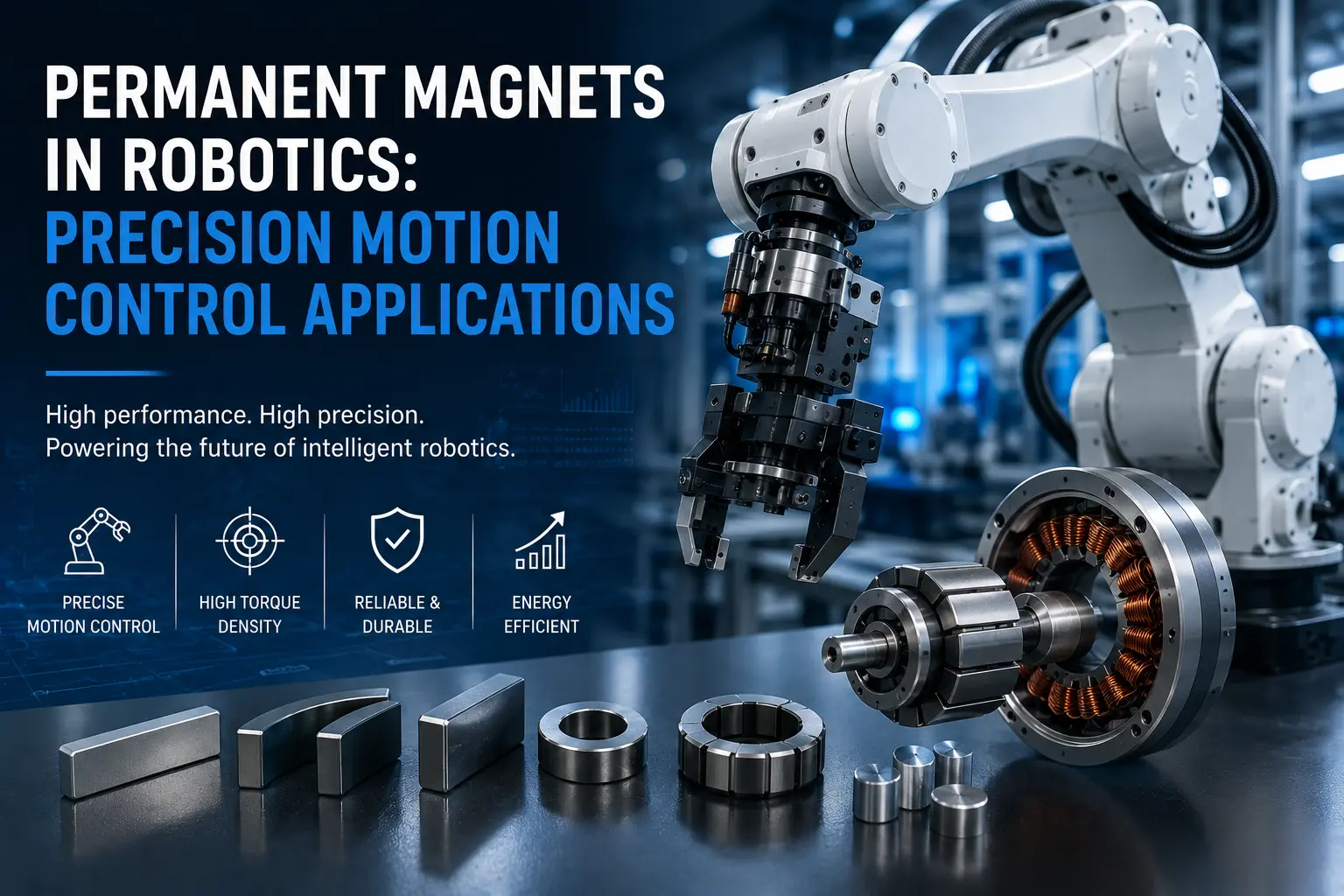
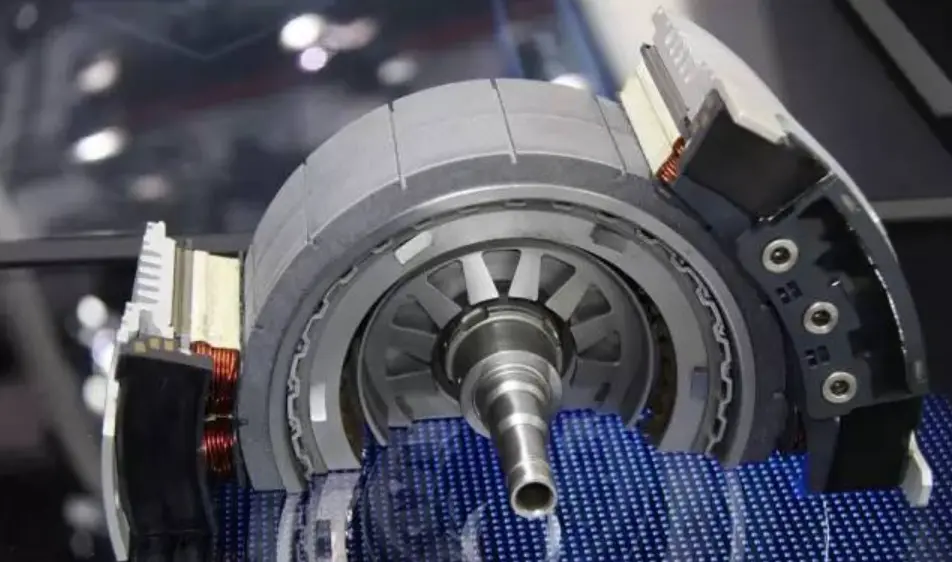
Permanent magnets play an important role in modern robotics, enabling compact motors, precise positioning systems, magnetic sensors, and efficient actuators. As industrial robots become faster, lighter, and more accurate, the performance of their magnetic components directly affects motion control, energy efficiency, and system reliability.
From robotic arms and collaborative robots to automated guided vehicles (AGVs), permanent magnets provide the magnetic force and torque required for precise and repeatable movement.
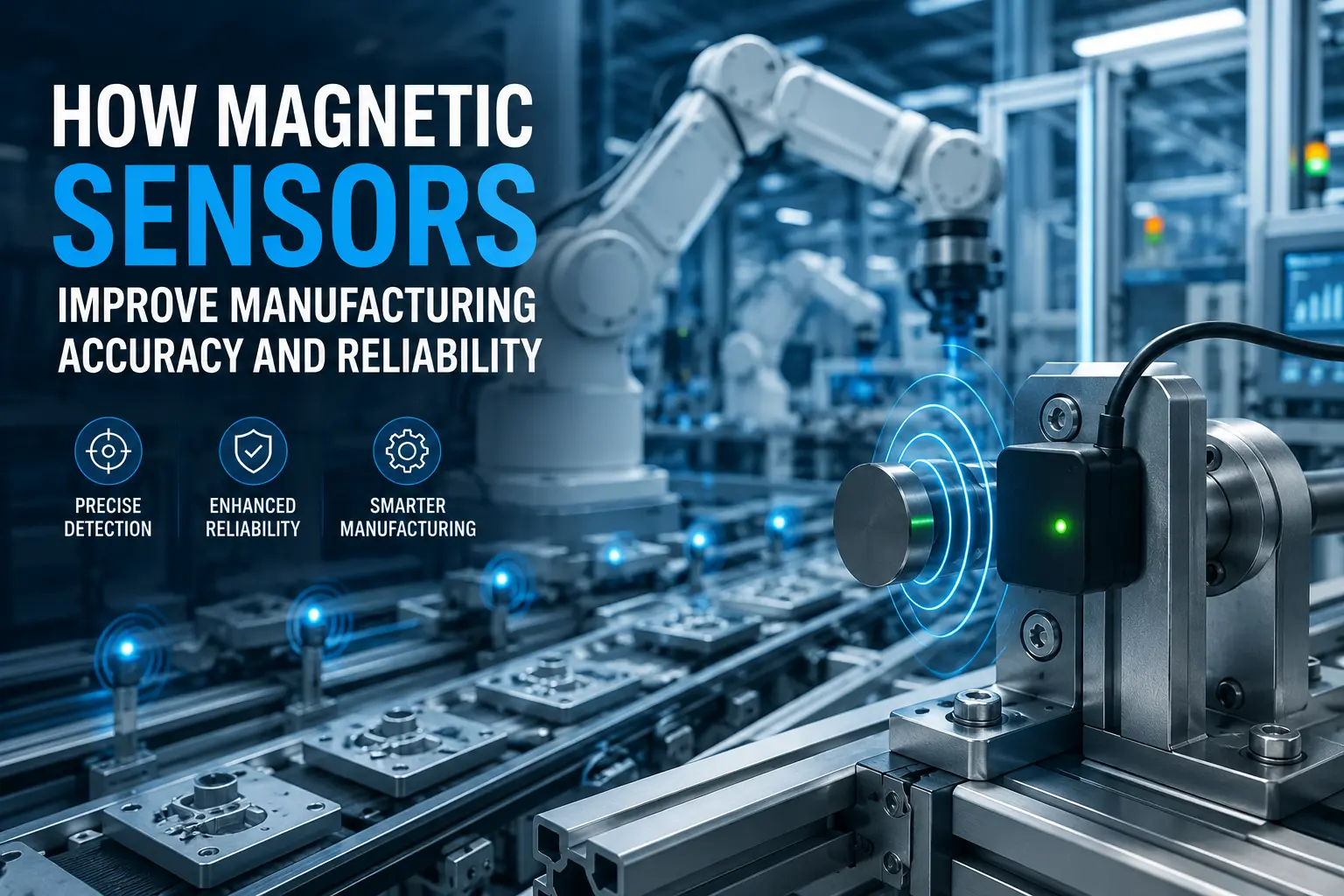
As manufacturing becomes increasingly automated, accurate position detection and reliable motion control are essential for maintaining product quality and production efficiency. Magnetic sensors have become a preferred solution because they provide precise, non-contact detection in environments where dust, vibration, moisture, and temperature fluctuations can reduce the performance of conventional sensing technologies.
Unlike mechanical switches, magnetic sensors experience virtually no physical wear, resulting in longer service life and lower maintenance costs. Their durability makes them ideal for continuous industrial operation.
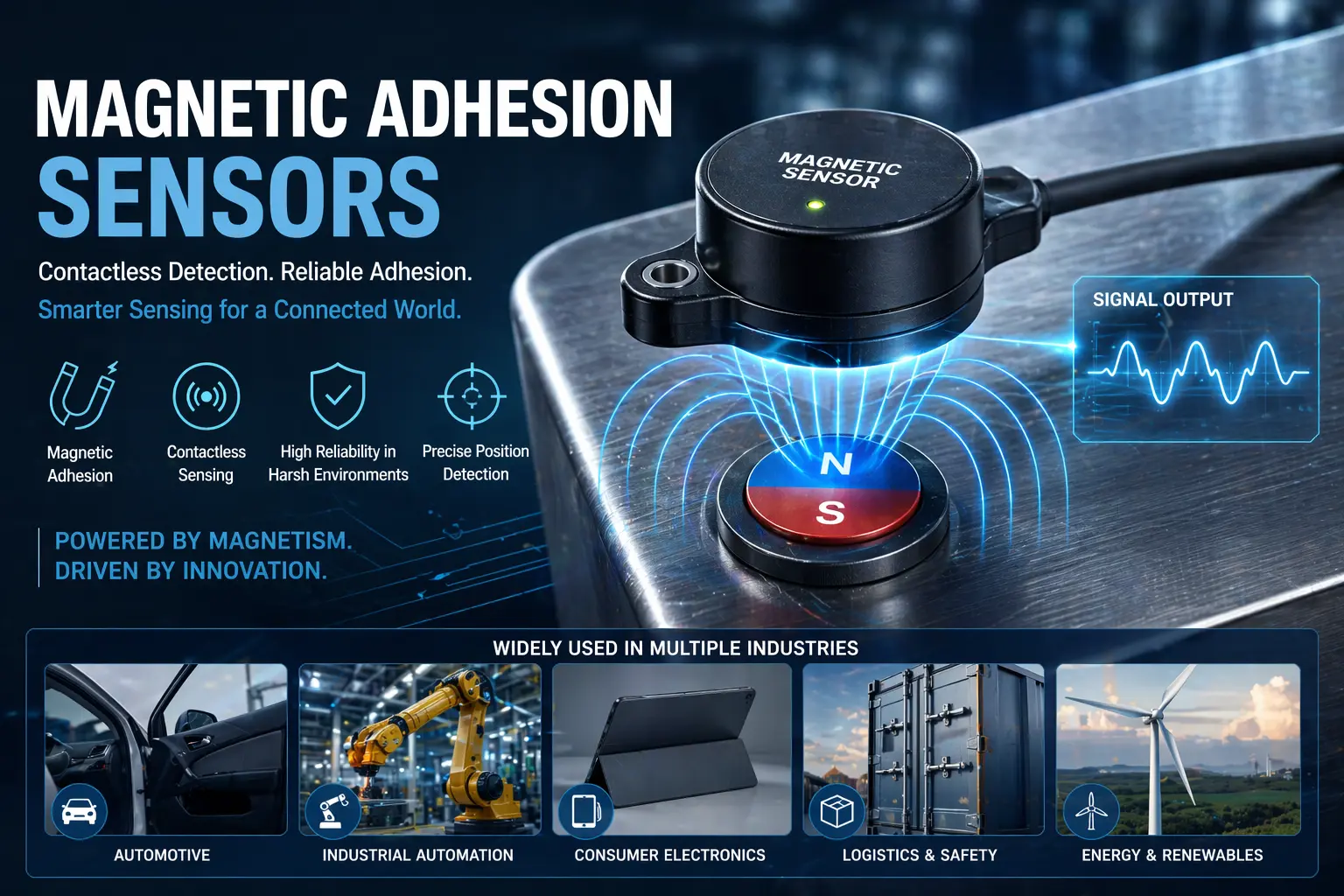
Magnetic adhesion sensors are emerging as a high-reliability solution for contactless detection, attachment verification, and position monitoring across multiple industries. By leveraging controlled magnetic fields and sensing elements such as Hall-effect or magnetoresistive chips, these sensors deliver stable performance in environments where traditional mechanical or optical sensing fails.
This article outlines the working principles, system architecture, and real-world deployment scenarios of magnetic adhesion sensors, with a focus on scalability and industrial applicability.
High-temperature operating conditions represent one of the most critical challenges in modern magnet engineering. From electric vehicles and wind turbines to aerospace systems and industrial automation, magnetic components are increasingly required to maintain performance under thermal stress.
In this context, stability and coercivity become decisive factors in determining whether a magnetic material can deliver long-term reliability and predictable performance in demanding environments.
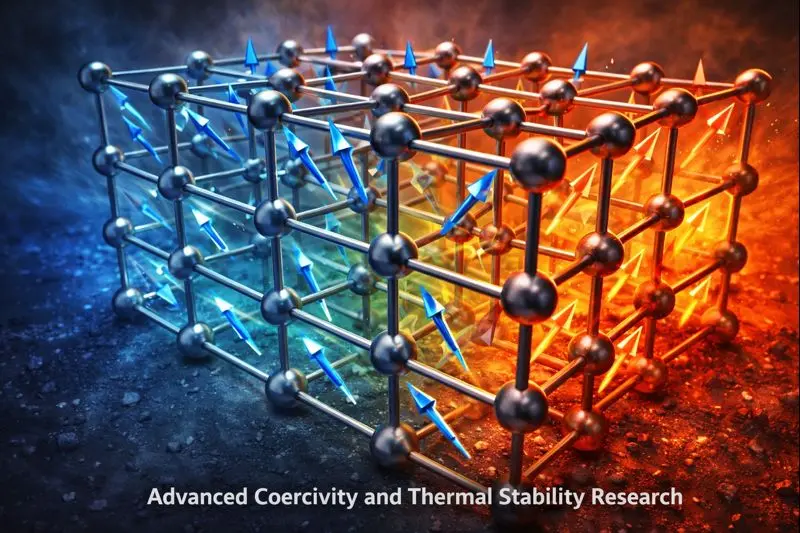
Magnetic materials are highly sensitive to temperature. As thermal energy increases, magnetic domains become more active, and the alignment responsible for magnetization can weaken.
In high-value industrial applications, temperature-induced degradation can lead to:
Reduced magnetic flux output
Loss of torque or efficiency in motors
Increased demagnetization risk
Shortened service life of permanent magnet systems
Therefore, thermal stability is not just a material property—it is a strategic design requirement.
Understanding Coercivity in Magnetic Materials
Coercivity refers to a magnet’s resistance to demagnetization. It defines how much reverse magnetic field is required to reduce magnetization to zero.
In high-temperature environments, coercivity is particularly important because elevated temperatures lower the energy barrier that keeps magnetic domains aligned.
A magnet with insufficient coercivity may experience irreversible demagnetization even if the temperature remains below its Curie point.
Temperature Effects on Magnetic Performance
Reduction in Remanence
As temperature rises, the remanent magnetization decreases. This results in a lower magnetic field strength and reduced functional output in devices.
Decline in Coercivity
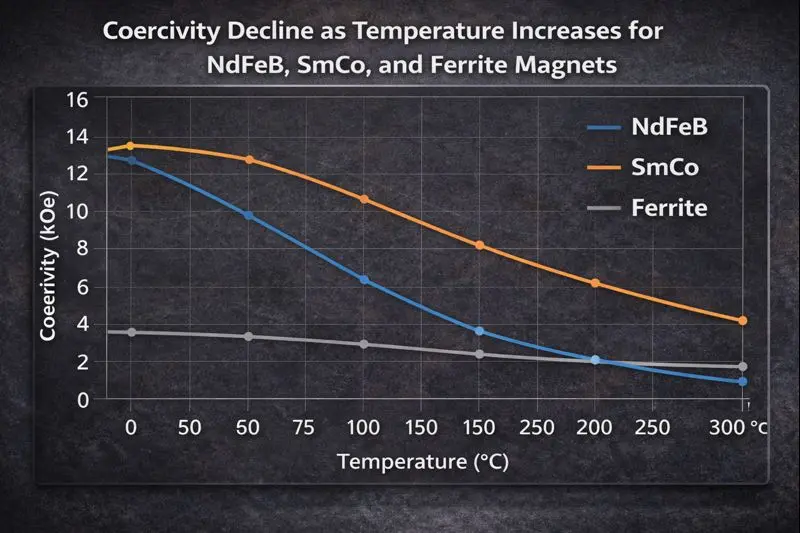
Coercivity typically drops significantly with temperature. This makes magnets more vulnerable to external demagnetizing fields, mechanical vibration, and thermal cycling.
Approaching the Curie Temperature
At the Curie temperature, the material loses ferromagnetism entirely and becomes paramagnetic. While most industrial systems operate well below this limit, partial losses occur long before reaching Curie temperature.
Key Magnetic Materials for High-Temperature Applications
NdFeB Magnets
Neodymium magnets provide the highest energy density but are highly temperature-sensitive. High-coercivity grades and heavy rare earth doping (Dy, Tb) are often required for stability above 150°C.
SmCo Magnets
Samarium cobalt magnets offer superior thermal stability and corrosion resistance, maintaining performance up to 250–350°C. They are widely used in aerospace and defense applications.
Ferrite Magnets
Ferrite Magnets have lower magnetic strength but excellent thermal stability and cost efficiency. They are suitable for applications where temperature resistance outweighs compact power density.
Strategies to Improve High-Temperature Stability
Material Engineering
Optimizing grain boundaries, alloy composition, and coercivity-enhancing additives improves resistance to thermal demagnetization.
Coatings and Protection
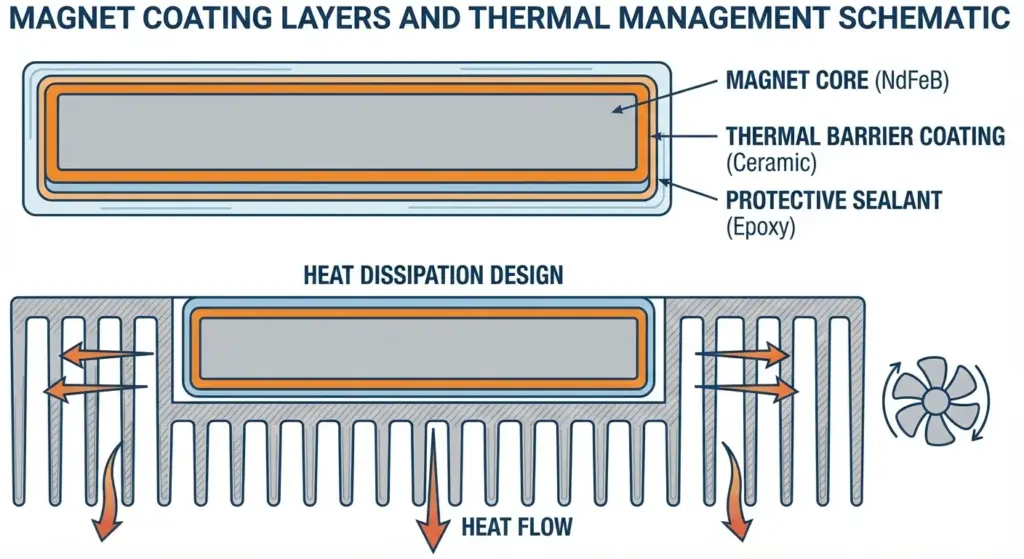
High temperatures accelerate oxidation and corrosion, especially in NdFeB magnets. Protective coatings such as epoxy, nickel, or specialized thermal layers extend service life.
Thermal Design Integration
Effective heat dissipation, insulation, and system-level thermal management reduce magnet exposure to peak temperatures.
Industrial Outlook and Future Trends
The demand for magnets capable of stable performance in extreme environments is accelerating. Key drivers include:
Electrification of transportation
High-efficiency industrial motors
Renewable energy generation
Miniaturized high-power electronics
Future innovation will focus on reducing dependence on heavy rare earth elements while maintaining high coercivity and thermal reliability.
Conclusion
Stability and coercivity are central to the successful deployment of magnetic materials in high-temperature environments. Understanding how temperature impacts remanence, coercivity, and long-term durability allows engineers and manufacturers to select the right magnet grade, improve system resilience, and ensure operational reliability.
As industries push toward higher efficiency and harsher operating conditions, high-temperature magnetic performance will remain a key competitive advantage in advanced manufacturing and energy technologies.
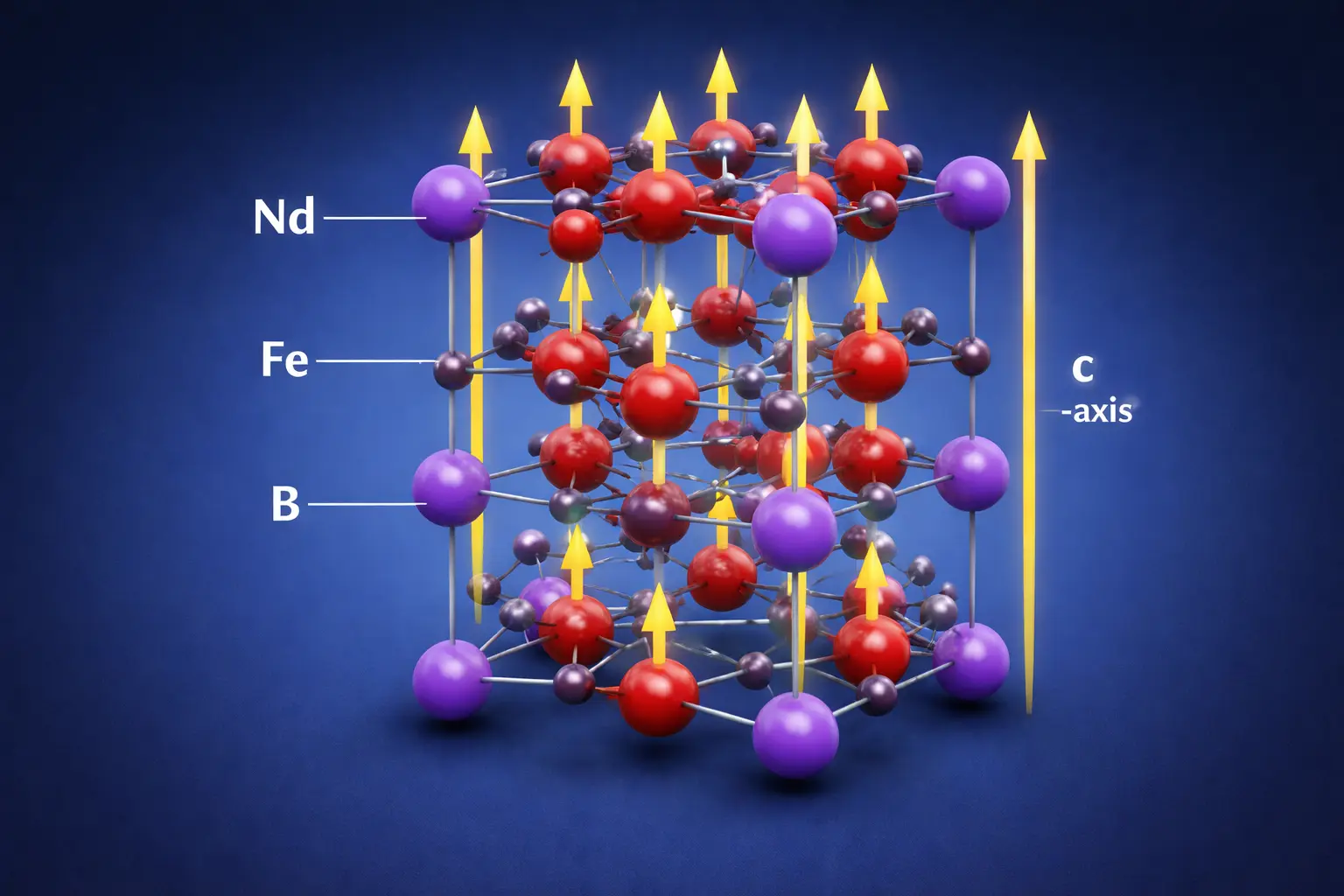
Magnetic materials play a crucial role in modern technology and industry. Their properties are largely determined by crystal structure and magnetic anisotropy. In applications such as high-performance motors, magnetic sensors, and data storage systems, understanding and controlling magnetic anisotropy is key to optimizing performance.
This article explores the relationship between crystal structure and magnetic anisotropy, explaining how they influence material properties and how these principles can be applied in magnetic engineering and manufacturing.
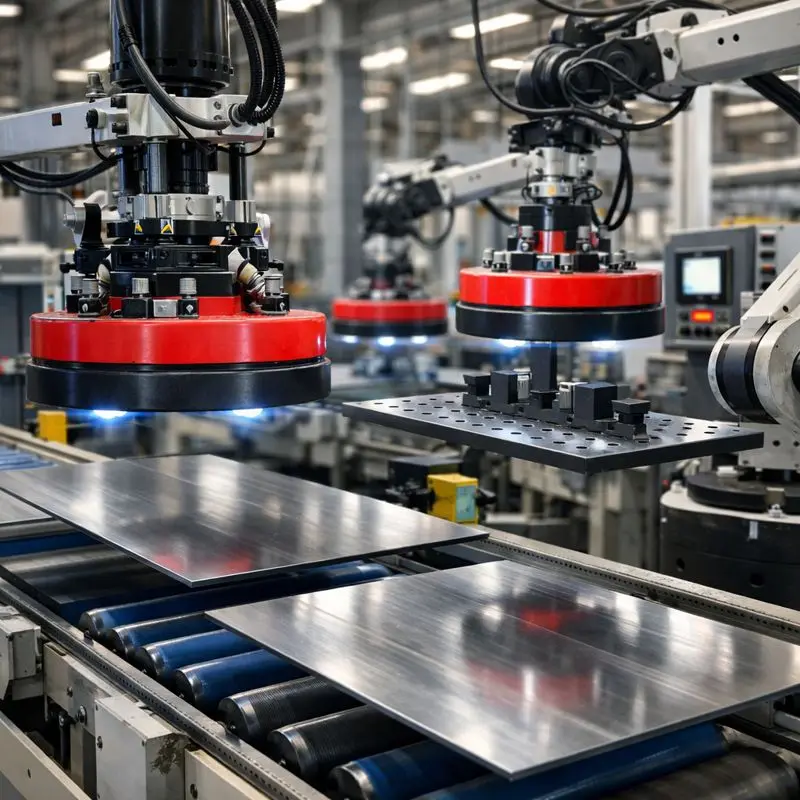
In modern manufacturing, efficiency is no longer a tactical advantage—it is a strategic requirement. Industrial magnets have evolved from simple holding tools into high-impact productivity enablers across automated, high-throughput, and precision-driven production environments. For manufacturers aiming to reduce waste, optimize workflows, and improve quality control, industrial magnets are a proven operational asset.
Magnets are integral to many modern technologies, yet uncontrolled exposure to magnetic fields can pose serious risks to electronic goods. From consumer devices to industrial control systems, electronic components rely on precise electrical signals and data storage mechanisms. Strong magnetic fields can disrupt these systems, leading to data loss, malfunction, or permanent damage. Understanding these risks is essential for manufacturers, engineers, and end users operating in technology-driven environments.
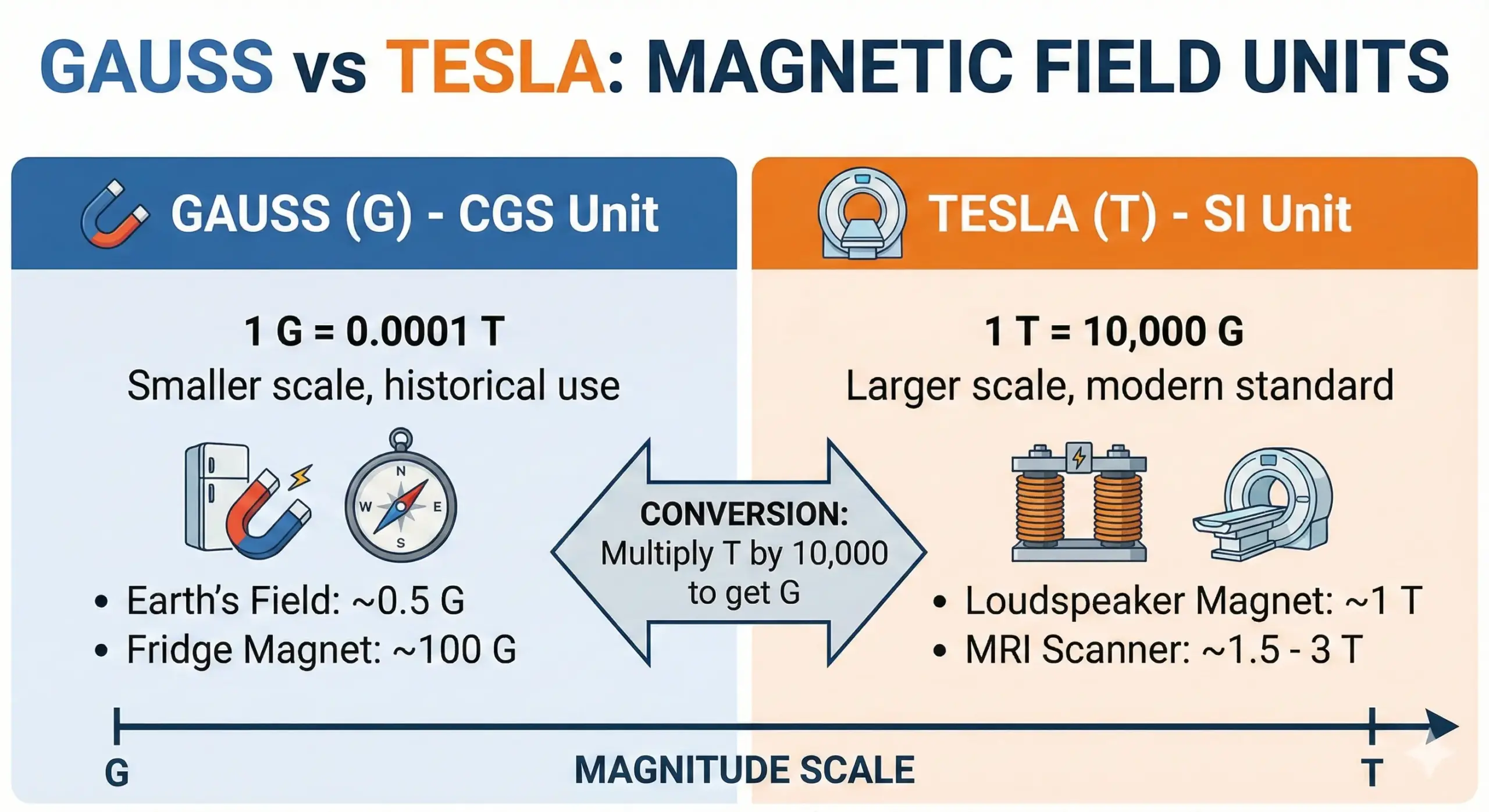
Global industries relying on permanent magnets — including EV motors, medical devices, renewable energy systems, and industrial automation — must quantify magnetic field strength accurately. Two primary units are used worldwide: Gauss (G) and Tesla (T). Both describe magnetic field intensity, but they originate from different measurement systems and align with different engineering standards.
For professionals specifying magnet performance, compliance, and safety, a clear understanding of these units is essential to making informed procurement and design decisions.
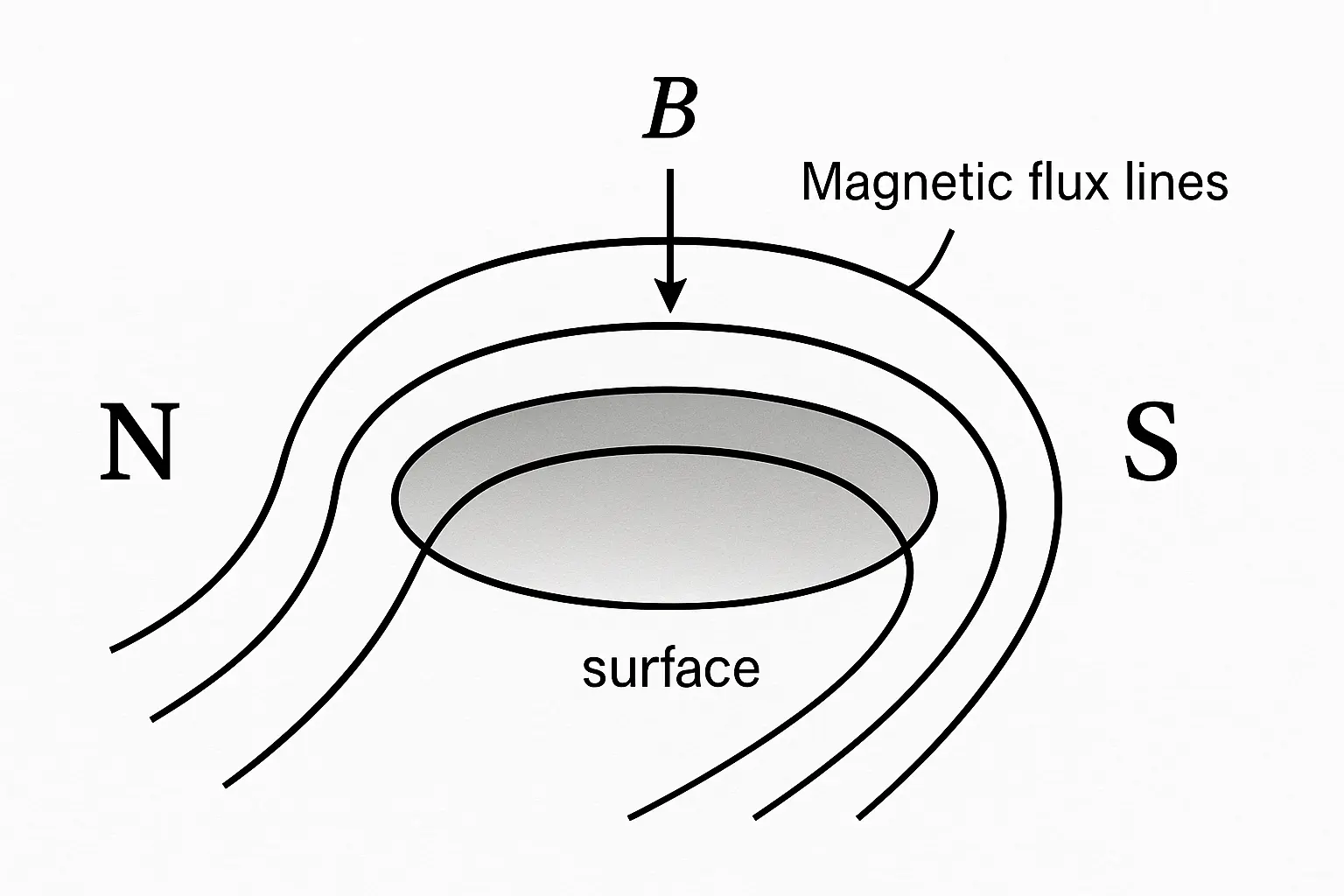
Magnetic flux is a fundamental concept in magnetics, electrical engineering, and industrial applications involving magnetic materials. It provides a measurable way to describe how much magnetic field passes through a given area. For companies working with permanent magnets, motors, transformers, and sensors, understanding magnetic flux is essential for efficient system design and performance optimization.
In simple terms, magnetic flux represents the total magnetic field flowing through a surface. The stronger the magnetic field or the larger the area that field covers, the greater the magnetic flux.
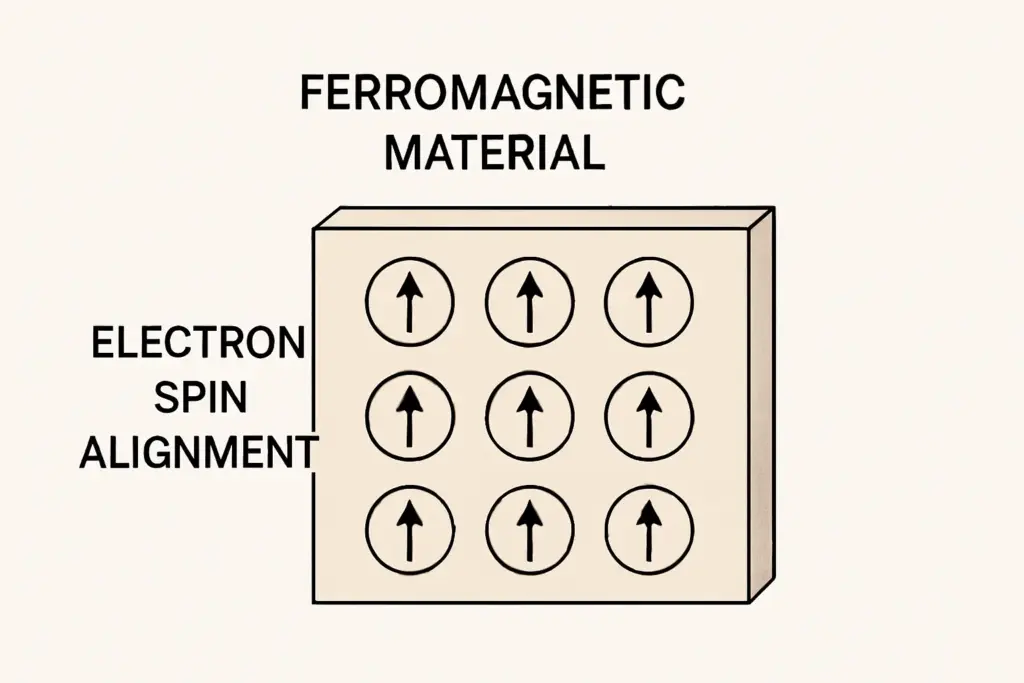
Permanent magnets often appear to “create” energy when they repel or attract other magnets. In reality, the repulsive force you feel is not produced by an ongoing energy output. Instead, magnetic behavior originates from the alignment of electrons inside the material. When a ferromagnetic material—such as neodymium, samarium–cobalt, or ferrite—is magnetized, its atomic magnetic moments align in a unified direction, creating a stable magnetic field.
This alignment is the result of external energy applied during manufacturing. For example, NdFeB magnets are produced through sintering or bonding, then exposed to a strong magnetic field that forces their internal magnetic domains to orient. Once aligned, these domains remain in position thanks to the material’s crystalline structure, which energetically prefers this ordered state.
In other words, the “energy” of a magnet is not a fuel but a configuration. The magnet does not burn energy to make its field; it simply maintains an arrangement that naturally produces magnetism.
Why Magnetic Repulsion Feels Like Work
When two magnets repel, the force you experience is due to the interaction between their magnetic fields—not because the magnets are consuming energy. The work being done comes from the person or machine pushing the magnets together. As you apply force to overcome the repulsion, you are adding energy into the system.
From a physics standpoint, magnetic forces are conservative. If you push two like poles together and then release them, the stored potential energy is returned as motion when they separate. Throughout the process, the magnet’s internal structure remains unchanged, meaning the magnet itself is not losing strength simply because it participated in a repulsive interaction.
Does Magnetic Strength Last Forever?
While magnets do not “use up” energy when they repel or attract, they are not eternal. Their performance degrades slowly over time due to several external factors:
Thermal Stress
High temperatures can cause magnetic domains to lose alignment. Neodymium magnets, for example, begin to weaken when exposed to temperatures above their rated maximum operating temperature (typically 80°C for standard grades and up to 200°C for high-temperature variants).
Physical Impact
Shock or mechanical vibration can disturb domain alignment, reducing magnetic field intensity. This is particularly relevant in industrial environments.
Corrosion
Uncoated magnets, especially NdFeB, are highly susceptible to oxidation. Surface damage accelerates demagnetization by disrupting the internal structure.
External Magnetic Fields
Exposure to strong opposing magnetic fields can partially or fully demagnetize a permanent magnet by reorienting its domains.
Under controlled conditions—stable temperature, protected surface, and proper handling—a high-quality magnet can retain more than 95% of its strength over many decades.
The Long-Term Outlook for Magnetic Materials
As industries expand into electrification, renewable energy, and high-density power systems, long-term magnetic stability is becoming a critical performance metric. Advanced coatings, high-temperature grades, and rare-earth-free alternatives are being developed to ensure lifecycle reliability, especially in automotive, aerospace, and industrial automation applications.
Meanwhile, magnets’ ability to perform without consuming energy continues to be an operational advantage. Their persistence and consistency make them indispensable in motors, sensors, actuators, and power systems across advanced manufacturing environments.
Conclusion
Magnets do not generate energy to repel or attract; their magnetic field originates from internal electron alignment established during production. Because this state requires no ongoing energy expenditure, magnets can exert force indefinitely—provided they are not exposed to conditions that disrupt their structure. Although they are not truly “forever,” their operational lifespan is exceptionally long, making them foundational components in modern engineering and industrial innovation.
Manage Consent
To provide the best experiences, we use technologies like cookies to store and/or access device information. Consenting to these technologies will allow us to process data such as browsing behavior or unique IDs on this site. Not consenting or withdrawing consent, may adversely affect certain features and functions.
Functional
Always active
The technical storage or access is strictly necessary for the legitimate purpose of enabling the use of a specific service explicitly requested by the subscriber or user, or for the sole purpose of carrying out the transmission of a communication over an electronic communications network.
Preferences
The technical storage or access is necessary for the legitimate purpose of storing preferences that are not requested by the subscriber or user.
Statistics
The technical storage or access that is used exclusively for statistical purposes.The technical storage or access that is used exclusively for anonymous statistical purposes. Without a subpoena, voluntary compliance on the part of your Internet Service Provider, or additional records from a third party, information stored or retrieved for this purpose alone cannot usually be used to identify you.
Marketing
The technical storage or access is required to create user profiles to send advertising, or to track the user on a website or across several websites for similar marketing purposes.