Category: Magnetic Applicaitons

  • How to Magnetize a Screwdriver

    How to Magnetize a Screwdriver

    A magnetized screwdriver is a simple but powerful tool in any workshop. Whether you’re assembling electronics, fixing appliances, or working in tight spaces, a magnetized tip makes it easy to hold screws securely and prevent drops. If your screwdriver isn’t magnetic, don’t worry — you can magnetize it yourself in just a few minutes using simple tools and basic magnetic principles.

    This guide explains how to magnetize a screwdriver, why it works, and when demagnetization may be necessary.


    Why Magnetize a Screwdriver?

    Magnetizing a screwdriver offers practical benefits, especially in professional and DIY environments:

    • Improves precision: Holds screws on the tip for easy placement.
    • Increases efficiency: Prevents losing small screws in machinery or electronics.
    • Enhances safety: Reduces the risk of dropping screws into sensitive components.

    In short, a magnetized screwdriver makes work cleaner, faster, and more efficient — especially in assembly lines, repair shops, and maintenance operations.


    How Magnetization Works

    Magnetism in metals like steel arises from the alignment of magnetic domains — tiny regions where the atomic magnetic moments point in the same direction. In a non-magnetized screwdriver, these domains are randomly oriented. When exposed to a strong magnetic field, the domains align, creating a lasting magnetic effect in the tool’s tip.

    Most screwdrivers are made from ferromagnetic materials such as carbon steel or chrome vanadium steel, making them ideal candidates for magnetization.


    Step-by-Step: How to Magnetize a Screwdriver

    1. Gather Your Materials

    You’ll need:

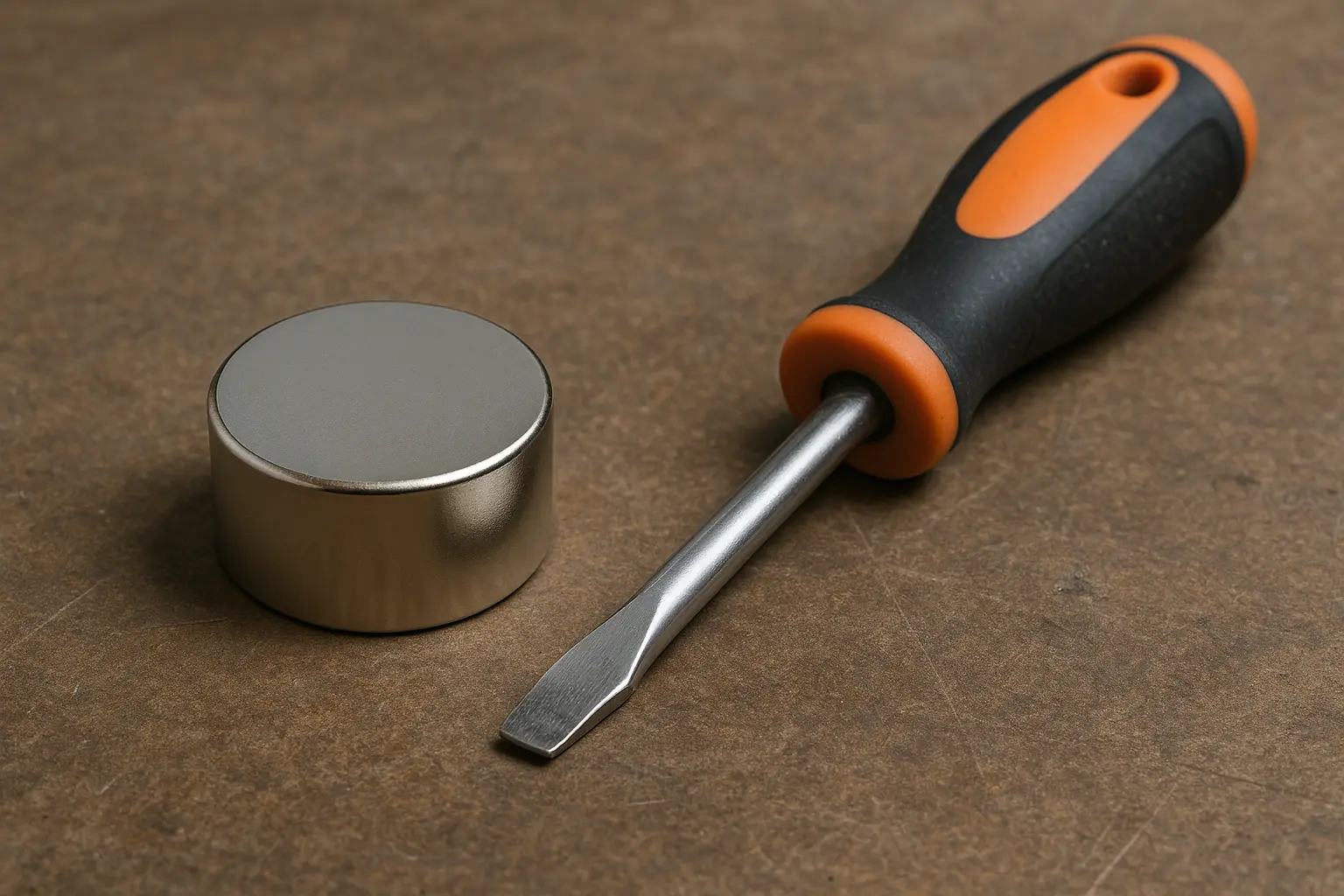
    • A strong neodymium magnet (recommended for best results)
    • The screwdriver you wish to magnetize
    • (Optional) A cloth or gloves to protect your hands from the magnet’s strength

    2. Clean the Screwdriver Tip

    Dirt or oil can reduce magnetic contact. Wipe the tip with a dry cloth to ensure a clean metal surface before you begin.


    3. Determine Magnet Polarity

    If possible, identify the magnet’s north and south poles. Consistency in direction is important — do not alternate the magnet’s polarity during the process.


    4. Stroke the Magnet Along the Shaft

    1. Hold the magnet firmly against the screwdriver shaft near the tip.
    2. Stroke it in one direction only — from the handle toward the tip — about 20 to 30 times.
    3. Avoid back-and-forth motion, as it cancels the alignment of magnetic domains.
    4. The magnetic field gradually aligns the screwdriver’s atomic structure, magnetizing it effectively.
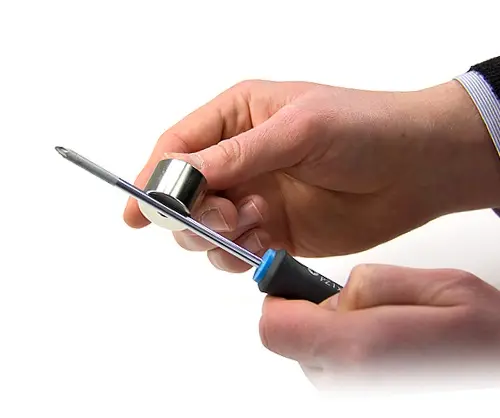
    Person stroking a neodymium magnet along a screwdriver shaft in one direction to magnetize it.

    5. Test the Magnetization

    Try picking up a small steel screw or paper clip with the screwdriver tip. If it clings firmly, the tool is successfully magnetized. If not, repeat the process several more times using firm, consistent strokes.
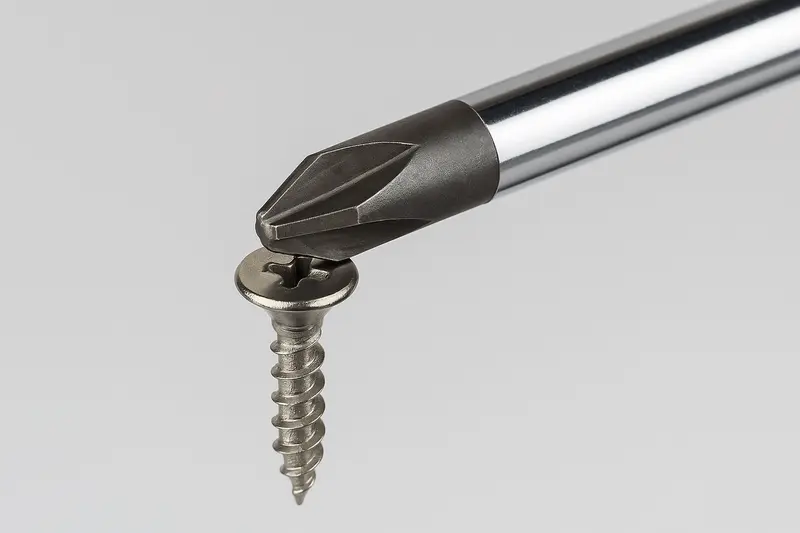
    Magnetized screwdriver picking up a steel screw to test magnetic strength

    How to Demagnetize a Screwdriver (When Needed)

    Sometimes, you may want to remove the magnetism, particularly when working near sensitive electronics or magnetic sensors. To demagnetize:

    • Use a demagnetizer tool (commonly found in hardware stores).
    • Alternatively, stroke the magnet along the screwdriver in alternating directions or heat the tip briefly (carefully, without damaging the metal).
      These actions randomize the magnetic domains, eliminating the magnetic field.

    Alternative Method: Using an Electric Current

    If you have access to a coil of wire and a DC power source, you can magnetize a screwdriver electromagnetically:

    1. Wrap the wire around the screwdriver several times.
    2. Pass a low DC current through the wire for a few seconds.
    3. The resulting electromagnetic field magnetizes the shaft.
      This method provides a stronger, more uniform magnetic effect and is often used in industrial or workshop settings.

    Practical Tips for Best Results

    • Use high-quality neodymium magnets for fast and strong magnetization.
    • Avoid excessive heat near the screwdriver tip — it can reduce magnetic retention.
    • Store magnetized screwdrivers away from magnetic-sensitive tools or digital devices.
    • Periodically re-magnetize as the magnetic field weakens over time.

    Conclusion

    Magnetizing a screwdriver is a quick, cost-effective way to enhance tool performance. By using a simple neodymium magnet and following a few straightforward steps, you can create a screwdriver that holds screws securely and makes every repair or assembly task more efficient.


    For premium-grade neodymium magnets and precision magnetization tools, explore HSMAGNET — your trusted source for advanced magnetic materials and professional magnetic solutions.

  • How to Re-Magnetize a Refrigerator Door Gasket

    How to Re-Magnetize a Refrigerator Door Gasket

    A refrigerator door gasket is more than just a strip of rubber — it’s a magnetic seal that keeps cold air in and warm air out. Over time, this magnetic strip can weaken, causing the door not to close tightly and forcing your refrigerator to work harder. Understanding how to re-magnetize a refrigerator door gasket can save energy, improve appliance efficiency, and extend the lifespan of your fridge.

    Understanding the Magnetic Gasket

    Most modern refrigerators use a magnetic door gasket made from flexible PVC with an embedded magnetic strip, typically a ferrite or rare-earth magnetic material. This magnet ensures the door seals firmly against the refrigerator body. When the magnetic force weakens, you may notice:

    • The door doesn’t close completely.
    • Condensation or frost buildup near the door.
    • Increased energy consumption.

    Before replacing the entire gasket, it’s worth checking whether you can re-magnetize it.

    Why Refrigerator Gasket Magnets Lose Strength

    Several factors can cause the magnetic strip to weaken over time:

    • Temperature fluctuations from frequent opening and closing.
    • Aging of the magnetic material.
    • Mechanical damage or bending of the gasket.
    • Exposure to magnetic interference or impact.

    In most cases, the magnet can be restored with the right tools and method.

    Step-by-Step: How to Re-Magnetize a Refrigerator Door Gasket

    1. Check the Existing Magnetic Strength

    Open the refrigerator door slightly and place a small metal object (like a paper clip or a key) against the gasket. If it doesn’t stick well, re-magnetization is needed.


    2. Gather Your Tools

    You’ll need:

    • A strong neodymium magnet or magnetic polarity magnetizer.
    • A clean cloth for wiping down the gasket.
    • (Optional) A polarity compass to identify the north and south poles.

    3. Clean the Gasket

    Use a mild detergent or warm soapy water to remove any dirt or grease from the gasket surface. Allow it to dry completely before proceeding.


    4. Determine Magnetic Polarity

    Re-magnetization must follow the original pole orientation of the gasket. If available, use a magnetic polarity tester to identify the direction of the poles (alternating north-south pattern).

    If you don’t have one, you can carefully test the pattern by moving the magnet along the gasket and noting the attraction or repulsion points.


    5. Re-Magnetize the Gasket

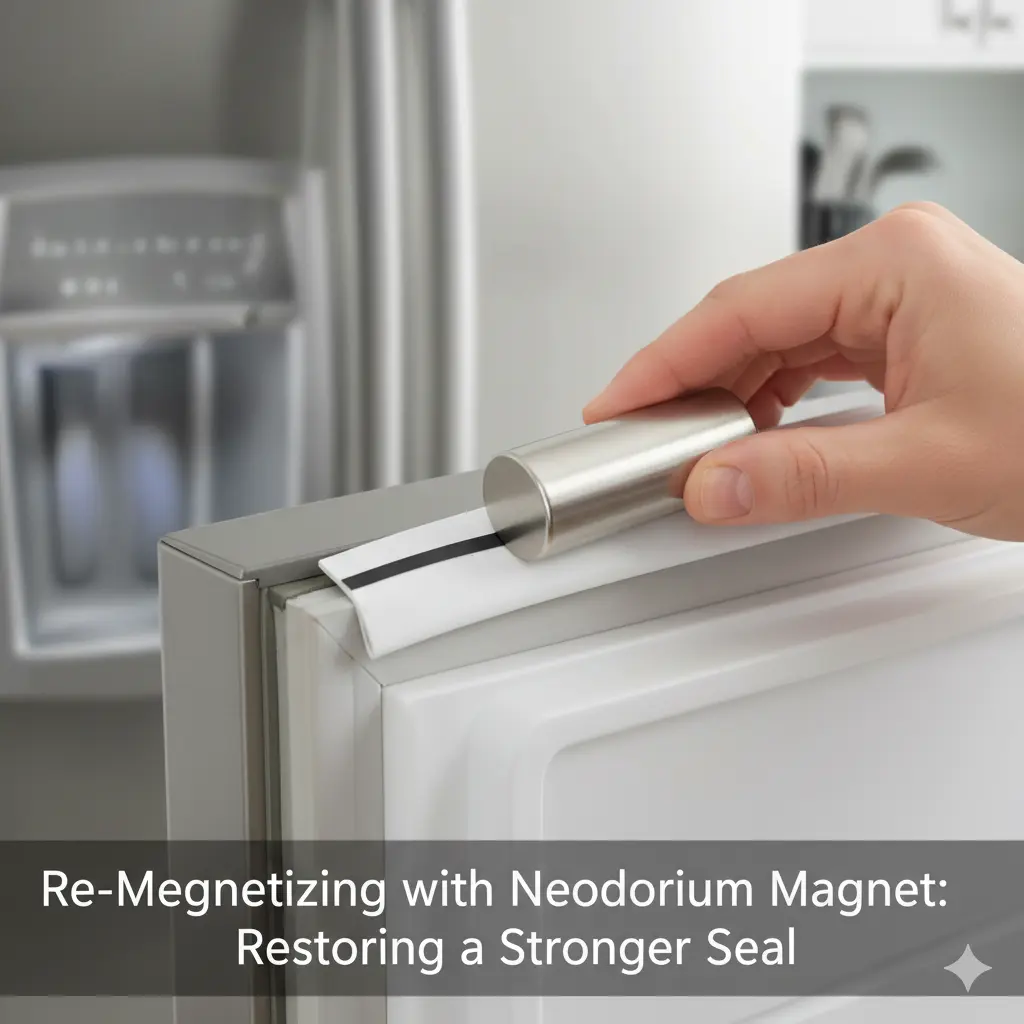
    1. Hold the neodymium magnet against the gasket where the strip is located.
    2. Move the magnet slowly along the gasket’s length, maintaining the same polarity direction.
    3. Repeat this process 2–3 times on both sides of the door seal.
    4. Test the magnetic strength again using a paper clip or metal object.

    The gasket should now show improved attraction and sealing capability.

    Person re-magnetizing a refrigerator door gasket using a neodymium magnet along the seal.

    6. Inspect the Door Alignment

    Even a strong magnet cannot compensate for a warped or misaligned door. Make sure the refrigerator door sits evenly, and adjust the hinges if necessary to achieve a perfect seal.


    When to Replace Instead of Re-Magnetize

    If the gasket is cracked, brittle, or severely deformed, re-magnetizing won’t be enough. In such cases, replacing the entire gasket is the most effective solution. A fresh, properly magnetized seal ensures long-term efficiency and consistent cooling performance.


    Benefits of Maintaining a Strong Magnetic Seal

    A well-magnetized refrigerator door gasket delivers several key benefits:

    • Enhanced energy efficiency — prevents cold air leakage.
    • Improved temperature consistency — preserves food quality.
    • Reduced compressor strain — extends appliance lifespan.
    • Lower electricity bills — through reduced power consumption.

    Conclusion

    Re-magnetizing a refrigerator door gasket is a simple yet effective way to restore sealing performance and improve energy efficiency. With just a strong magnet and a few careful steps, you can bring your refrigerator’s magnetic seal back to life.


    For professional-grade magnets, re-magnetization tools, and custom magnetic solutions, explore HSMAGNET — your trusted partner in advanced magnetic materials and technologies.

  • Magnets in New Energy Vehicles: Driving the EV Revolution

    Magnets in New Energy Vehicles: Driving the EV Revolution

    The rise of new energy vehicles (NEVs), especially electric vehicles (EVs), is transforming the automotive industry. One key technology behind this transformation is the use of high-performance magnets. From drive motors to steering and braking systems, magnets—especially neodymium (NdFeB) and samarium cobalt (SmCo) types—play a vital role in making EVs more efficient, powerful, and reliable.

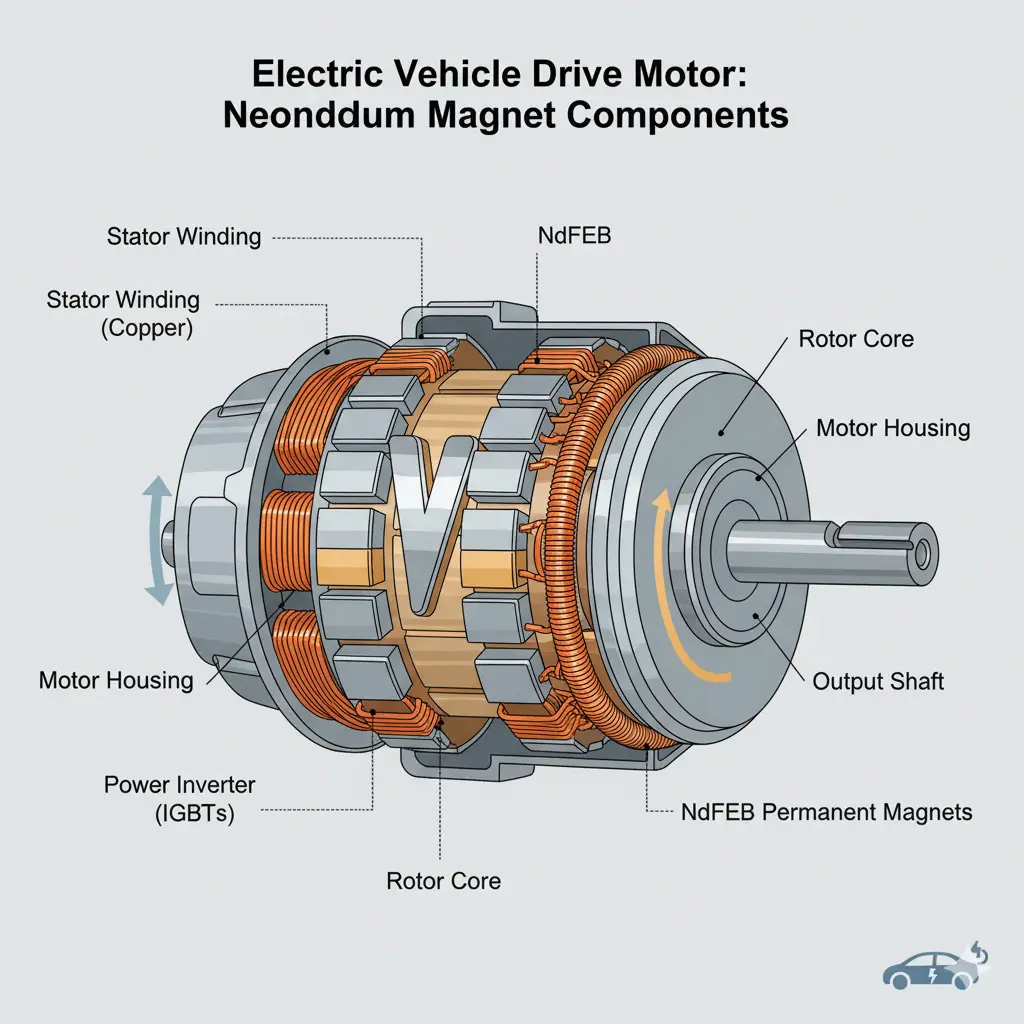
    Permanent Magnet Synchronous Motors (PMSMs) – The EV Powerhouse

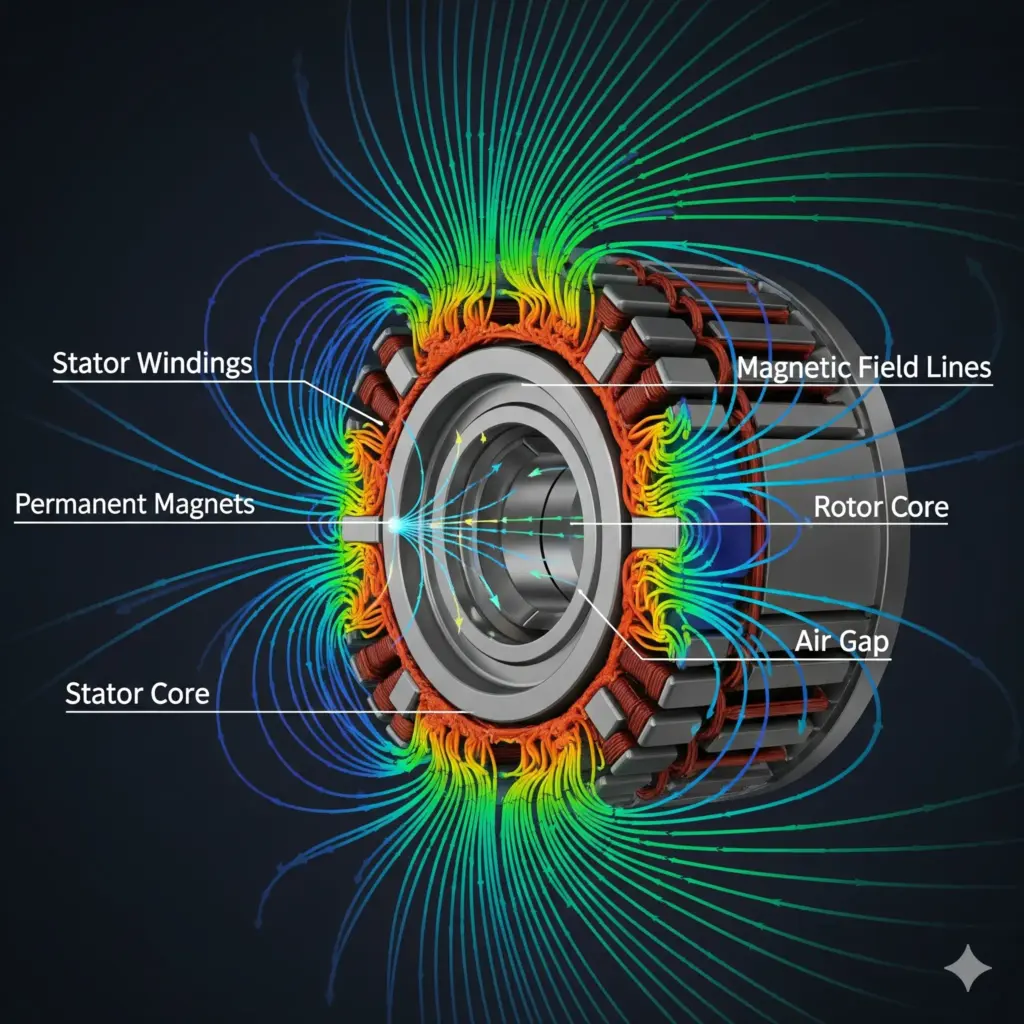
    In most modern EVs, the drive motor is a permanent magnet synchronous motor. The magnets inside are usually made of high-performance NdFeB, which generates a strong magnetic field for:

    • High efficiency – reducing energy loss and increasing battery life.
    • High torque density – delivering powerful acceleration.
    • Compact design – making motors smaller and lighter, which helps extend driving range.

    These benefits are why PMSMs are the dominant choice for EV drive systems.

    Cross-section of a permanent magnet synchronous motor in EVs showing magnetic fields

    Electric Power Steering (EPS) – Precision and Comfort

    The EPS system in an EV uses an electric motor to provide steering assistance. High-quality magnets help:

    • Improve motor efficiency.
    • Enhance steering precision and response.
    • Reduce overall system size for more compact vehicle designs.

    This results in smoother, safer, and more energy-efficient steering.

    Electric Braking Systems – Fast, Reliable, and Safe

    Modern EVs often feature regenerative braking systems that use magnetic components in their motors. Magnets help:

    • Enable quick braking response.
    • Increase braking force.
    • Improve vehicle safety and stability.

    By converting kinetic energy into electricity during braking, magnets also help recharge the battery and extend range.

    Auxiliary Systems – Quiet Efficiency Everywhere

    Magnets are also found in EV air conditioning systems, pumps, and sensors. These smaller but crucial applications help reduce energy consumption and improve comfort without draining the battery.

    Conclusion

    Magnets are at the heart of electric vehicle performance, efficiency, and safety. As EV technology advances, high-performance magnetic materials like NdFeB and SmCo will remain essential for driving the next generation of cleaner, smarter transportation.

  • Magnets in Magnetic Separators: How They Work and Why They Matter

    Magnets in Magnetic Separators: How They Work and Why They Matter

    Magnetic separators are essential equipment in industries like mining, recycling, food processing, and ceramics. At the core of every separator is a magnet — the key component that creates the magnetic field necessary for material separation. This guide explains what magnetic separators are, their applications, how they work, and the types of magnets (NdFeB, ferrite, SmCo, and electromagnets) commonly used.

    What Is a Magnetic Separator?

    A magnetic separator is a device that uses a magnetic field to separate magnetic materials from non-magnetic ones. This separation can be applied to dry powders, liquid slurries, or bulk solid materials. Magnetic separators help improve product purity, protect machinery, and recover valuable metals.

    Key benefits of magnetic separators:

    • Remove iron and steel contaminants.
    • Improve end-product quality.
    • Recover valuable magnetic minerals.
    • Prevent damage to crushers, mills, and other processing equipment.

    Applications of Magnetic Separators

    Magnetic separators are used in a wide range of industries:

    • Mining & Mineral Processing – Separation of magnetite, hematite, and ilmenite.
    • Recycling Industry – Removing ferrous metals from scrap, plastics, and crushed waste.
    • Food Processing – Capturing fine ferrous contaminants in flour, sugar, and spices.
    • Ceramics & Glass – Eliminating iron impurities to improve product appearance.
    • Chemicals & Pharmaceuticals – Ensuring product purity in sensitive production lines.

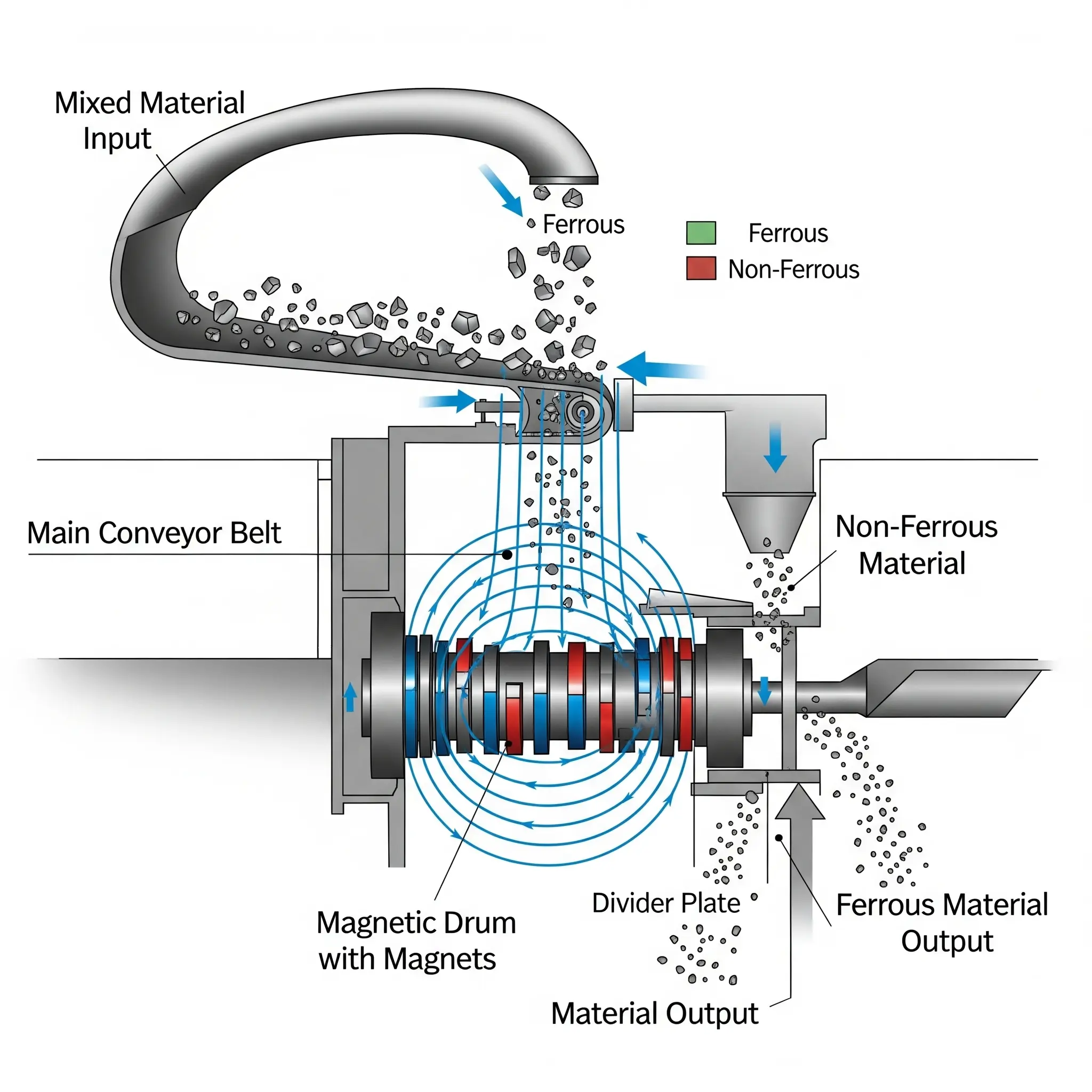
    How Magnetic Separators Work

    Magnetic separators create a magnetic field that attracts and holds magnetic particles while allowing non-magnetic materials to pass through. The process works as follows:

    1. Material Feeding – Powder, slurry, or bulk solids enter the separator.
    2. Magnetic Attraction – Ferrous or magnetic particles are drawn to the magnet.
    3. Separation Path – Non-magnetic particles continue moving without being attracted.
    4. Discharge – Magnetic particles are removed manually or via an automated cleaning system.

    Common magnetic separator designs:

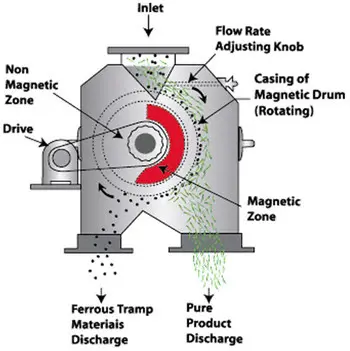
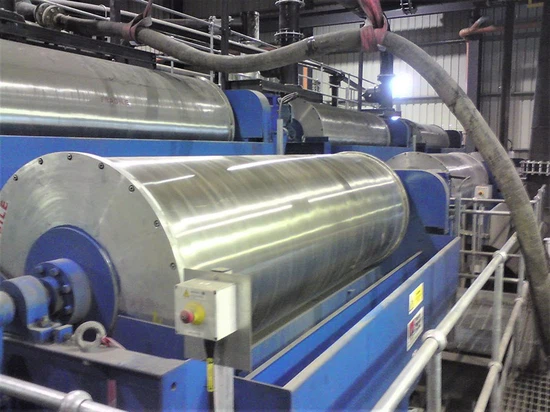
    • Magnetic Drum Separators – Rotating drums capture and discharge magnetic materials.
    • Overband Magnets – Installed over conveyors to remove ferrous metals from moving belts.
    • Magnetic Grids and Plates – Fixed magnets for hoppers, chutes, and pipelines.
    • High-Intensity Magnetic Separators – For weakly magnetic minerals such as hematite.
    Close-up view of a magnetic drum separator showing its rotating drum and internal stationary magnetic system with labels.

    Types of Magnets Used in Magnetic Separators

    The performance of a magnetic separator depends heavily on the magnet type used.

    1. Neodymium Magnets (NdFeB)

    • Extremely strong magnetic field.
    • Ideal for fine ferrous particle capture.
    • Common in high-intensity magnetic separators.
    • Sensitive to high temperatures unless coated or specially designed.

    2. Ferrite Magnets

    • Low cost, corrosion-resistant, and durable.
    • Suitable for removing large ferrous pieces.
    • Lower magnetic strength compared to NdFeB.

    3. Samarium Cobalt Magnets (SmCo)

    • High temperature resistance (up to 350 °C).
    • Strong corrosion resistance.
    • Ideal for harsh environments like high-heat mineral processing.

    4. Electromagnets

    • Magnetic field strength can be adjusted.
    • Can be switched on or off.
    • Suitable for separating weakly magnetic minerals.
    • Require external power and more maintenance.
    High-quality overall view of a magnetic drum separator operating in an industrial setting.

    Choosing the Right Magnet for Your Magnetic Separator

    When selecting a magnet for a magnetic separator, consider:

    • Material Type – Strongly magnetic, weakly magnetic, or non-magnetic.
    • Operating Temperature – Choose SmCo for high-heat environments.
    • Particle Size – Fine powders may need high-intensity NdFeB magnets.
    • Cleaning Requirements – Manual, semi-automatic, or fully automatic cleaning.

    Why Magnet Quality Matters

    High-quality magnets ensure:

    • Strong, stable magnetic fields.
    • Long service life without significant demagnetization.
    • Consistent separation performance.
    • Resistance to heat, corrosion, and mechanical stress.

    Final Thoughts

    Magnets are the heart of every magnetic separator. Whether you need neodymium magnets for high-intensity separation, ferrite magnets for bulk ferrous removal, or SmCo magnets for extreme environments, choosing the right magnet type is crucial for efficiency and long-term performance.

    If you’re sourcing magnets for magnetic separators, make sure they are built with reliable magnetic materials to deliver the strength, stability, and durability your process demands.

  • Magnet Selection Guide for Professional Magnetic Nail Art

    Magnet Selection Guide for Professional Magnetic Nail Art

    Magnetic nail polish has transformed the nail art world — from mesmerizing “cat eye” streaks to luxurious “velvet” textures and even 3D holographic illusions. Behind these stunning effects is one key tool: the magnet.

    As a professional magnet manufacturer, HS Magnet supplies magnets for countless industries — and yes, that includes the beauty world. In this guide, we’ll show you how the right magnet can take your nail art from ordinary to extraordinary.

    1. How Magnetic Nail Art Works

    Magnetic nail polishes contain tiny metallic particles suspended in the polish. When a magnet is held close to the wet polish, these particles move and align according to the magnetic field, creating unique patterns.

    Different magnets = different effects:

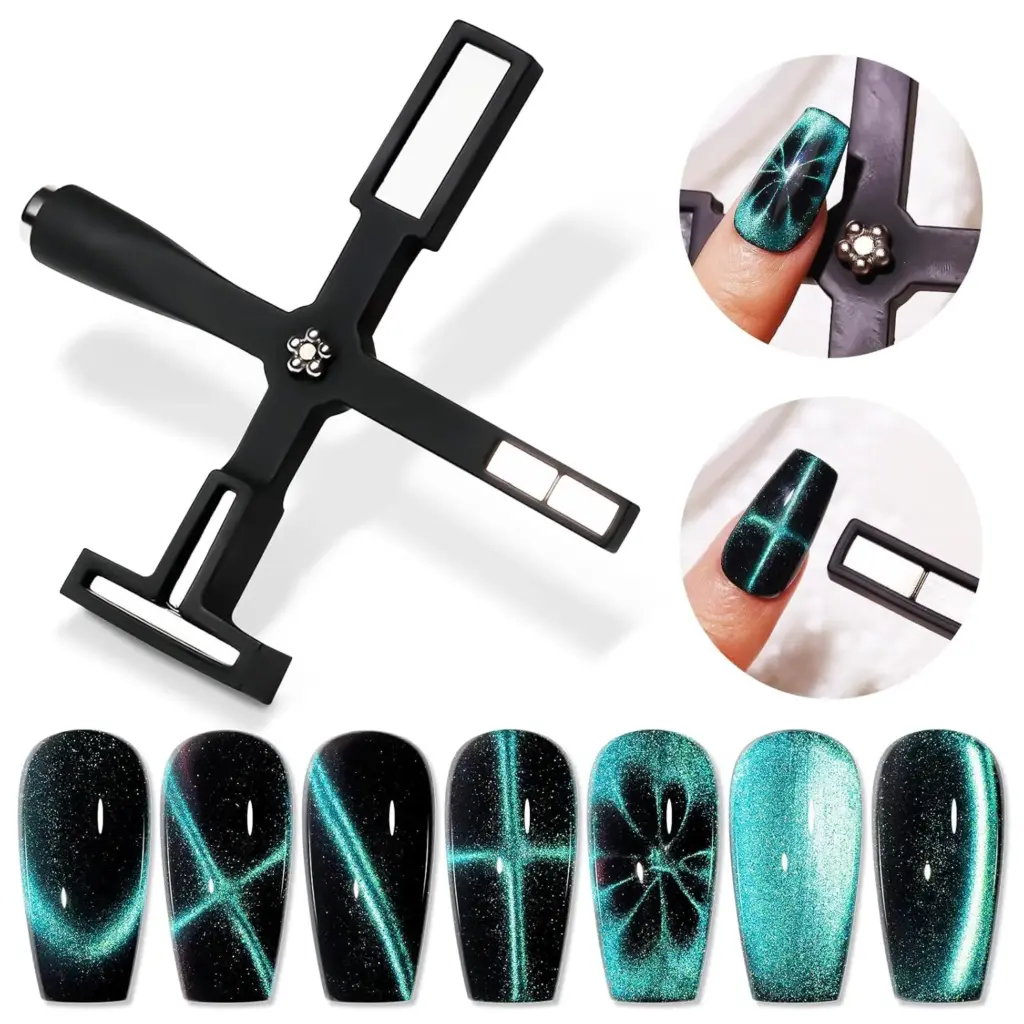
    • Cat Eye Line: Created with a strong, linear field magnet.
    • Velvet / Gradient: Achieved by moving a magnet in small circles or changing its distance.
    • 3D or Starburst Patterns: Made with multipole or shaped magnets.

    2. Types of Magnets for Nail Art

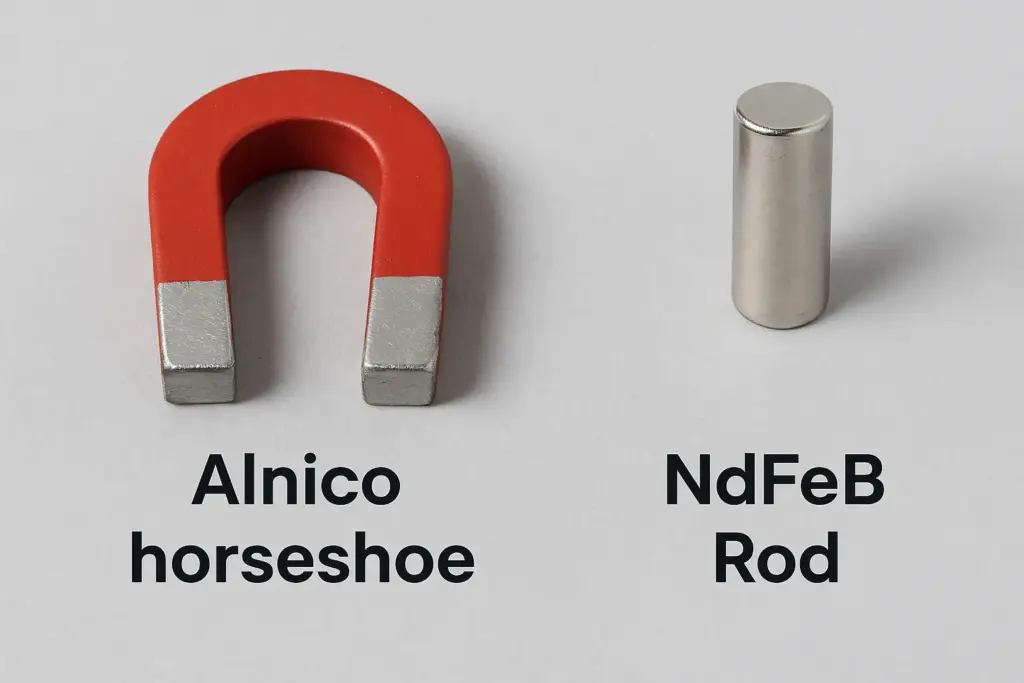
    Alnico Horseshoe Magnets – Classic & Reliable

    • Best for: Traditional cat-eye lines and simple linear effects.
    • Advantages: High temperature resistance (perfect under UV/LED lamps), long service life, classic shape.
    • Field Strength: Moderate – creates soft, elegant lines without over-pulling the metallic particles.

    Neodymium (NdFeB) Magnets – Sharp & Modern

    • Best for: 3D designs, high-definition patterns, and advanced salon effects.
    • Advantages: Extremely high magnetic strength, fast pattern formation, variety of shapes (rod, block, sphere).
    • Grades for Nail Art:
      • N35–N38: For beginner kits or DIY users.
      • N42–N52: For professionals who need crisp patterns in seconds.

    Specialty Shaped Magnets

    • Round / Dome Magnets: Soft halo or spotlight effects.
    • Rod Magnets: Circular wave patterns.
    • Multipole Blocks: Intricate geometric lines and multiple bands in one stroke.
    Comparison of Alnico horseshoe and NdFeB magnets for professional nail art effects

    3. How to Use a Magnet for Nail Art (Pro Tips)

    1. Prep Your Nails: Apply base coat and cure.
    2. Apply Magnetic Polish: Work one nail at a time to keep the polish wet.
    3. Hold Magnet Close: About 2–3 mm from the nail for 5–15 seconds.
    4. Experiment with Angles: Tilting changes the depth and shape of the effect.
    5. Cure & Seal: Cure under UV/LED light, then apply a top coat (you can magnetize the top coat too for sharper results).

    Pro Tip: Re-magnetizing the top coat before curing can sharpen edges and prevent the design from spreading.

    4. Choosing the Right Magnet for Your Business

    User TypeRecommended MagnetWhy
    Salon ProfessionalsN42–N52 NeodymiumFast, sharp results, perfect for client speed.
    DIY Nail ArtistsN35–N38 NeodymiumAffordable, easy to use, good for practice.
    Luxury Nail BrandsCustom-shaped NdFeB or AlnicoUnique patterns for branding and product differentiation.

    5. Maintenance Tips for Nail Art Magnets

    • Clean with 99% isopropyl alcohol to remove polish residue.
    • Store with magnetic keepers to protect field strength.
    • Avoid soaking in acetone for long periods.
    NdFeB cat eye nail magnet tool

    6. Why Work with a Professional Magnet Manufacturer?

    Most nail art magnets on the market are generic. At HS Magnet, we can customize the magnetic strength, shape, coating, and size for your specific nail polish formula and desired effect.

    From durable Alnico horseshoe magnets for traditional salons to high-performance N52 neodymium for modern 3D nail systems — we make magnets that perform beautifully in the nail industry.

  • The Application of Magnets in Welding Machinery

    The Application of Magnets in Welding Machinery

    Magnets are an unsung hero in welding workshops. Whether for holding, aligning, or even assisting in advanced joining methods, magnets simplify welding operations, improve accuracy, and boost efficiency. In welding, magnets are used both as raw magnetic materials (inside machines or fixtures) and as finished magnetic tools designed for welders.

    1. Why Magnets Are Essential in Welding

    Welding often involves handling large or awkwardly shaped steel parts. Traditional clamps can be slow to set up, and even small misalignments can ruin a weld. Magnets provide:

    • Quick fixation without drilling holes or tightening bolts
    • Precise positioning at exact angles
    • Hands-free operation, letting welders focus on the weld itself

    2. Types of Magnets Used in Welding

    Different magnet types are chosen based on strength, heat resistance, and cost:

    • Neodymium Magnets (NdFeB): Extremely strong, compact, and ideal for holding heavy or large workpieces securely. Best for applications where maximum magnetic force is needed in a small space.
    • Ferrite (Ceramic) Magnets: More affordable and heat resistant, suitable for lighter holding tasks or where cost is a concern.
    • AlNiCo Magnets: Good temperature stability, often used in magnetic sensing or positioning inside welding machinery.

    3. Magnetic Tools & Devices in Welding Operations

    a. Magnetic Welding Clamps

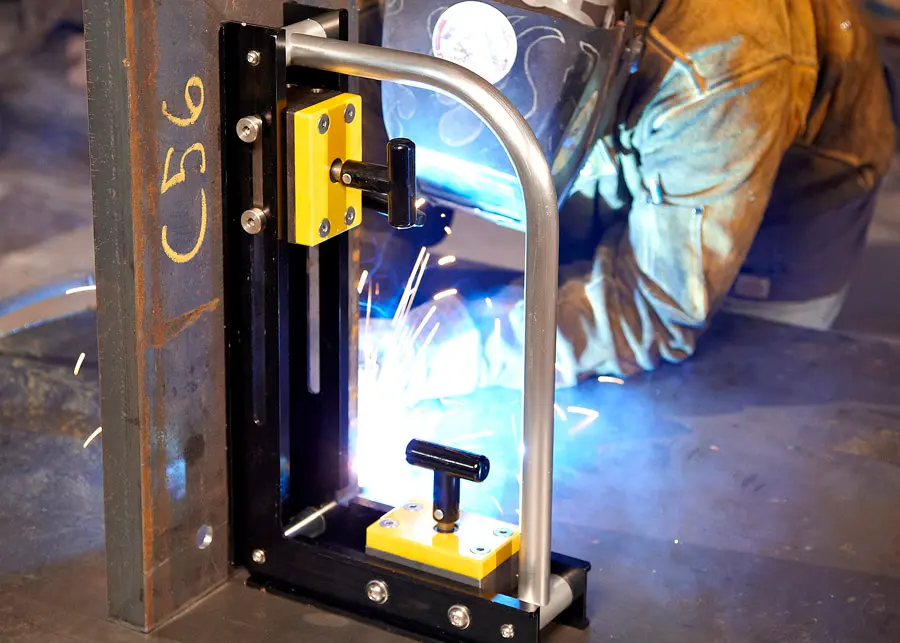
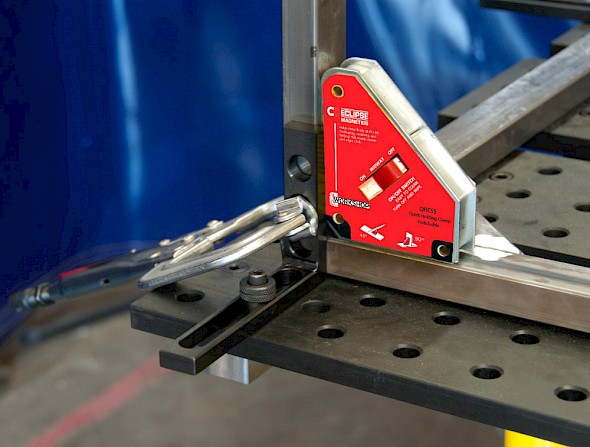
    Hold workpieces at 45°, 90°, or 135° angles without slipping. Perfect for tack welding frames, gates, or sheet metal structures.

    b. Magnetic Angle Finders & Positioning Blocks

    Allow precise setup of weld joints, reducing human error and ensuring square corners.

    c. Magnetic Welding Tables

    Tables with built-in magnets secure parts anywhere on the surface, making setups faster and more flexible.

    d. Magnetic Torch & Rod Holders

    Keep welding torches or filler rods in place, especially in tight or vertical positions.

    e. Magnetic Fixtures for Distortion Control

    Hold workpieces steady against thermal movement, preventing warping during long welds.

    Magnetic welding clamp holding workpiece at 90 degrees

    4. Advanced Magnet-Based Welding Methods

    Magnetic Pulse Welding (MPW)

    A solid-state welding technique where a powerful magnetic field accelerates metal pieces together at high speed, bonding them without melting. NdFeB magnets are key for generating the required electromagnetic force.

    Robotic Welding Systems

    In automated setups, magnets inside robotic grippers enable fast pickup, positioning, and release of steel components.

    5. Why Neodymium Magnets Are Game-Changers in Welding

    Neodymium magnets are preferred in many welding tools because they:

    • Deliver maximum holding strength in compact designs
    • Enable faster setups compared to mechanical clamps
    • Maintain secure holding even for heavy or oddly shaped parts
    • Improve automation efficiency in robotic welding

    Conclusion

    Magnets — whether ferrite, AlNiCo, or neodymium — are indispensable in modern welding operations. From basic angle clamps to advanced magnetic pulse welding, they make the work faster, safer, and more precise. And with the unmatched power of neodymium magnets, today’s welding shops can achieve efficiency and accuracy that were once impossible.

  • Radiant Ring Magnets – Unique Radial Magnetization for Specialized Applications

    Radiant Ring Magnets – Unique Radial Magnetization for Specialized Applications

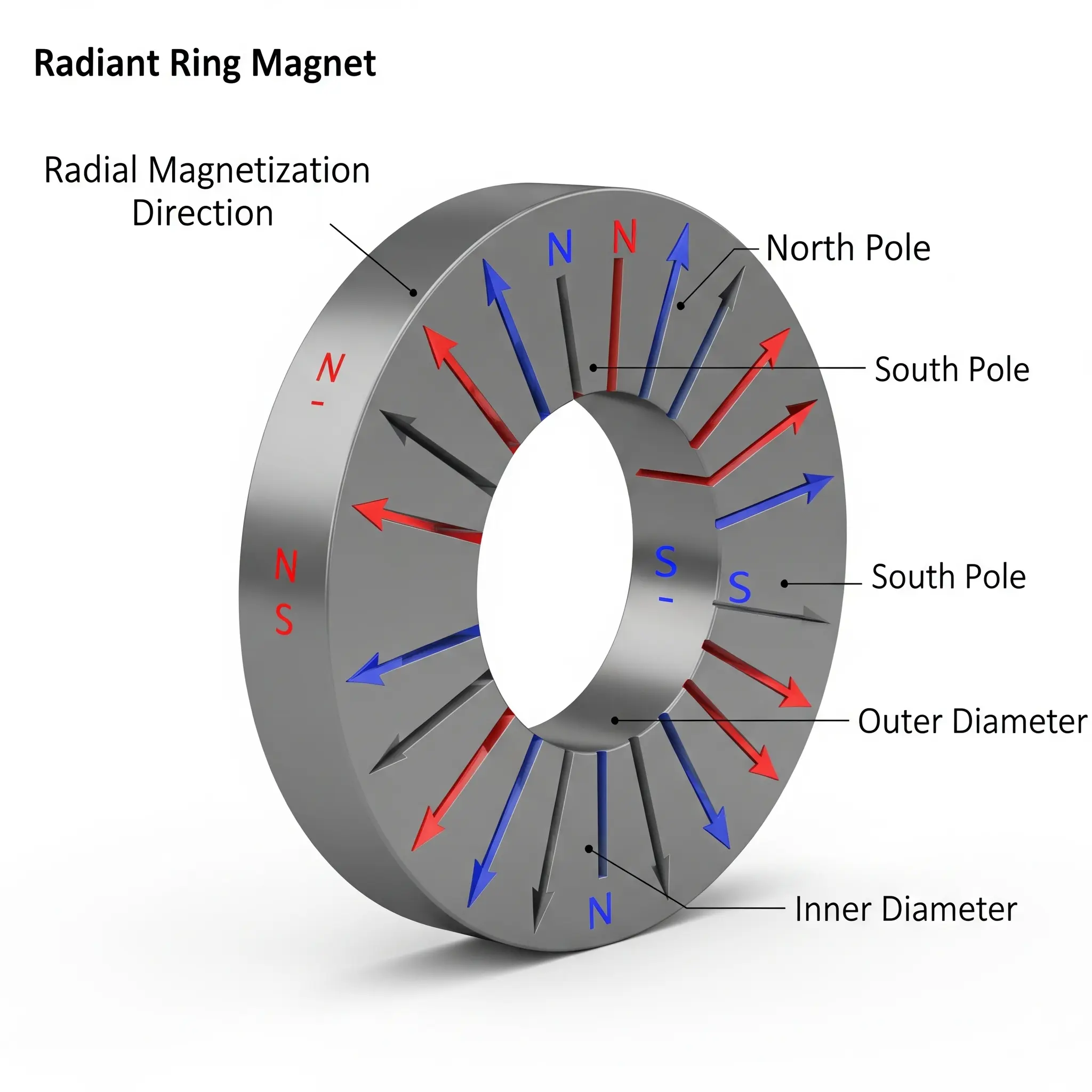
    A radiant ring magnet is a special type of circular permanent magnet that is magnetized radially along its circumference—meaning the magnetic poles are distributed outward (or inward) like spokes on a wheel, rather than through the length or thickness of the magnet. This distinctive magnetization pattern allows for highly efficient rotational magnetic fields and unique functional benefits in certain applications.

    How Radiant Ring Magnets Are Made

    The production of a radiant ring depends largely on the magnetic material type and its magnetic anisotropy.

    1. Isotropic Magnetic Materials

    Isotropic materials, such as AlNiCo 2 or isotropic bonded neodymium magnets, can be magnetized in any direction after forming. This makes them ideal for producing radiant ring magnets, since the magnetization can be applied radially in the final step.

    • Advantages: Flexible magnetization directions, simpler tooling, lower cost for small batches.
    • Examples: AlNiCo 2 rings for instrumentation, bonded NdFeB for motors and encoders.

    2. Anisotropic Magnetic Materials

    Anisotropic materials, such as sintered NdFeB or ferrite, have a preferred magnetic direction (easy axis) fixed during manufacturing. Producing a radiant ring from anisotropic material is more complex—it requires specialized pressing dies and the application of a strong external magnetic field during forming to align the crystal structure radially.

    • Advantages: Much higher energy product (stronger magnetic output).
    • Challenges: More expensive tooling, limited shape flexibility.

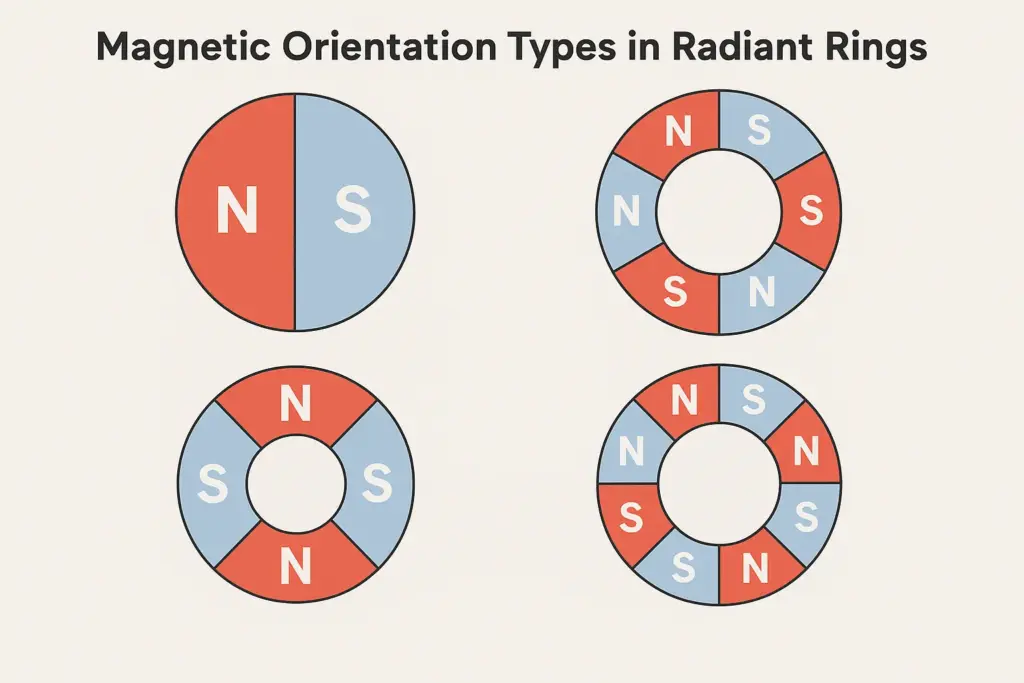
    Magnetic Orientation Types in Radiant Rings

    • Radial Outward Magnetization – North poles face outward around the circumference, south poles face inward.
    • Radial Inward Magnetization – South poles face outward, north poles inward.
    • Multi-Pole Radial Magnetization – Multiple alternating north and south poles around the ring, ideal for position sensing and brushless motors.
    Illustration of multi-pole radial magnetization in ring magnets

    Applications of Radiant Ring Magnets

    Radiant ring magnets are not just a curiosity—they are essential in several high-performance systems:

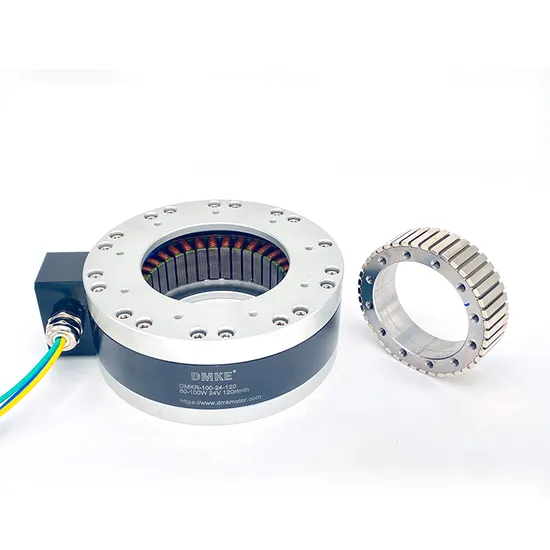
    1. Electric Motors & Generators
      • Brushless DC motors
      • Servo motors for robotics and CNC machines
      • Compact high-torque motors for drones and e-mobility
    2. Magnetic Couplings
      • Used in sealed pumps to transmit torque without direct contact
      • Ideal for chemical processing, food-grade systems, and vacuum equipment
    3. Precision Position Sensors & Encoders
      • Radial multi-pole rings provide accurate angular position feedback
      • Used in automotive ABS systems, industrial automation, and medical devices
    4. Magnetic Bearings
      • Enable contactless rotation in high-speed turbines and flywheels
    5. Scientific & Laboratory Equipment
      • Custom magnetic fields for particle manipulation, NMR devices, and calibration systems
    Radiant ring magnet in brushless DC motor for high-torque applications

    Why Choose Our Manufacturing Expertise

    With over 20 years of magnet manufacturing experience, we specialize in producing both isotropic and anisotropic radiant ring magnets. Whether you require small-batch precision AlNiCo rings for sensing applications or high-energy anisotropic NdFeB rings for motors, our engineers can design the right magnetization pattern to meet your performance requirements.

    We can supply:

    • Custom dimensions from micro-rings to large-diameter assemblies
    • Single-pole or multi-pole radial magnetization
    • Material selection from AlNiCo, bonded NdFeB, ferrite, or sintered NdFeB
    • Protective coatings such as Ni-Cu-Ni, epoxy, or Parylene

    Conclusion

    Radiant ring magnets offer unique magnetic field distributions that unlock performance advantages in motion systems, coupling devices, and precision instruments. By understanding the differences between isotropic and anisotropic materials, engineers can choose the optimal design for their application—and with the right manufacturing partner, even the most challenging radial magnetization patterns are possible.

  • Magnets for Reed Switch Activation – Design, Working Principle, and Selection Guide

    Magnets for Reed Switch Activation – Design, Working Principle, and Selection Guide

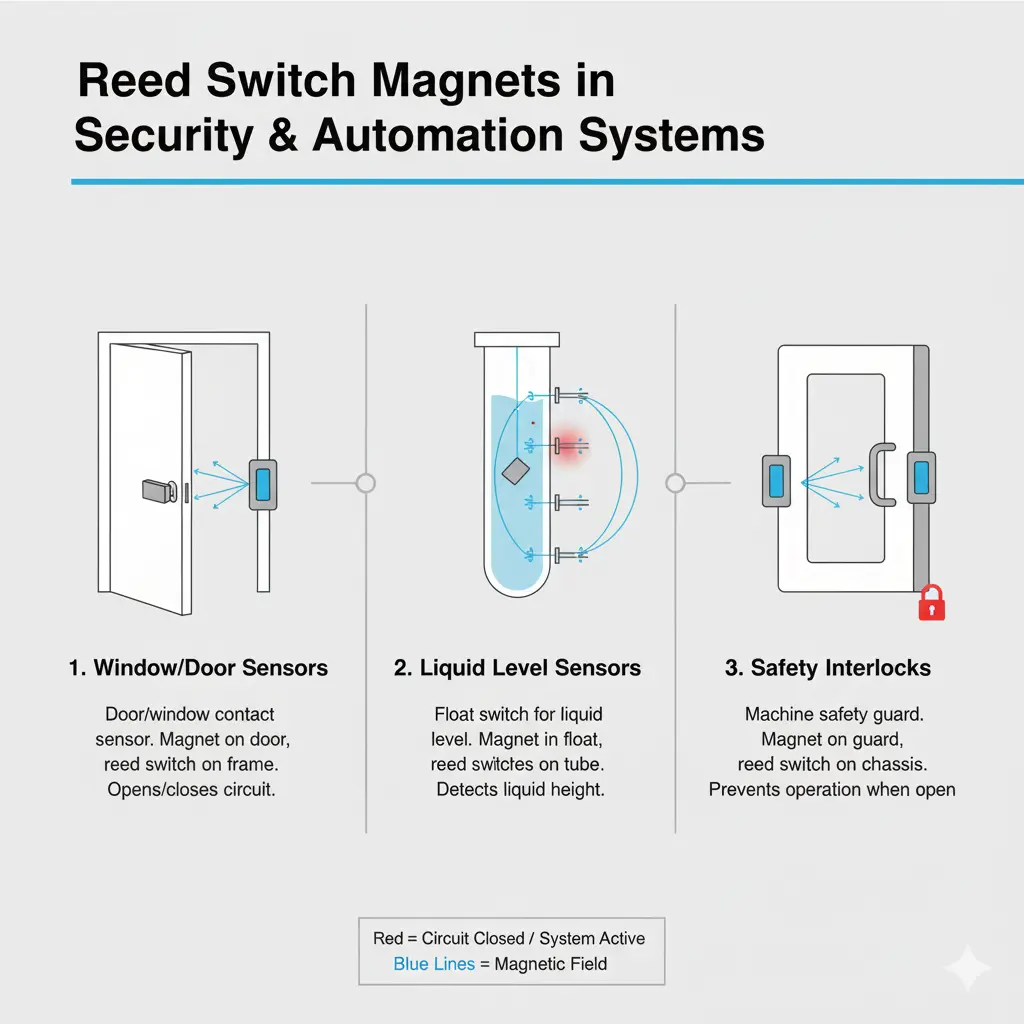
    Reed switches are widely used in sensors, security systems, and automation equipment — and at the heart of their operation is a magnet.
    As a professional magnet manufacturer and supplier, we not only understand how reed switches work, but also how to provide the right type of permanent magnet to ensure stable, reliable activation.

    In this article, we’ll explain how magnets activate reed switches, the working principle behind them, and the best magnet materials for your reed switch application.

    How a Magnet Activates a Reed Switch

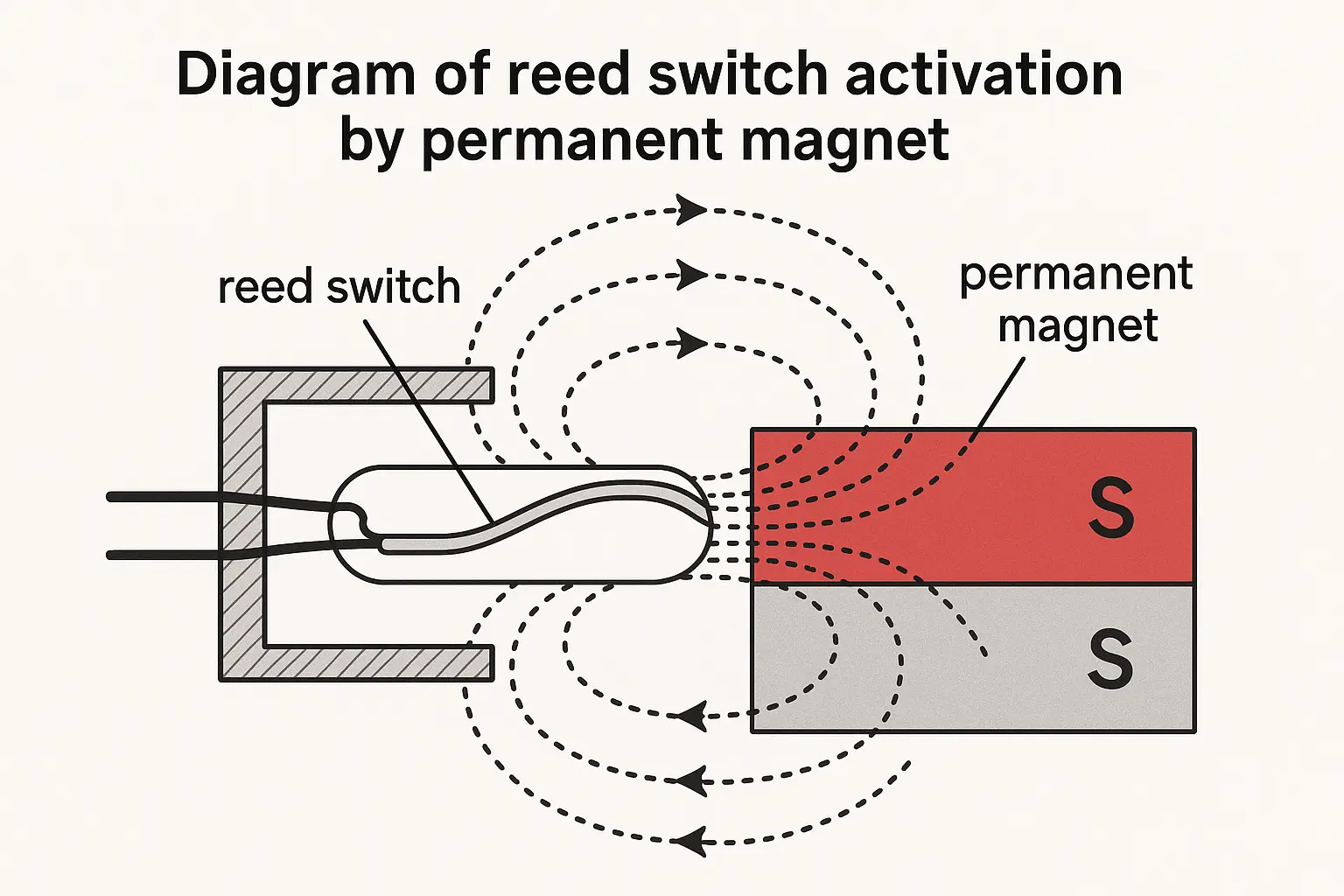
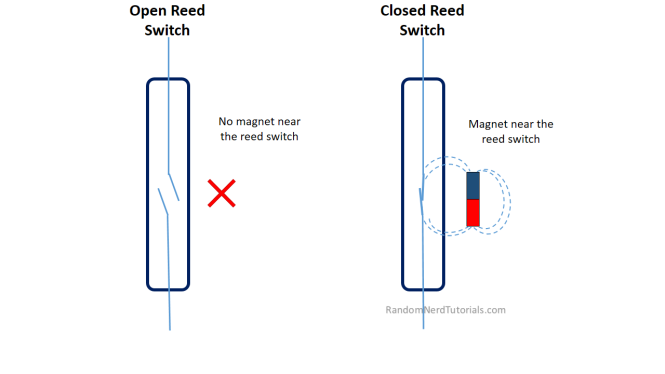
    A reed switch consists of two ferromagnetic blades (reeds) sealed inside a small glass tube. These blades are slightly separated and plated with hard metals for durability. When exposed to a magnetic field, the blades become magnetized and attract each other, closing the circuit.

    Activation process:

    1. Magnetic field introduction – A permanent magnet or an electromagnetic coil creates a magnetic field around the reed switch.
    2. Magnetization of blades – The reeds gain opposite magnetic poles.
    3. Contact and conduction – The blades attract each other, closing the circuit.
    4. Return to open state – Removing the magnetic field lets the reeds spring apart, breaking the circuit.

    For most applications, permanent magnets are preferred because they are compact, reliable, and require no electrical power to operate.

    Step-by-step illustration of magnet activating reed switch

    Best Permanent Magnets for Reed Switch Activation

    Choosing the right magnet is critical for reed switch performance. Here’s a guide to the most common materials:

    1. NdFeB (Neodymium Iron Boron) Magnets

    • Features: Extremely strong magnetic performance in a compact size.
    • Advantages: High remanence, high coercivity, ideal for space-limited designs.
    • Applications: Security sensors, high-precision electronics, automation systems.
    • Considerations: Sensitive to high temperatures and moisture — surface coatings are recommended.

    2. Ferrite (Ceramic) Magnets

    • Features: Cost-effective, good corrosion resistance.
    • Advantages: Stable magnetic performance, low price, ideal for mass-market products.
    • Applications: Door and window magnetic sensors, general reed switch uses.
    • Considerations: Lower magnetic strength compared to NdFeB; requires larger size for same activation distance.

    3. Samarium Cobalt (SmCo) Magnets

    • Features: Excellent temperature and corrosion resistance.
    • Advantages: Maintains stability in high-temperature and harsh environments.
    • Applications: Aerospace, military, and industrial reed switch systems.
    • Considerations: Higher cost than other magnet types.

    4. Alnico Magnets

    • Features: High remanence, stable performance over a wide temperature range.
    • Advantages: Good for applications with frequent temperature changes.
    • Applications: Special instrumentation and sensors.
    • Considerations: Lower resistance to demagnetization; not ideal in strong external magnetic fields.
    Reed switch magnets in security and automation systems

    Why Choose Us as Your Reed Switch Magnet Supplier

    We manufacture and supply a full range of NdFeB, Ferrite, SmCo, and Alnico magnets tailored for reed switch activation.
    Whether you need miniature high-precision magnets for compact sensors or durable, high-temperature magnets for industrial applications, we can provide:

    • Custom shapes and sizes for optimal activation distance.
    • Special coatings to improve corrosion resistance.
    • Consistent magnetic performance through precision manufacturing.
    • Technical support to help you select the right magnet for your reed switch design.

    Conclusion

    A reed switch is only as reliable as the magnet that activates it. By choosing the right magnet material and specifications, you can ensure stable operation, long service life, and consistent performance in your application.

    If you’re looking for high-quality magnets for reed switch activation, contact us today — we’re here to help you design and supply the perfect solution for your needs.

  • Neodymium Magnets in Aquariums and Saltwater Applications

    Neodymium Magnets in Aquariums and Saltwater Applications

    Neodymium magnets, also known as rare-earth magnets, are among the most powerful permanent magnets available today. Thanks to their exceptional strength, compact size, and versatility, they have become a popular choice for various aquarium and saltwater tank applications.

    As a leading neodymium magnet manufacturer, we supply magnets that are widely used in the aquarium industry, from cleaning tools to coral mounting systems. In this article, we’ll explore how neodymium magnets are used in aquariums and why their high performance makes them ideal for saltwater environments—when properly protected.

    Why Use Neodymium Magnets in Aquariums?

    Traditional methods such as suction cups or adhesive mounts often fail in aquariums due to water pressure, algae growth, and the corrosive nature of saltwater. Neodymium magnets provide a reliable, reusable, and adjustable alternative, enabling secure attachment and easy repositioning of tools and decorations.

    Common Applications of Neodymium Magnets in Aquariums

    1. Magnetic Algae Scrapers

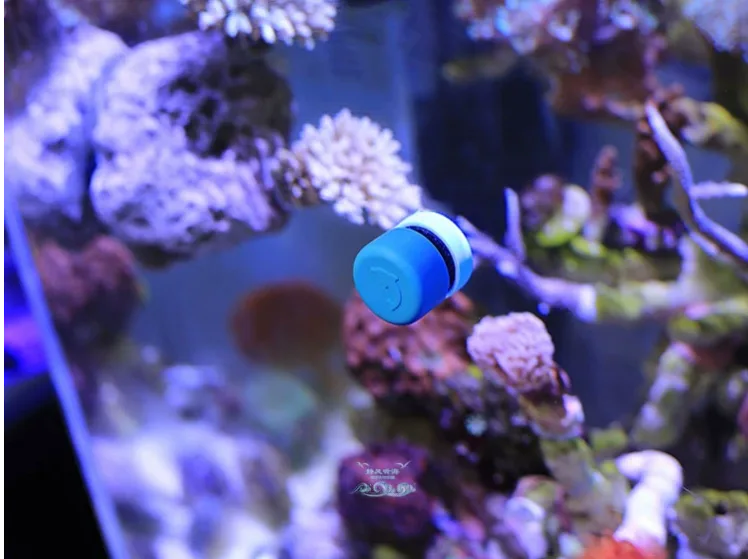
    One of the most well-known uses of neodymium magnets in aquariums is in magnetic algae scrapers. These tools consist of two parts—one placed inside the tank and one outside. The powerful magnetic force allows you to clean algae from glass or acrylic surfaces without putting your hands in the water. This is particularly important in saltwater aquariums, where algae growth can be rapid.

    Magnetic algae scraper using neodymium magnets in saltwater tank

    2. Magnetic Coral Frag Holders

    Coral frag holders allow aquarists to place and rearrange coral frags without drilling or permanently altering the aquarium. Using strong neodymium magnets, these holders keep coral frags securely in place, even in tanks with strong currents, while allowing for easy adjustments.

    3. Magnetic Tank Cleaners

    Beyond algae scrapers, there are full magnetic cleaning tools designed for general tank maintenance. They enable cleaning of glass and acrylic surfaces from the outside, removing debris and buildup efficiently while keeping hands dry.

    4. Magnetic Fish Feeders

    Some advanced aquarium setups use magnet-mounted fish feeders to deliver food to a specific spot in the tank. This targeted feeding helps prevent overfeeding, reduces waste, and ensures all fish get their share.

    5. Magnetic Rocks and Decorations

    Hobbyists often use neodymium magnets to anchor rocks or decorative elements in aquariums. This keeps layouts stable despite fish movement or strong water flow—especially important in reef tanks.

    6. Magnetic Mounts for Equipment

    Neodymium magnets are also used to mount aquarium equipment such as heaters, sensors, or filtration systems. They provide a secure hold without drilling, adhesives, or suction cups, and equipment can be repositioned quickly without damage.

    Neodymium magnets for aquarium equipment mounting and decorations

    Important Considerations

    While neodymium magnets are extremely powerful, they require protective coatings such as epoxy, plastic, or rubber to prevent corrosion—especially in saltwater tanks. As a manufacturer, we offer custom-coated neodymium magnets specifically designed for aquarium applications, ensuring both durability and safety.

    Handling tips:

    • Keep fingers clear when connecting large magnets to avoid pinching.
    • Avoid uncoated magnets in saltwater environments.
    • Choose the correct magnet strength to prevent glass damage.

    Supplying Neodymium Magnets for Aquarium Applications

    At HS Magnet, we manufacture and supply high-quality neodymium magnets in various shapes, sizes, and coatings, tailored for aquarium use. Whether you need magnets for algae scrapers, coral mounts, or custom aquarium equipment, we can provide OEM and bulk solutions with competitive pricing and consistent quality.

    Contact us today to discuss your aquarium magnet needs and get a quote for your next project.

  • Magnets for High-Speed Magnetic Rotor Assemblies: A Complete Guide

    Magnets for High-Speed Magnetic Rotor Assemblies: A Complete Guide

    High-speed magnetic rotor assemblies are the heart of many advanced electric machines — from electric vehicle motors to aerospace actuators. At HS Magnet, we work closely with motor designers to supply high-performance magnets and complete rotor assemblies that meet extreme speed, efficiency, and durability demands.

    In this article, we’ll explain what magnetic rotors are, why the choice of magnet material is critical, and the most common magnetic materials used in high-speed rotor assemblies.

    What is a Magnetic Rotor Assembly?

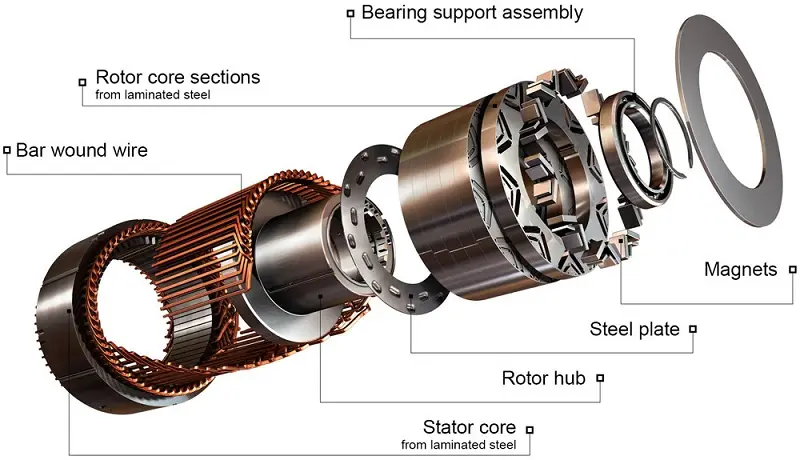
    A magnetic rotor is the rotating component in a motor or generator that contains permanent magnets. When paired with a stator, the rotor’s magnetic field interacts with the stator’s windings to produce motion or generate electricity.

    In high-speed magnetic rotor assemblies, the magnets must withstand:

    • High rotational speeds — often exceeding 50,000 RPM
    • High temperatures — due to electrical and mechanical losses
    • Strong centrifugal forces — which can place stress on magnet bonds and sleeves
    • Demanding efficiency requirements — to achieve high torque and power density in a compact size

    The Role of Magnets in Rotor Performance

    The magnet material determines:

    • Magnetic field strength → affects torque and efficiency
    • Temperature tolerance → critical for preventing demagnetization at high heat
    • Corrosion resistance → important in harsh or humid environments
    • Cost-effectiveness → impacts overall motor price

    Choosing the right magnet is a balance of performance, environment, and budget.

    Common Magnet Materials for High-Speed Rotors

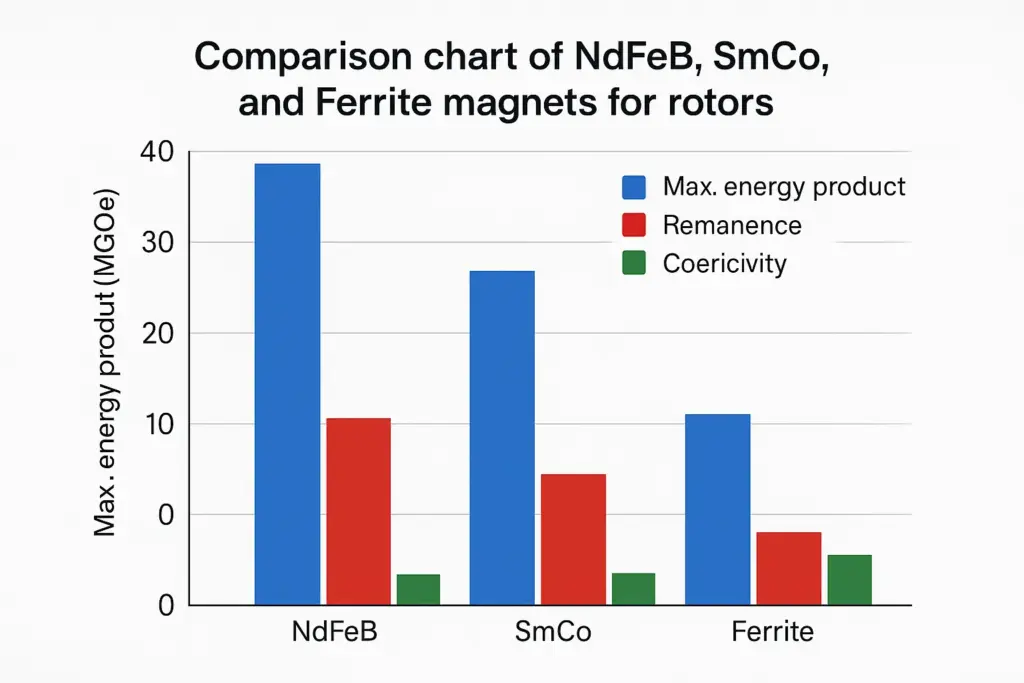
    Comparison chart of NdFeB, SmCo, and Ferrite magnets for rotors

    1. Neodymium Iron Boron (NdFeB) Magnets

    Key Features:

    • Strongest commercially available permanent magnet material
    • High remanence and coercivity
    • Magnetic energy product over 50 MGOe
    • Curie temperature: 310–400°C
    • Available in high-temperature grades for demanding rotor designs

    Applications:

    • Electric vehicle drive motors
    • CNC machine tool spindle motors
    • Robotics joint actuators
    • Aerospace auxiliary motors

    Why Choose NdFeB: Ideal when maximum torque density and compact size are required.

    2. Samarium Cobalt (SmCo) Magnets

    Key Features:

    • Magnetic energy product: 20–30 MGOe
    • Exceptional temperature resistance (Curie temp: 700–800°C)
    • Excellent corrosion resistance without coating
    • Stable performance in extreme environments

    Applications:

    • Aerospace motors near jet engines
    • Oilfield downhole motors
    • High-speed industrial drives in hot environments

    Why Choose SmCo: Best choice for high-temperature, corrosive, or vacuum environments where NdFeB may not survive.

    3. Ferrite (Ceramic) Magnets

    Key Features:

    • Low cost and good chemical stability
    • Magnetic energy product: 3–5 MGOe
    • High electrical resistivity → reduced eddy current loss
    • Naturally corrosion-resistant

    Applications:

    • Household appliance motors (fans, washing machines, vacuum cleaners)
    • Cost-sensitive small high-speed motors

    Why Choose Ferrite: Affordable and reliable for medium-performance, high-volume applications.

    Advanced Magnet Configurations: Halbach Arrays

    For maximum power density and efficiency, HS Magnet also designs Halbach array magnetic rotors. These arrangements concentrate magnetic flux on one side, improving motor performance while reducing weight and size.

    Factors to Consider When Selecting Magnets for Rotor Assemblies

    When designing or sourcing a magnetic rotor assembly, consider:

    • Operating speed (RPM)
    • Maximum working temperature
    • Environmental exposure (moisture, chemicals, vacuum)
    • Space constraints
    • Required torque and efficiency
    • Budget limitations

    Our engineers can simulate performance and recommend the optimal magnet grade, coating, and mechanical structure for your application.

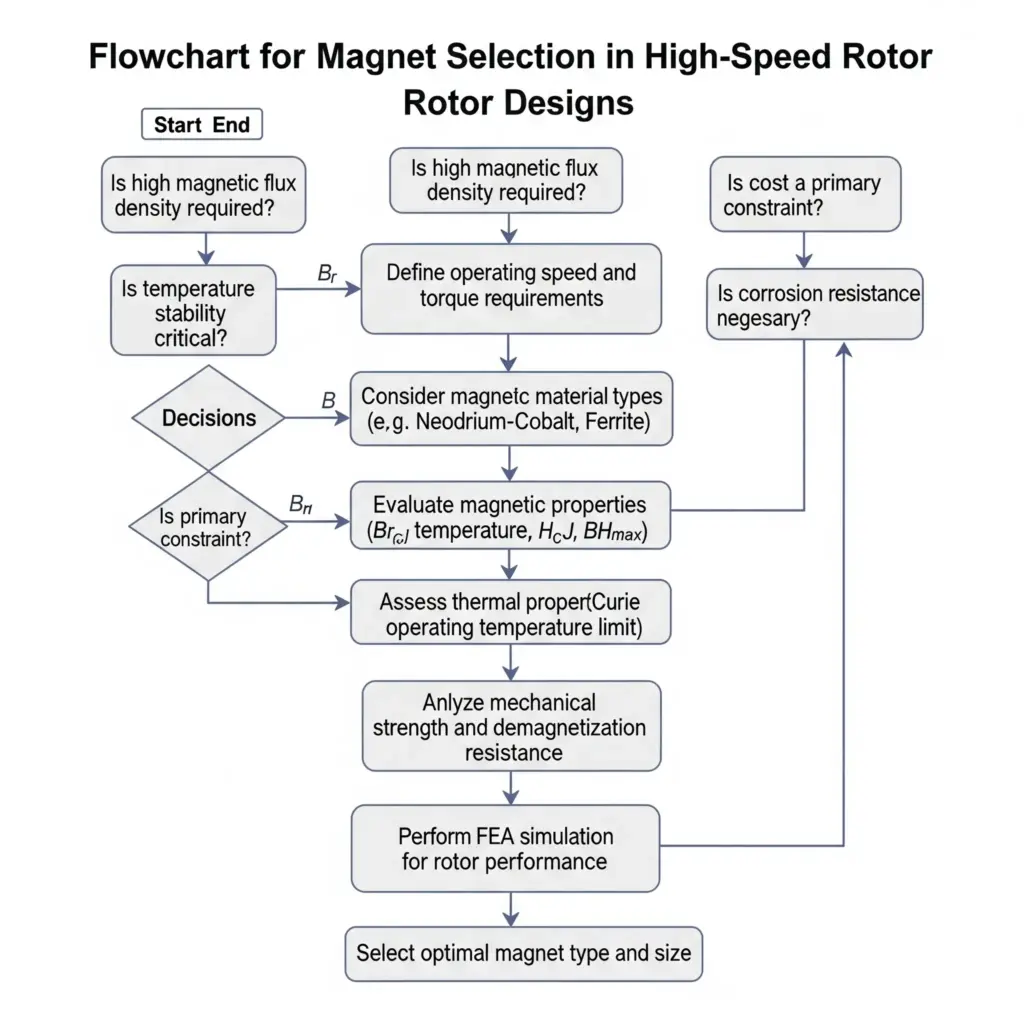
    Flowchart for selecting magnets in high-speed rotor designs

    Partner with HS Magnet for Your Next Rotor Project

    At HS Magnet, we supply:

    • NdFeB, SmCo, and ferrite magnets in custom sizes and grades
    • Complete high-speed magnetic rotor assemblies ready for integration
    • Advanced Halbach array designs for ultra-high efficiency
    • Precision thin metals and protective sleeves to ensure rotor reliability

    If you’re developing a high-performance electric machine, let’s discuss how we can help you achieve higher efficiency, higher power density, and longer service life.

    Contact us today for a consultation on your next high-speed magnetic rotor assembly project.