
For global buyers operating in fast-moving industrial and technology sectors, ensuring a predictable and compliant import process is mission-critical. China remains the world’s dominant magnet supplier, and understanding the regulatory landscape is essential for minimizing lead-time risk and achieving operational continuity. The following framework outlines a structured approach to importing magnets from China efficiently and in full alignment with current export control requirements.
Prioritize Magnet Grades Without Controlled Elements
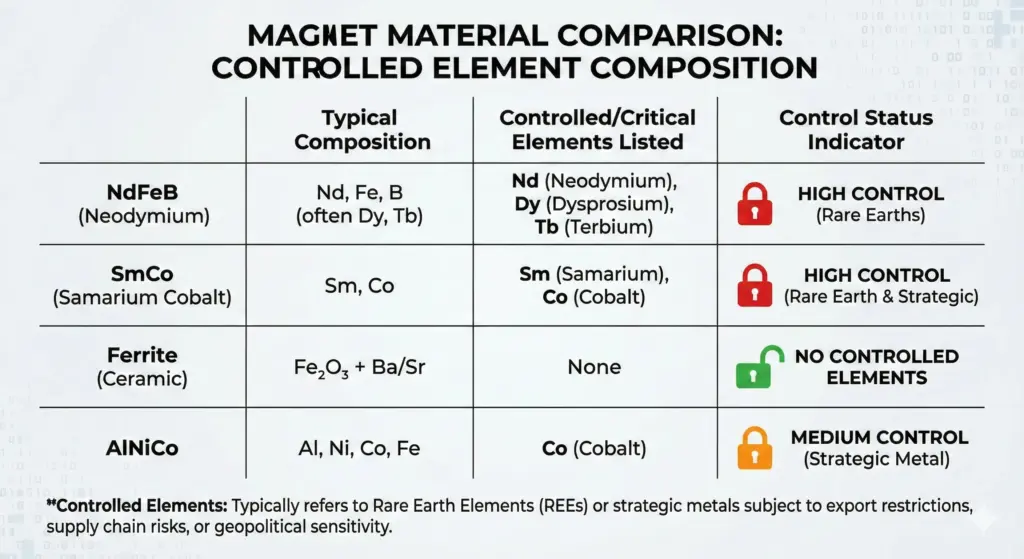
A forward-looking sourcing strategy begins with material selection. Magnets containing China-controlled rare earth elements—primarily dysprosium (Dy) and terbium (Tb)—incur more stringent export licensing requirements.
- NdFeB Options Without Dy/Tb:
Many manufacturers now provide high-performance NdFeB grades that exclude controlled elements, including N35–N52, N35M–N50M, N35H–N48H, and N35SH–N45SH. These products typically require only a third-party test report verifying the absence of Dy and Tb, eliminating the need for an export license. - SmCo:
Because samarium is a controlled element, all SmCo magnets require an export license regardless of grade. - AlNiCo and Ferrite:
These materials do not contain controlled elements. Similar to non-Dy/Tb NdFeB, they generally require only a third-party component analysis report.
By prioritizing non-controlled grades whenever technically feasible, importers can significantly reduce administrative complexity and cycle time.
Plan for Export Licenses When Controlled Elements Are Involved
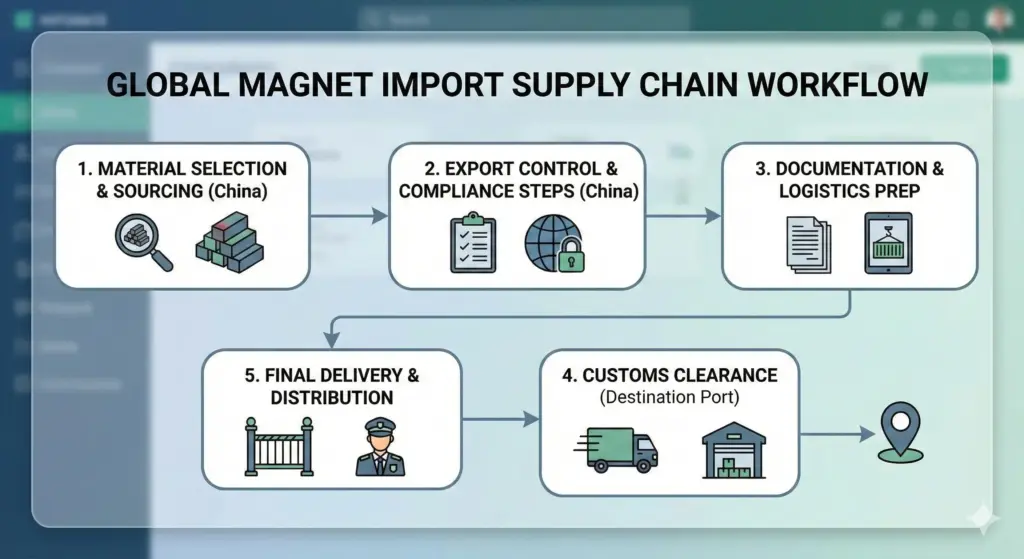
When magnets contain controlled elements, suppliers must secure an export license—a process that typically spans two to three months, including an approval cycle of approximately 45 working days. To safeguard supply reliability, buyers should:
- Develop procurement plans well in advance of production or project milestones.
- Initiate export license applications early.
- Consolidate procurement volumes into fewer, larger batches to improve administrative efficiency.
Organizations that proactively build these lead times into their project schedules will mitigate the risk of production delays or budget overruns.
Prepare Comprehensive Import Documentation
Customs authorities and exporters require a complete documentation package to verify compliance and confirm end-use legitimacy. The following materials should be prepared in advance:
- Importer and End-User Profile (Chinese and English):
Includes company name, address, country, website, incorporation date, capital, legal representative, team size, assets, business scope, major products, and intended application—complete with company stamp. - End-User and End-Use Statement:
A formal declaration issued by the end-user outlining the final application of the magnet products and confirming they will not be used for weapons of mass destruction or related systems. Must include company details, contract number, and stamped signature. - Technical Documentation and Testing Reports:
Provide the product’s use-case description, preferably with photos of its application. Include component analysis reports for all exported magnet grades. - Trade Contract:
Ensure alignment with actual shipment data—dimensions, weight (kg), quantities, and total value. - Supporting Materials:
Examples include historical cooperation records from the past three years, past export quantities and values, supply-chain overview, and sample product images.
Prepared documentation strengthens compliance posture and minimizes the likelihood of customs delays.
Strengthen Collaboration With Suppliers
Given the dynamic nature of China’s export control framework, maintaining real-time communication with suppliers is a critical success factor. Regular alignment ensures:
- Documentation is updated in accordance with the latest regulatory requirements.
- License applications are initiated on schedule.
- Buyers gain early visibility into potential risks, material constraints, or policy changes.
Strategic supplier engagement ultimately enables smoother import execution and more predictable global supply chain performance.
Conclusion
Successfully importing magnets from China requires regulatory awareness, strategic planning, and disciplined document management. By prioritizing non-controlled magnet types, planning ahead for controlled-element products, preparing complete documentation, and fostering active supplier communication, businesses can significantly streamline the import workflow. This operational discipline ensures continuity in production, accelerates time-to-market, and strengthens long-term competitiveness in sectors reliant on advanced magnetic materials.
If you have any questions regarding the policies for importing magnets from China, please feel free to contact HSmagnet.
Leave a Reply