
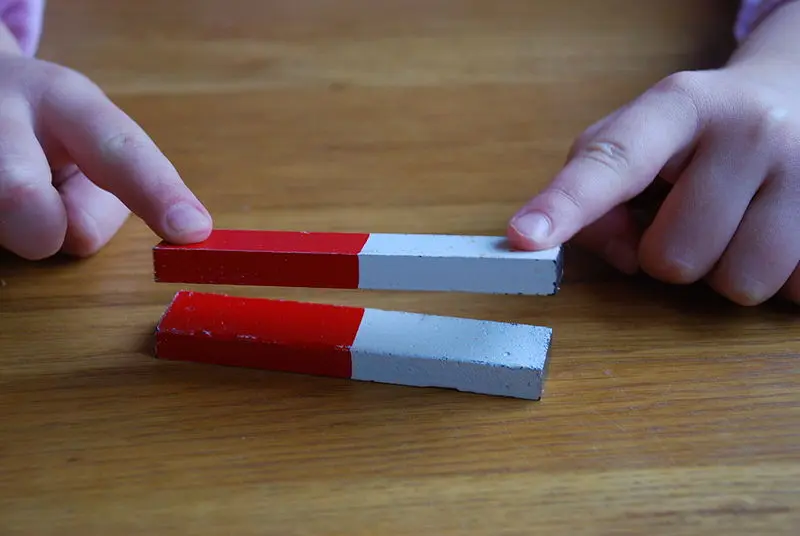
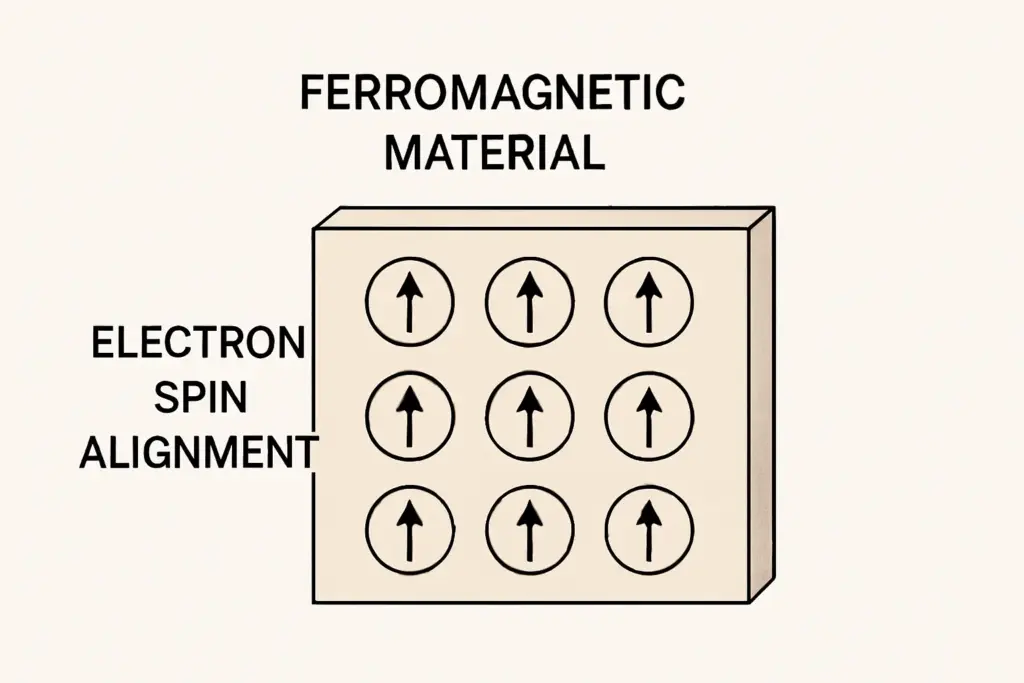
Permanent magnets often appear to “create” energy when they repel or attract other magnets. In reality, the repulsive force you feel is not produced by an ongoing energy output. Instead, magnetic behavior originates from the alignment of electrons inside the material. When a ferromagnetic material—such as neodymium, samarium–cobalt, or ferrite—is magnetized, its atomic magnetic moments align in a unified direction, creating a stable magnetic field.
This alignment is the result of external energy applied during manufacturing. For example, NdFeB magnets are produced through sintering or bonding, then exposed to a strong magnetic field that forces their internal magnetic domains to orient. Once aligned, these domains remain in position thanks to the material’s crystalline structure, which energetically prefers this ordered state.
In other words, the “energy” of a magnet is not a fuel but a configuration. The magnet does not burn energy to make its field; it simply maintains an arrangement that naturally produces magnetism.
Why Magnetic Repulsion Feels Like Work
When two magnets repel, the force you experience is due to the interaction between their magnetic fields—not because the magnets are consuming energy. The work being done comes from the person or machine pushing the magnets together. As you apply force to overcome the repulsion, you are adding energy into the system.
From a physics standpoint, magnetic forces are conservative. If you push two like poles together and then release them, the stored potential energy is returned as motion when they separate. Throughout the process, the magnet’s internal structure remains unchanged, meaning the magnet itself is not losing strength simply because it participated in a repulsive interaction.
Does Magnetic Strength Last Forever?
While magnets do not “use up” energy when they repel or attract, they are not eternal. Their performance degrades slowly over time due to several external factors:
Thermal Stress
High temperatures can cause magnetic domains to lose alignment. Neodymium magnets, for example, begin to weaken when exposed to temperatures above their rated maximum operating temperature (typically 80°C for standard grades and up to 200°C for high-temperature variants).
Physical Impact
Shock or mechanical vibration can disturb domain alignment, reducing magnetic field intensity. This is particularly relevant in industrial environments.
Corrosion
Uncoated magnets, especially NdFeB, are highly susceptible to oxidation. Surface damage accelerates demagnetization by disrupting the internal structure.
External Magnetic Fields
Exposure to strong opposing magnetic fields can partially or fully demagnetize a permanent magnet by reorienting its domains.
Under controlled conditions—stable temperature, protected surface, and proper handling—a high-quality magnet can retain more than 95% of its strength over many decades.
The Long-Term Outlook for Magnetic Materials
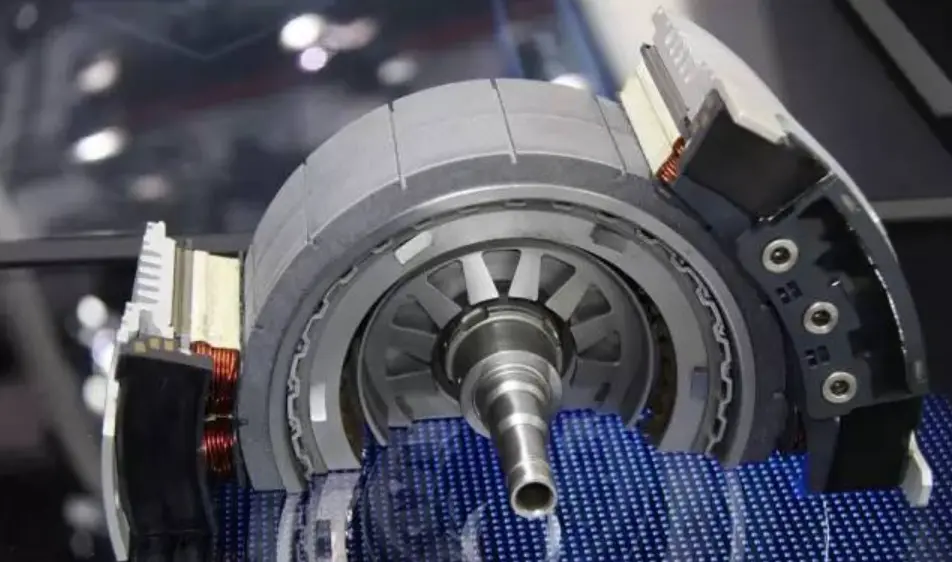
As industries expand into electrification, renewable energy, and high-density power systems, long-term magnetic stability is becoming a critical performance metric. Advanced coatings, high-temperature grades, and rare-earth-free alternatives are being developed to ensure lifecycle reliability, especially in automotive, aerospace, and industrial automation applications.
Meanwhile, magnets’ ability to perform without consuming energy continues to be an operational advantage. Their persistence and consistency make them indispensable in motors, sensors, actuators, and power systems across advanced manufacturing environments.
Conclusion
Magnets do not generate energy to repel or attract; their magnetic field originates from internal electron alignment established during production. Because this state requires no ongoing energy expenditure, magnets can exert force indefinitely—provided they are not exposed to conditions that disrupt their structure. Although they are not truly “forever,” their operational lifespan is exceptionally long, making them foundational components in modern engineering and industrial innovation.

Leave a Reply