
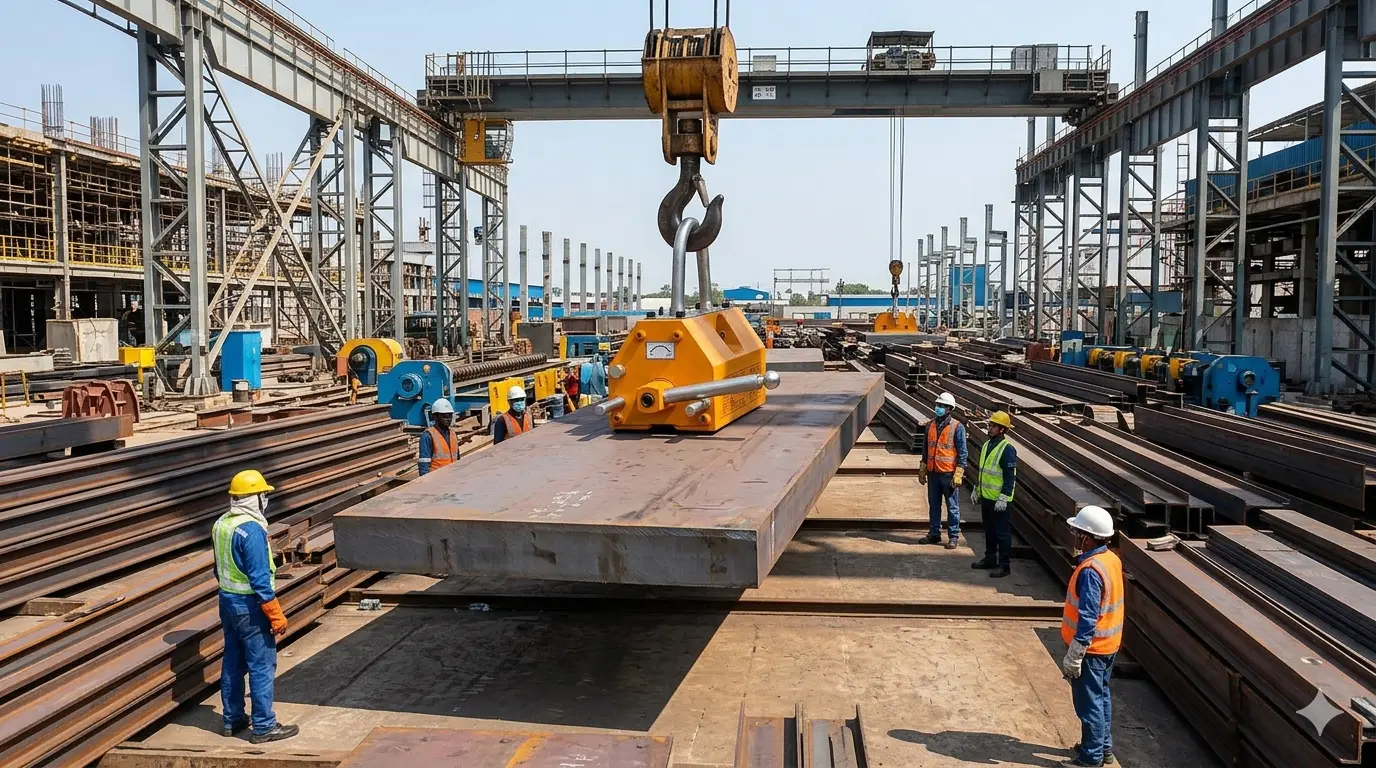
In modern construction, efficiency, safety, and precision are critical performance drivers. Magnetic tools have emerged as highly effective solutions for handling ferrous materials, reducing manual labor, and improving job-site productivity. From steel beam lifting to temporary fixing and alignment, magnetic systems offer a versatile and cost-effective alternative to traditional mechanical methods.
This article explores how magnetic tools are used in construction, focusing on holding, lifting, and fixing applications, along with their key advantages and selection considerations.
Table of Contents
Why Magnetic Tools Are Gaining Adoption in Construction
Construction environments often involve heavy steel components, complex installations, and time-sensitive operations. Magnetic tools provide several operational advantages:
- Faster material handling
- Reduced reliance on clamps and fasteners
- Improved worker safety
- Non-invasive attachment (no drilling or welding)
- Reusable and low maintenance
These benefits align with industry goals of improving efficiency while minimizing labor intensity.
Magnetic Holding Solutions
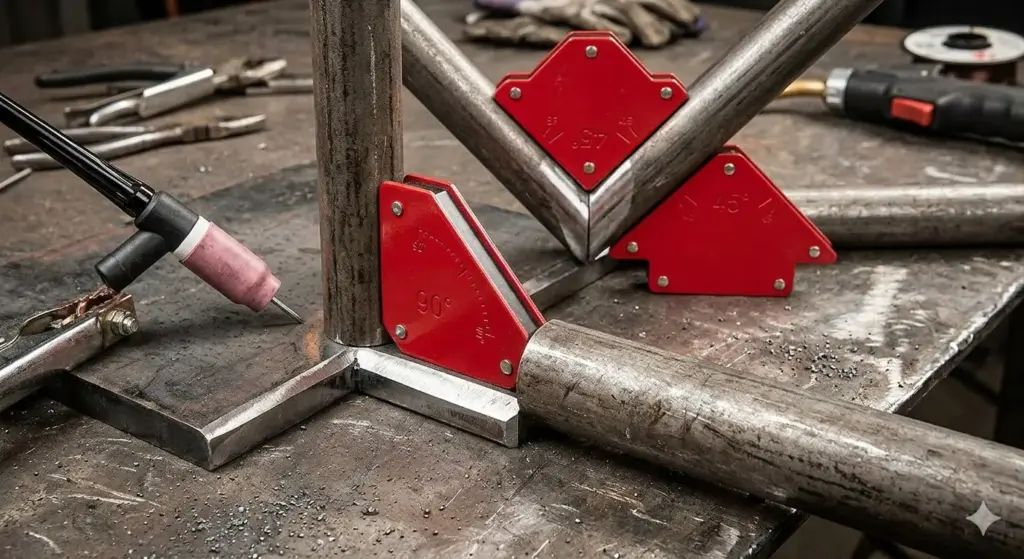
Magnetic holding tools are widely used to secure metal components temporarily during fabrication, welding, or installation.
Common Applications
- Positioning steel plates
- Holding beams during welding
- Securing pipes and frames
- Temporary alignment fixtures
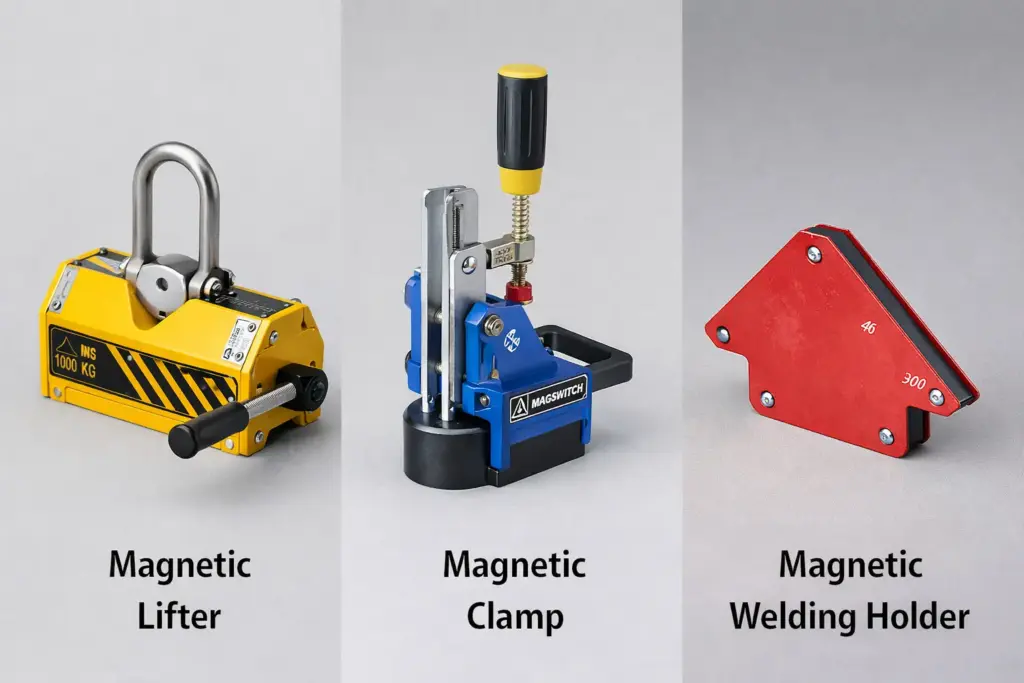
Typical Products
- Magnetic welding holders
- Magnetic clamps
- Switchable magnetic bases
These tools use strong permanent magnets to create a firm grip on ferrous surfaces, allowing workers to maintain precise positioning without additional hardware.
Key Benefits
- Quick setup and removal
- No surface damage
- High repeatability in positioning
- Reduced setup time
Magnetic Lifting Solutions
Handling heavy steel components is one of the most critical challenges on construction sites. Magnetic lifters provide a safe and efficient method for lifting and transporting ferrous materials.
How Magnetic Lifters Work
Magnetic lifters use high-strength permanent magnets to generate a powerful holding force. Some designs include mechanical switches to activate or deactivate the magnetic field safely.
Applications
- Lifting steel plates and sheets
- Transporting structural beams
- Loading and unloading metal materials
- Warehouse and fabrication handling
Advantages Over Traditional Lifting
- No slings or chains required
- Faster attachment and release
- Reduced risk of load slippage
- Improved operator safety
High-quality magnetic lifters are designed with safety factors and locking mechanisms to prevent accidental release.
Magnetic Fixing and Alignment Tools
In construction and installation processes, accurate alignment is essential. Magnetic fixing tools help position components quickly and maintain alignment during assembly.
Typical Use Cases
- Pipe alignment during welding
- Frame assembly
- HVAC system installation
- Temporary structural positioning
Common Tools
- Magnetic positioning jigs
- Magnetic levels
- Magnetic drill bases
These tools improve installation accuracy while reducing the need for manual holding or additional fixtures.
Key Advantages of Magnetic Tools
1. Increased Productivity
Magnetic tools reduce setup time and simplify material handling, enabling faster project completion.
2. Enhanced Safety
By minimizing manual lifting and reducing reliance on unstable fixtures, magnetic tools help lower workplace injury risks.
3. Cost Efficiency
Reusable magnetic systems reduce the need for consumables such as clamps, bolts, and welding supports.
4. Non-Destructive Operation
Magnetic attachment does not damage surfaces, making it ideal for finished or coated materials.
Limitations and Considerations
While magnetic tools offer many benefits, they are not suitable for all situations.
Material Compatibility
Magnetic tools only work with ferromagnetic materials such as steel. They are ineffective on aluminum, stainless steel (in some grades), or non-metal materials.
Surface Condition
Dirty, uneven, or coated surfaces can reduce magnetic holding force.
Load Safety
For lifting applications, proper safety factors must be applied. Operators should always follow load ratings and safety guidelines.
Temperature Limits
High temperatures can reduce magnetic strength. Selecting the correct magnet grade is essential for high-temperature environments.
How to Choose the Right Magnetic Tool
When selecting magnetic tools for construction, consider the following:
- Type of application (holding, lifting, or fixing)
- Load capacity requirements
- Surface condition of materials
- Operating environment (temperature, dust, moisture)
- Safety standards and certifications
Working with experienced suppliers ensures proper product selection and system reliability.
Future Trends in Magnetic Construction Tools
As construction projects become more complex and efficiency-driven, magnetic tools are evolving with:
- Stronger and more temperature-resistant magnet materials
- Ergonomic and lightweight designs
- Smart safety mechanisms
- Integration with automated and robotic systems
These innovations will further expand the role of magnetic solutions in modern construction workflows.
Conclusion
Magnetic tools are transforming construction operations by providing efficient, safe, and flexible solutions for holding, lifting, and fixing ferrous materials. Their ability to simplify workflows and reduce labor intensity makes them an increasingly valuable asset on job sites.
By selecting the right magnetic tools and applying them correctly, construction professionals can improve productivity, enhance safety, and achieve more precise results in a wide range of applications.
Leave a Reply