
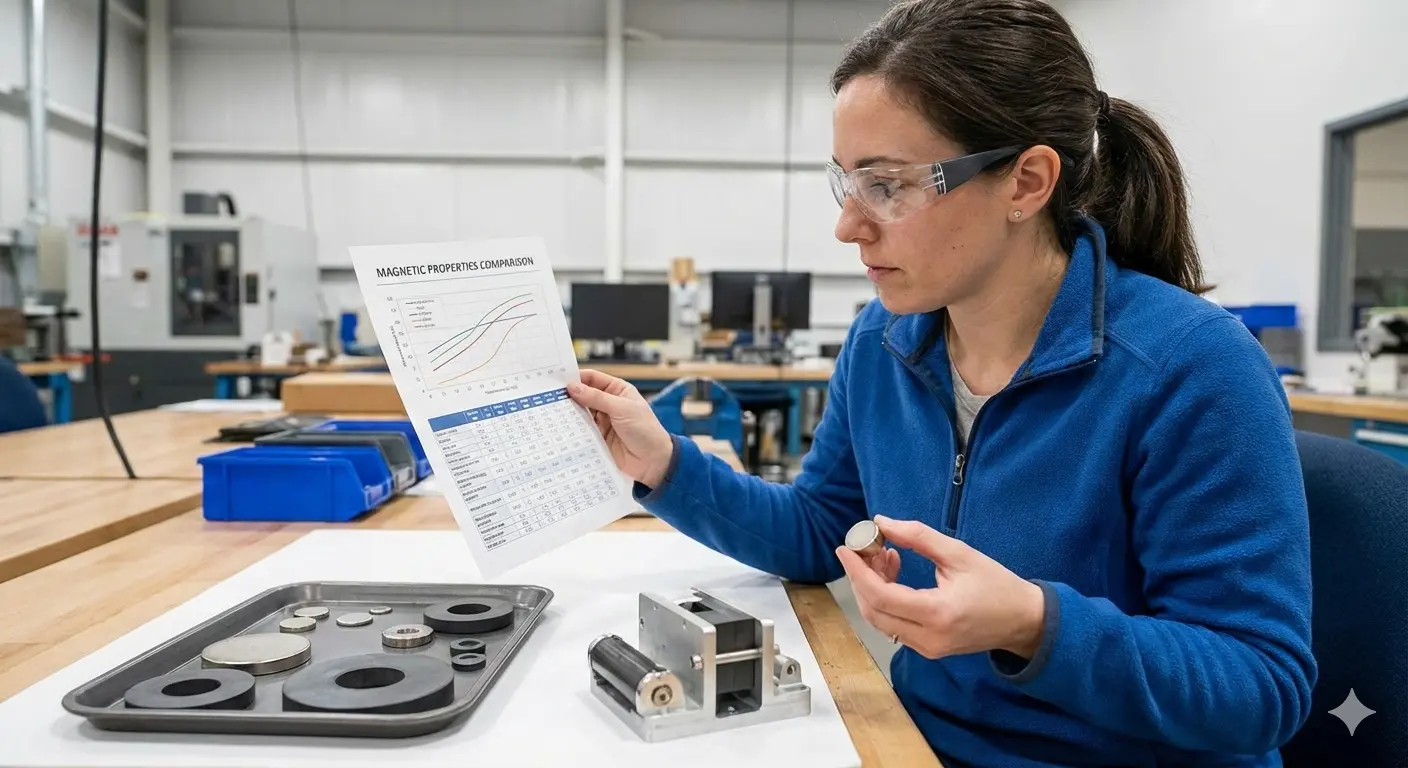
Selecting the right magnet is a critical engineering and procurement decision that directly impacts product performance, reliability, cost control, and long-term supply stability. With multiple magnet materials, grades, and configurations available, a structured selection approach is essential to avoid overengineering, underperformance, or unnecessary cost exposure.
This guide outlines a practical, decision-oriented framework to help businesses choose the most suitable magnet for their specific application.
Table of Contents
- Step 1: Define the Performance Requirements
- Step 2: Evaluate Space and Weight Constraints
- Step 3: Consider Operating Temperature and Environment
- Step 4: Assess Cost and Total Ownership Impact
- Step 5: Align Magnet Type with Application Category
- Step 6: Address Supply Chain and Compliance Considerations
- Step 7: Validate Through Testing and Prototyping
- Conclusion
Step 1: Define the Performance Requirements
The first and most important step is to clearly define what the magnet must achieve.
Key questions include:
- Required magnetic force or holding strength
- Direction of magnetization and field distribution
- Tolerance for performance variation over time
High-performance applications such as motors, generators, and precision sensors typically require rare earth magnets, while simpler holding or separation tasks may be adequately served by ferrite or alnico magnets.
Step 2: Evaluate Space and Weight Constraints
Available space often determines material choice.
- Limited space or weight-sensitive designs: Rare earth magnets (NdFeB or SmCo)
- Larger allowable footprint: Ferrite magnets
In compact systems, selecting a weaker magnet often leads to larger assemblies, which can negatively affect overall product design and efficiency.
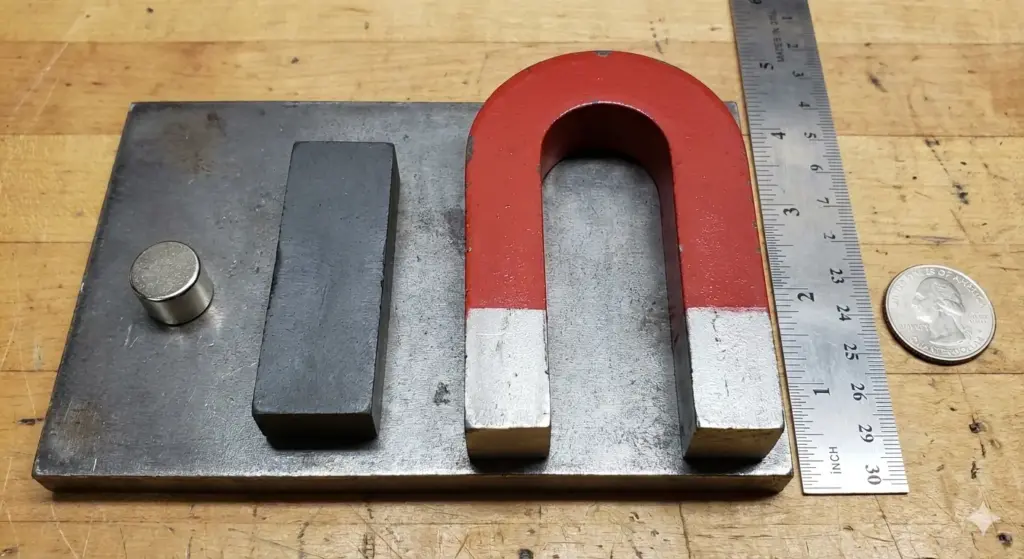
Step 3: Consider Operating Temperature and Environment
Environmental conditions play a decisive role in magnet selection.
Important factors include:
- Maximum and continuous operating temperature
- Exposure to moisture, chemicals, or corrosive agents
- Mechanical stress and vibration
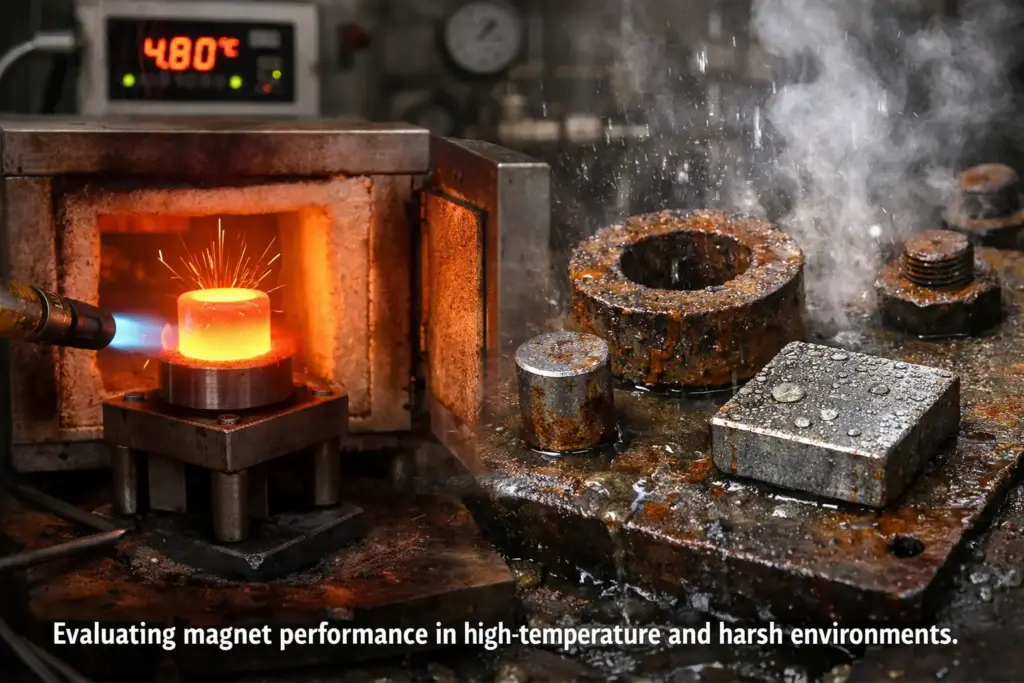
For high-temperature or harsh environments, SmCo or specialized ferrite grades may outperform standard NdFeB magnets. Proper coatings and surface treatments are also essential for corrosion resistance.
Step 4: Assess Cost and Total Ownership Impact
Magnet selection should be based on total cost of ownership, not unit price alone.
Consider:
- Raw material and manufacturing costs
- Impact on system efficiency and energy consumption
- Assembly and maintenance implications
In many cases, a higher-cost magnet enables system-level savings through reduced size, lower energy use, or simplified assembly.
Step 5: Align Magnet Type with Application Category
Common Magnet Types and Typical Uses
- Neodymium (NdFeB): Motors, generators, automation, electronics
- Samarium Cobalt (SmCo): Aerospace, medical, high-temperature applications
- Ferrite (Ceramic): Speakers, appliances, separators, general industrial use
- Alnico: Sensors, instruments, high-temperature stability needs
Matching magnet type to functional requirements ensures performance consistency and cost efficiency.
Step 6: Address Supply Chain and Compliance Considerations
In industrial and OEM environments, supply continuity is as important as technical fit.
Key considerations include:
- Availability and lead time stability
- Regulatory and export control exposure
- Traceability and quality certifications
Engaging with an experienced magnet supplier early in the design phase helps mitigate risk and avoid late-stage redesigns.
Step 7: Validate Through Testing and Prototyping
Before finalizing a magnet specification:
- Conduct performance testing under real operating conditions
- Validate thermal, mechanical, and environmental limits
- Confirm consistency across production batches
Prototype validation reduces failure risk and accelerates time to market.
Conclusion
Choosing the right magnet is a multidisciplinary decision that spans engineering, procurement, and supply chain management. By systematically evaluating performance needs, environmental conditions, cost implications, and supply risks, businesses can select magnets that support both technical excellence and long-term operational resilience.
A structured magnet selection process transforms magnets from simple components into strategic enablers of product success.
Leave a Reply