
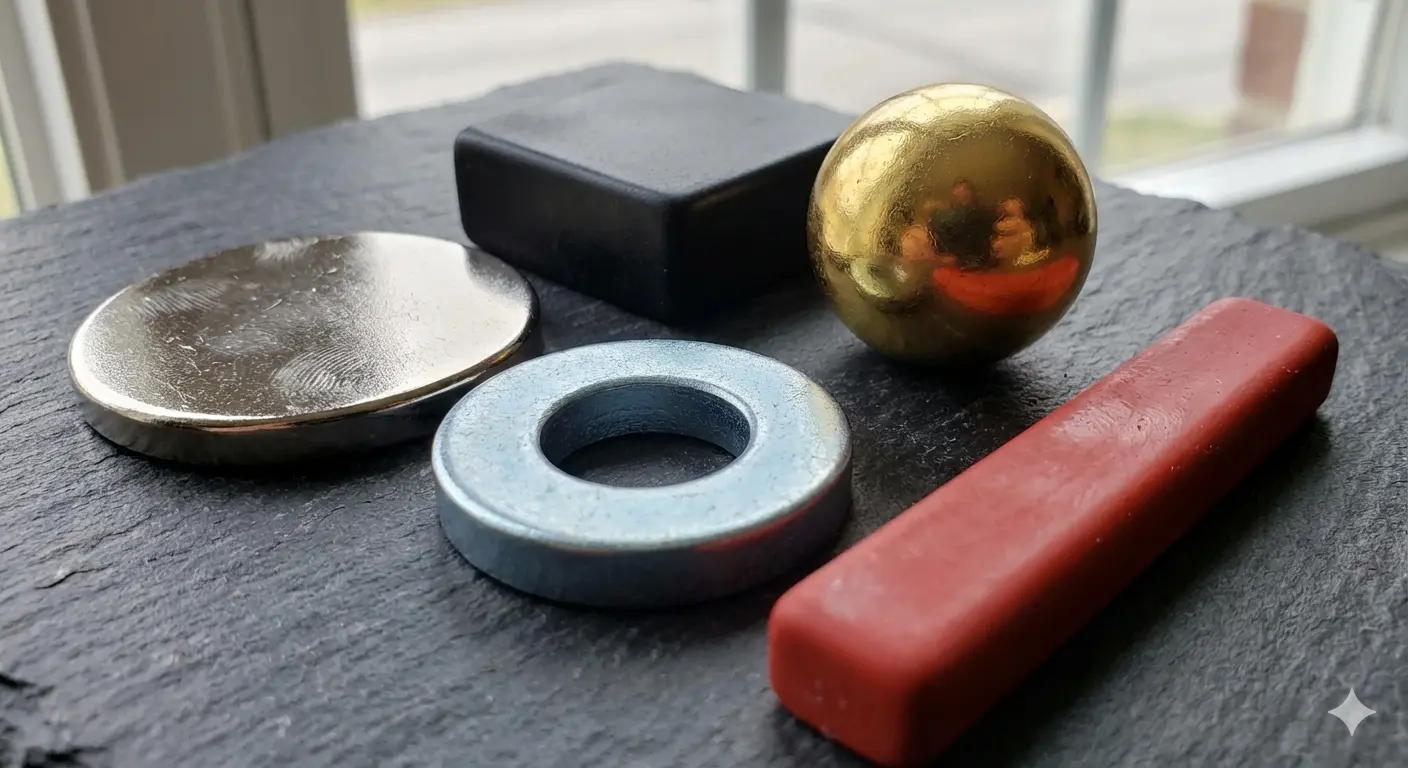
In industrial and commercial applications, magnet performance is not defined solely by magnetic strength. Environmental durability—especially corrosion resistance—plays a decisive role in product reliability, lifecycle cost, and safety compliance. Without appropriate surface protection, even high-performance magnets can degrade rapidly, leading to premature failure and operational risk.
Understanding magnet coatings and their role in corrosion resistance is therefore essential for engineers, procurement teams, and product managers.
Why Magnets Need Corrosion Protection
Many magnet materials, particularly neodymium iron boron (NdFeB), contain iron and rare earth elements that are highly susceptible to oxidation. When exposed to moisture, chemicals, or salt spray, unprotected magnets can:
- Corrode and lose structural integrity
- Experience surface flaking or cracking
- Suffer reduced magnetic performance over time
In regulated or mission-critical environments, corrosion is not just a quality issue—it is a risk management concern.
Common Magnet Coating Types and Their Functions
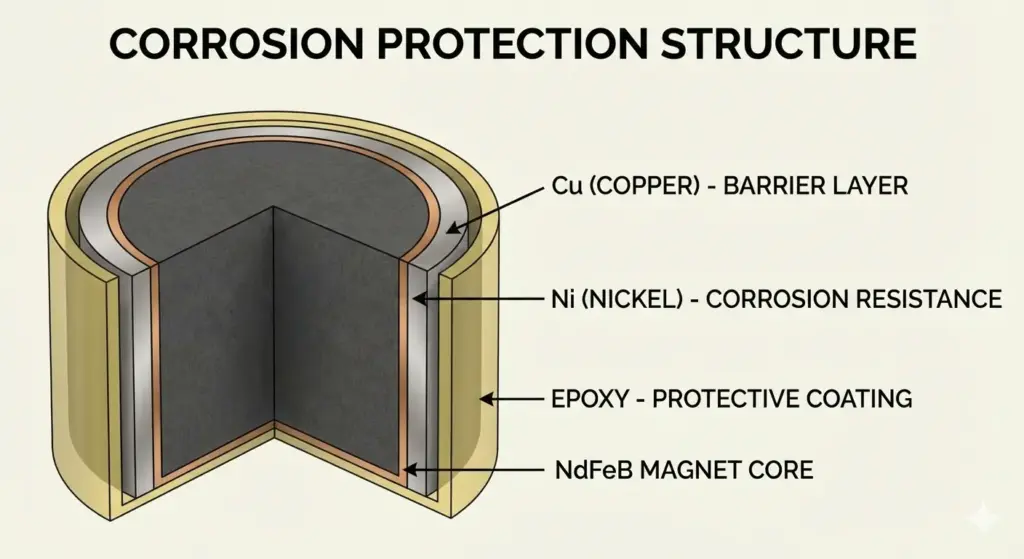
Nickel-Based Coatings (Ni-Cu-Ni)
Nickel plating is the most widely used coating for neodymium magnets.
Key characteristics:
- Good corrosion resistance in dry or mildly humid environments
- Smooth, metallic finish suitable for precision assemblies
- Cost-effective for high-volume production
Ni-Cu-Ni coatings are commonly used in electronics, motors, and general industrial applications.
Epoxy Coatings
Epoxy coatings provide enhanced protection in more aggressive environments.
Key characteristics:
- Excellent resistance to moisture, chemicals, and salt spray
- Available in black or colored finishes
- Slightly thicker coating layer compared to metal plating
Epoxy-coated magnets are frequently used in outdoor, marine, and industrial environments where humidity is a persistent risk.
Zinc Coatings
Zinc plating offers basic corrosion protection at a lower cost.
Key characteristics:
- Moderate corrosion resistance
- Thinner coating layer
- Suitable for indoor or low-risk environments
Zinc coatings are typically selected for cost-sensitive applications with limited exposure to moisture.
Parylene and Polymer Coatings
For specialized applications, advanced polymer coatings may be required.
Key characteristics:
- Uniform, pinhole-free coverage
- Excellent chemical and electrical insulation
- Suitable for medical and electronic applications
Although more expensive, these coatings support high-reliability use cases.
Coating Selection by Magnet Material
Different magnet materials have different corrosion behaviors.
- NdFeB magnets: Require coating in almost all applications
- SmCo magnets: Naturally corrosion resistant; coating often optional
- Ferrite magnets: Excellent inherent corrosion resistance
- Alnico magnets: Good corrosion stability, usually uncoated
Material selection and coating strategy should be evaluated together, not in isolation.
Environmental Factors That Influence Coating Choice
When selecting a magnet coating, consider the full operating environment:
- Humidity and water exposure
- Temperature fluctuations
- Chemical contact or salt spray
- Mechanical wear and abrasion
A mismatch between coating and environment is a common root cause of magnet failure in the field.

Corrosion Testing and Quality Standards
Professional magnet suppliers validate coating performance through standardized testing, such as:
- Salt spray (fog) testing
- Humidity aging tests
- Adhesion and thickness inspection
From a procurement standpoint, documented testing and quality control processes are essential indicators of supplier capability.
Cost vs. Performance Trade-Offs
Higher-grade coatings increase upfront cost but often reduce total lifecycle cost by:
- Extending service life
- Reducing maintenance and replacement
- Preventing downstream equipment damage
In B2B and OEM environments, coating decisions should be based on risk exposure rather than short-term cost optimization.
Conclusion
Magnet coatings are not a cosmetic feature—they are a functional necessity that directly impacts durability, safety, and long-term performance. Selecting the right coating requires a clear understanding of magnet material, operating environment, and reliability expectations.
By aligning coating strategy with real-world conditions, businesses can protect their magnetic components, stabilize product performance, and reduce avoidable operational risk.
Leave a Reply