
In high-performance magnetic applications, coating selection is not a cosmetic decision—it is a risk management strategy. For permanent magnets such as Neodymium Iron Boron (NdFeB), surface protection directly impacts durability, corrosion resistance, and long-term magnetic stability.
NdFeB magnets are highly susceptible to oxidation due to their iron content. Without proper surface treatment, environmental exposure can lead to corrosion, structural degradation, and performance loss.
This guide provides a structured comparison of the three most widely used coatings:
- Nickel-Copper-Nickel (Ni-Cu-Ni)
- Epoxy
- Parylene
Each serves a different operational priority. The optimal choice depends on your environment, regulatory requirements, and lifecycle expectations.
Table of Contents
Why Coating Matters for NdFeB Magnets
Uncoated NdFeB magnets oxidize rapidly, especially in humid or corrosive environments. Once corrosion begins, magnetic flux density can decrease due to material breakdown.
A properly selected coating provides:
- Corrosion resistance
- Mechanical protection
- Chemical resistance
- Electrical insulation (if required)
- Enhanced product lifespan
The coating should align with the magnet’s working environment—not just initial cost considerations.
Nickel-Copper-Nickel (Ni-Cu-Ni): The Industry Standard
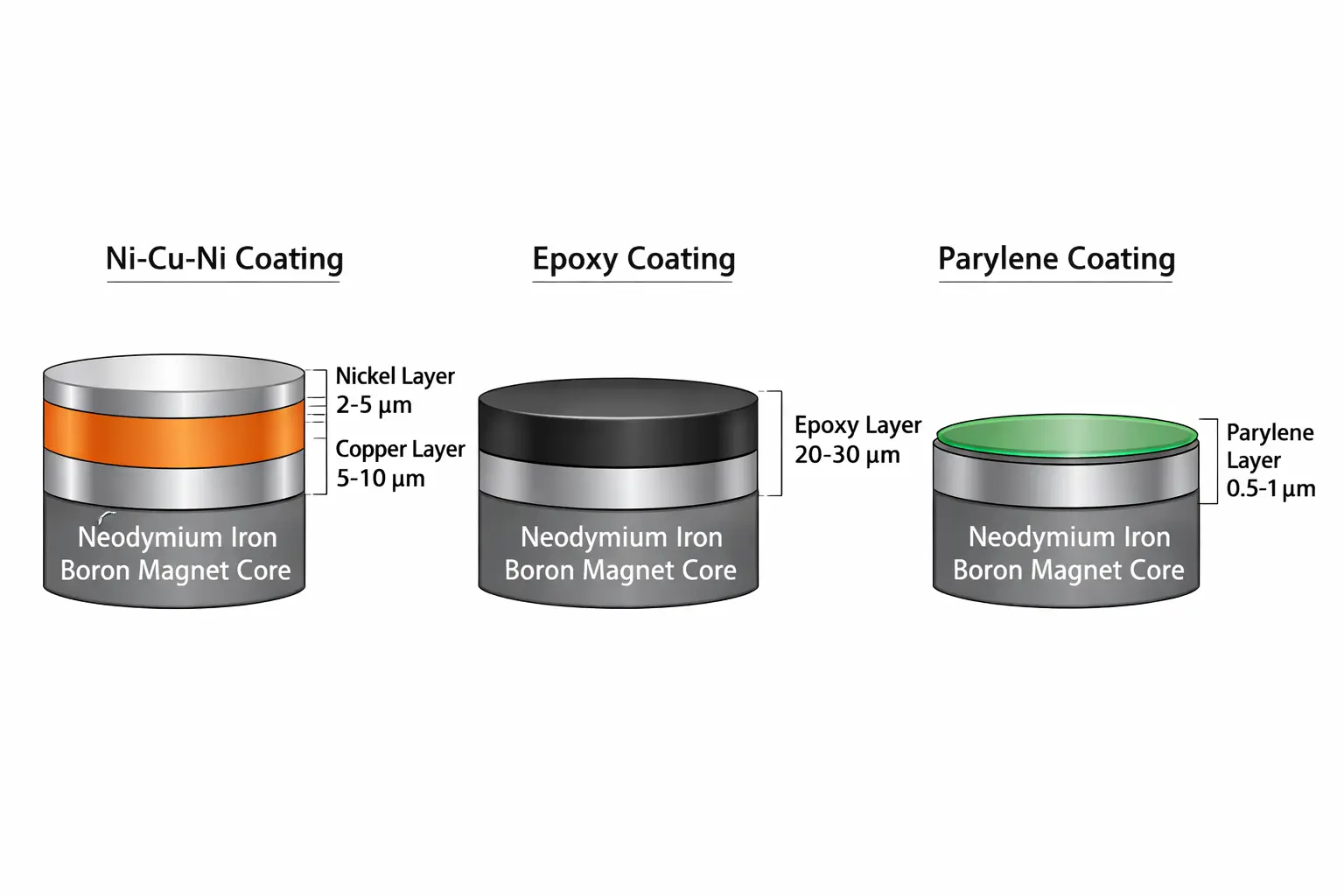
Structure
A triple-layer electroplated system:
- Nickel (inner layer)
- Copper (middle buffer layer)
- Nickel (outer protective layer)
Advantages
- Strong mechanical durability
- Bright metallic finish
- Good wear resistance
- Cost-effective for large-scale industrial use
Limitations
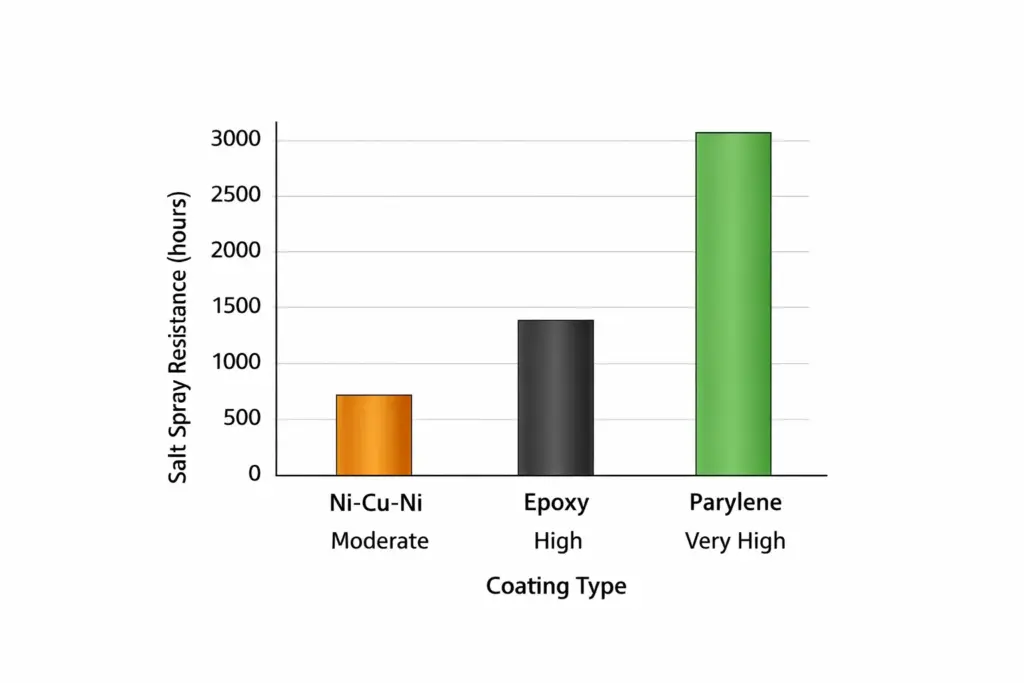
- Moderate corrosion resistance (typically 48–96 hours salt spray)
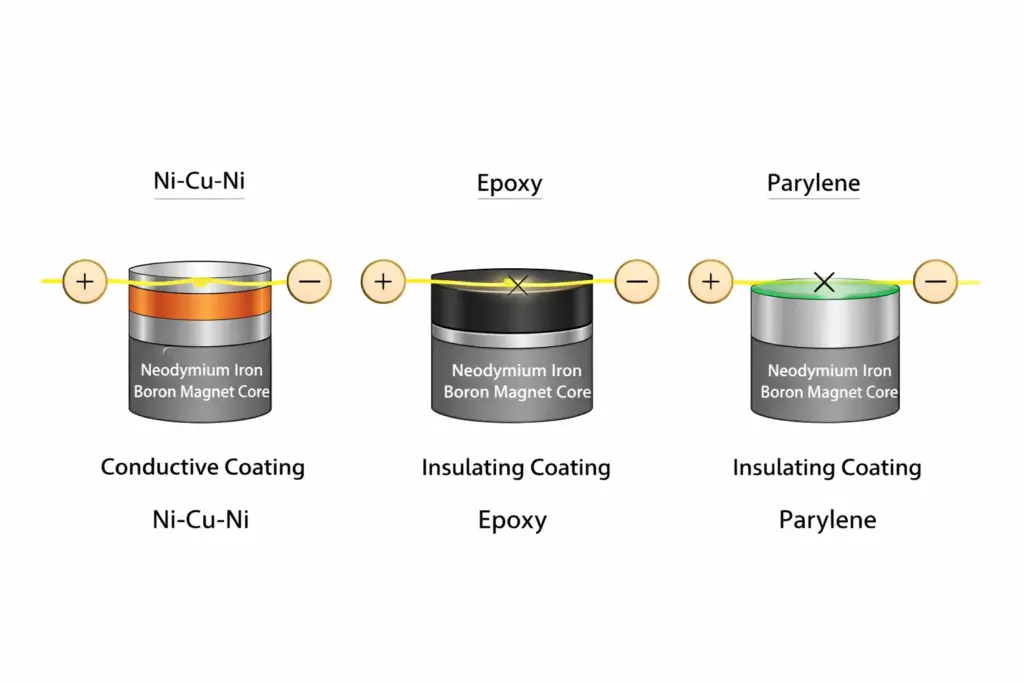
- Conductive surface
- Not ideal for prolonged marine or high-humidity exposure
Best Applications
- Consumer electronics
- Industrial assemblies
- Motors and sensors
- Indoor environments
Strategic Positioning:
Ni-Cu-Ni is the default option when cost-efficiency and mechanical robustness are the primary objectives.
Epoxy Coating: Enhanced Corrosion Protection
Epoxy is an organic polymer coating applied over electroplated layers or directly over the magnet surface.
Advantages
- Excellent corrosion resistance (can exceed 500+ hours salt spray)
- Non-conductive
- Chemical resistant
- Available in black or custom colors
Limitations
- Lower abrasion resistance compared to nickel
- Thicker coating layer (may affect tight-tolerance assemblies)
- Surface can scratch under heavy mechanical stress
Best Applications
- Marine environments
- Outdoor equipment
- Automotive components
- High-humidity climates
Strategic Positioning:
Epoxy is a risk-mitigation solution for moisture-intensive environments where corrosion resistance outweighs cosmetic appearance.
Parylene: Ultra-Thin, High-Performance Barrier
Parylene is a vapor-deposited polymer coating applied in a vacuum chamber. It forms a uniform, pinhole-free protective layer.
Advantages
- Extremely thin and uniform (micron-level precision)
- Superior chemical resistance
- Biocompatible (medical-grade options available)
- Excellent dielectric properties
Limitations
- Higher cost
- Specialized processing required
- Lower scratch resistance compared to metal coatings
Best Applications
- Medical devices
- Aerospace systems
- High-precision electronics
- Chemically aggressive environments
Strategic Positioning:
Parylene is a premium engineering solution for mission-critical and regulated industries where precision and chemical resistance are mandatory.
Technical Comparison Overview
| Feature | Ni-Cu-Ni | Epoxy | Parylene |
|---|---|---|---|
| Corrosion Resistance | Moderate | High | Very High |
| Thickness | Medium | Thick | Ultra-thin |
| Electrical Conductivity | Conductive | Non-conductive | Non-conductive |
| Mechanical Wear Resistance | High | Moderate | Moderate |
| Chemical Resistance | Moderate | High | Excellent |
| Cost Level | Low–Medium | Medium | High |
Environmental Decision Matrix
Indoor Dry Environments
Nickel-Copper-Nickel is sufficient and cost-efficient.
High Humidity or Marine Conditions
Epoxy provides stronger long-term corrosion protection.
Medical or Precision Electronics
Parylene ensures uniform coverage and regulatory compliance.
Chemical Exposure or Harsh Industrial Settings
Parylene or Epoxy, depending on mechanical demands.
Cost vs Lifecycle Strategy
Short-term procurement savings can result in long-term warranty exposure if corrosion failure occurs.
A forward-looking sourcing strategy considers:
- Total lifecycle cost
- Replacement risk
- Brand reputation impact
- Environmental compliance requirements
In high-value applications, upgrading from Ni-Cu-Ni to epoxy or parylene can significantly reduce operational risk.
Final Recommendation
There is no universally “best” coating—only the most appropriate one for your operating environment.
- Choose Ni-Cu-Ni for structural durability and cost control.
- Choose Epoxy for enhanced corrosion resistance in humid or outdoor settings.
- Choose Parylene for precision, chemical resistance, and regulated industries.
Selecting the right coating is not an afterthought—it is a strategic engineering decision that directly affects performance stability, product longevity, and customer satisfaction.
Leave a Reply