
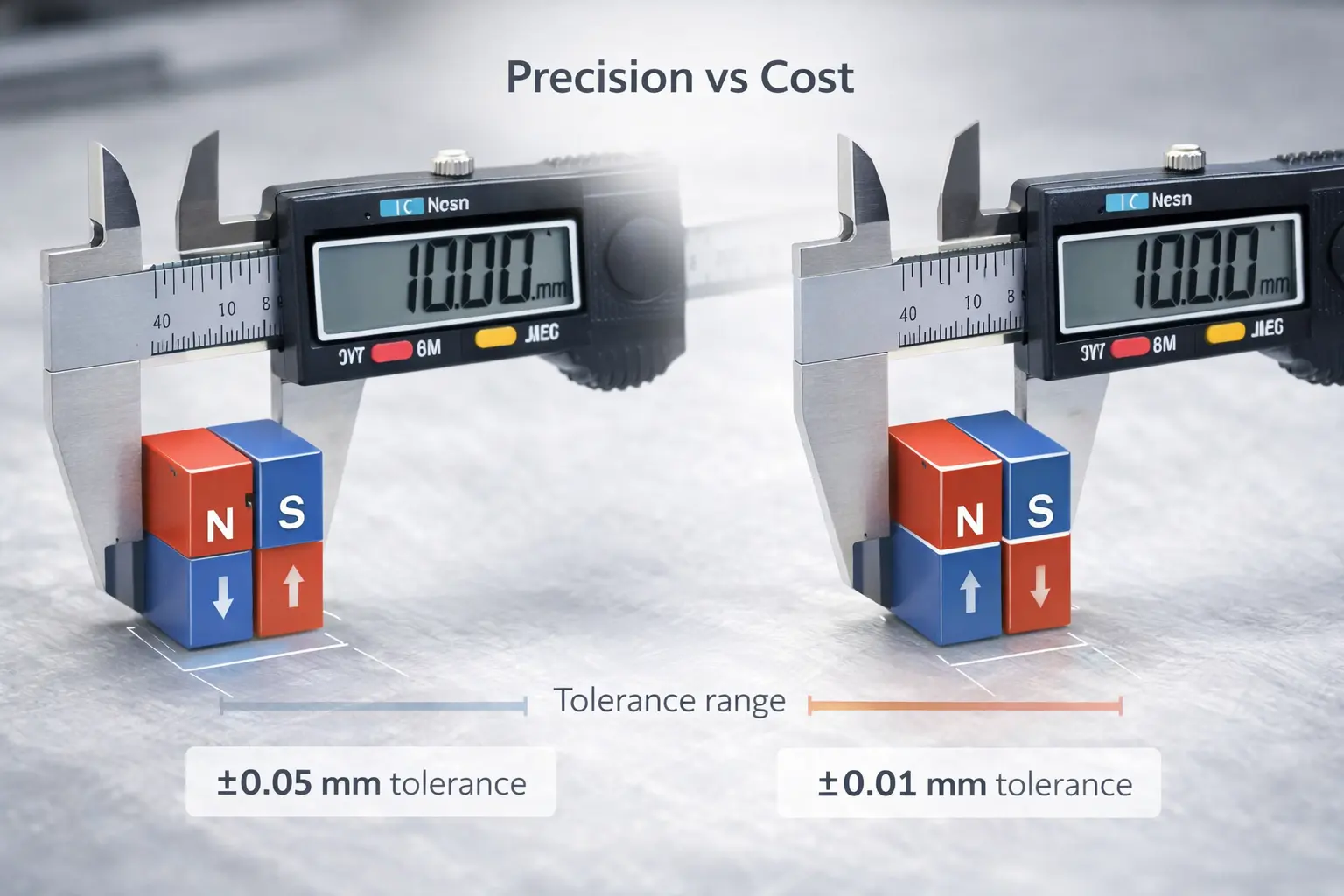
In permanent magnet manufacturing, dimensional tolerance plays a critical role in both product performance and production cost. While tighter tolerances may appear beneficial, specifying unnecessarily strict tolerances can significantly increase manufacturing complexity and pricing.
For many applications, a tolerance of ±0.05 mm can meet functional requirements while keeping costs under control, whereas ±0.01 mm typically requires additional precision processing. Understanding how magnets are produced—and especially how grinding processes work—helps engineers choose tolerances that balance performance and cost efficiency.
Table of Contents
- What Are Magnet Tolerances?
- Why Sintered Magnets Require Grinding
- The Role of Grinding in Achieving Tight Tolerances
- Why ±0.01 mm Tolerance Increases Cost
- When Tight Tolerances Are Necessary
- When ±0.05 mm Is the Smart Choice
- How Engineers Can Optimize Magnet Tolerances
- The Cost–Performance Balance
- Conclusion
What Are Magnet Tolerances?
Magnet tolerance refers to the allowable variation in a magnet’s dimensions compared to its nominal size.
For example:
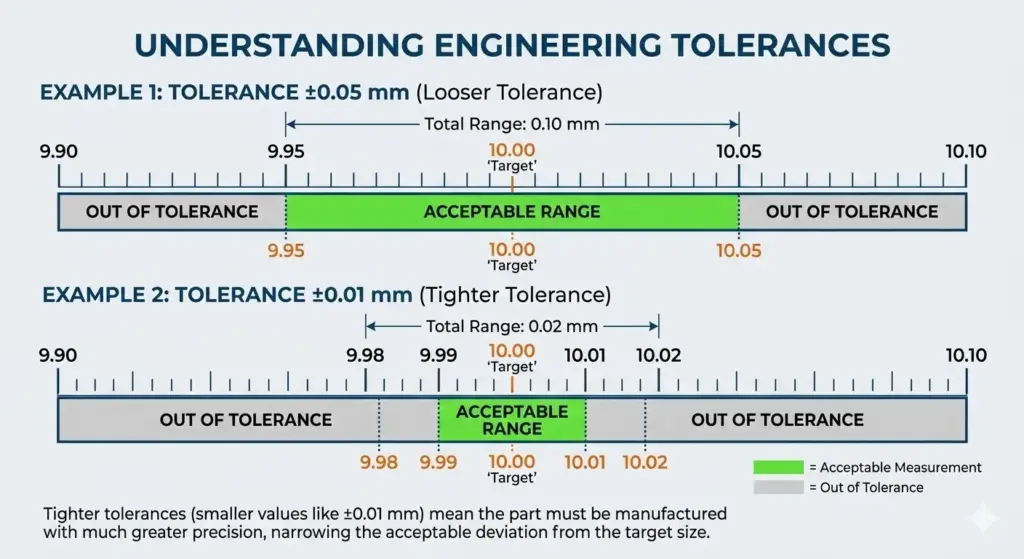
- A 10 mm magnet with ±0.05 mm tolerance can range from 9.95 mm to 10.05 mm
- A 10 mm magnet with ±0.01 mm tolerance can range from 9.99 mm to 10.01 mm
The smaller the tolerance range, the more precise the manufacturing process must be.
Because most high-performance permanent magnets—especially NdFeB—are produced through sintering and then machined to final dimensions, the grinding process becomes the main factor affecting tolerance and cost.
Why Sintered Magnets Require Grinding
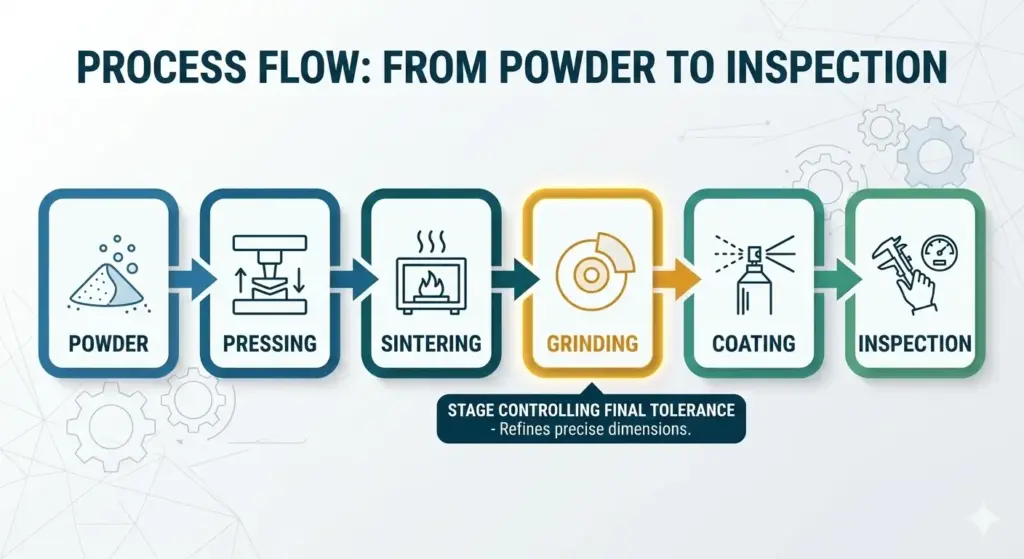
Sintered magnets are produced using powder metallurgy. The typical production flow includes:
- Raw material melting and alloy preparation
- Powder milling
- Pressing the powder in a magnetic field
- High-temperature sintering
- Rough shaping
- Precision grinding
After sintering, magnets shrink slightly and surfaces are not dimensionally accurate. Grinding is therefore required to achieve precise sizes.
However, magnets are hard and brittle materials, making precision machining more difficult than machining metals.
The Role of Grinding in Achieving Tight Tolerances
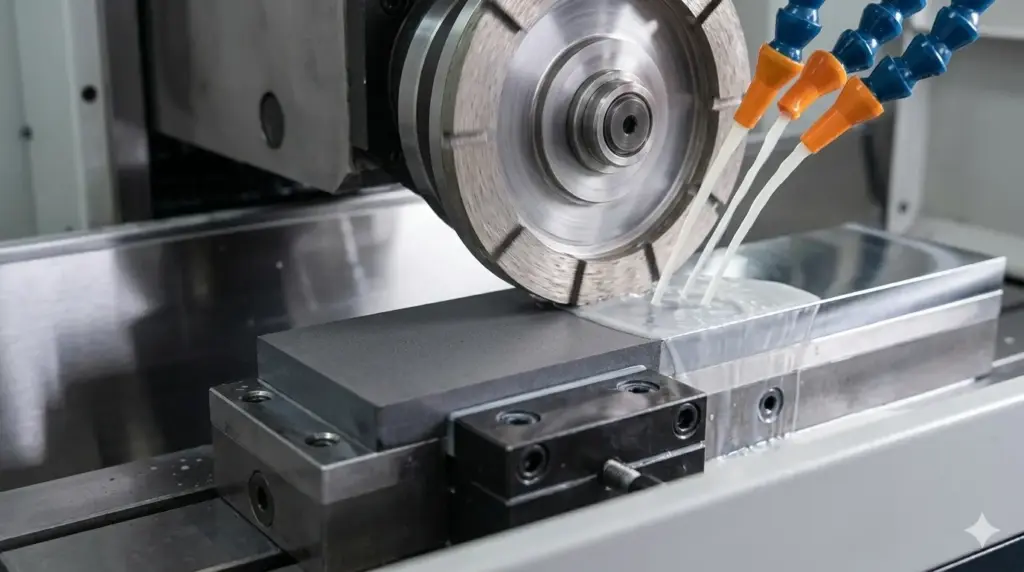
Grinding uses diamond wheels to remove small amounts of material from the magnet surface.
When tolerances are moderate—such as ±0.05 mm—the process is relatively efficient:
- Fewer grinding passes
- Higher material removal rate
- Lower inspection requirements
- Higher production yield
But achieving ±0.01 mm tolerance dramatically changes the process.
Why ±0.01 mm Tolerance Increases Cost
1. More Grinding Steps
Tighter tolerance requires multiple finishing passes to gradually approach the target dimension. Each pass removes only a very small amount of material to avoid cracking or chipping.
This increases machining time significantly.
2. Slower Grinding Speed
High precision requires slower grinding speeds to maintain dimensional accuracy and surface quality. Reduced processing speed directly increases production cost.
3. Higher Inspection Frequency
For ultra-tight tolerances:
- Measurements must be taken more frequently
- Precision gauges or coordinate measuring machines are required
- Additional quality control procedures are implemented
These steps add labor and equipment costs.
4. Higher Scrap Risk
Permanent magnets—especially NdFeB—are brittle. During grinding:
- Edges may chip
- Corners may crack
- Parts may fall outside tolerance
When tolerance is ±0.01 mm, even minor deviations lead to rejection. Scrap rates therefore increase.
5. Specialized Equipment Requirements
Maintaining ultra-tight tolerances often requires:
- High-precision CNC grinders
- Advanced fixtures
- Temperature-controlled environments
These investments are reflected in the final product price.
When Tight Tolerances Are Necessary
While tighter tolerances increase cost, some applications genuinely require them. Examples include:
- High-speed electric motor rotors
- Precision medical devices
- Optical positioning systems
- High-accuracy sensor assemblies
In these situations, dimensional accuracy directly affects performance or safety.
When ±0.05 mm Is the Smart Choice
For many applications, ±0.05 mm tolerance is more than sufficient.
Examples include:
- Magnetic separators
- Holding magnets
- Consumer electronics components
- Magnetic couplings
- General industrial assemblies
In these cases, specifying tighter tolerances offers little functional benefit but increases manufacturing cost.
How Engineers Can Optimize Magnet Tolerances
To achieve the best balance between cost and performance, consider the following guidelines:
Define functional requirements first
Identify which dimensions truly affect performance.
Avoid default ultra-tight tolerances
Not every magnet dimension requires ±0.01 mm precision.
Consult the magnet manufacturer early
Manufacturers can recommend cost-effective tolerances based on production capabilities.
Focus on critical dimensions only
Allow looser tolerances on non-critical surfaces.
This design strategy improves manufacturability while maintaining system performance.
The Cost–Performance Balance
In magnet manufacturing, tighter tolerances do not automatically mean better products. Instead, the goal should be functional precision—meeting the real needs of the application without over-engineering.
Choosing ±0.05 mm instead of ±0.01 mm often reduces machining time, lowers scrap rates, and improves production efficiency, resulting in substantial cost savings.
Conclusion
Magnet tolerances are a key factor in manufacturing cost. Because sintered magnets require diamond grinding to achieve final dimensions, tighter tolerances significantly increase machining time, inspection requirements, and scrap risk.
For many applications, specifying reasonable tolerances such as ±0.05 mm delivers the right balance between precision and affordability.
By understanding the grinding process and working closely with magnet manufacturers, engineers can design magnet components that meet performance requirements while keeping project budgets under control.
Leave a Reply