
Permanent magnets are widely used in motors, sensors, medical equipment, and industrial automation systems. A common question from engineers and buyers is: How long do permanent magnets actually last?
Under normal conditions, high-quality permanent magnets can maintain their magnetic strength for decades. However, their lifespan depends on several factors, including temperature, external magnetic fields, mechanical stress, and environmental conditions. Understanding the science behind magnetic decay helps users design reliable systems and avoid unnecessary performance loss.
Do Permanent Magnets Lose Strength Over Time?
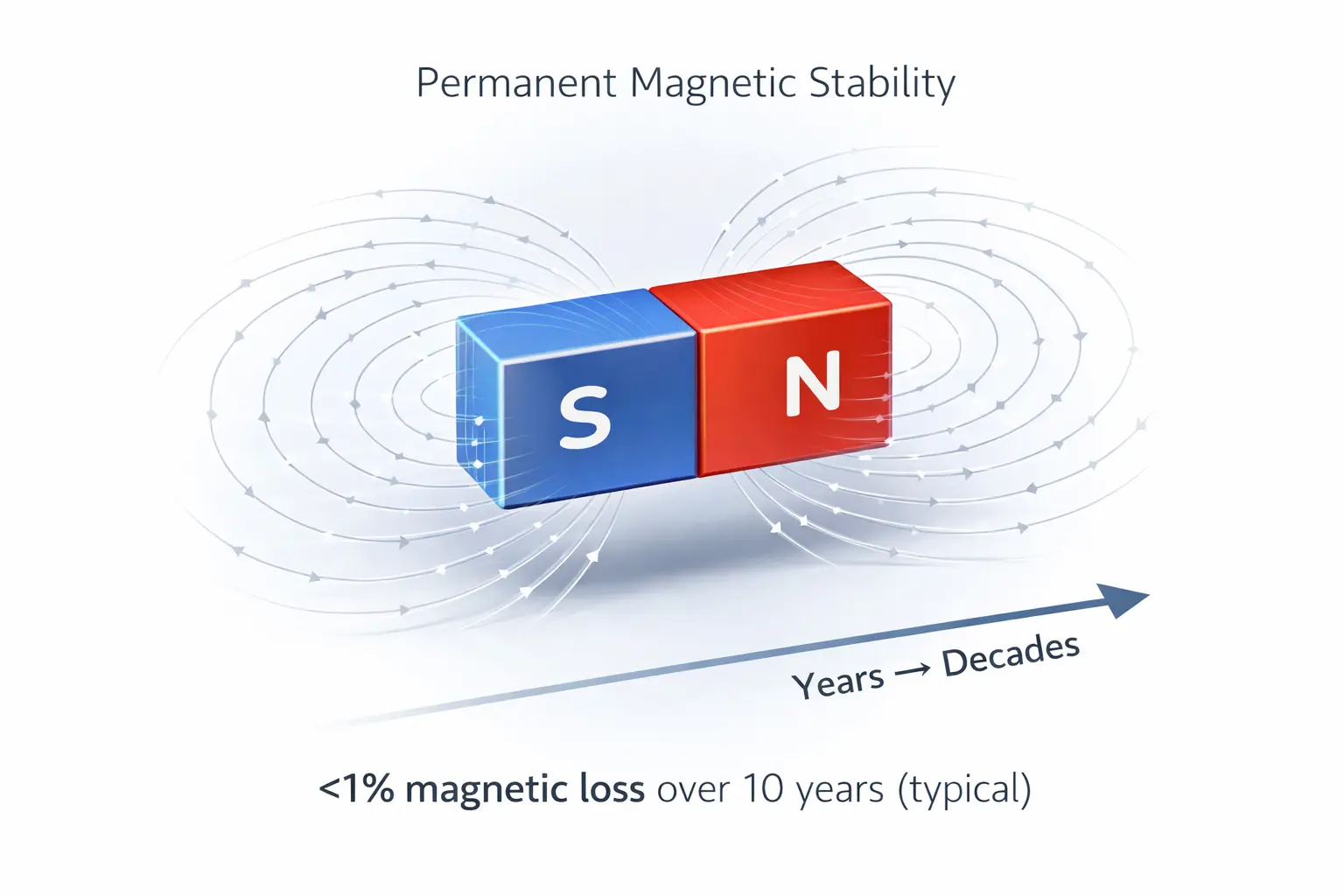
In theory, a permanent magnet can maintain its magnetization for many decades or even centuries if it is not exposed to damaging conditions. The magnetic structure inside the material is highly stable.
For example, modern neodymium magnets made from NdFeB alloy have extremely strong magnetic domains that remain aligned after magnetization. If the magnet operates within its recommended limits, the magnetic flux loss can be extremely small—often less than 1% over 10 years.
This stability is based on fundamental magnetic principles such as remanence and coercivity, which define how well a magnet resists demagnetization.
The Science Behind Magnetic Stability
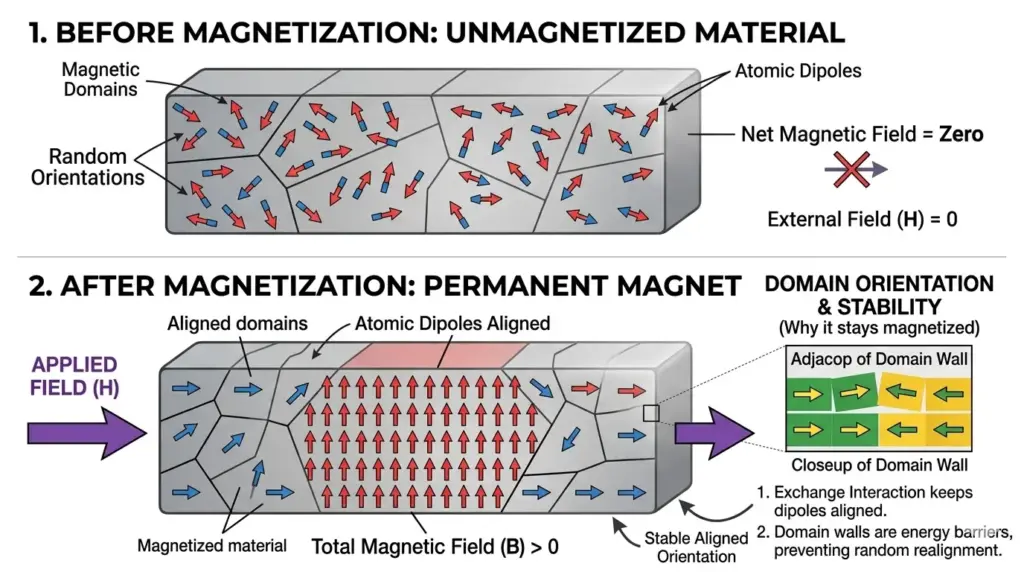
Permanent magnets consist of many microscopic regions called magnetic domains. Each domain acts like a tiny magnet with its own magnetic direction.
When a magnet is magnetized, these domains align in the same direction. The alignment creates a stable magnetic field that persists even when the external magnetizing force is removed.
Over time, if external forces disturb this alignment, some domains may rotate away from their original direction. This process is known as magnetic decay.
However, modern high-coercivity magnets strongly resist this process, which is why permanent magnets can remain functional for very long periods.
Factors That Can Cause Magnetic Decay
Although permanent magnets are stable, certain conditions can accelerate magnetic strength loss.
1. High Temperature
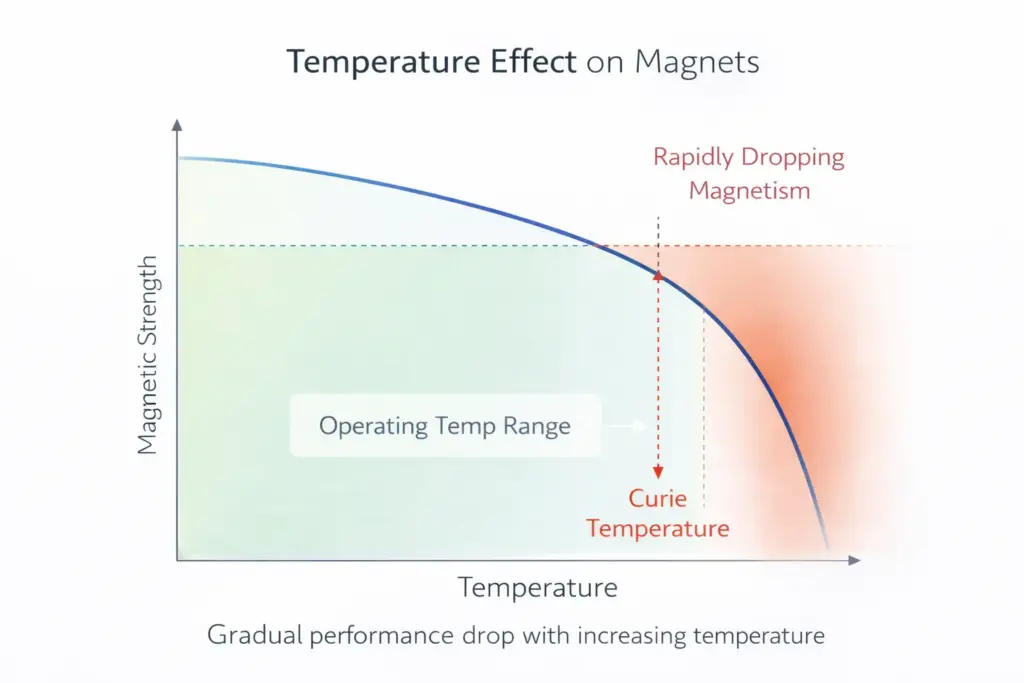
Temperature is the most common cause of magnet performance degradation.
Every magnet material has a maximum operating temperature. When this limit is exceeded:
- Magnetic domains may lose alignment
- Partial demagnetization may occur
- Magnetic flux density decreases
If the temperature reaches the Curie temperature, the magnet will lose its magnetization entirely.
For neodymium magnets, typical operating limits range from 80°C to 200°C, depending on the magnet grade.
2. Exposure to Strong Opposing Magnetic Fields
A strong external magnetic field in the opposite direction can force magnetic domains to rotate, weakening the magnet.
This is known as demagnetization and can occur in:
- Electric motor assemblies
- Magnetic testing environments
- Improper storage conditions
Magnets with higher coercivity are more resistant to this effect.
3. Mechanical Shock or Physical Damage
Permanent magnets—especially sintered neodymium magnets—are brittle materials.
Severe mechanical impact can:
- Crack the magnet
- Disturb internal domain alignment
- Reduce effective magnetic strength
Protective coatings and proper mechanical design help reduce this risk.
4. Corrosion and Environmental Damage
If a magnet is exposed to moisture or corrosive environments, oxidation may occur. Corrosion can damage the magnet’s structure and indirectly affect magnetic performance.
To prevent this, magnets often use protective coatings such as:
- Nickel-copper-nickel plating
- Epoxy coatings
- Zinc coatings
These layers protect the magnet from environmental degradation.
Expected Lifespan of Common Magnet Materials
Different magnet materials have different long-term stability characteristics.
- Strongest magnetic material available
- Typical magnetic loss: less than 1% per decade under normal conditions
Samarium Cobalt (SmCo)
- Excellent high-temperature stability
- Extremely resistant to corrosion and demagnetization
- Lower magnetic strength but very stable
- Excellent resistance to corrosion
With proper use, all of these materials can function reliably for 20–50 years or longer.
How to Extend the Lifespan of Permanent Magnets
To maximize magnet durability, engineers should follow several best practices.
Operate within temperature limits
Ensure the magnet grade matches the thermal requirements of the application.
Avoid strong opposing magnetic fields
Proper system design prevents unintentional demagnetization.
Protect magnets from corrosion
Use appropriate coatings for humid or chemically aggressive environments.
Use mechanical protection
Encapsulation or structural support prevents cracking or chipping.
Store magnets properly
Keep magnets separated by spacers and away from strong electromagnetic sources.
Are Permanent Magnets Truly Permanent?
The term “permanent” does not mean a magnet will last forever without any change. Instead, it means the magnet retains its magnetization without requiring continuous external power.
With modern materials and proper design, permanent magnets can maintain useful magnetic performance for several decades, making them extremely reliable components in industrial and consumer applications.
Conclusion
Permanent magnets are designed for long-term stability, and under proper operating conditions they can last for decades with minimal magnetic decay. The key factors affecting lifespan include temperature exposure, opposing magnetic fields, mechanical damage, and environmental corrosion.
By understanding these factors and selecting the correct magnet material and grade, engineers can ensure reliable magnetic performance throughout the life of a product.
In most applications, permanent magnets are not the limiting factor in system lifespan—when properly designed, they will continue performing long after other components require replacement.
Leave a Reply