
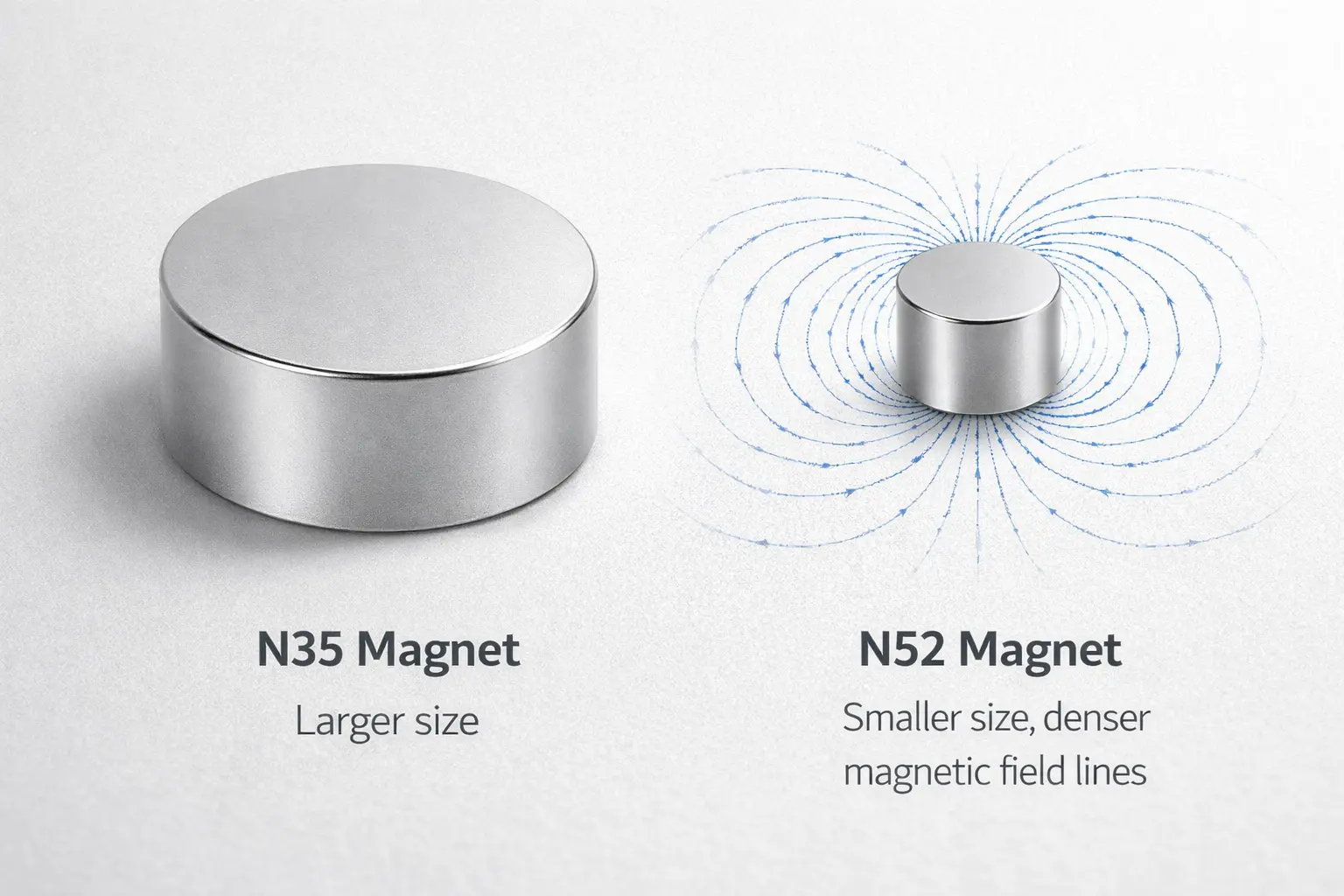
1. What Do N35 and N52 Mean?
In neodymium iron boron (NdFeB) magnets, grades such as N35, N42, and N52 represent different performance levels of the material.
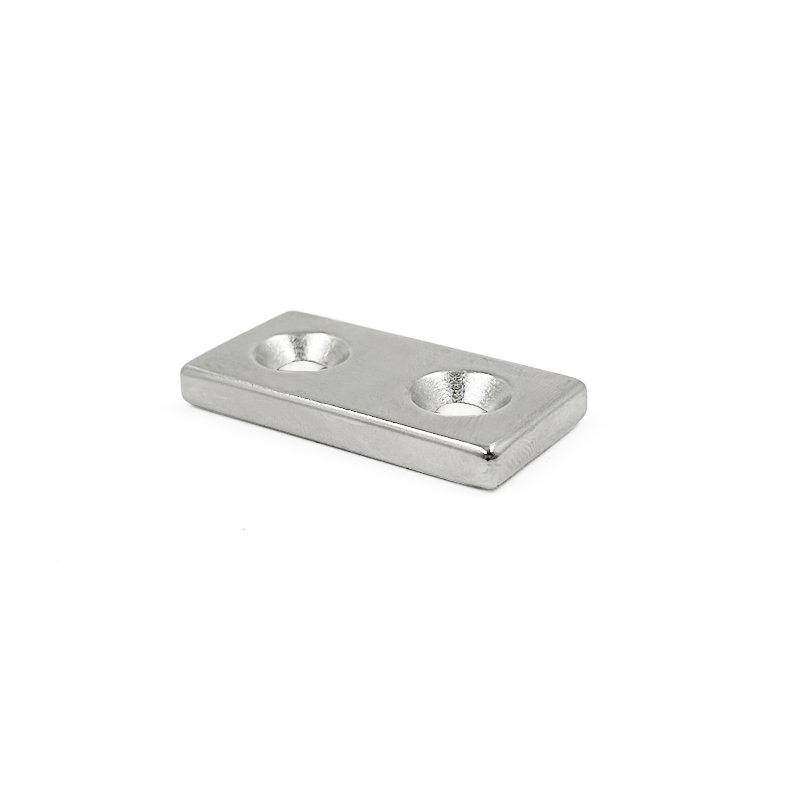
- “N” stands for Neodymium (NdFeB permanent magnet)
- The number indicates the maximum energy product (BHmax) of the magnet
- A higher number means stronger magnetic energy per unit volume
👉 Simply put: N52 is one of the strongest commercially available NdFeB magnet grades, while N35 is a widely used mid-range grade.
Table of Contents
2. Key Performance Differences Between N35 and N52
2.1 Magnetic Properties Comparison
| Parameter | N35 | N52 |
|---|---|---|
| Maximum Energy Product (BHmax) | ~35 MGOe | ~52 MGOe |
| Remanence Br (T) | 1.17–1.22 | 1.45–1.48 |
| Intrinsic Coercivity Hcj (kA/m) | ≥955 | ≥836 |
| Magnetic Strength | Medium | Very High |
| Volume Efficiency | Moderate | Excellent |
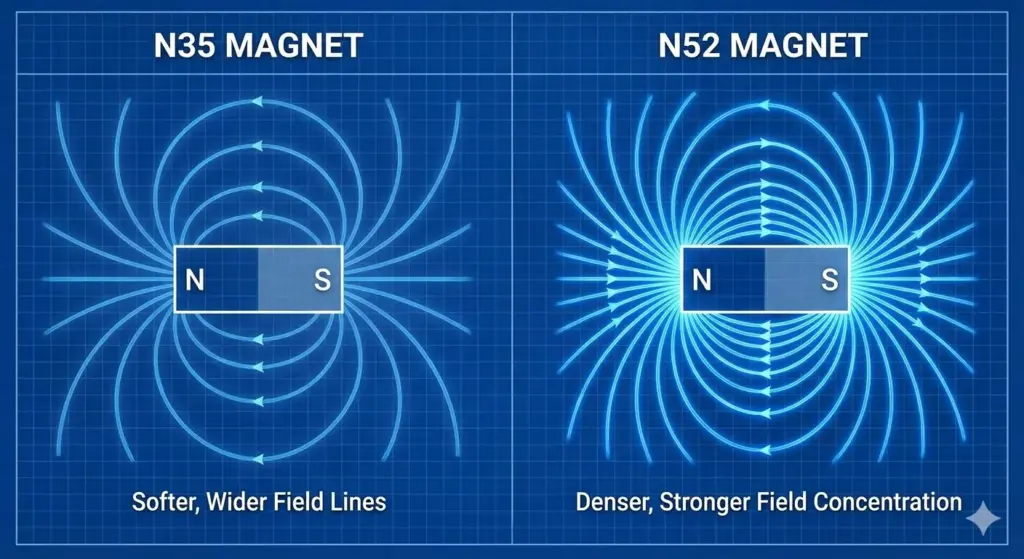
📌 For the same size, N52 produces significantly stronger magnetic force than N35.
📌 For the same magnetic requirement, N52 allows a smaller and lighter magnet design.
2.2 Size Reduction and Design Flexibility
- N35 magnets
- Require larger volume to achieve the same magnetic force
- Suitable when space is not limited
- N52 magnets
- Enable compact and lightweight designs
- Ideal for applications with strict space constraints
This makes N52 especially valuable in miniature motors, sensors, and consumer electronics.
3. Temperature Performance: Is N52 Always Better?
This is a common misconception.
Standard Operating Temperature
- N35: Maximum operating temperature ~80°C
- N52: Maximum operating temperature typically 60–80°C
⚠️ Important note:
A higher N-grade does not automatically mean better high-temperature performance.
In fact, N52 magnets can be more sensitive to heat-related demagnetization if temperature grade is not properly specified.
Choosing Magnets for High-Temperature Applications
For operating temperatures above 100°C, focus on temperature grades, not just N values:
- Examples: N35SH, N42SH, N48UH
👉 High magnetic strength ≠ high thermal stability
4. Cost Differences: Why Is N52 More Expensive?
4.1 Material and Manufacturing Factors
- N52 requires tighter composition control
- Higher sintering precision and grain alignment
- Lower production yield compared to N35
- Often uses higher-purity rare earth materials
4.2 Unit Cost vs System Cost
| Cost Factor | N35 | N52 |
|---|---|---|
| Price per kg | Lower | Higher |
| Material usage | More | Less |
| Total system cost | Not always lowest | Often optimized |
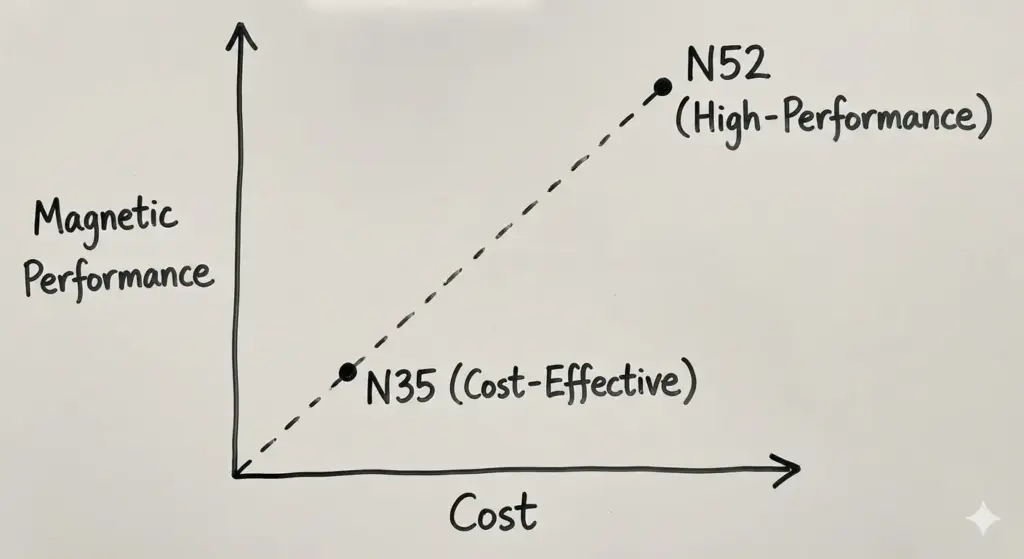
📌 Although N52 magnets cost more per unit weight, the reduced material usage can lower total system cost.
5. Typical Application Scenarios
When N35 Is the Better Choice
- Industrial fixtures and holding magnets
- Loudspeakers and standard motors
- Cost-sensitive, high-volume products
- Applications with sufficient installation space
When N52 Is the Better Choice
- High-performance motors and actuators
- Consumer electronics (smartphones, TWS earbuds)
- Medical devices and precision sensors
- Compact, lightweight, or high-efficiency systems
6. How to Choose Between N35 and N52
Ask these three key questions:
1️⃣ Is space limited?
→ Yes: Choose N52
2️⃣ Is cost the primary concern?
→ Yes: Choose N35
3️⃣ Is the operating temperature high?
→ Yes: Focus on temperature grade (H / SH / UH) rather than N-value
7. Conclusion: Balancing Performance and Cost
- N35: Cost-effective, reliable, and widely used
- N52: Maximum magnetic performance and excellent space efficiency
The best magnet is not the strongest one, but the one that best fits the application requirements.
Smart magnet selection is about performance, temperature, space, and total system cost—working together.
Leave a Reply