
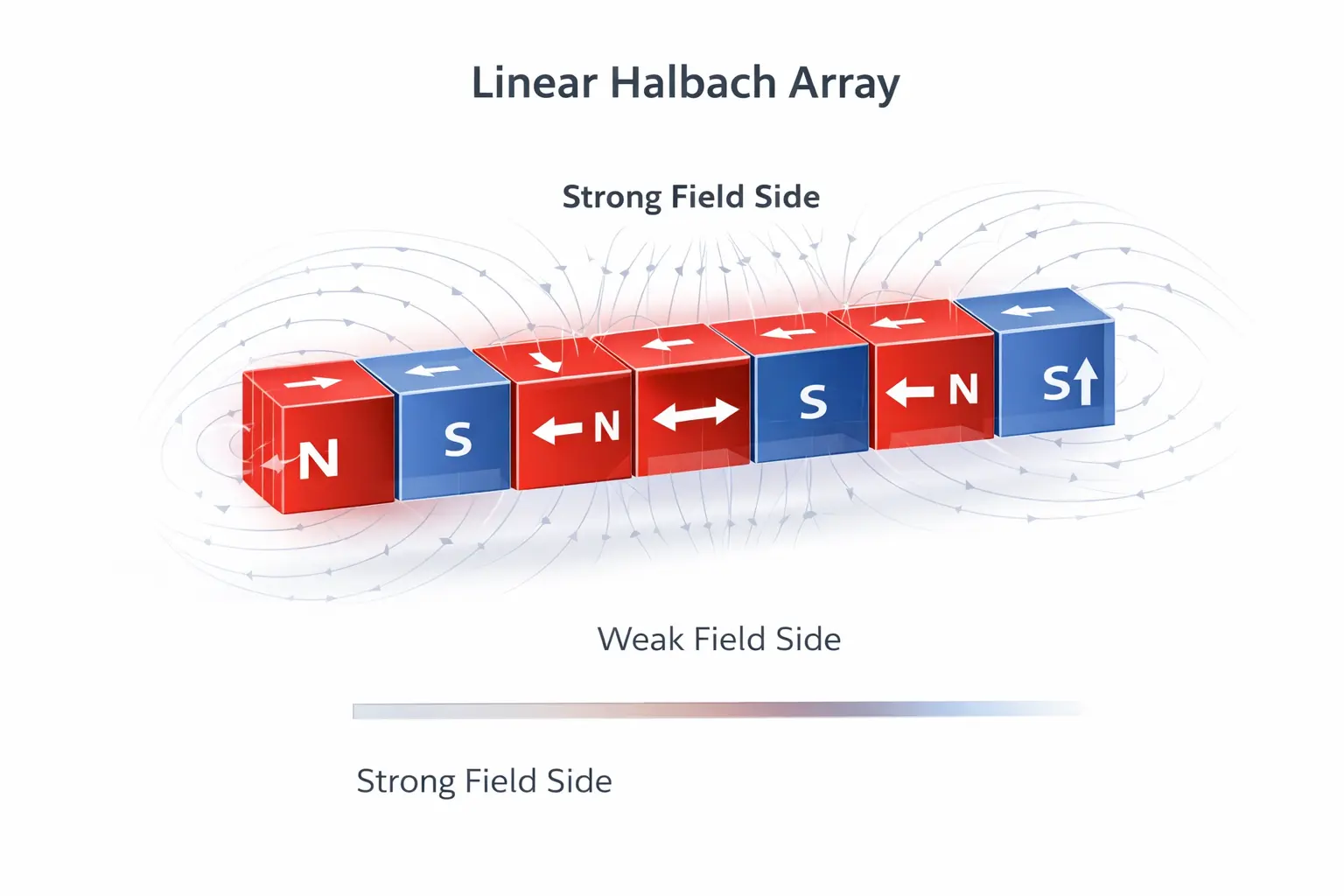
In advanced magnetic engineering, performance is no longer driven solely by stronger magnets—it depends on smarter field control. A Halbach array is a specialized magnet arrangement that concentrates magnetic flux on one side while significantly reducing it on the opposite side. This asymmetric field distribution enables higher efficiency, improved power density, and reduced stray magnetic interference.
(more…)Category: Guide
-
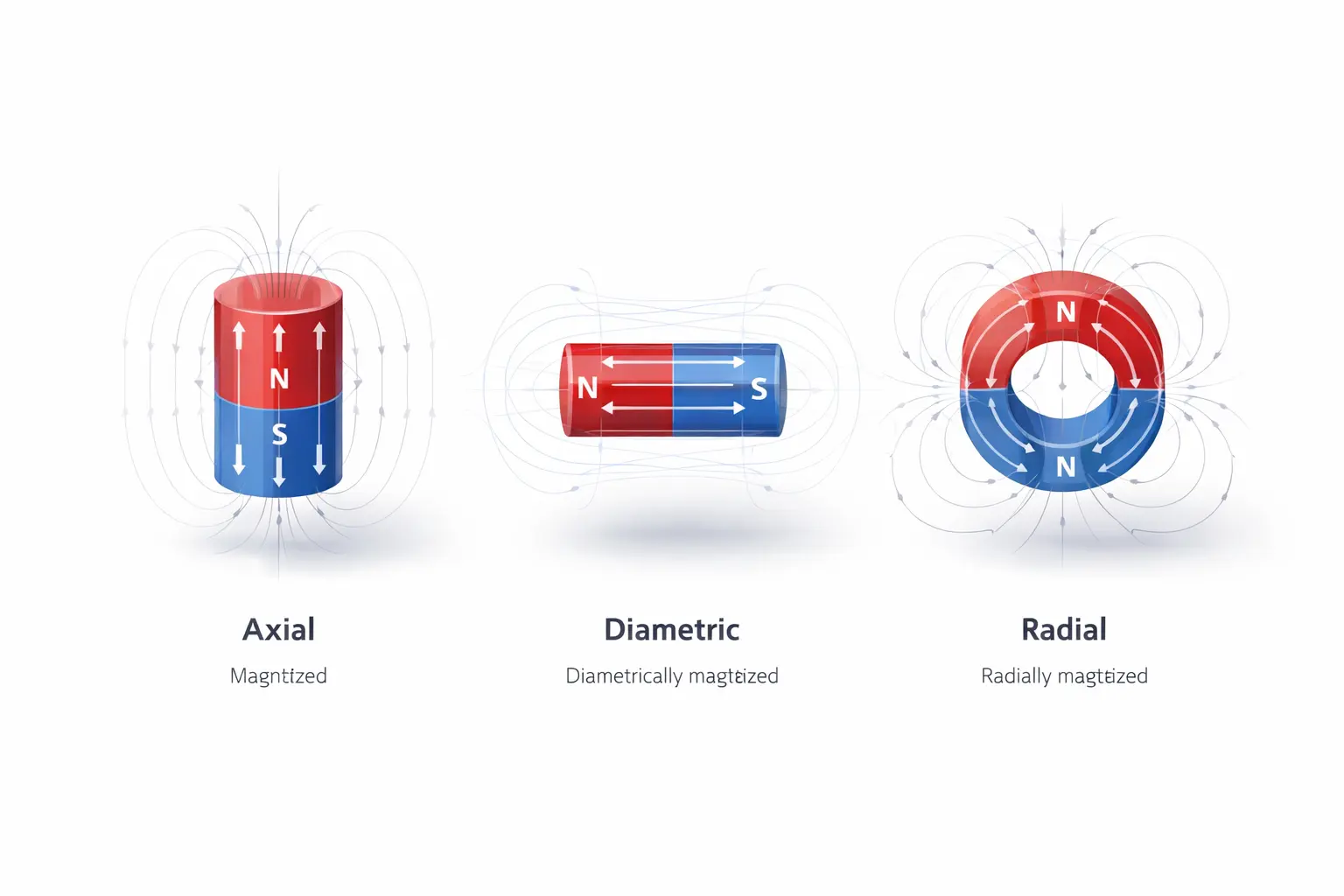
Magnetization Direction Guide: Axial, Diametric, and Radial Explained
Magnetization direction is one of the most critical yet frequently misunderstood parameters in permanent magnet design. Whether used in motors, sensors, medical devices, or magnetic assemblies, the direction in which a magnet is magnetized directly determines flux distribution, torque performance, holding force, and system efficiency.
In this guide, we explain the three primary magnetization directions—axial, diametric, and radial—with clear technical comparisons. We also explore why radial magnetization is significantly more expensive and complex to manufacture.
(more…) -
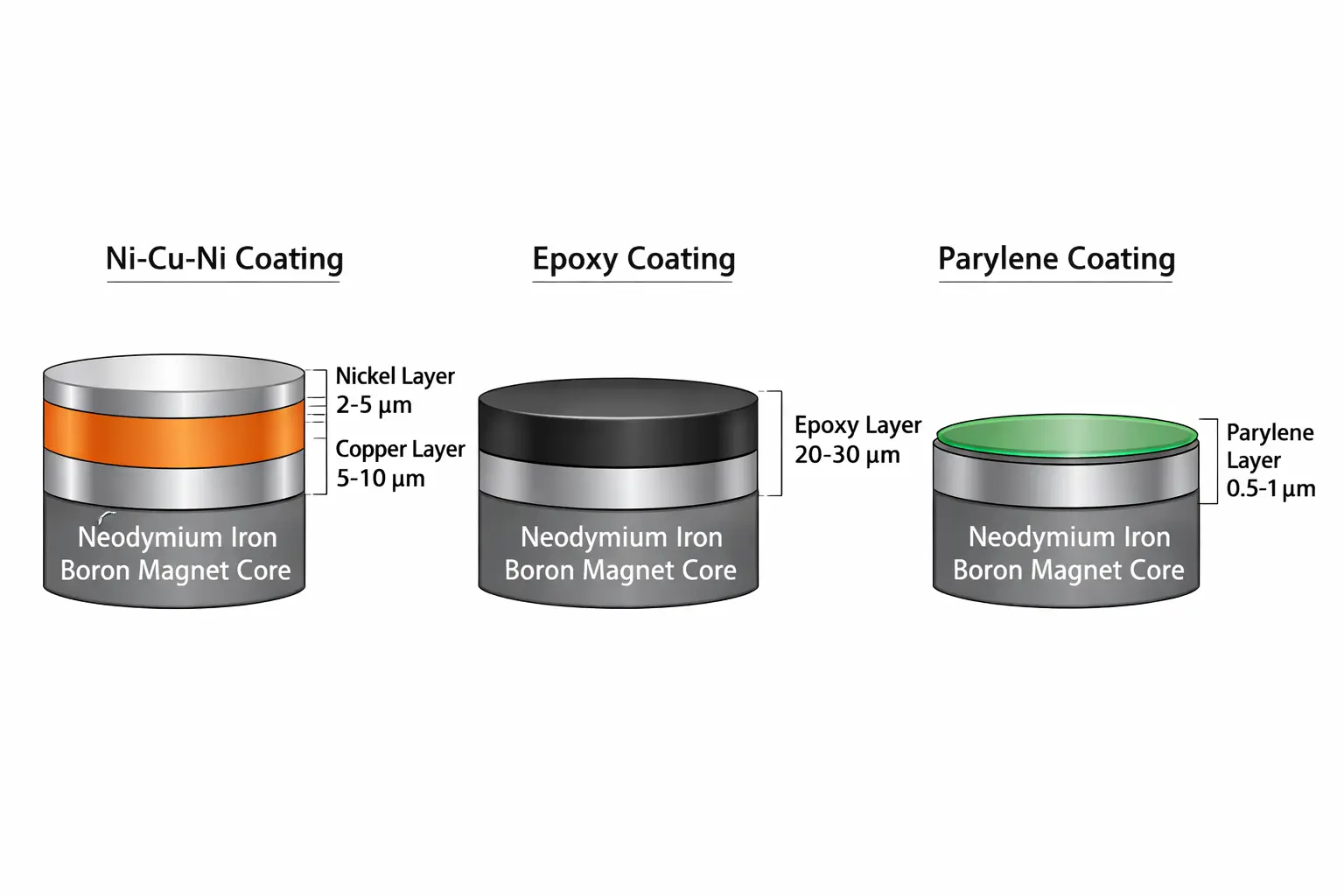
How to Choose the Right Coating for Your Magnets: Nickel-Copper-Nickel vs Epoxy vs Parylene
In high-performance magnetic applications, coating selection is not a cosmetic decision—it is a risk management strategy. For permanent magnets such as Neodymium Iron Boron (NdFeB), surface protection directly impacts durability, corrosion resistance, and long-term magnetic stability.
NdFeB magnets are highly susceptible to oxidation due to their iron content. Without proper surface treatment, environmental exposure can lead to corrosion, structural degradation, and performance loss.
This guide provides a structured comparison of the three most widely used coatings:
- Nickel-Copper-Nickel (Ni-Cu-Ni)
- Epoxy
- Parylene
Each serves a different operational priority. The optimal choice depends on your environment, regulatory requirements, and lifecycle expectations.
(more…) -

The Ultimate Magnet Buying Guide for Engineers and Product Designers
For engineers and product designers, magnets are not off-the-shelf accessories—they are performance-critical components that influence efficiency, safety, cost structure, and long-term reliability. An incorrect magnet choice can trigger redesigns, supply delays, compliance issues, and hidden lifecycle costs.
This guide is designed as a decision framework, not a catalog overview. Its objective is simple: help technical decision-makers specify the right magnet the first time and move efficiently toward qualified B2B supplier engagement.
(more…) -

Magnet Coatings and Corrosion Resistance: What You Need to Know
In industrial and commercial applications, magnet performance is not defined solely by magnetic strength. Environmental durability—especially corrosion resistance—plays a decisive role in product reliability, lifecycle cost, and safety compliance. Without appropriate surface protection, even high-performance magnets can degrade rapidly, leading to premature failure and operational risk.
Understanding magnet coatings and their role in corrosion resistance is therefore essential for engineers, procurement teams, and product managers.
(more…) -
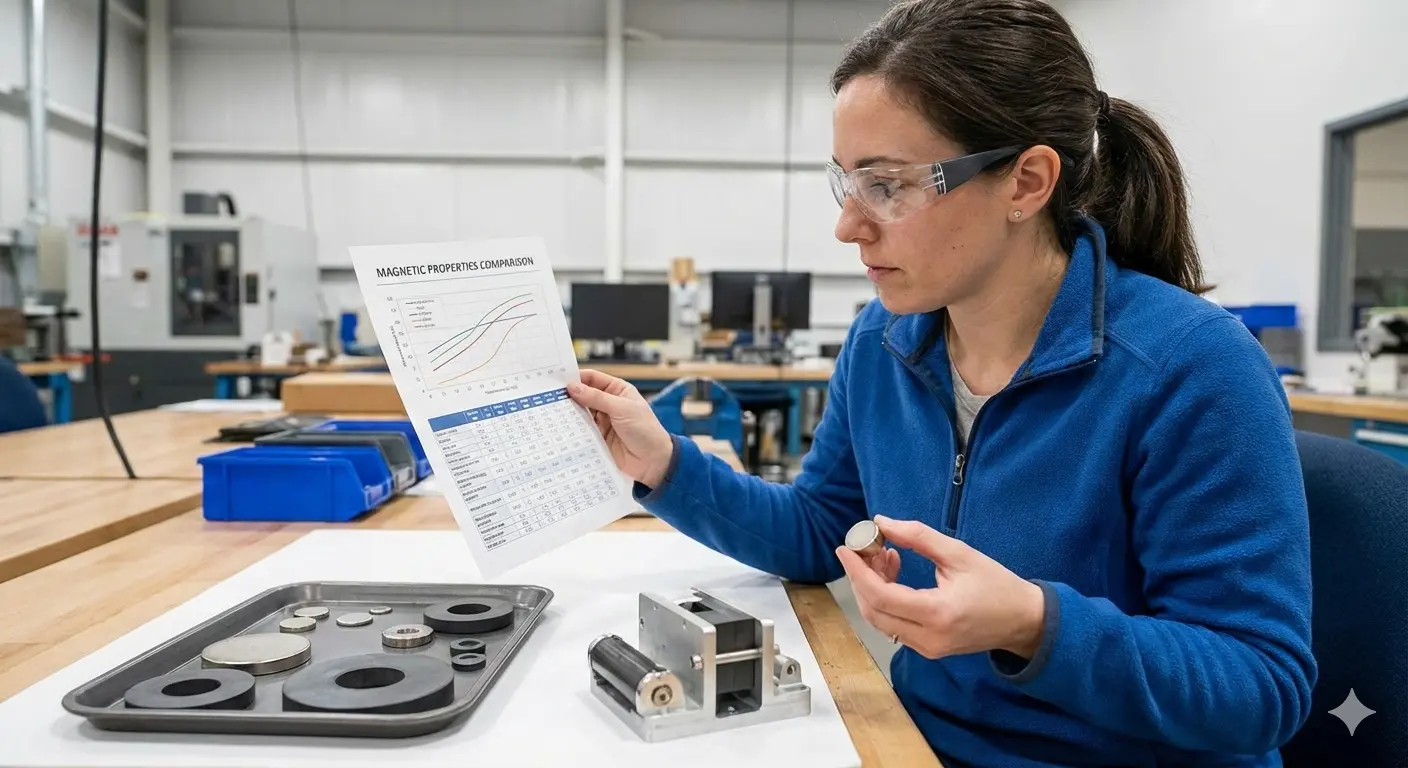
How to Choose the Right Magnet for Your Application
Selecting the right magnet is a critical engineering and procurement decision that directly impacts product performance, reliability, cost control, and long-term supply stability. With multiple magnet materials, grades, and configurations available, a structured selection approach is essential to avoid overengineering, underperformance, or unnecessary cost exposure.
This guide outlines a practical, decision-oriented framework to help businesses choose the most suitable magnet for their specific application.
(more…)