

Magnets play a critical role in engineering, physics, and advanced aerospace systems. But when technology leaves Earth’s atmosphere, many users wonder: do magnets work in space?
The short answer is yes — magnets absolutely work in space. Their performance does not depend on gravity or air, and their magnetic fields remain fully functional in the vacuum of space. However, their behavior and applications can differ depending on environmental conditions such as temperature, radiation, and magnetic interference.
This article provides a forward-looking perspective on how magnets operate in space and why they remain indispensable in modern aerospace technology.
Understanding How Magnets Work in Any Environment
Magnets generate a magnetic field due to the alignment of magnetic domains inside the material. This phenomenon is internal and self-sustaining, meaning it does not require:
- Air
- Gravity
- Atmosphere
- Pressure
Because of this, a magnet’s field is stable and consistent in environments ranging from deep ocean floors to the vacuum of outer space.
Key Point:
A vacuum has no impact on a permanent magnet’s magnetic structure.
Do Magnetic Fields Change in Space?
While magnets themselves function normally, environmental factors can influence performance:
1. Temperature Extremes
Space swings between intense heat and severe cold.
- High temperatures can reduce magnetic strength.
- Extremely low temperatures can increase magnetic performance for some materials.
Rare-earth magnets such as samarium cobalt (SmCo) are preferred in aerospace for their robust thermal stability.
2. Cosmic Radiation
Radiation does not typically demagnetize a permanent magnet, but long-term exposure can degrade materials depending on alloy composition.
3. Presence of Planetary Magnetic Fields
In orbit or near magnetically active celestial bodies, nearby magnetic fields can interact with a magnet’s field strength and direction. This doesn’t “turn off” the magnet — it simply influences its environment.
How Magnets Are Used in Space Technology
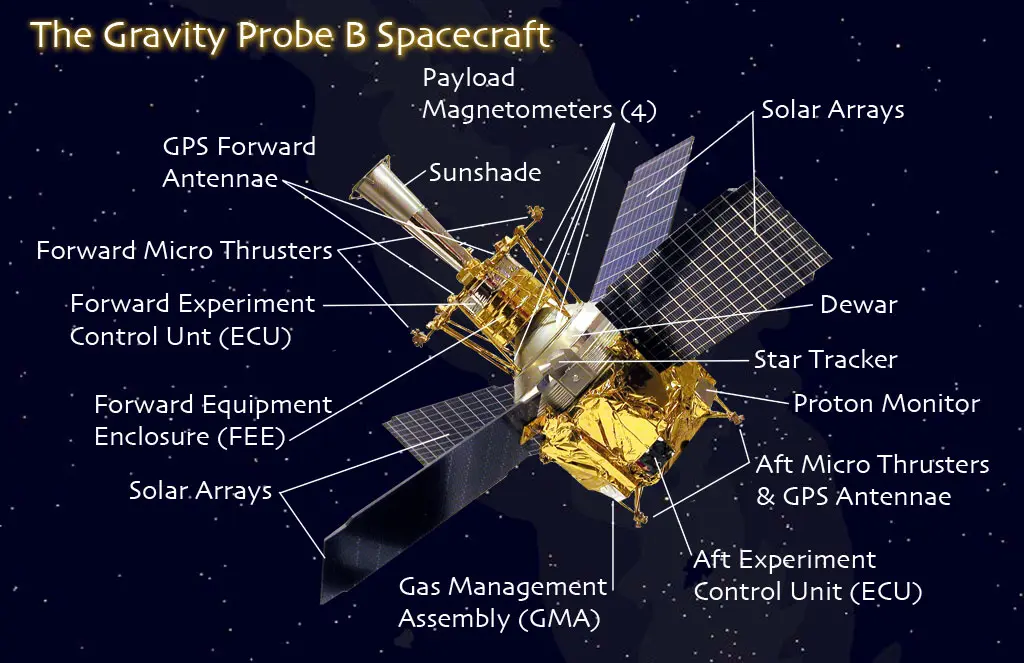
Electronics, navigation, and mechanical systems in aerospace applications rely heavily on magnet-based technologies. Below are some core use cases.
1. Attitude Control Systems (ACS)
Satellites use magnetorquers, which generate controlled magnetic fields that interact with Earth’s magnetic field to adjust orientation.
This is one of the most efficient and lightweight positioning technologies in orbital mechanics.
2. Electric Propulsion Systems
Advanced ion thrusters and magnetic confinement systems leverage magnetic fields to guide charged particles and optimize propulsion efficiency.
3. Magnetic Sensors
Critical systems use:
- Magnetometers
- Hall effect sensors
- Geomagnetic detectors
These instruments support navigation, scientific measurement, and stabilization.
4. Motors and Actuators
Mechanisms requiring rotation or precision movement, such as:
- Solar panel deployment systems
- Robotic arms
- Antenna positioning hardware
all use permanent magnets and electromagnetic assemblies.
5. Magnetic Shielding
Specialized shielding solutions protect sensitive spacecraft electronics from charged particles and cosmic rays.
Do Electromagnets Work in Space?
Yes. Electromagnets perform exceptionally well in space and offer enhanced flexibility because their magnetic fields can be adjusted, strengthened, or turned off.
Their uses cover:
- Thrusters
- Antenna controls
- Robotic assemblies
- Gyroscopic equipment
- Energy storage systems
The only requirement is a power supply, which is typically provided by solar arrays or onboard batteries.
Why Magnets Are Essential to Aerospace Engineering
Magnets deliver significant value in space applications due to their ability to operate:
- Without physical contact
- Without lubrication
- Without atmospheric limitations
- With predictable, controllable behavior
This makes them ideal for mission-critical components where reliability and performance are non-negotiable.
Conclusion
Magnets work flawlessly in space because their magnetic fields do not depend on air or gravity. Instead, they operate based on intrinsic physical properties that remain stable even in the vacuum of space. Whether supporting satellite orientation, powering motors, stabilizing sensors, or enabling cutting-edge propulsion systems, magnets remain a cornerstone of modern aerospace technology.
For advanced magnetic components engineered for extreme environments, HSMAGNET provides high-performance permanent magnets, electromagnets, and custom assemblies designed to meet the rigorous demands of space and industrial applications.

Leave a Reply