
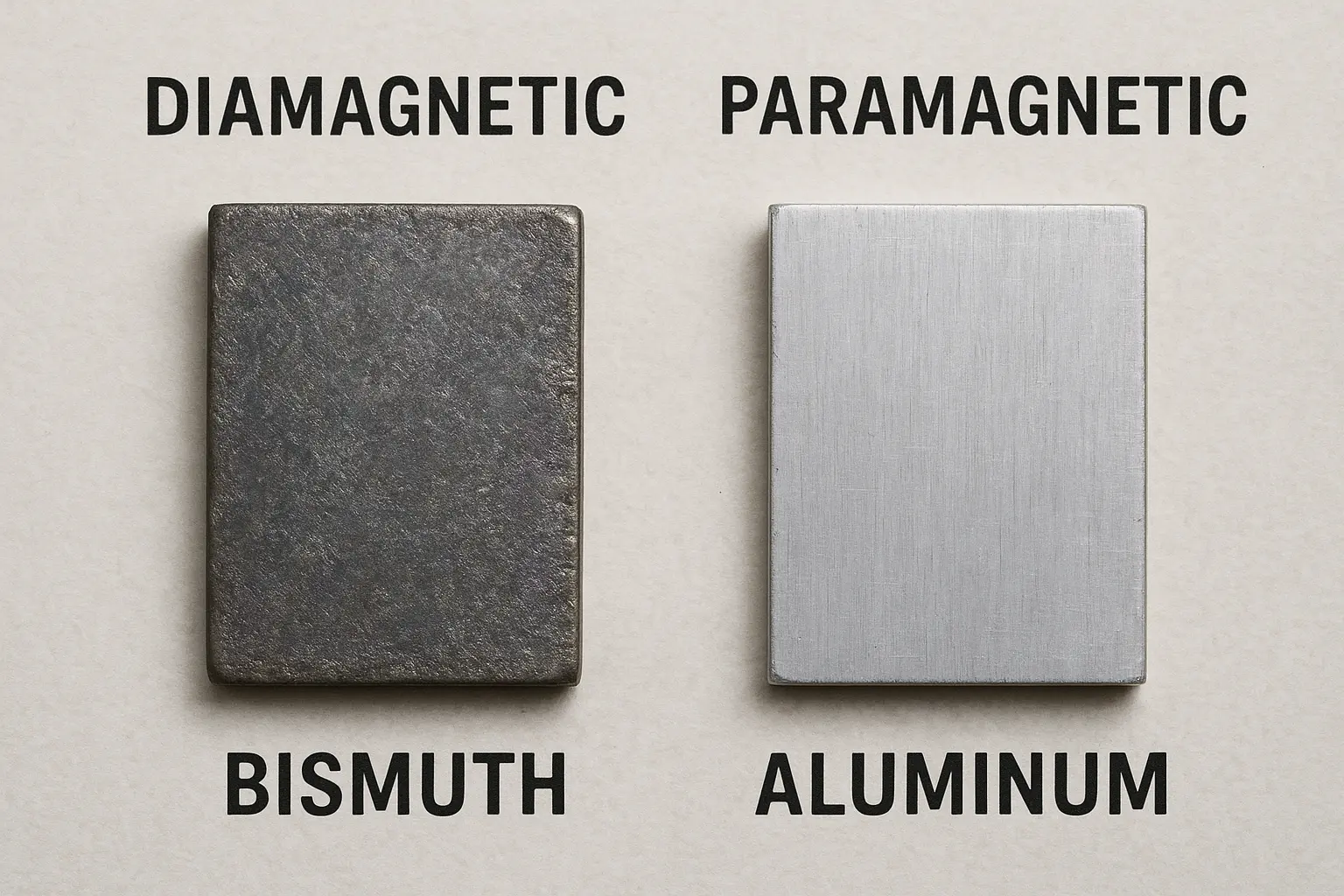
In industrial environments where magnetic performance drives product reliability, understanding the difference between diamagnetic and paramagnetic materials is a strategic necessity. These classifications describe how materials react to external magnetic fields, influencing engineering decisions across manufacturing, electronics, sensing technologies, and precision instrumentation. Although both categories exhibit weak magnetic responses, the mechanisms behind them and their practical business implications differ substantially.
What Are Diamagnetic Materials?
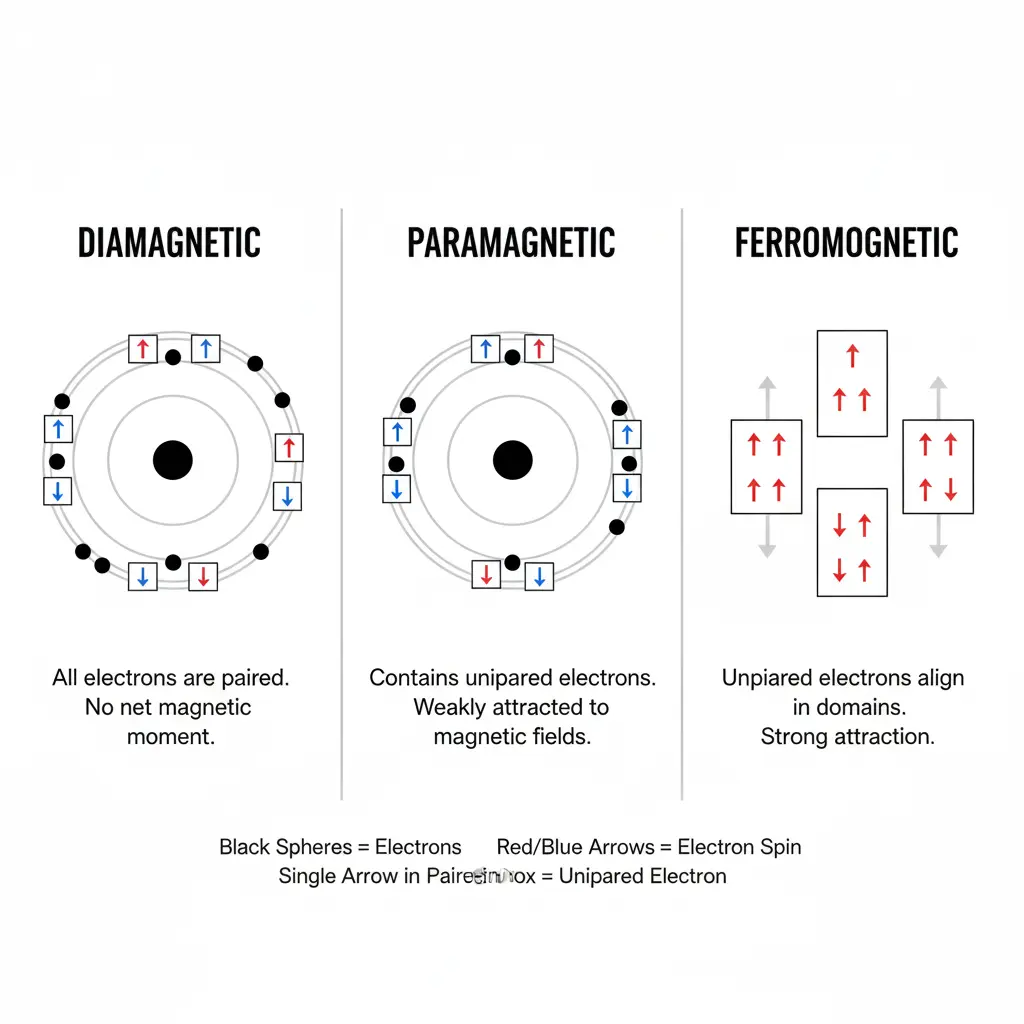
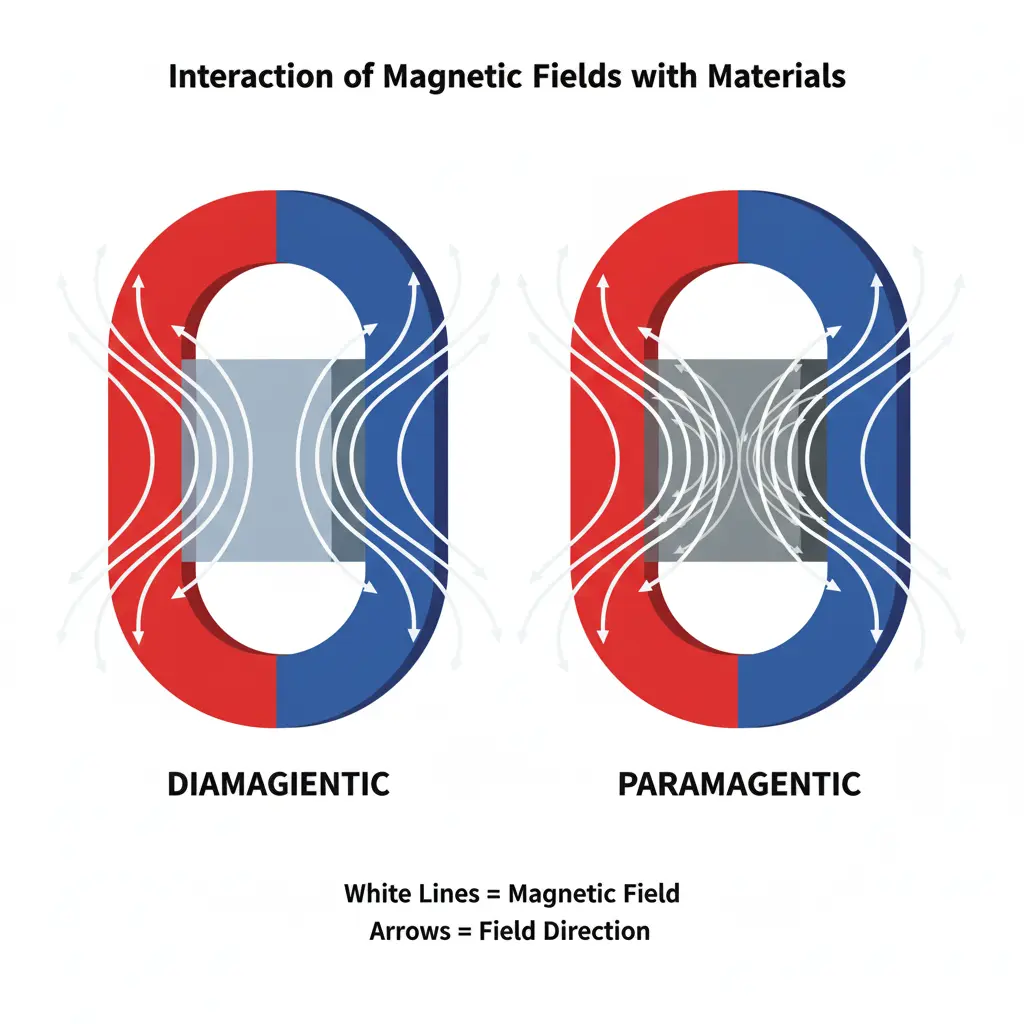
Diamagnetic materials form the baseline category in magnetic classification. In these materials, all electrons are paired, resulting in no inherent magnetic moment. When exposed to a magnetic field, they generate a temporary, extremely weak magnetic field in the opposite direction. This produces negative magnetic susceptibility and leads to slight repulsion.
Common diamagnetic materials include bismuth, copper, gold, silver, graphite, and even everyday substances such as water. Their weak response may seem negligible, but the consistency and predictability of diamagnetism make these materials valuable in high-precision applications. Industries that require low magnetic interference—such as scientific instrumentation, balancing systems, and magnetic shielding—often rely on these attributes to ensure system stability.
What Are Paramagnetic Materials?
Paramagnetic materials behave differently due to the presence of unpaired electrons. These unpaired electrons create small magnetic moments that align partially with an applied magnetic field, generating slight attraction. Their magnetic susceptibility is positive but modest, and the induced magnetization disappears immediately when the external field is removed.
Examples of paramagnetic materials include aluminum, magnesium, lithium, titanium, and a variety of transition-metal ions. Their temperature-dependent behavior further differentiates them; as temperature increases, electron alignment weakens and magnetic susceptibility decreases. This makes paramagnetic materials suitable for applications where controlled, temporary magnetic influence is part of system design.
Key Differences Between Diamagnetic and Paramagnetic Materials
The fundamental distinction lies in their response direction and magnitude:
- Diamagnetic materials always exhibit repulsion and maintain magnetic neutrality.
- Paramagnetic materials show weak attraction and temporary magnetization.
Diamagnetic materials are ideal in environments requiring stability and minimal magnetic interaction, such as precision measuring devices, levitation experiments, and sensitive electronic components. Paramagnetic materials, by contrast, support systems where controlled, low-level magnetism is advantageous, including magnetic separation, catalysis environments, and temperature-responsive sensors.
Understanding these differences enables engineers and procurement teams to make informed, performance-driven decisions when integrating magnetic or non-magnetic materials into their systems.
Industrial and Engineering Implications
Material selection drives operational efficiency and long-term product performance. Diamagnetic materials offer predictable neutrality, making them well-suited for high-accuracy applications where magnetic distortion must be minimized. Paramagnetic materials provide reliable, though temporary, magnetic responsiveness, enabling their use in advanced sensor technologies and variable-field environments.
As industries move toward more engineered material solutions, the ability to differentiate between these two magnetic behaviors becomes a competitive advantage. With continued advancements in material science, magnets manufacturers are increasingly able to fine-tune magnetic traits to meet precise operational requirements, driving higher efficiency and product innovation.
Leave a Reply