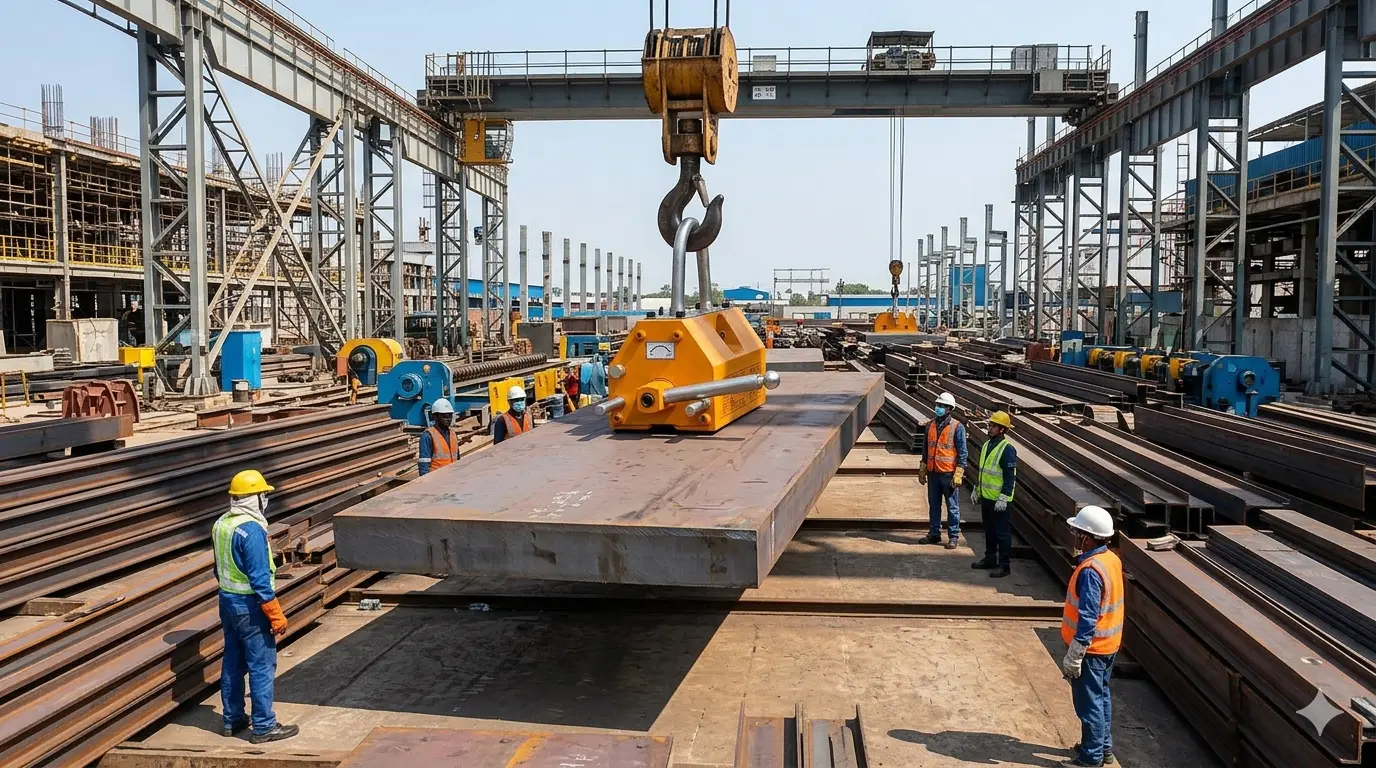
In modern construction, efficiency, safety, and precision are critical performance drivers. Magnetic tools have emerged as highly effective solutions for handling ferrous materials, reducing manual labor, and improving job-site productivity. From steel beam lifting to temporary fixing and alignment, magnetic systems offer a versatile and cost-effective alternative to traditional mechanical methods.
This article explores how magnetic tools are used in construction, focusing on holding, lifting, and fixing applications, along with their key advantages and selection considerations.
Neodymium magnets are critical components in many modern technologies, including electric vehicles, wind turbines, consumer electronics, and industrial motors. As global demand for these high-performance magnets continues to grow, concerns about rare earth resource sustainability are increasing. Recycling neodymium magnets provides an important pathway to reduce environmental impact, improve material efficiency, and support a more resilient supply chain.
However, while recycling offers clear benefits, it also presents several technical and economic challenges.
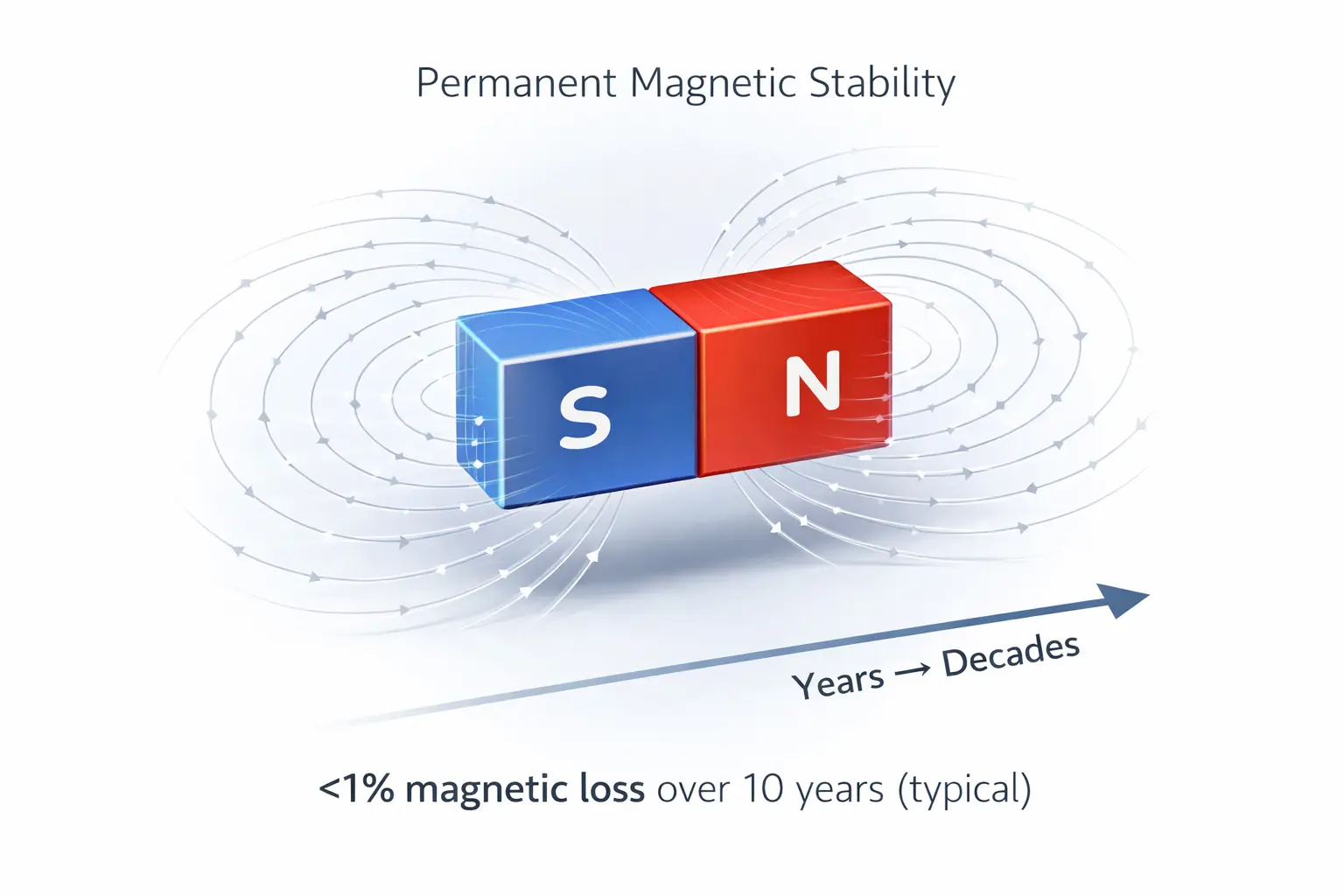
Permanent magnets are widely used in motors, sensors, medical equipment, and industrial automation systems. A common question from engineers and buyers is: How long do permanent magnets actually last?
Under normal conditions, high-quality permanent magnets can maintain their magnetic strength for decades. However, their lifespan depends on several factors, including temperature, external magnetic fields, mechanical stress, and environmental conditions. Understanding the science behind magnetic decay helps users design reliable systems and avoid unnecessary performance loss.
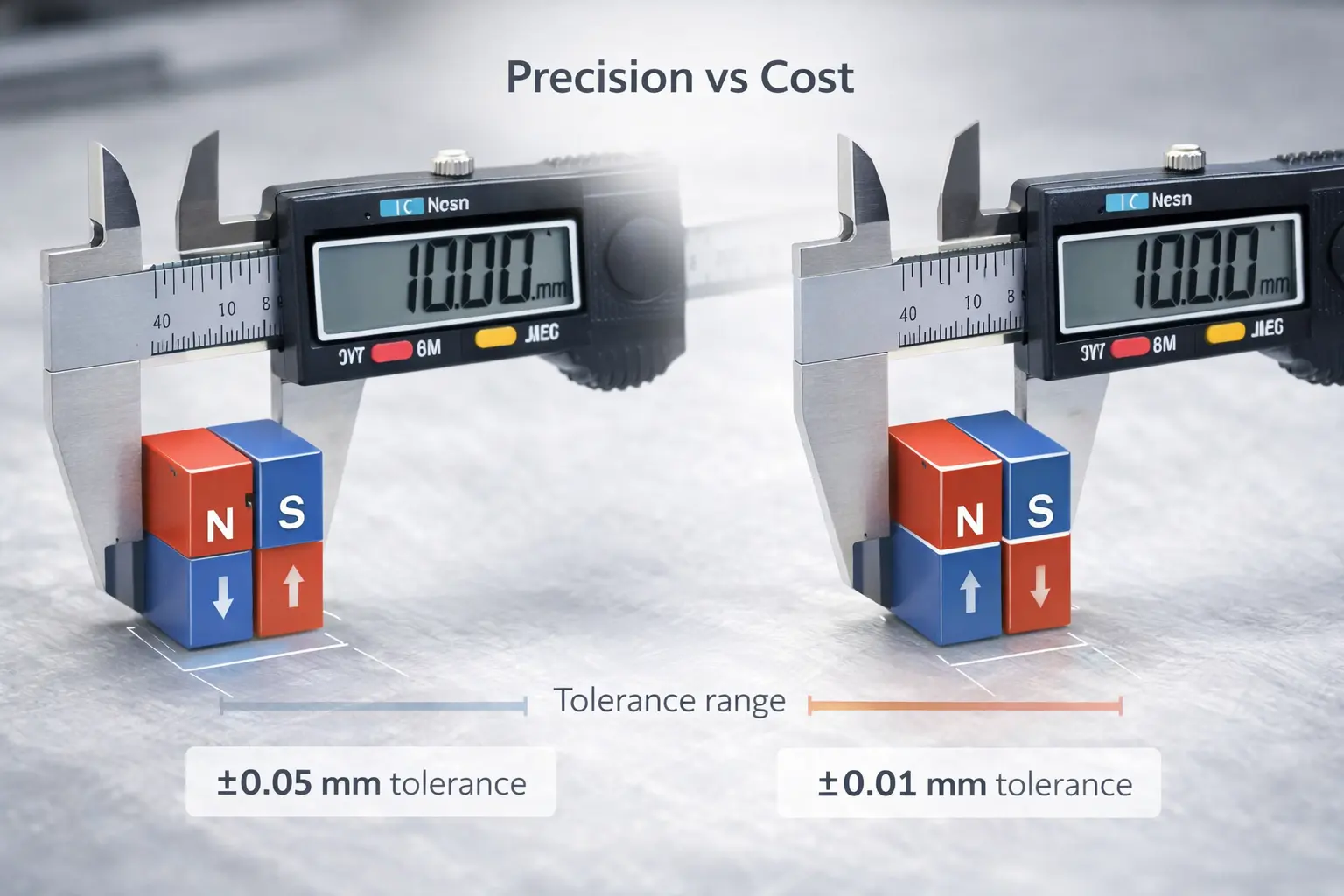
In permanent magnet manufacturing, dimensional tolerance plays a critical role in both product performance and production cost. While tighter tolerances may appear beneficial, specifying unnecessarily strict tolerances can significantly increase manufacturing complexity and pricing.
For many applications, a tolerance of ±0.05 mm can meet functional requirements while keeping costs under control, whereas ±0.01 mm typically requires additional precision processing. Understanding how magnets are produced—and especially how grinding processes work—helps engineers choose tolerances that balance performance and cost efficiency.
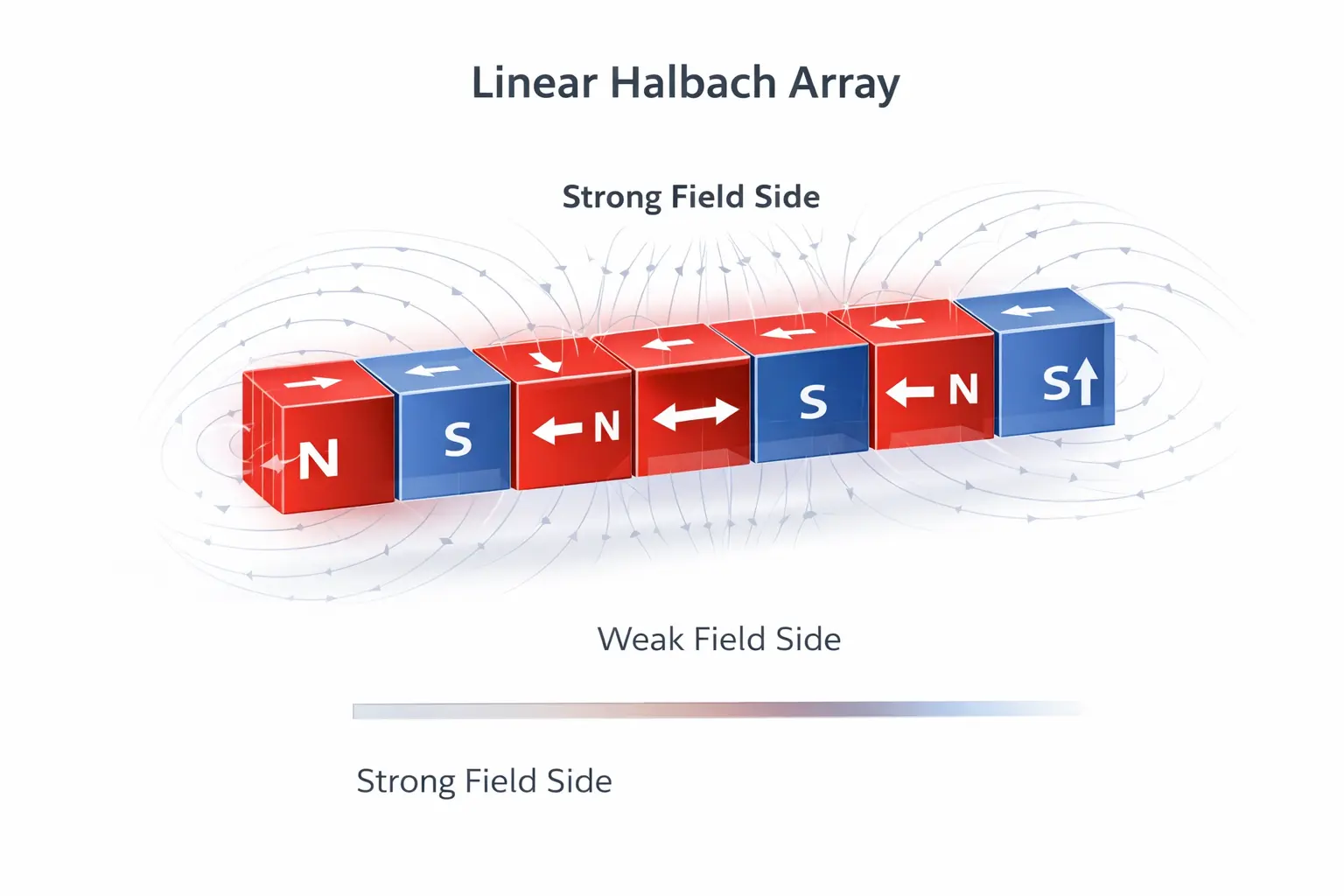
In advanced magnetic engineering, performance is no longer driven solely by stronger magnets—it depends on smarter field control. A Halbach array is a specialized magnet arrangement that concentrates magnetic flux on one side while significantly reducing it on the opposite side. This asymmetric field distribution enables higher efficiency, improved power density, and reduced stray magnetic interference.
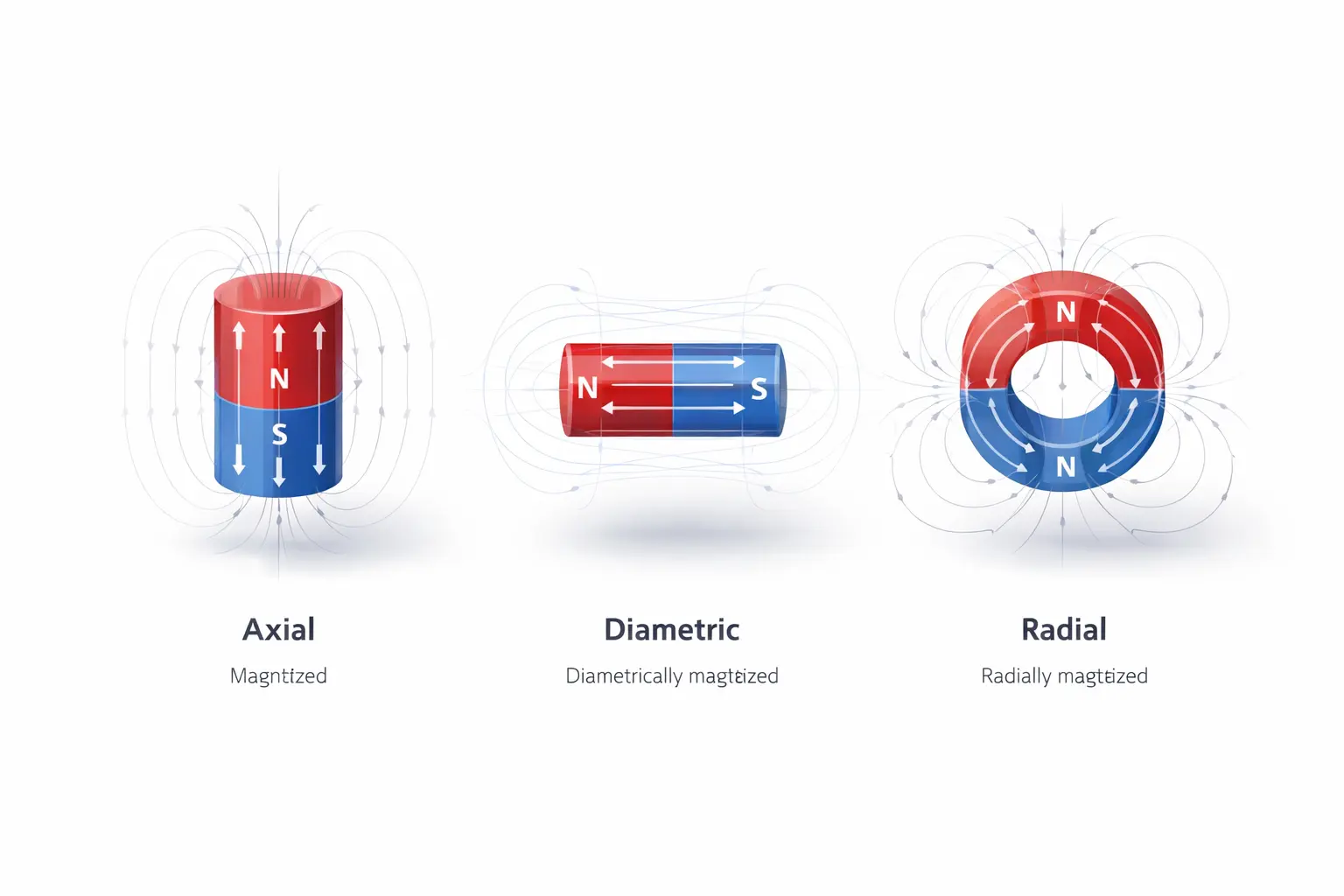
Magnetization direction is one of the most critical yet frequently misunderstood parameters in permanent magnet design. Whether used in motors, sensors, medical devices, or magnetic assemblies, the direction in which a magnet is magnetized directly determines flux distribution, torque performance, holding force, and system efficiency.
In this guide, we explain the three primary magnetization directions—axial, diametric, and radial—with clear technical comparisons. We also explore why radial magnetization is significantly more expensive and complex to manufacture.
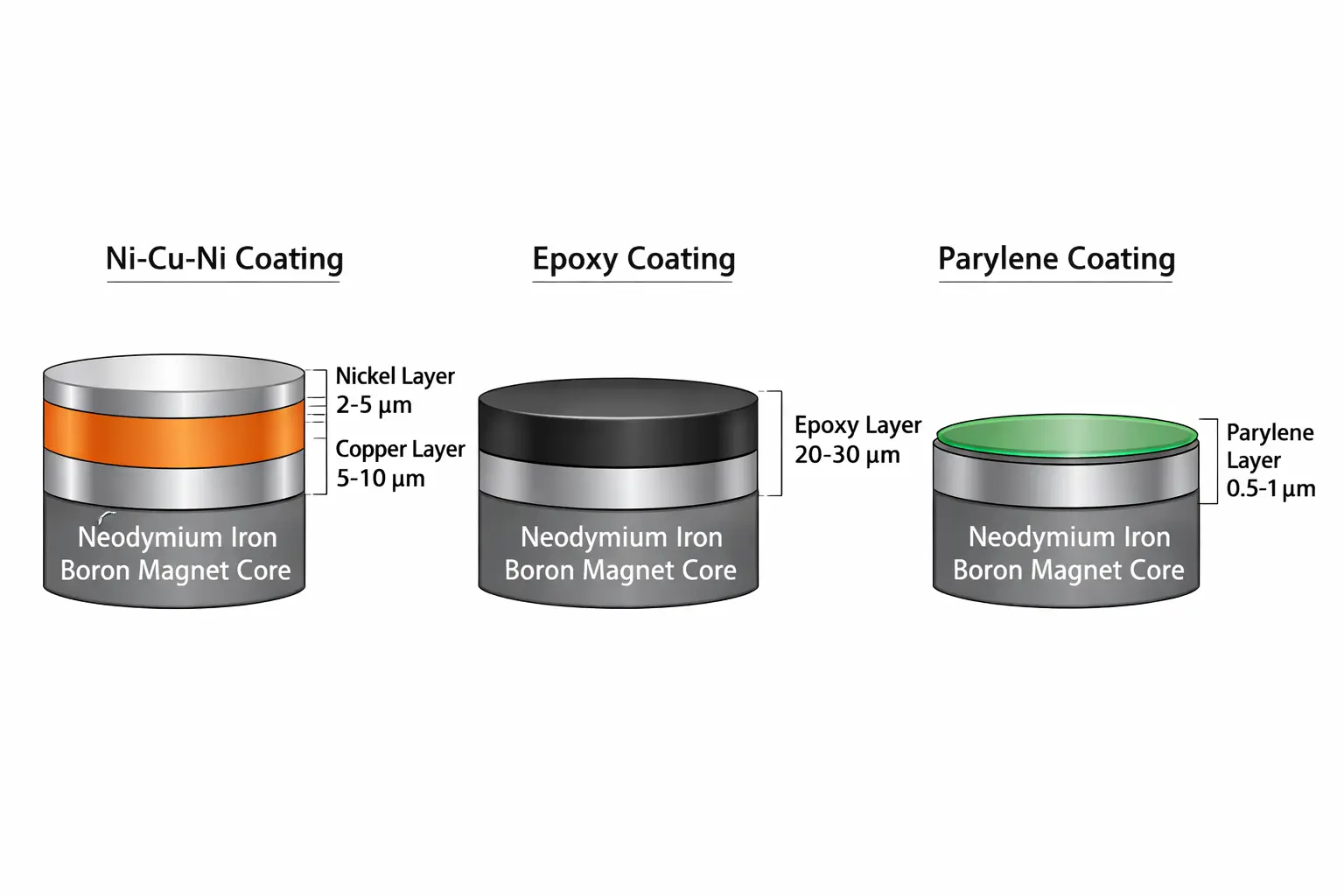
In high-performance magnetic applications, coating selection is not a cosmetic decision—it is a risk management strategy. For permanent magnets such as Neodymium Iron Boron (NdFeB), surface protection directly impacts durability, corrosion resistance, and long-term magnetic stability.
NdFeB magnets are highly susceptible to oxidation due to their iron content. Without proper surface treatment, environmental exposure can lead to corrosion, structural degradation, and performance loss.
This guide provides a structured comparison of the three most widely used coatings:
Nickel-Copper-Nickel (Ni-Cu-Ni)
Epoxy
Parylene
Each serves a different operational priority. The optimal choice depends on your environment, regulatory requirements, and lifecycle expectations.
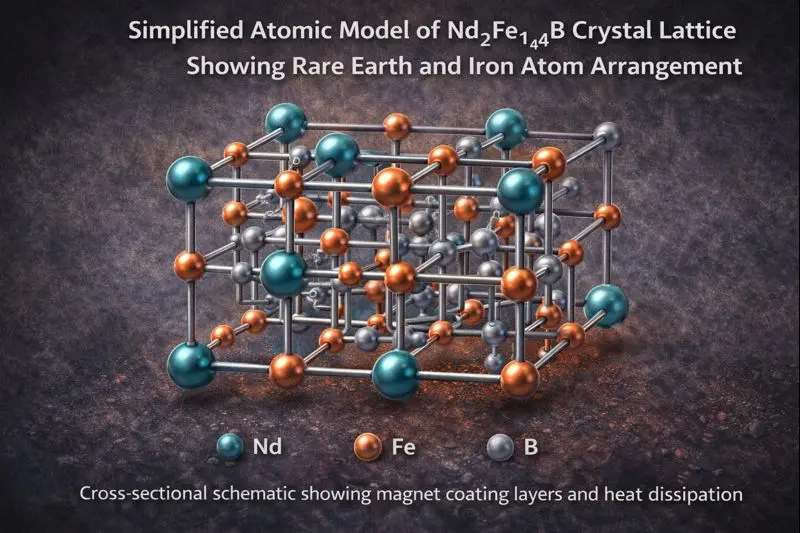
Neodymium–Iron–Boron (NdFeB) magnets are the most powerful permanent magnets available today and are essential components in electric vehicles, wind turbines, industrial motors, robotics, and aerospace systems.
However, standard NdFeB magnets suffer from performance degradation at elevated temperatures, particularly due to a rapid loss of coercivity. To address this limitation, manufacturers often introduce heavy rare earth (HRE) elements, such as dysprosium (Dy) and terbium (Tb).
This article explains how heavy rare earth elements improve the high-temperature stability of NdFeB magnets, the mechanisms behind coercivity enhancement, and the trade-offs involved.
High-temperature operating conditions represent one of the most critical challenges in modern magnet engineering. From electric vehicles and wind turbines to aerospace systems and industrial automation, magnetic components are increasingly required to maintain performance under thermal stress.
In this context, stability and coercivity become decisive factors in determining whether a magnetic material can deliver long-term reliability and predictable performance in demanding environments.
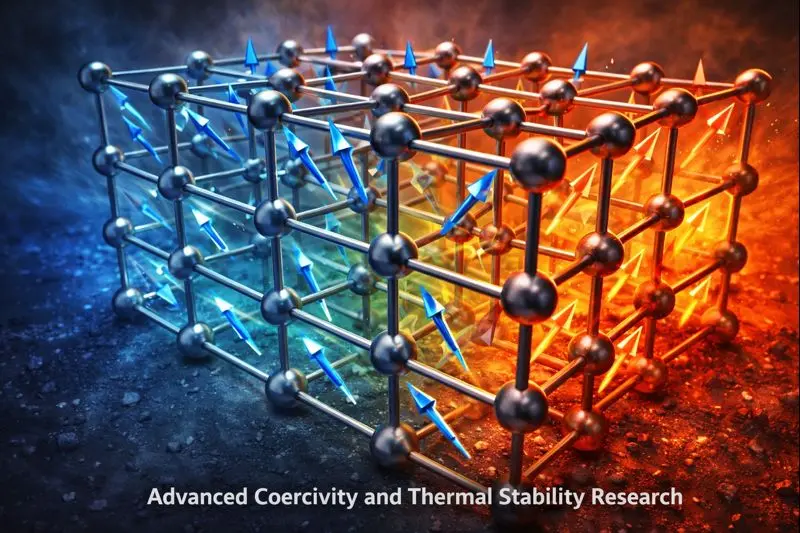
Magnetic materials are highly sensitive to temperature. As thermal energy increases, magnetic domains become more active, and the alignment responsible for magnetization can weaken.
In high-value industrial applications, temperature-induced degradation can lead to:
Reduced magnetic flux output
Loss of torque or efficiency in motors
Increased demagnetization risk
Shortened service life of permanent magnet systems
Therefore, thermal stability is not just a material property—it is a strategic design requirement.
Understanding Coercivity in Magnetic Materials
Coercivity refers to a magnet’s resistance to demagnetization. It defines how much reverse magnetic field is required to reduce magnetization to zero.
In high-temperature environments, coercivity is particularly important because elevated temperatures lower the energy barrier that keeps magnetic domains aligned.
A magnet with insufficient coercivity may experience irreversible demagnetization even if the temperature remains below its Curie point.
Temperature Effects on Magnetic Performance
Reduction in Remanence
As temperature rises, the remanent magnetization decreases. This results in a lower magnetic field strength and reduced functional output in devices.
Decline in Coercivity
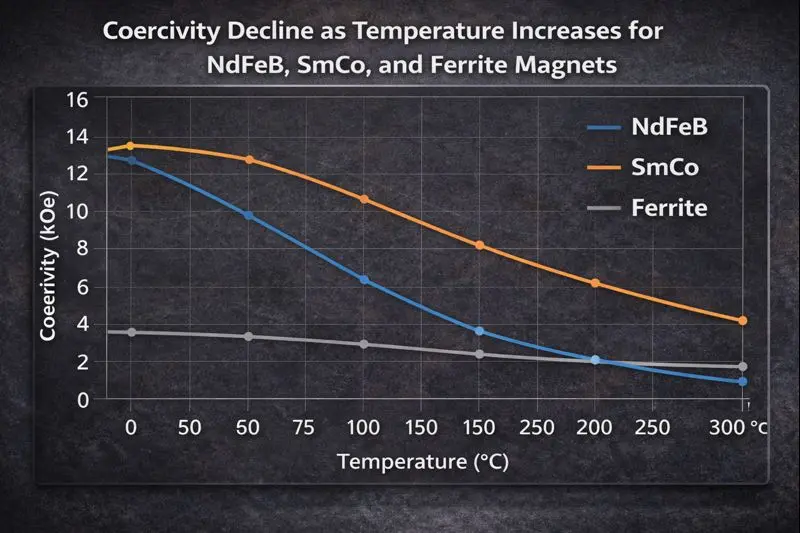
Coercivity typically drops significantly with temperature. This makes magnets more vulnerable to external demagnetizing fields, mechanical vibration, and thermal cycling.
Approaching the Curie Temperature
At the Curie temperature, the material loses ferromagnetism entirely and becomes paramagnetic. While most industrial systems operate well below this limit, partial losses occur long before reaching Curie temperature.
Key Magnetic Materials for High-Temperature Applications
NdFeB Magnets
Neodymium magnets provide the highest energy density but are highly temperature-sensitive. High-coercivity grades and heavy rare earth doping (Dy, Tb) are often required for stability above 150°C.
SmCo Magnets
Samarium cobalt magnets offer superior thermal stability and corrosion resistance, maintaining performance up to 250–350°C. They are widely used in aerospace and defense applications.
Ferrite Magnets
Ferrite Magnets have lower magnetic strength but excellent thermal stability and cost efficiency. They are suitable for applications where temperature resistance outweighs compact power density.
Strategies to Improve High-Temperature Stability
Material Engineering
Optimizing grain boundaries, alloy composition, and coercivity-enhancing additives improves resistance to thermal demagnetization.
Coatings and Protection
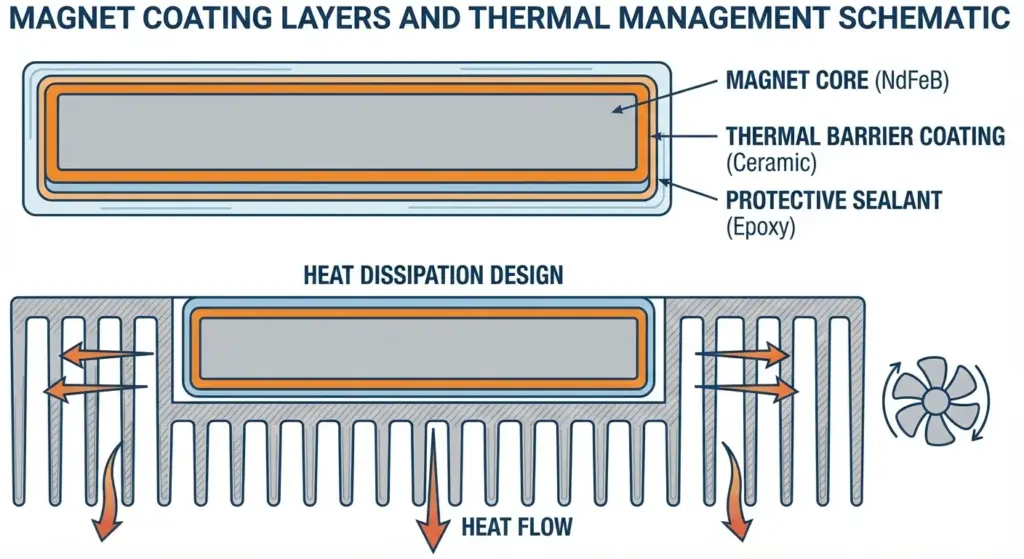
High temperatures accelerate oxidation and corrosion, especially in NdFeB magnets. Protective coatings such as epoxy, nickel, or specialized thermal layers extend service life.
Thermal Design Integration
Effective heat dissipation, insulation, and system-level thermal management reduce magnet exposure to peak temperatures.
Industrial Outlook and Future Trends
The demand for magnets capable of stable performance in extreme environments is accelerating. Key drivers include:
Electrification of transportation
High-efficiency industrial motors
Renewable energy generation
Miniaturized high-power electronics
Future innovation will focus on reducing dependence on heavy rare earth elements while maintaining high coercivity and thermal reliability.
Conclusion
Stability and coercivity are central to the successful deployment of magnetic materials in high-temperature environments. Understanding how temperature impacts remanence, coercivity, and long-term durability allows engineers and manufacturers to select the right magnet grade, improve system resilience, and ensure operational reliability.
As industries push toward higher efficiency and harsher operating conditions, high-temperature magnetic performance will remain a key competitive advantage in advanced manufacturing and energy technologies.
Manage Consent
To provide the best experiences, we use technologies like cookies to store and/or access device information. Consenting to these technologies will allow us to process data such as browsing behavior or unique IDs on this site. Not consenting or withdrawing consent, may adversely affect certain features and functions.
Functional
Always active
The technical storage or access is strictly necessary for the legitimate purpose of enabling the use of a specific service explicitly requested by the subscriber or user, or for the sole purpose of carrying out the transmission of a communication over an electronic communications network.
Preferences
The technical storage or access is necessary for the legitimate purpose of storing preferences that are not requested by the subscriber or user.
Statistics
The technical storage or access that is used exclusively for statistical purposes.The technical storage or access that is used exclusively for anonymous statistical purposes. Without a subpoena, voluntary compliance on the part of your Internet Service Provider, or additional records from a third party, information stored or retrieved for this purpose alone cannot usually be used to identify you.
Marketing
The technical storage or access is required to create user profiles to send advertising, or to track the user on a website or across several websites for similar marketing purposes.