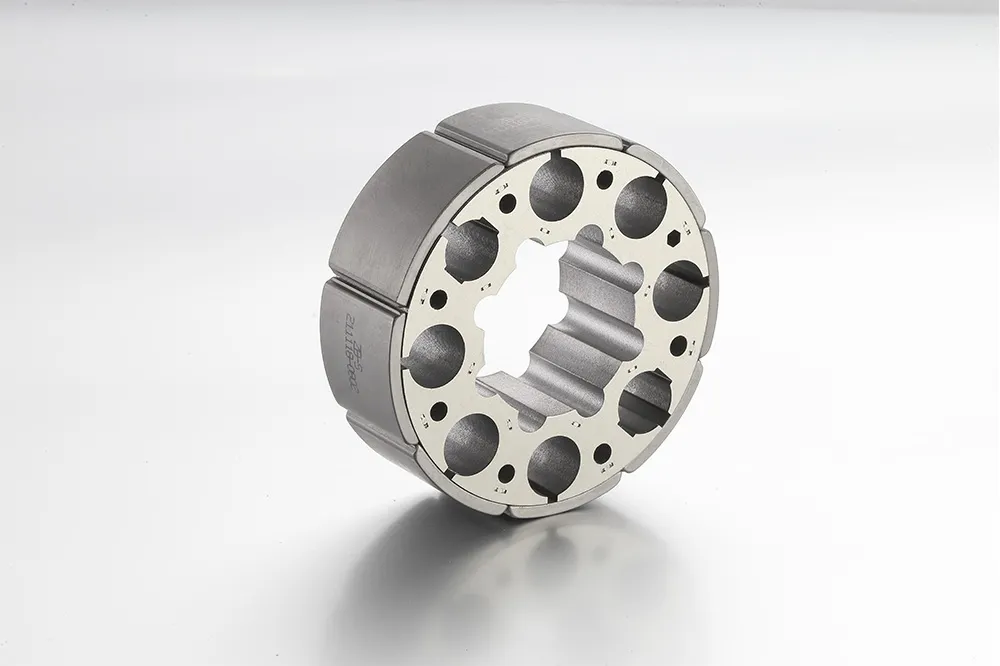
Neodymium magnets, commonly referred to as NdFeB magnets, are the strongest commercially available permanent magnets. However, not all neodymium magnets deliver the same performance. Magnet grades define their magnetic strength, thermal stability, and suitability for specific operating environments. For engineers, designers, and procurement teams, understanding magnet grades is essential to optimizing performance, reliability, and total system cost.
Selecting the correct grade directly influences torque output in motors, holding force in assemblies, and long-term resistance to demagnetization.
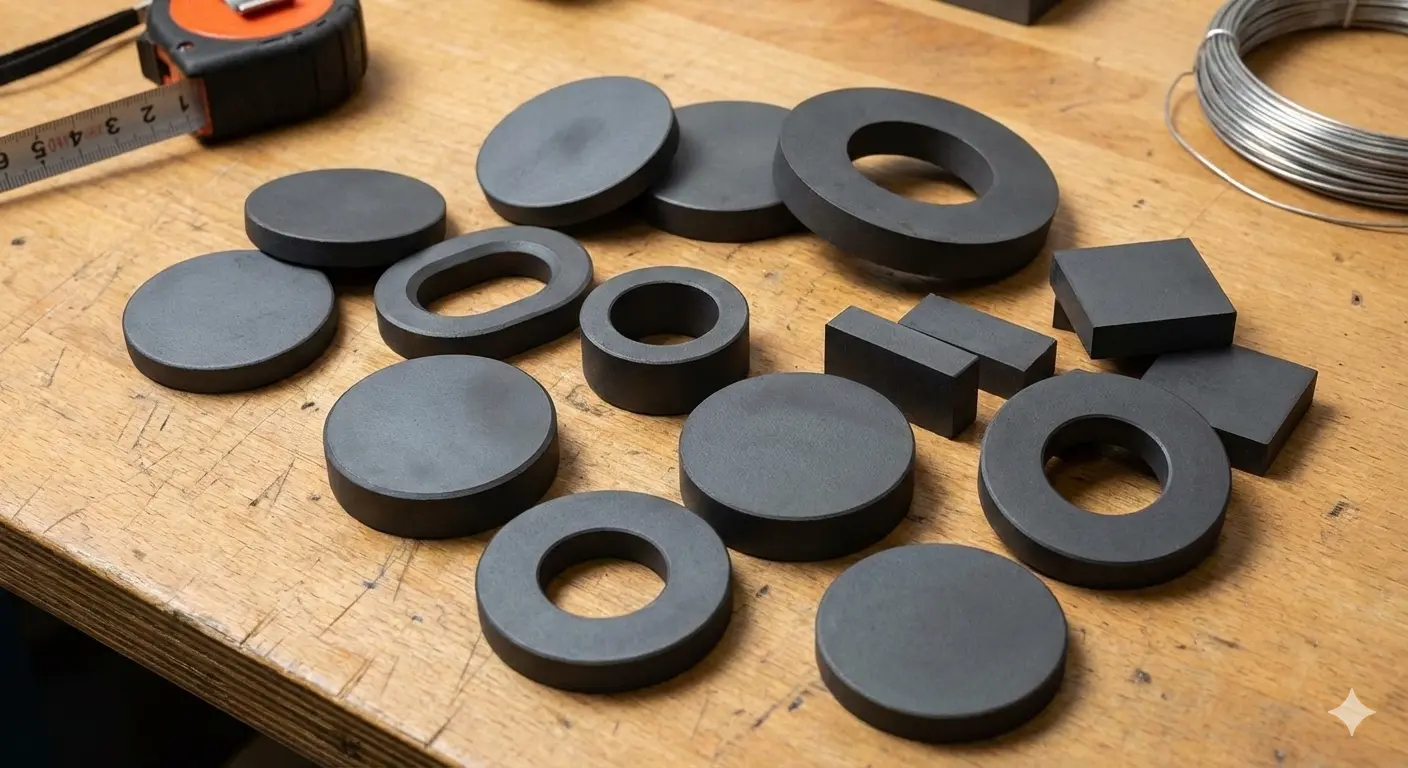
Ceramic magnets, also known as ferrite magnets, are a class of permanent magnets made from iron oxide combined with ceramic materials such as barium carbonate or strontium carbonate. They are among the most widely used magnetic materials globally due to their cost efficiency, corrosion resistance, and long-term magnetic stability. Ceramic magnets play a foundational role in both consumer and industrial applications where reliable magnetic performance is required without high material costs.
A horseshoe magnet is a permanent magnet bent into a U-shaped configuration, strategically engineered to bring its two poles—north and south—closer together. This geometry creates a concentrated magnetic field between the poles, enabling higher magnetic strength and greater holding force. In modern industrial and scientific applications, this compact yet powerful design supports precision tasks where controlled magnetic fields are essential.
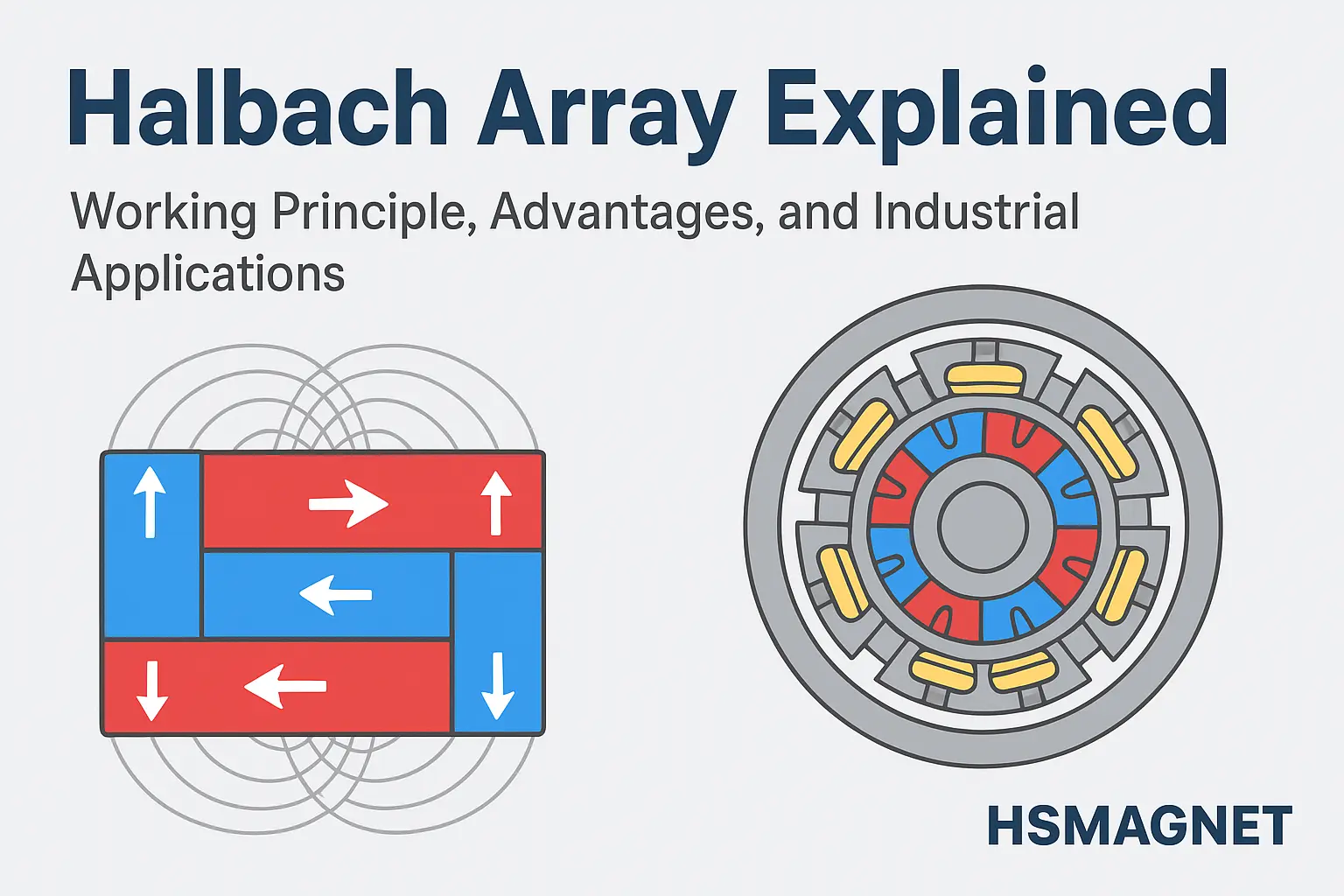
A Halbach array is a specialized magnetic arrangement that amplifies magnetic field strength on one side while nearly canceling the field on the opposite side. This asymmetric field distribution provides high magnetic efficiency, reduced weight, and exceptional performance in advanced engineering applications. Industries leveraging high-precision magnetics — such as electric motors, linear actuators, maglev systems, and scientific instruments — rely on Halbach arrays to achieve superior magnetic output with optimized material usage.
The array works by carefully orienting individual permanent magnets in a specific rotational pattern. This geometry naturally redirects magnetic flux, eliminating the need for bulky iron components and improving system-level performance metrics such as force density, torque, and energy conversion efficiency.
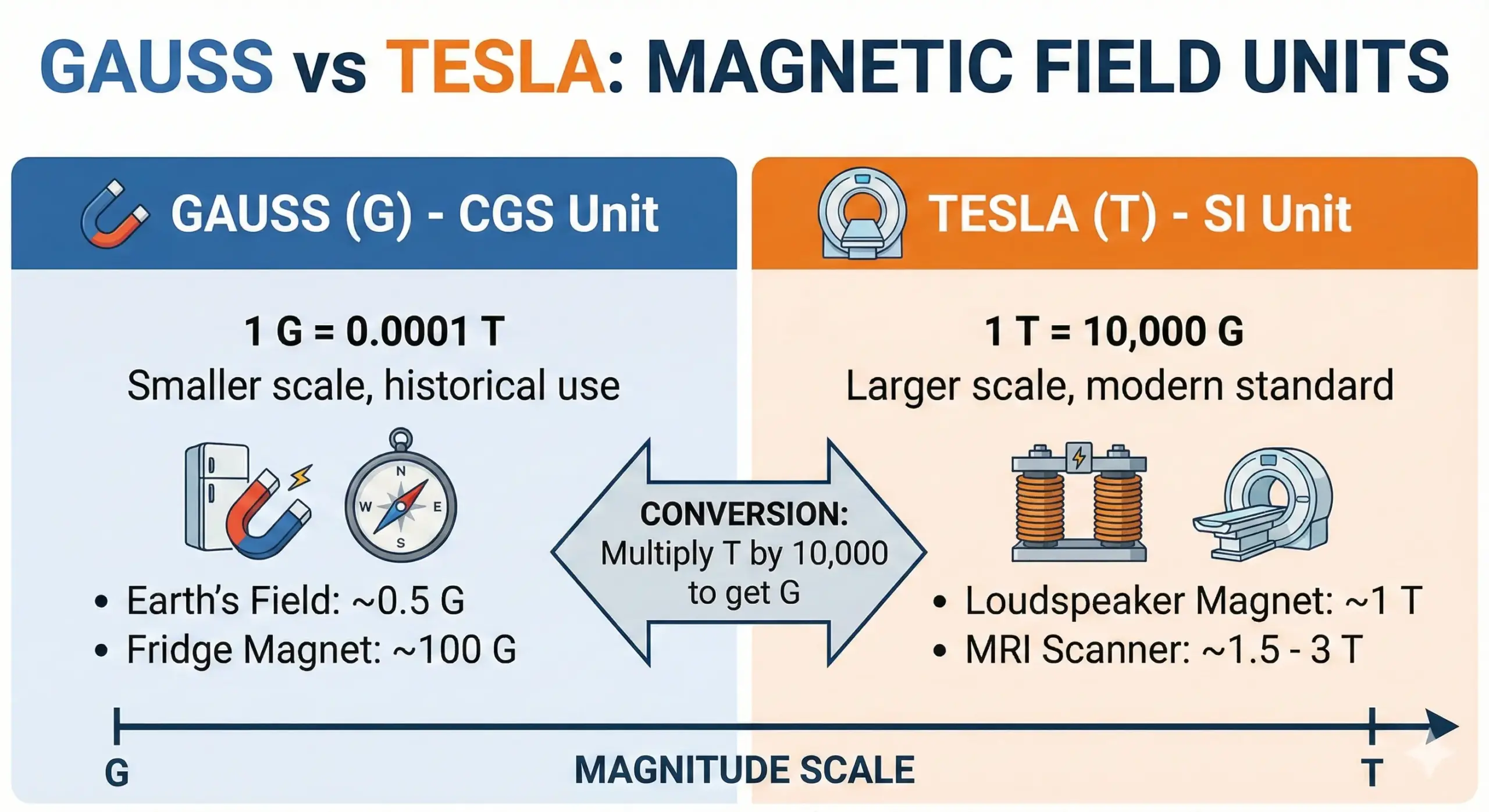
Global industries relying on permanent magnets — including EV motors, medical devices, renewable energy systems, and industrial automation — must quantify magnetic field strength accurately. Two primary units are used worldwide: Gauss (G) and Tesla (T). Both describe magnetic field intensity, but they originate from different measurement systems and align with different engineering standards.
For professionals specifying magnet performance, compliance, and safety, a clear understanding of these units is essential to making informed procurement and design decisions.
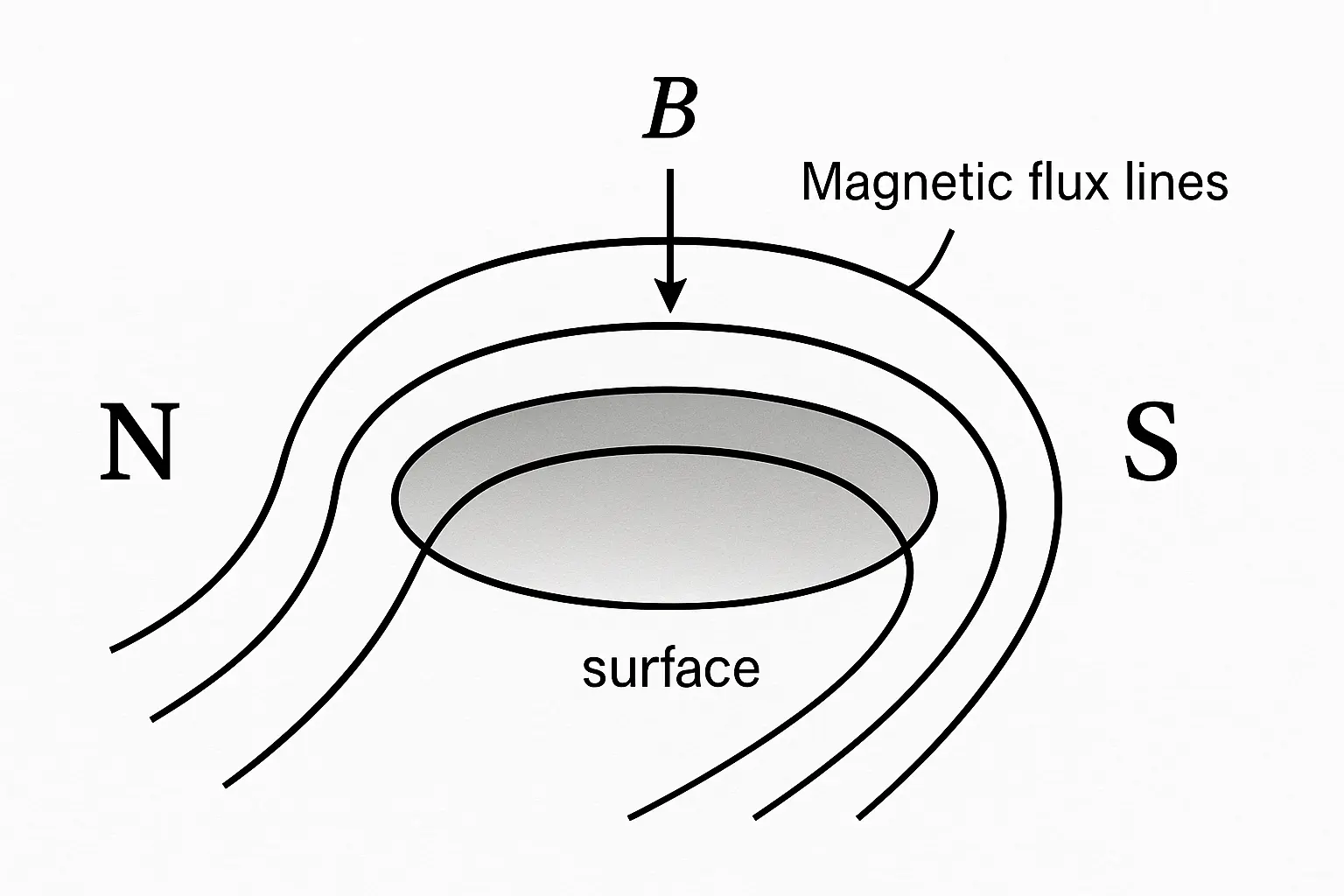
Magnetic flux is a fundamental concept in magnetics, electrical engineering, and industrial applications involving magnetic materials. It provides a measurable way to describe how much magnetic field passes through a given area. For companies working with permanent magnets, motors, transformers, and sensors, understanding magnetic flux is essential for efficient system design and performance optimization.
In simple terms, magnetic flux represents the total magnetic field flowing through a surface. The stronger the magnetic field or the larger the area that field covers, the greater the magnetic flux.
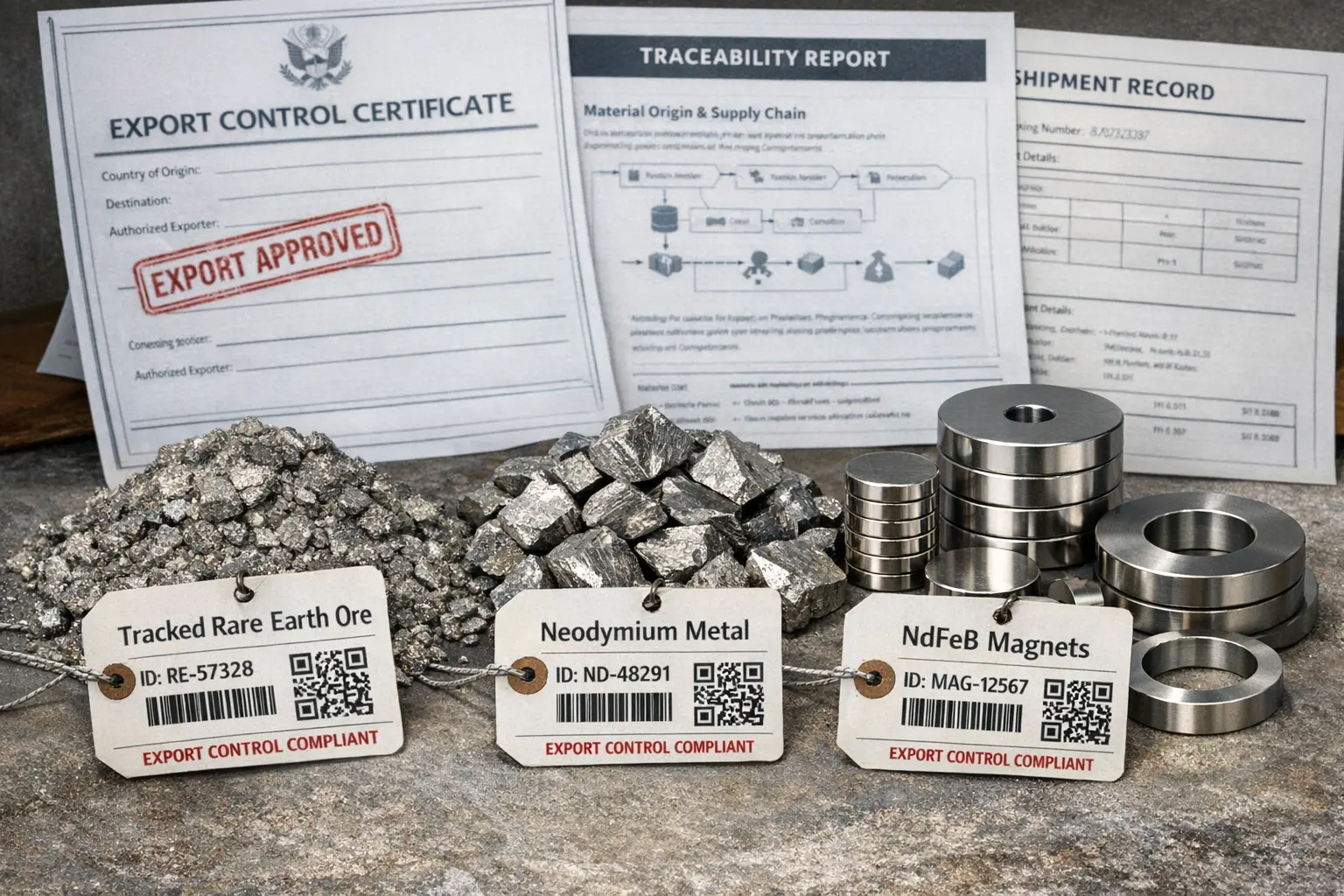
For global buyers operating in fast-moving industrial and technology sectors, ensuring a predictable and compliant import process is mission-critical. China remains the world’s dominant magnet supplier, and understanding the regulatory landscape is essential for minimizing lead-time risk and achieving operational continuity. The following framework outlines a structured approach to importing magnets from China efficiently and in full alignment with current export control requirements.
Permanent magnets often appear to “create” energy when they repel or attract other magnets. In reality, the repulsive force you feel is not produced by an ongoing energy output. Instead, magnetic behavior originates from the alignment of electrons inside the material. When a ferromagnetic material—such as neodymium, samarium–cobalt, or ferrite—is magnetized, its atomic magnetic moments align in a unified direction, creating a stable magnetic field.
This alignment is the result of external energy applied during manufacturing. For example, NdFeB magnets are produced through sintering or bonding, then exposed to a strong magnetic field that forces their internal magnetic domains to orient. Once aligned, these domains remain in position thanks to the material’s crystalline structure, which energetically prefers this ordered state.
In other words, the “energy” of a magnet is not a fuel but a configuration. The magnet does not burn energy to make its field; it simply maintains an arrangement that naturally produces magnetism.
Why Magnetic Repulsion Feels Like Work
When two magnets repel, the force you experience is due to the interaction between their magnetic fields—not because the magnets are consuming energy. The work being done comes from the person or machine pushing the magnets together. As you apply force to overcome the repulsion, you are adding energy into the system.
From a physics standpoint, magnetic forces are conservative. If you push two like poles together and then release them, the stored potential energy is returned as motion when they separate. Throughout the process, the magnet’s internal structure remains unchanged, meaning the magnet itself is not losing strength simply because it participated in a repulsive interaction.
Does Magnetic Strength Last Forever?
While magnets do not “use up” energy when they repel or attract, they are not eternal. Their performance degrades slowly over time due to several external factors:
Thermal Stress
High temperatures can cause magnetic domains to lose alignment. Neodymium magnets, for example, begin to weaken when exposed to temperatures above their rated maximum operating temperature (typically 80°C for standard grades and up to 200°C for high-temperature variants).
Physical Impact
Shock or mechanical vibration can disturb domain alignment, reducing magnetic field intensity. This is particularly relevant in industrial environments.
Corrosion
Uncoated magnets, especially NdFeB, are highly susceptible to oxidation. Surface damage accelerates demagnetization by disrupting the internal structure.
External Magnetic Fields
Exposure to strong opposing magnetic fields can partially or fully demagnetize a permanent magnet by reorienting its domains.
Under controlled conditions—stable temperature, protected surface, and proper handling—a high-quality magnet can retain more than 95% of its strength over many decades.
The Long-Term Outlook for Magnetic Materials
As industries expand into electrification, renewable energy, and high-density power systems, long-term magnetic stability is becoming a critical performance metric. Advanced coatings, high-temperature grades, and rare-earth-free alternatives are being developed to ensure lifecycle reliability, especially in automotive, aerospace, and industrial automation applications.
Meanwhile, magnets’ ability to perform without consuming energy continues to be an operational advantage. Their persistence and consistency make them indispensable in motors, sensors, actuators, and power systems across advanced manufacturing environments.
Conclusion
Magnets do not generate energy to repel or attract; their magnetic field originates from internal electron alignment established during production. Because this state requires no ongoing energy expenditure, magnets can exert force indefinitely—provided they are not exposed to conditions that disrupt their structure. Although they are not truly “forever,” their operational lifespan is exceptionally long, making them foundational components in modern engineering and industrial innovation.
Magnets play a central role in shaping the tonal character and amplification capabilities of both acoustic-electric and electric guitars. From a technical perspective, magnetic components translate string vibration into electrical signals that can be shaped, amplified, and projected. Understanding how magnets operate within guitar systems offers clarity for musicians, manufacturers, and technology developers who want to optimize sound, performance, and product design.
Magnetic Pickups: The Core Mechanism
At the heart of most guitars that rely on amplification is the magnetic pickup. This component is engineered to transform mechanical vibrations into electrical output through electromagnetic induction. When a metal string vibrates within a magnetic field, it disturbs the field and induces a corresponding voltage in the pickup coil.
Key Components
Permanent magnets: Typically Alnico or ceramic, providing stable magnetic fields.
Copper wire coils: Thousands of windings that capture induced electrical signals.
Pole pieces: Metal elements that shape the magnetic field for each string.
This combination enables accurate translation of string movement into an electrical waveform that reflects the nuances of playing style, dynamics, and articulation.
How Electric Guitar Pickups Use Magnets
In electric guitars, the pickup is the primary interface between the instrument and its amplified output. The magnets within the pickup magnetize the steel strings above them. As the strings vibrate, they modulate the magnetic flux, creating a signal that replicates the frequency and intensity of the vibration.
Operational Characteristics
Single-coil pickups deliver articulate, bright tones but can introduce electromagnetic noise.
Humbuckers use opposing magnetic orientations to eliminate noise and produce warmer, fuller tones.
Pickup strength (magnet grade and proximity to strings) influences output level and responsiveness.
The magnetic system is designed to balance clarity, dynamic range, and signal purity.
Magnet Use in Acoustic-Electric Guitars
Acoustic-electric guitars employ a hybrid strategy. While many rely on piezo pickups, a growing segment uses soundhole magnetic pickups to capture a more natural, warm tone. These operate similarly to electric guitar pickups but are optimized for the acoustic body’s resonance characteristics.
Functional Insights
They detect vibration from steel strings only—nylon strings do not interact with magnetic fields.
They deliver strong feedback resistance, ideal for stage performance.
They preserve the acoustic character while adding clarity and projection.
For manufacturers and players focused on amplified acoustic performance, magnetic pickups provide a reliable, low-noise solution with consistent tonal output.
Influence of Magnet Type on Tonal Behavior
Different magnet materials shape sound characteristics in distinct ways, enabling strategic tone engineering.
Common Magnet Types
Alnico II: Smooth, vintage warmth with softer attack.
Alnico V: Stronger magnetic pull, tighter response, brighter presence.
Ceramic: High output, aggressive tonal profile, ideal for modern high-gain applications.
These material choices drive product differentiation and player preference across all levels of performance.
Magnetic Fields, String Pull, and Tone Optimization
Although magnets enable sound generation, they also exert force on the strings. Excessive magnetic pull—particularly from strong magnets placed too close—can reduce sustain and cause tonal anomalies.
Optimization Principles
Maintain proper pickup height to prevent over-pulling.
Balance magnet strength with tonal objectives.
Use multi-pickup configurations to achieve broader sonic flexibility.
Precision in magnet placement directly shapes the user experience and performance quality.
Strategic Implications for Guitar Manufacturers
For businesses developing guitars, pickups, or aftermarket components, magnetic design directly impacts product competitiveness. Industry-leading differentiation occurs through:
Enhanced coil engineering
Advanced magnet materials
Hybrid pickup systems
Noise-reduction technology
Integrated preamps for acoustic-electric platforms
The intersection of magnetic science and guitar craftsmanship continues to redefine tone innovation and market positioning.
Wireless charging operates on electromagnetic induction, where a charging pad transfers energy to a device through a rapidly alternating magnetic field. The receiver coil inside the phone captures this energy and converts it into electrical power. Because magnetic fields sit at the core of this technology, customers often ask whether additional magnets—such as magnetic cases, phone mounts, or magnetic accessories—can influence charging performance. From an engineering perspective, the answer depends on magnet strength, placement, and material design.
How Magnets Interact with Wireless Charging Coils
Magnets themselves do not inherently disrupt wireless charging because the technology relies on alternating magnetic fields, while permanent magnets produce static magnetic fields. Static fields do not interfere with the operational frequency of induction charging. However, the presence of certain ferromagnetic materials near the charging coil can create operational inefficiencies.
Key Interaction Principles
Magnetic fields from accessories do not block induction unless they distort the magnetic pathway.
Non-conductive magnetic materials, such as ferrite, can support wireless charging by managing magnetic flux.
Metal-backed accessories can obstruct charging by absorbing or deflecting magnetic energy.
As a result, the magnet itself is rarely the issue—the real risk lies in design choices that introduce conductive metals between the charger and device.
Why Some Magnetic Accessories Disrupt Charging
Many magnetic phone accessories incorporate steel or other conductive metals to improve grip strength. These metals can trigger heat buildup, reduce charging speed, or prevent charging altogether by interfering with the magnetic coupling between the transmitter and receiver coils.
Common Issues
Energy loss due to eddy currents generated in conductive metal plates.
Misalignment caused by magnets that shift the phone away from the coil’s optimal charging zone.
Thermal shutdown triggered when lower-quality accessories cause excessive heat accumulation.
Premium magnetic systems, such as MagSafe-compatible designs, solve these issues using optimized magnet arrays and non-conductive support materials.
The Role of Magnet Design in Supporting Wireless Charging
Modern magnetic alignment systems demonstrate how magnets can actually enhance wireless charging performance. These systems use magnets not to replace the induction process, but to ensure precise positioning, maximizing efficiency and power transfer.
Alignment Benefits
Enhanced user experience through automatic positioning
Reduced power loss from misaligned coils
Improved thermal stability and faster charging cycles
The strategic integration of magnets becomes a competitive advantage when paired with materials that maintain electromagnetic compatibility.
Are Magnetic Phone Cases Safe?
Most magnetic cases are fully compatible with wireless charging, provided they avoid conductive metal plates. Cases designed specifically for magnetic chargers use carefully engineered magnet rings embedded within non-conductive polymer structures, ensuring both alignment and performance.
Before recommending or purchasing a case, evaluate:
Whether the magnet is surrounded by non-metallic materials
Whether the product explicitly supports wireless charging
Whether the magnet’s placement aligns with industry standards
This approach ensures consistent charging reliability and avoids operational disturbances.
Best Practices for Using Magnets with Wireless Charging
Adopting the right workflow ensures consistent performance:
Select accessories labeled as “wireless charging compatible.”
Avoid mounts or cases with large metal plates.
Ensure precise alignment for optimal power transfer.
Monitor temperature during extended charging cycles.
Choose products designed for your device’s charging architecture.
For businesses designing magnetic accessories, prioritizing electromagnetic compatibility testing is essential for compliance and end-user satisfaction.
Manage Consent
To provide the best experiences, we use technologies like cookies to store and/or access device information. Consenting to these technologies will allow us to process data such as browsing behavior or unique IDs on this site. Not consenting or withdrawing consent, may adversely affect certain features and functions.
Functional
Always active
The technical storage or access is strictly necessary for the legitimate purpose of enabling the use of a specific service explicitly requested by the subscriber or user, or for the sole purpose of carrying out the transmission of a communication over an electronic communications network.
Preferences
The technical storage or access is necessary for the legitimate purpose of storing preferences that are not requested by the subscriber or user.
Statistics
The technical storage or access that is used exclusively for statistical purposes.The technical storage or access that is used exclusively for anonymous statistical purposes. Without a subpoena, voluntary compliance on the part of your Internet Service Provider, or additional records from a third party, information stored or retrieved for this purpose alone cannot usually be used to identify you.
Marketing
The technical storage or access is required to create user profiles to send advertising, or to track the user on a website or across several websites for similar marketing purposes.