
Author: Seny Shen

  • What Objects Do Magnets Stick To?

    What Objects Do Magnets Stick To?

    Magnets interact with materials based on their atomic structure and magnetic domain behavior. At a strategic level, the key determinant is whether the material contains elements that support aligned magnetic domains, enabling strong attraction. Understanding these fundamentals helps businesses make data-driven decisions when selecting materials for industrial, commercial, or consumer-facing applications.

    Ferromagnetic Materials

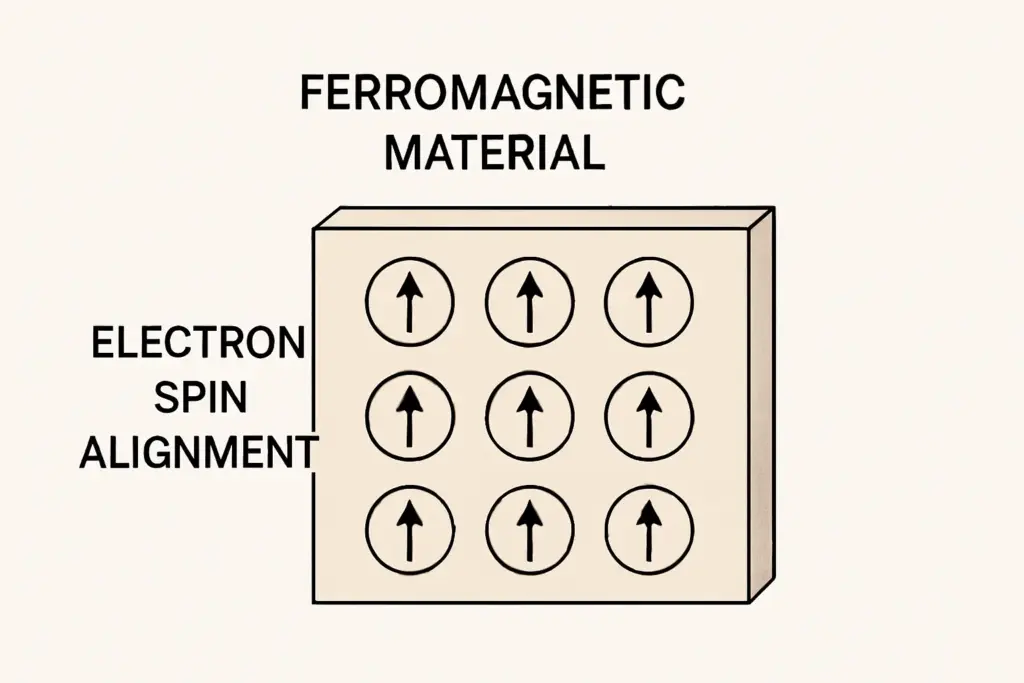
    Ferromagnetic materials are the primary category that magnets adhere to consistently. These materials have unpaired electrons and magnetic domains that align easily when exposed to an external magnetic field, delivering strong and stable attraction.

    Common Ferromagnetic Examples

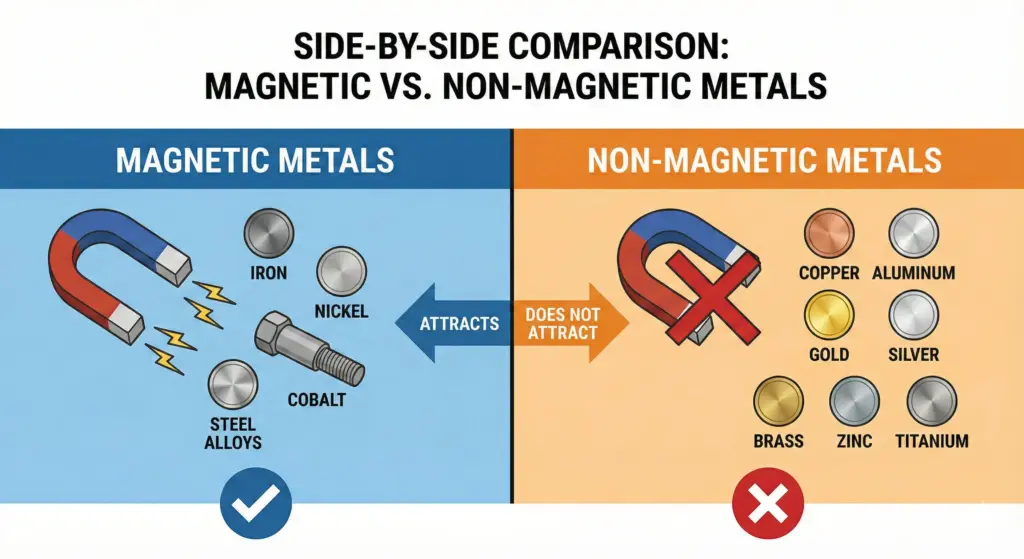
    • Iron: The most magnet-responsive metal and widely used across manufacturing and engineering.
    • Steel: An alloy of iron; carbon steels are highly magnetic, while stainless steels vary based on composition.
    • Nickel: Offers moderate magnetism and is often used in plating and electronic components.
    • Cobalt: Known for strong magnetic properties and essential in high-performance alloys and magnets.

    Ferromagnetic materials deliver predictable bonding strength, which is why they dominate in industrial fixtures, magnetic assemblies, motors, and consumer products.

    Comparison chart of metals showing which materials attract magnets and which do not.

    Variability Within Steel Grades

    Not all steels respond equally to magnets.

    • Austenitic stainless steels (e.g., 304, 316) are generally non-magnetic due to their crystal structure.
    • Ferritic and martensitic stainless steels (e.g., 430, 410) are magnetic and support strong adhesion.

    This variability underscores the importance of material-grade verification in production planning and quality assurance workflows.

    Paramagnetic Materials

    Paramagnetic materials demonstrate very weak attraction. This effect is so minimal that magnets will not “stick”—instead, these materials are only faintly attracted in the presence of a strong magnetic field.

    Typical examples include:

    • Aluminum
    • Magnesium
    • Titanium
    • Molybdenum

    Operationally, these materials are treated as non-magnetic in practical applications.

    Diamagnetic Materials

    Diamagnetic materials are repelled by magnetic fields. The effect is extremely weak, meaning magnets will not stick under any normal circumstance.

    Examples include:

    • Copper
    • Gold
    • Silver
    • Bismuth
    • Graphite

    From a material-engineering perspective, diamagnetism is not leveraged for adhesion but may be considered where magnetic neutrality is desired, such as in sensitive electronic or scientific environments.

    Non-Metallic Objects

    Most non-metallic materials do not interact with magnets, including:

    • Plastic
    • Wood
    • Rubber
    • Glass
    • Ceramics

    While magnets do not stick to these surfaces, they are commonly used as substrates or housings in magnetic product design.

    Coatings, Plating, and Surface Treatments

    Magnets stick to objects based on core material, not surface coating.
    For example:

    • Gold-plated iron → Magnetic
    • Nickel-plated steel → Magnetic
    • Copper-coated aluminum → Not magnetic

    Evaluating the base structure is crucial when assessing compatibility for magnetic fixtures or assemblies.

    Practical Applications

    Understanding what magnets stick to unlocks value across multiple sectors:

    • Manufacturing: Selecting compatible metals for magnetic tools or automation systems.
    • Consumer Goods: Designing magnetic closures, mounts, or accessories.
    • Electronics: Ensuring proper interaction between magnets and shielding components.
    • Construction: Using magnetic fasteners and alignment tools for operational efficiency.

    This material-level insight enables precise engineering decisions and performance optimization.

  • Introduction to Permanent Magnet Synchronous Motors (PMSM)

    Introduction to Permanent Magnet Synchronous Motors (PMSM)

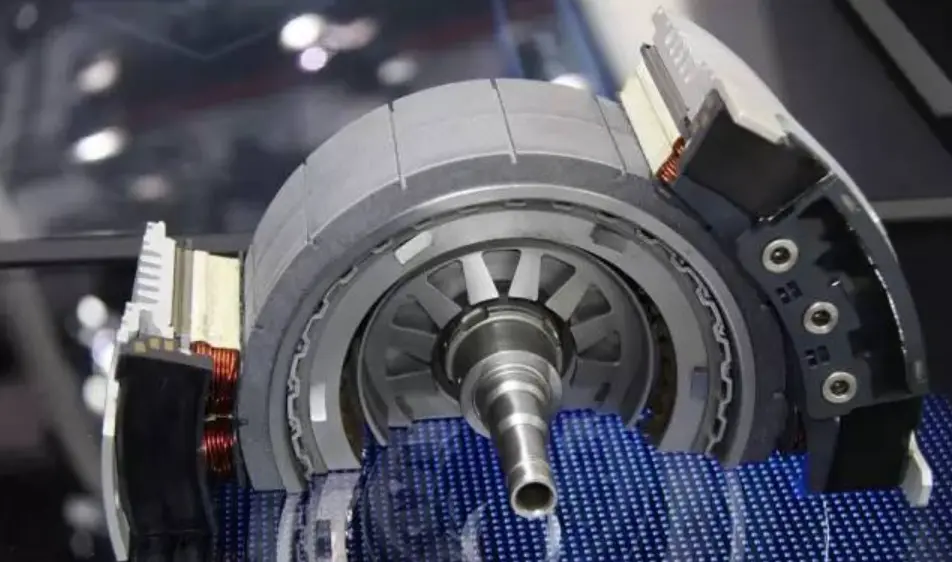
    A Permanent Magnet Synchronous Motor (PMSM) is an advanced electric motor that uses permanent magnets embedded in or attached to the rotor to generate a consistent magnetic field. Unlike induction motors, PMSMs do not rely on induced rotor currents, enabling higher efficiency, lower heat generation, and more precise control. These advantages have positioned PMSMs as a preferred solution across industrial automation, robotics, automotive powertrains, HVAC systems, and high-performance motion-control applications.

    As global industries accelerate their transition toward energy-efficient and digitally controlled power systems, PMSMs continue to gain market share due to their superior performance, compact design, and reliable operational characteristics.

    How a PMSM Works

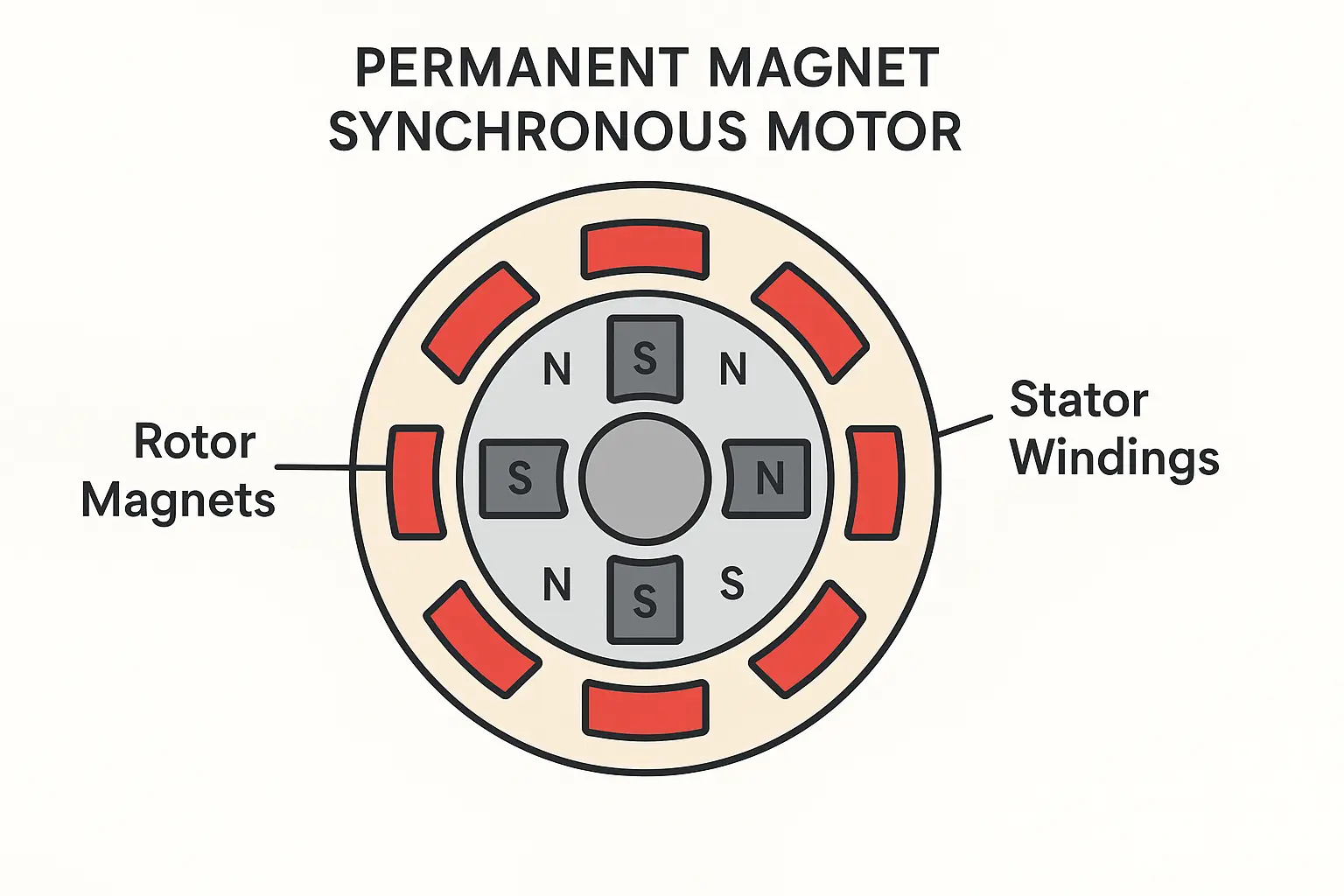
    A PMSM operates by synchronizing the rotor’s magnetic field with the rotating magnetic field produced by the stator. The permanent magnets create a stable magnetic force, while alternating current in the stator windings generates the rotating field.

    This synchronous relationship ensures:

    • Constant speed under steady load
    • High torque density
    • Minimal energy losses
    • Consistent, vibration-controlled operation

    PMSMs typically utilize neodymium or samarium cobalt magnets because of their high magnetic strength, thermal stability, and resistance to demagnetization. The quality of these magnets directly influences motor efficiency, power density, and performance in demanding environments.

    Rotor assembly with embedded permanent magnets used in PMSM systems.

    Key Advantages of Permanent Magnet Synchronous Motors

    The engineering benefits of PMSMs make them a strategic choice for modern, high-efficiency systems.

    High Efficiency and Lower Energy Consumption

    Permanent magnets eliminate the need for rotor excitation currents, reducing power losses and improving overall efficiency—often exceeding 90%. This performance is essential for industries focused on sustainability, operational cost reduction, and long-term energy optimization.

    High Torque Density and Power-to-Weight Ratio

    By integrating high-strength permanent magnets, PMSMs deliver stronger magnetic flux within a compact footprint. This enables lighter motor designs with higher output power, supporting everything from electric vehicles to advanced robotics.

    Excellent Dynamic Control

    PMSMs provide precise speed and torque response, making them ideal for applications demanding accuracy, such as CNC machinery, industrial automation, semiconductor equipment, and high-end servo systems.

    Reduced Maintenance Requirements

    With fewer components subject to electrical or mechanical wear, PMSMs offer longer operating lifecycles and reduced maintenance costs—another major advantage in industrial and automotive environments.

    PMSM Applications Across Modern Industries

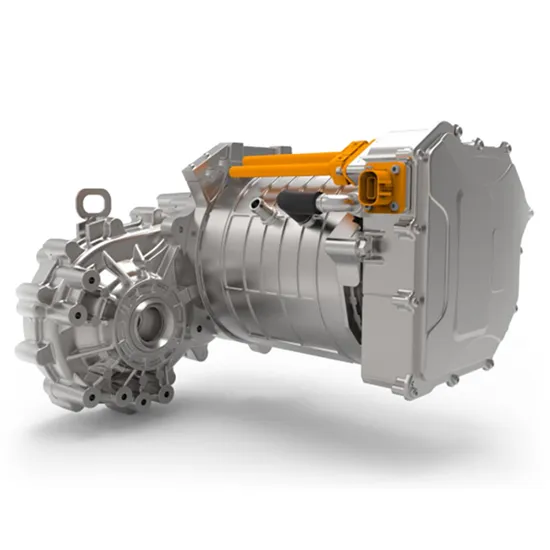
    PMSM drivetrain used in modern electric vehicle applications.

    PMSMs have become fundamental components in numerous sectors due to their reliability and energy-efficient performance.

    Electric Vehicles

    PMSMs power many modern EV drivetrains, offering high torque, smooth acceleration, and low energy consumption. Their compact size enhances design flexibility and vehicle range.

    Industrial Automation and Robotics

    In factories, PMSMs drive servo motors, conveyors, robotic joints, and precision machinery. Their rapid response and stable operation support high-accuracy production lines.

    HVAC, Pumps, and Compressors

    Energy-efficient PMSMs improve system performance and reduce power costs in HVAC blowers, industrial pumps, and air compressors.

    Home Appliances and Consumer Electronics

    From washing machines to high-end fans, PMSMs enable quieter, more efficient product designs that meet global energy standards.

    The Strategic Importance of High-Quality Permanent Magnets

    Since PMSMs rely heavily on magnetic performance, the choice of permanent magnet materials—especially neodymium and samarium cobalt—directly determines motor efficiency, torque output, and thermal stability. For manufacturers and engineers, sourcing high-grade magnets is mission-critical to ensuring long-term product reliability and competitive performance levels.

  • How Can a Permanent Magnet Be Demagnetized?

    How Can a Permanent Magnet Be Demagnetized?

    Permanent magnets deliver long-term magnetic performance, but their magnetization is not absolute. Under certain conditions, they can lose part or all of their magnetic strength. For manufacturing teams, quality-control departments, and engineering groups working with magnetic assemblies, understanding how demagnetization occurs—both accidentally and intentionally—is essential. It ensures reliable product design, accurate performance modeling, and effective lifecycle management of magnetic components.

    Heat as the Most Common Demagnetization Method

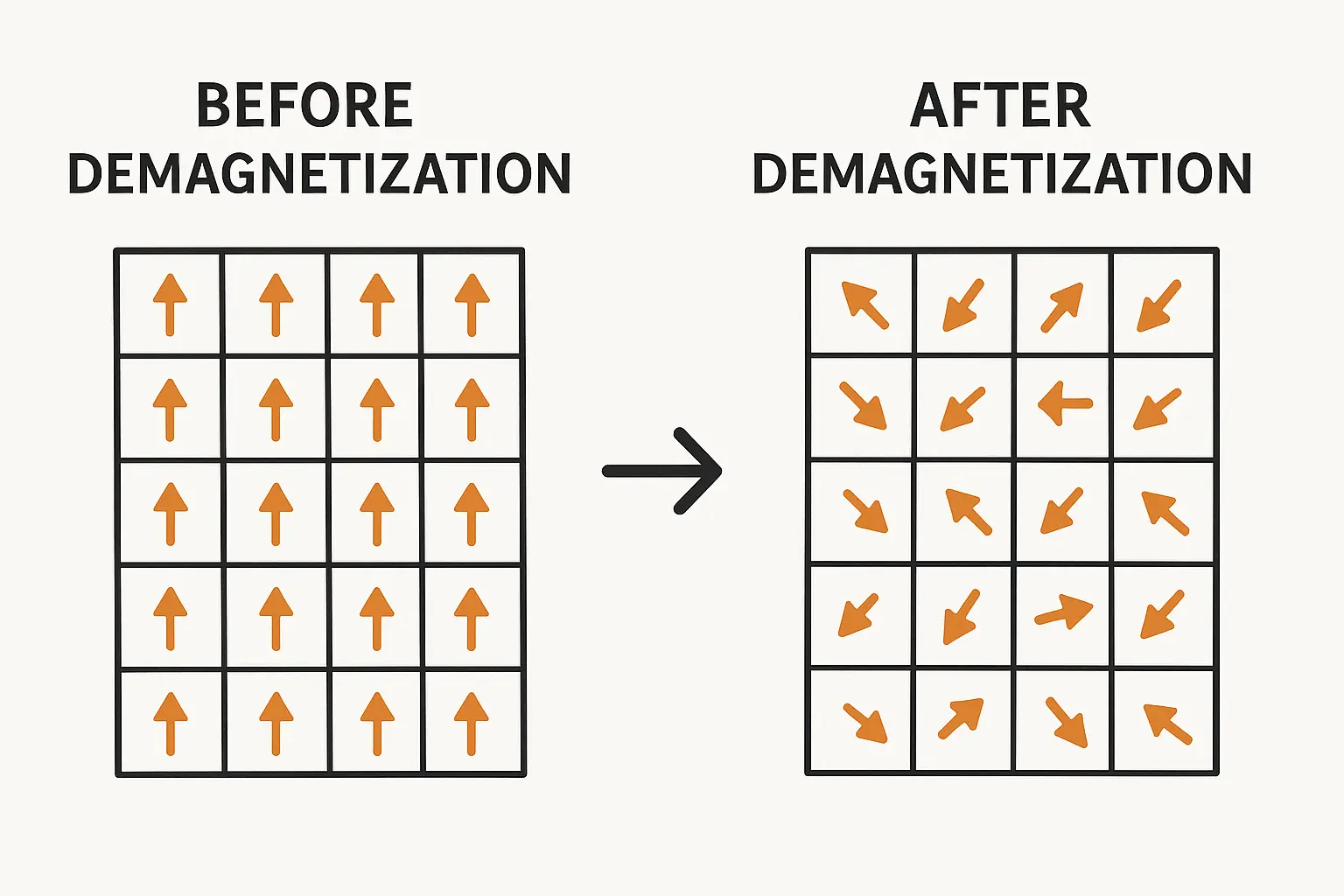
    Temperature has a direct and measurable impact on magnetic alignment. When a magnet is heated, the thermal energy causes the magnetic domains to vibrate. As the temperature increases, this vibration becomes strong enough to disrupt their alignment. Beyond a certain threshold—known as the Curie temperature—the magnet completely loses its ferromagnetic properties.

    • Ferrite magnets have a high Curie temperature and can tolerate substantial heat.
    • Neodymium magnets are more sensitive and begin losing strength at much lower temperatures.
    • Samarium cobalt magnets demonstrate excellent thermal resistance.

    For controlled demagnetization in industrial settings, heat treatment is the most predictable and scalable approach. Manufacturers use precise thermal processes to reset magnetic domains when recycling or re-magnetizing components.

    Magnet exposed to high temperature to demonstrate thermal demagnetization.

    Applying an Opposing Magnetic Field

    Another method involves exposing the magnet to a strong external magnetic field in the opposite direction. This reverse field forces the magnetic domains to realign, reducing the magnet’s overall magnetic strength. The result can range from partial demagnetization to complete polarity reversal, depending on the field intensity.

    This approach is commonly used when calibrating magnetic assemblies, removing residual magnetism from tooling, or preparing magnets for re-magnetization. It is also a risk factor during production if magnets are placed too close together or handled near high-strength magnetic equipment.

    Mechanical Shock and Structural Stress

    Traditionally, mechanical shock—such as dropping a magnet—could demagnetize brittle magnetic materials like Alnico. The impact generated enough internal stress to disrupt domain alignment. Modern rare-earth magnets are much more resistant, but mechanical stress still has effects under certain conditions:

    • Micro-cracks can weaken magnetic pathways.
    • Excess vibration can gradually reduce magnetic performance over time.
    • Structural deformation can change the magnetic circuit and lower field strength.

    For high-performance assemblies, this reinforces the importance of proper mounting, shock prevention, and structural stability in the final product design.

    Corrosion and Chemical Degradation

    Magnetic strength can also be compromised by chemical reactions. Neodymium magnets, for example, are highly susceptible to corrosion if their protective plating is damaged. Once oxidation begins, the magnet’s internal structure breaks down, causing permanent loss of magnetic properties.

    Proper surface coatings—such as nickel-copper-nickel plating, epoxy, or specialized protective layers—are critical for long-term stability in humid, corrosive, or outdoor environments.

    Why Understanding Demagnetization Matters

    For businesses that rely on magnetic components, demagnetization is more than a theoretical concept. It influences material selection, environmental planning, quality assurance, and the overall durability of magnet-based systems. With the growing use of magnetic solutions in automation, sensors, consumer electronics, and energy applications, organizations must factor demagnetization risks into both product development cycles and operational processes.

    Future advancements in material science continue to improve magnet resilience. Enhanced coatings, engineered alloys, and stabilized magnetic structures enable permanent magnets to perform reliably even in challenging environments. However, understanding the mechanisms of demagnetization remains fundamental for designing robust, long-lifecycle magnetic systems.

  • How Do Headphones Use Electromagnets?

    How Do Headphones Use Electromagnets?

    Modern headphone systems rely on electromagnetism as their core operating mechanism. Whether used in consumer audio, professional monitoring, or industrial communication devices, electromagnets convert electrical signals into precise mechanical vibration that ultimately produces sound. For engineering teams and procurement specialists, understanding this mechanism is essential because magnetic components directly influence acoustic quality, energy efficiency, and long-term product reliability.

    The Structure of a Headphone Driver

    At the center of every headphone is the driver unit, a highly engineered assembly that controls sound production. A typical driver includes three key elements:

    • A permanent magnet, often neodymium for its high magnetic strength
    • A voice coil, which acts as the electromagnet
    • A diaphragm, the membrane that vibrates to create sound waves

    This configuration forms a dynamic magnetic system in which electrical energy is transformed into air vibration. The strength and consistency of this system determine the clarity, accuracy, and tonal performance of the headphone.

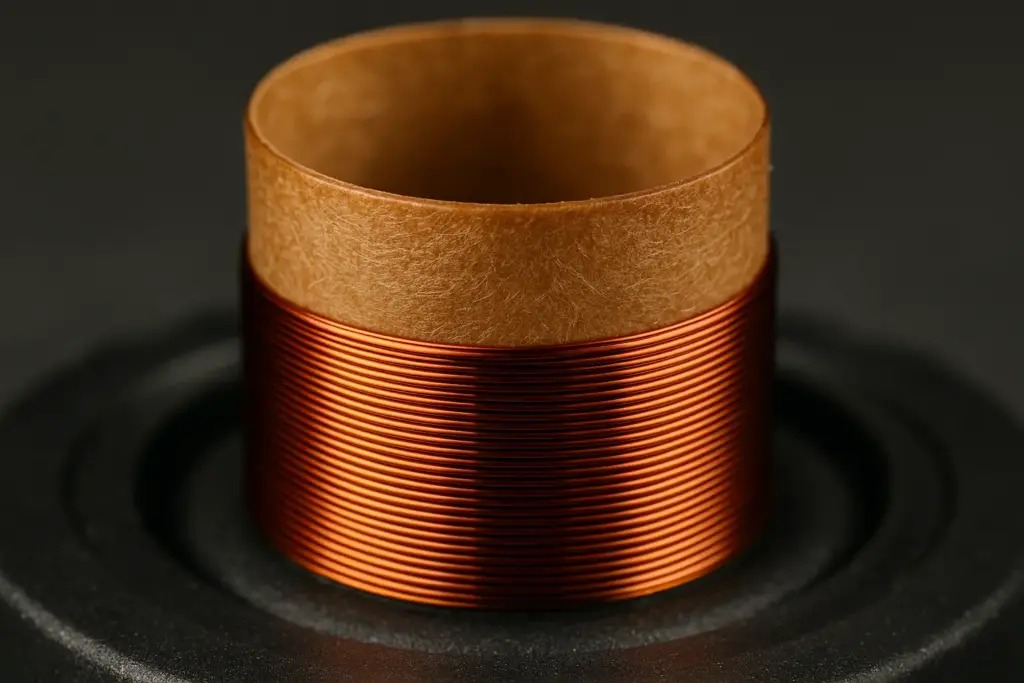
    Copper voice coil used as the electromagnet inside headphone audio systems.

    How the Voice Coil Functions as an Electromagnet

    The voice coil is made of thin copper or aluminum wire wound into a lightweight cylinder. When electrical audio signals pass through the coil, it becomes an electromagnet with rapidly shifting polarity. These shifts correspond directly to the frequency and amplitude of the audio signal.

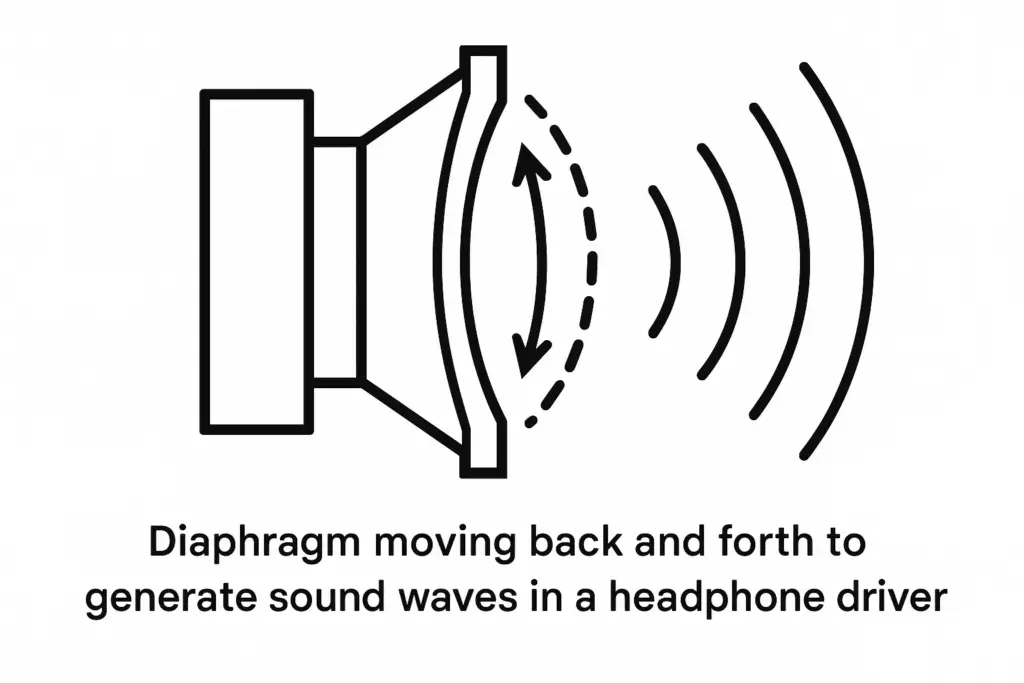
    The permanent magnet surrounding the voice coil creates a stable magnetic field. As the current in the coil fluctuates, the coil moves forward and backward within this field. Because the diaphragm is attached to the voice coil, every movement produces air pressure waves that the listener perceives as sound. This electromagnetic interaction is the reason headphones can reproduce complex audio with precision.

    The Role of Permanent Magnets in Sound Accuracy

    While the voice coil generates motion, the permanent magnet defines the operating environment. Neodymium magnets are preferred due to their ability to produce a powerful magnetic field at a low mass. This supports:

    • Higher driver sensitivity
    • Reduced power consumption
    • A more accurate frequency response
    • Stable performance over long operating periods

    For professional and industrial audio solutions, magnet quality is a key determinant of whether a device can maintain consistent output under heavy usage.

    Why Electromagnets Enable High-Fidelity Audio

    Electromagnets offer unique advantages that enable headphones to achieve detailed and accurate sound reproduction:

    • Instant dynamic response: The coil reacts immediately to electrical input changes.
    • High-resolution sound: The diaphragm follows precise electromagnetic motion, enabling clean reproduction of digital audio.
    • Versatile design scalability: The technology supports in-ear monitors, studio headsets, and heavy-duty industrial models.
    • Material optimization: Manufacturers can adjust coil materials, diaphragm types, and magnet grades to achieve targeted performance metrics.

    As material science advances, these systems continue to deliver improved clarity, lower distortion, and enhanced spatial audio capability.

    Diaphragm moving back and forth to generate sound waves in a headphone driver.

    Future Developments in Electromagnetic Headphone Technology

    The audio industry is moving toward next-generation driver architectures that optimize weight, efficiency, and signal accuracy. Innovations include lighter coil materials, hybrid magnetic structures, and AI-assisted acoustic modeling. These developments will elevate performance standards across consumer, professional, and industrial audio categories.

  • Difference Between Diamagnetic and Paramagnetic Materials

    Difference Between Diamagnetic and Paramagnetic Materials

    In industrial environments where magnetic performance drives product reliability, understanding the difference between diamagnetic and paramagnetic materials is a strategic necessity. These classifications describe how materials react to external magnetic fields, influencing engineering decisions across manufacturing, electronics, sensing technologies, and precision instrumentation. Although both categories exhibit weak magnetic responses, the mechanisms behind them and their practical business implications differ substantially.

    What Are Diamagnetic Materials?

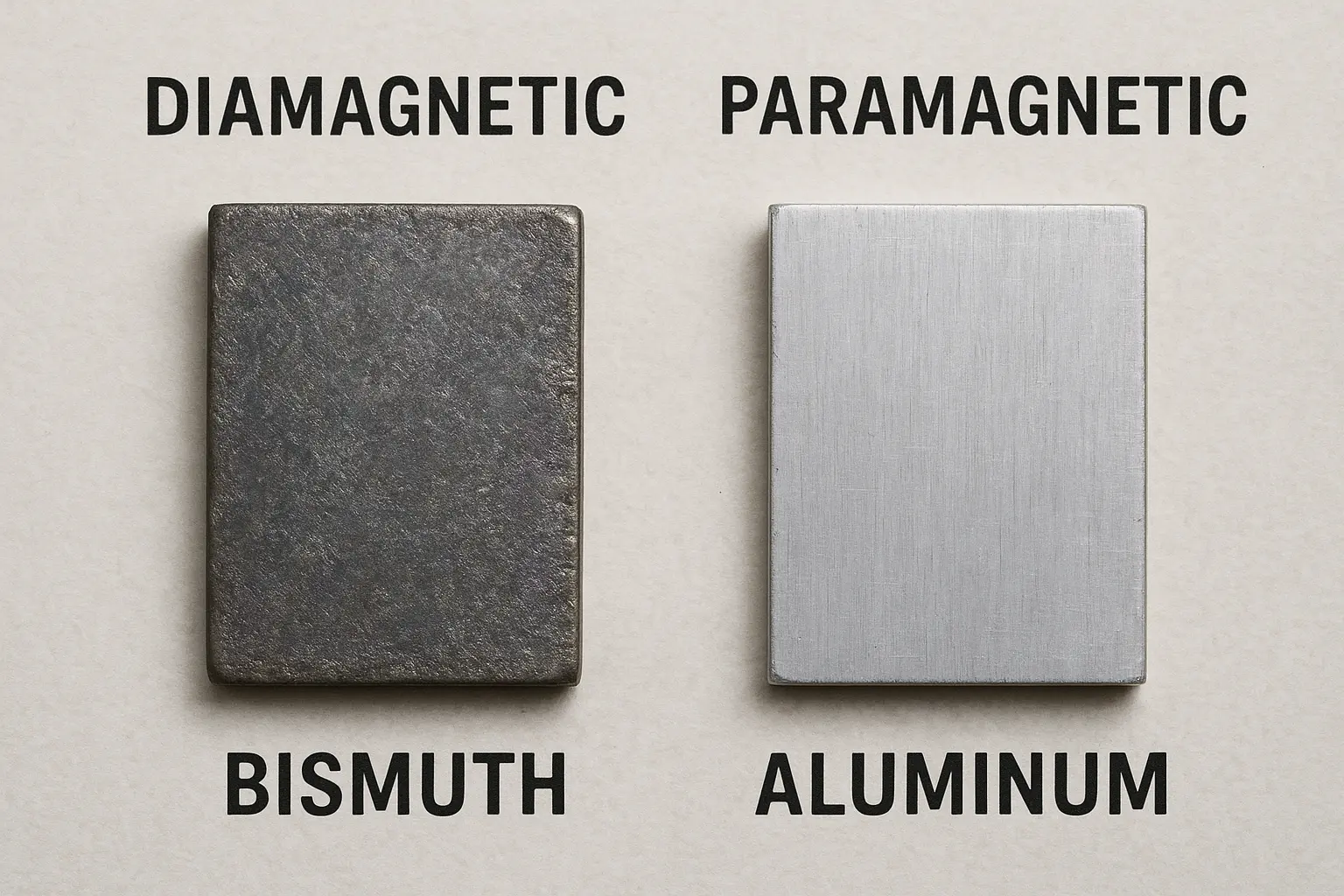
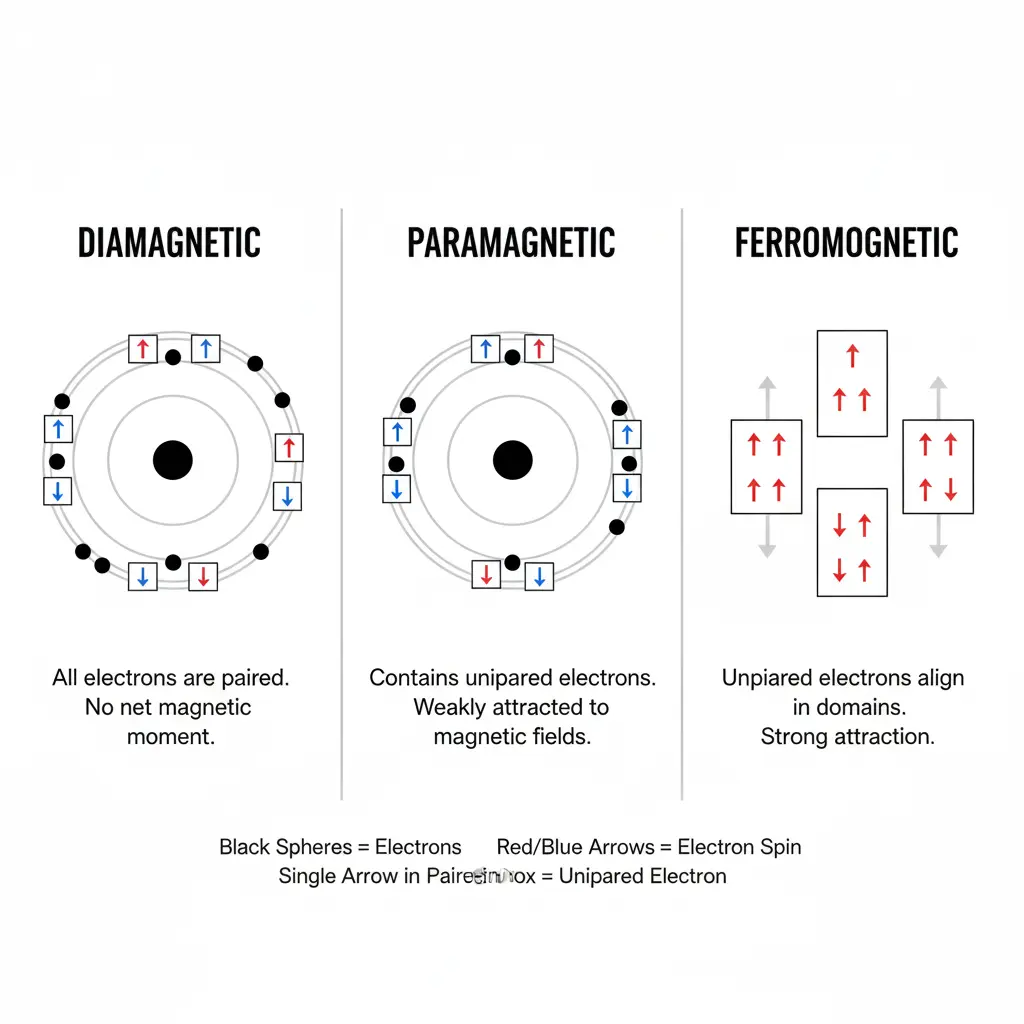
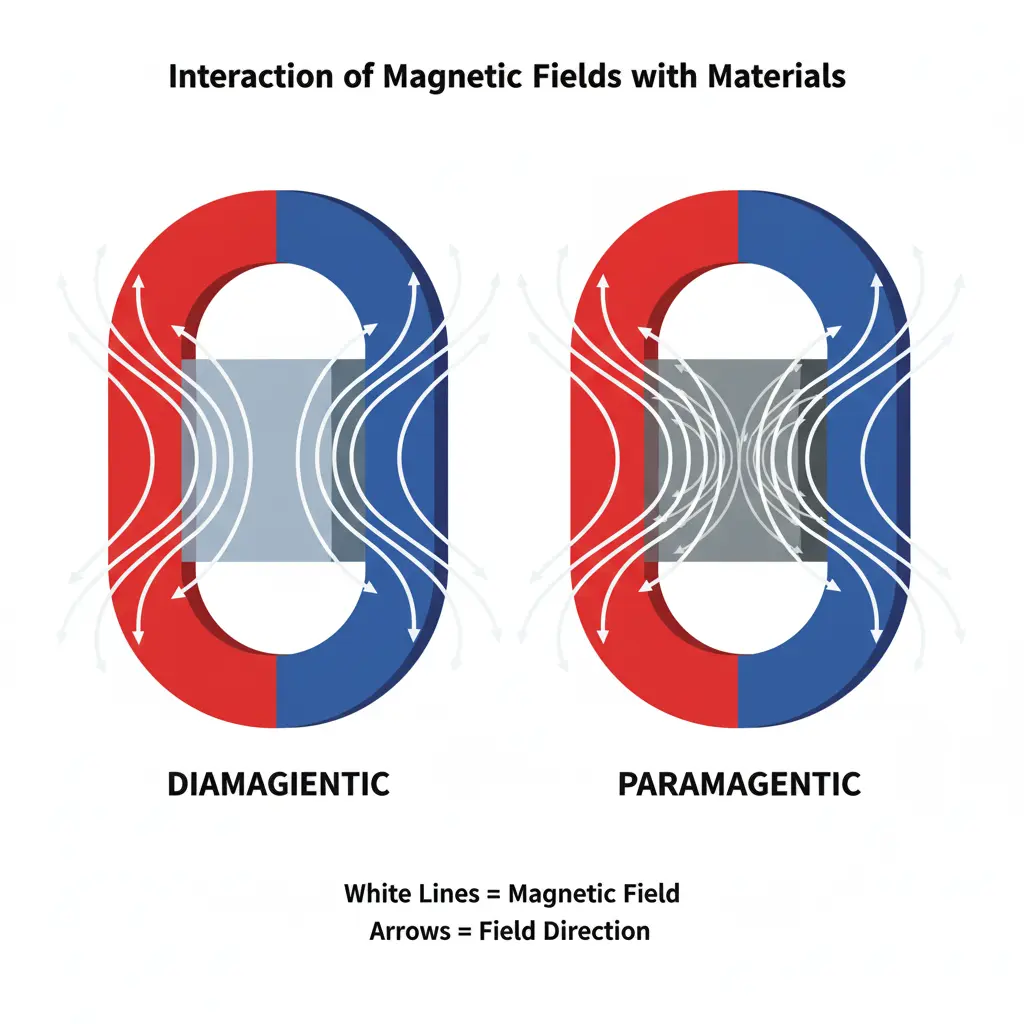
    Diamagnetic materials form the baseline category in magnetic classification. In these materials, all electrons are paired, resulting in no inherent magnetic moment. When exposed to a magnetic field, they generate a temporary, extremely weak magnetic field in the opposite direction. This produces negative magnetic susceptibility and leads to slight repulsion.

    Common diamagnetic materials include bismuth, copper, gold, silver, graphite, and even everyday substances such as water. Their weak response may seem negligible, but the consistency and predictability of diamagnetism make these materials valuable in high-precision applications. Industries that require low magnetic interference—such as scientific instrumentation, balancing systems, and magnetic shielding—often rely on these attributes to ensure system stability.

    Illustration of paired and unpaired electrons explaining magnetic behavior.

    What Are Paramagnetic Materials?

    Paramagnetic materials behave differently due to the presence of unpaired electrons. These unpaired electrons create small magnetic moments that align partially with an applied magnetic field, generating slight attraction. Their magnetic susceptibility is positive but modest, and the induced magnetization disappears immediately when the external field is removed.

    Examples of paramagnetic materials include aluminum, magnesium, lithium, titanium, and a variety of transition-metal ions. Their temperature-dependent behavior further differentiates them; as temperature increases, electron alignment weakens and magnetic susceptibility decreases. This makes paramagnetic materials suitable for applications where controlled, temporary magnetic influence is part of system design.

    Key Differences Between Diamagnetic and Paramagnetic Materials

    The fundamental distinction lies in their response direction and magnitude:

    • Diamagnetic materials always exhibit repulsion and maintain magnetic neutrality.
    • Paramagnetic materials show weak attraction and temporary magnetization.

    Diamagnetic materials are ideal in environments requiring stability and minimal magnetic interaction, such as precision measuring devices, levitation experiments, and sensitive electronic components. Paramagnetic materials, by contrast, support systems where controlled, low-level magnetism is advantageous, including magnetic separation, catalysis environments, and temperature-responsive sensors.

    Understanding these differences enables engineers and procurement teams to make informed, performance-driven decisions when integrating magnetic or non-magnetic materials into their systems.

    Visualization of magnetic field lines interacting differently with diamagnetic and paramagnetic materials.

    Industrial and Engineering Implications

    Material selection drives operational efficiency and long-term product performance. Diamagnetic materials offer predictable neutrality, making them well-suited for high-accuracy applications where magnetic distortion must be minimized. Paramagnetic materials provide reliable, though temporary, magnetic responsiveness, enabling their use in advanced sensor technologies and variable-field environments.

    As industries move toward more engineered material solutions, the ability to differentiate between these two magnetic behaviors becomes a competitive advantage. With continued advancements in material science, magnets manufacturers are increasingly able to fine-tune magnetic traits to meet precise operational requirements, driving higher efficiency and product innovation.

  • Do Magnets Work in Space?

    Do Magnets Work in Space?

    Magnets play a critical role in engineering, physics, and advanced aerospace systems. But when technology leaves Earth’s atmosphere, many users wonder: do magnets work in space?

    The short answer is yes — magnets absolutely work in space. Their performance does not depend on gravity or air, and their magnetic fields remain fully functional in the vacuum of space. However, their behavior and applications can differ depending on environmental conditions such as temperature, radiation, and magnetic interference.

    This article provides a forward-looking perspective on how magnets operate in space and why they remain indispensable in modern aerospace technology.


    Understanding How Magnets Work in Any Environment

    Magnets generate a magnetic field due to the alignment of magnetic domains inside the material. This phenomenon is internal and self-sustaining, meaning it does not require:

    • Air
    • Gravity
    • Atmosphere
    • Pressure

    Because of this, a magnet’s field is stable and consistent in environments ranging from deep ocean floors to the vacuum of outer space.

    Key Point:

    A vacuum has no impact on a permanent magnet’s magnetic structure.


    Do Magnetic Fields Change in Space?

    While magnets themselves function normally, environmental factors can influence performance:

    1. Temperature Extremes

    Space swings between intense heat and severe cold.

    • High temperatures can reduce magnetic strength.
    • Extremely low temperatures can increase magnetic performance for some materials.

    Rare-earth magnets such as samarium cobalt (SmCo) are preferred in aerospace for their robust thermal stability.

    2. Cosmic Radiation

    Radiation does not typically demagnetize a permanent magnet, but long-term exposure can degrade materials depending on alloy composition.

    3. Presence of Planetary Magnetic Fields

    In orbit or near magnetically active celestial bodies, nearby magnetic fields can interact with a magnet’s field strength and direction. This doesn’t “turn off” the magnet — it simply influences its environment.


    How Magnets Are Used in Space Technology

    Magnetic components used in spacecraft systems and satellite mechanisms.

    Electronics, navigation, and mechanical systems in aerospace applications rely heavily on magnet-based technologies. Below are some core use cases.

    1. Attitude Control Systems (ACS)

    Satellites use magnetorquers, which generate controlled magnetic fields that interact with Earth’s magnetic field to adjust orientation.
    This is one of the most efficient and lightweight positioning technologies in orbital mechanics.

    2. Electric Propulsion Systems

    Advanced ion thrusters and magnetic confinement systems leverage magnetic fields to guide charged particles and optimize propulsion efficiency.

    3. Magnetic Sensors

    Critical systems use:

    • Magnetometers
    • Hall effect sensors
    • Geomagnetic detectors

    These instruments support navigation, scientific measurement, and stabilization.

    4. Motors and Actuators

    Mechanisms requiring rotation or precision movement, such as:

    • Solar panel deployment systems
    • Robotic arms
    • Antenna positioning hardware

    all use permanent magnets and electromagnetic assemblies.

    5. Magnetic Shielding

    Specialized shielding solutions protect sensitive spacecraft electronics from charged particles and cosmic rays.


    Do Electromagnets Work in Space?

    Yes. Electromagnets perform exceptionally well in space and offer enhanced flexibility because their magnetic fields can be adjusted, strengthened, or turned off.

    Their uses cover:

    • Thrusters
    • Antenna controls
    • Robotic assemblies
    • Gyroscopic equipment
    • Energy storage systems

    The only requirement is a power supply, which is typically provided by solar arrays or onboard batteries.


    Why Magnets Are Essential to Aerospace Engineering

    Magnets deliver significant value in space applications due to their ability to operate:

    • Without physical contact
    • Without lubrication
    • Without atmospheric limitations
    • With predictable, controllable behavior

    This makes them ideal for mission-critical components where reliability and performance are non-negotiable.


    Conclusion

    Magnets work flawlessly in space because their magnetic fields do not depend on air or gravity. Instead, they operate based on intrinsic physical properties that remain stable even in the vacuum of space. Whether supporting satellite orientation, powering motors, stabilizing sensors, or enabling cutting-edge propulsion systems, magnets remain a cornerstone of modern aerospace technology.

    For advanced magnetic components engineered for extreme environments, HSMAGNET provides high-performance permanent magnets, electromagnets, and custom assemblies designed to meet the rigorous demands of space and industrial applications.

  • How Are Electromagnets Used in Everyday Life?

    How Are Electromagnets Used in Everyday Life?

    Electromagnets are foundational to modern technology. Their ability to generate controlled magnetic fields allows them to power countless systems that drive convenience, efficiency, and safety in daily life. While most people never see these components directly, electromagnets operate behind the scenes to enable the devices and infrastructure we rely on every day.

    This article outlines the practical applications of electromagnets, demonstrating how they support consumer products, industrial equipment, transportation, healthcare, and digital communication.


    What Makes Electromagnets So Useful?

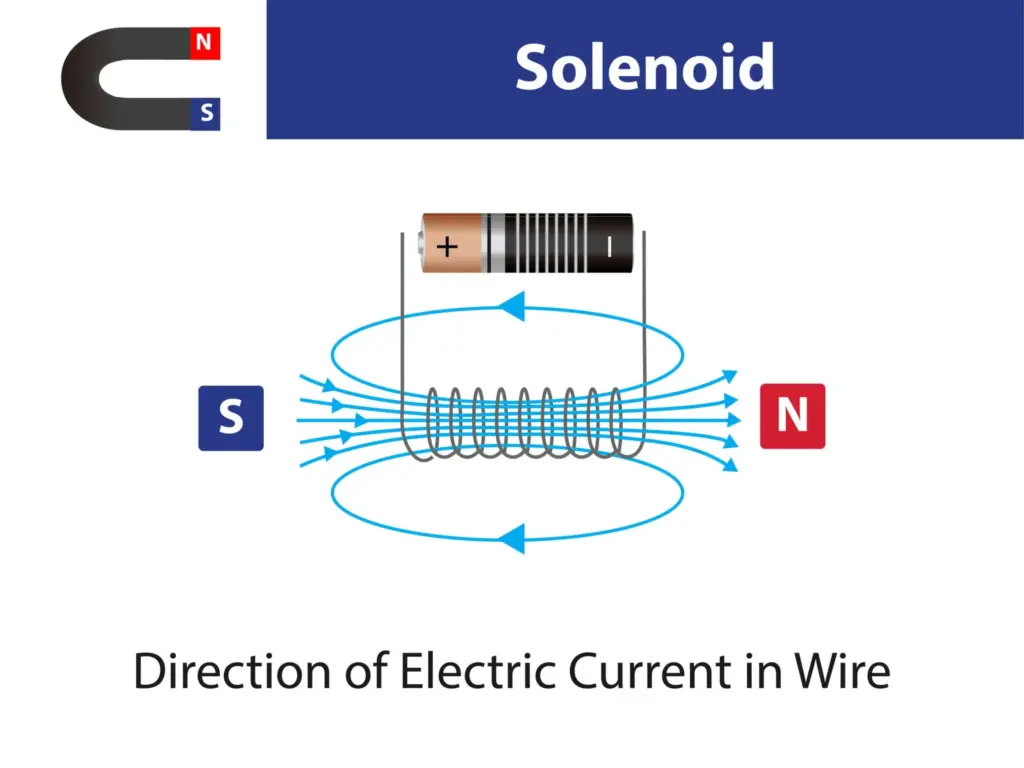
    Electromagnets are unique because their magnetic strength is controllable and temporary. When electric current flows through a coil of wire wrapped around a metal core, it produces a magnetic field that can be switched on, strengthened, weakened, or turned off entirely.

    This flexibility makes electromagnets an essential asset for systems that require precision, automation, and dynamic power management.


    Electromagnets in Household Appliances

    Electromagnets power many core functions in home devices:

    Electric Motors

    Nearly all rotating appliances rely on electromagnets:

    • Washing machines
    • Refrigerators
    • Air conditioners
    • Vacuum cleaners
    • Electric fans

    The electromagnetic motor converts electrical energy into mechanical motion, enabling efficient and durable performance.

    Door Locks and Latches

    Electromagnetic door lock activated by electric current in a smart home system.

    Electromagnetic locks are common in:

    • Smart home security systems
    • Apartment building entry systems
    • Commercial access control solutions

    The lock engages when a current passes through the magnet, providing secure and reliable operation.

    Speakers and Headphones

    Inside every speaker system is an electromagnet working with a permanent magnet to vibrate the speaker cone and produce sound. This technology powers:

    • TVs
    • Smartphones
    • Bluetooth speakers
    • Home theater systems

    Electromagnets in Consumer Electronics

    Digital communication relies heavily on electromagnets for data transfer and motion control.

    Hard Drives and Data Storage

    Older HDDs use electromagnets to position the read/write head with extreme accuracy. Even in modern systems, electromagnetic principles underpin memory architecture.

    Relays and Switches

    Power supplies, chargers, and circuit boards use electromagnetic relays to open and close electrical circuits automatically.

    Microphone Technology

    Electromagnetic induction converts sound waves into electrical signals, enabling audio capture for:

    • Phones
    • Laptops
    • Recording equipment
    • Smart home devices

    Electromagnets in Transportation

    Transportation systems depend on electromagnets for safety and performance.

    Electric Vehicles

    EV motors use high-precision electromagnets to generate efficient rotational force. These motors support:

    • Smooth acceleration
    • Reduced energy loss
    • High torque output

    Railway Systems

    Electromagnets are used in:

    • Maglev trains that float on magnetic tracks
    • Railway braking systems
    • Automated switching and signaling equipment

    Automotive Sensors

    Electromagnetic components power:

    • ABS sensors
    • Fuel injectors
    • Electric power steering
    • Alternators

    Electromagnets in Healthcare

    Advanced medical equipment depends on strong, precisely controlled electromagnetic fields.

    MRI Machines

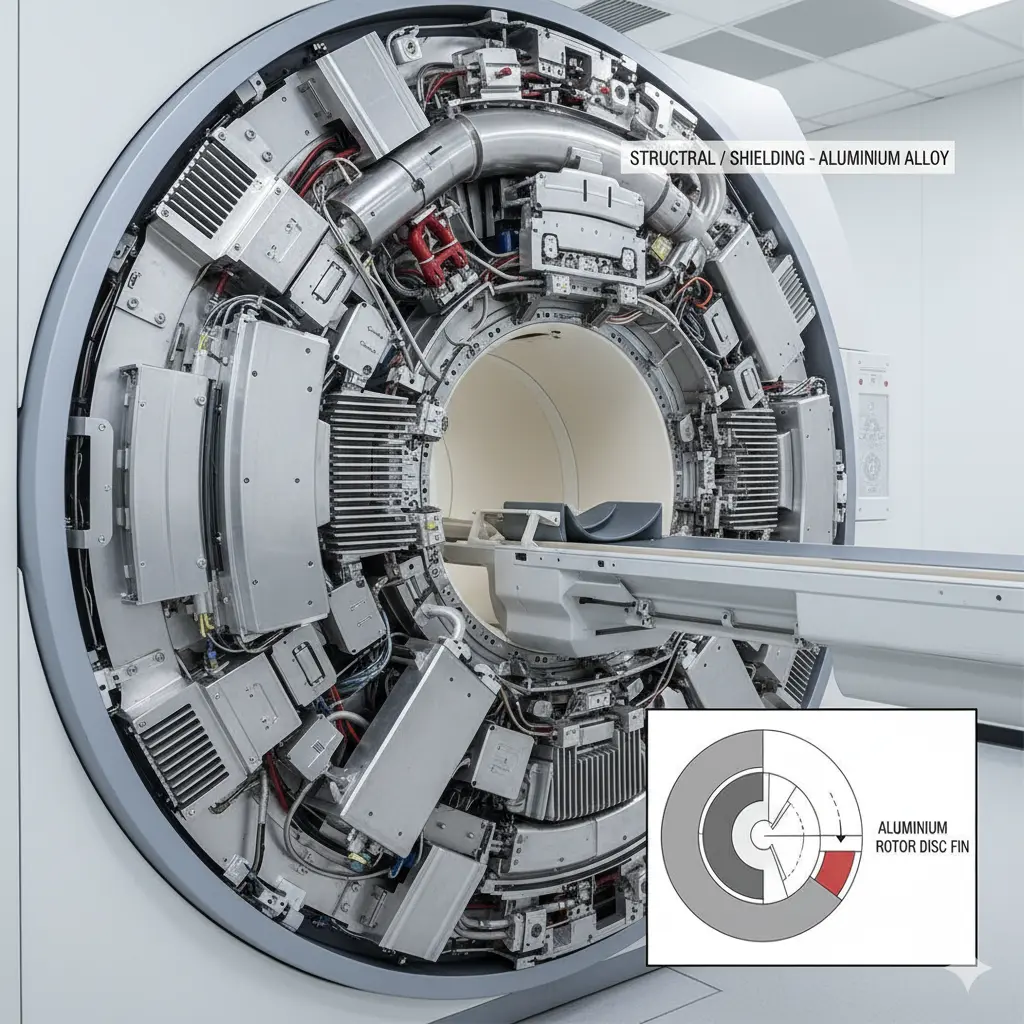
    Magnetic Resonance Imaging relies on high-power electromagnets to align particles in the human body and produce detailed diagnostic images.

    Aluminium parts used in MRI machine to reduce magnetic interference.

    Hospital Beds and Lifts

    Electromechanical systems help healthcare workers adjust and maneuver patient equipment safely.

    Medical Pumps and Valves

    Electromagnetic actuators ensure consistent operation in infusion devices and monitoring equipment.


    Electromagnets in Industry and Infrastructure

    Beyond household and personal use, electromagnets drive critical industrial operations.

    Magnetic Lifting Equipment

    Scrap yards, factories, and logistics centers use electromagnets to lift, sort, and move heavy steel materials safely.

    Automated Assembly Lines

    Robotic arms equipped with electromagnetic grippers handle precision tasks with controllable magnet strength.

    Power Grid Transformers

    Electromagnetic transformers step voltage up or down, enabling stable electrical distribution.


    Why Electromagnets Matter in Modern Life

    Electromagnets provide:

    • Control over magnetic strength
    • Efficiency through reduced mechanical complexity
    • Reliability across high-demand applications
    • Versatility for both micro-scale electronics and industrial machinery

    This combination makes electromagnets one of the most widely used technologies in modern engineering.


    Conclusion

    Electromagnets operate silently within the technologies we use every day, supporting everything from home appliances to global transportation systems. Their controllable magnetic fields enable automation, precision, and performance across a wide range of applications. As industries move toward greater electrification and smarter infrastructure, electromagnets will continue to play an essential role in shaping the future of modern life.

    If you need electromagnetic components or custom magnetic assemblies for advanced applications, HSMAGNET provides engineered solutions designed for precision, reliability, and long-term operational excellence.

  • Can You Drill a Hole in a Magnet?

    Can You Drill a Hole in a Magnet?

    Magnets are essential components in countless industrial and engineering applications, from motors and sensors to magnetic fixtures and assemblies. However, one common question often arises during customization: can you drill a hole in a magnet?

    While it might seem straightforward, drilling into a magnet is not a simple task. It involves significant technical risks and requires careful planning, the right tools, and strict safety precautions. This article will explain whether you can drill a magnet, how to do it properly, and the potential consequences if done incorrectly.


    Understanding Magnet Composition

    Before drilling, it’s essential to understand what magnets are made of. Magnets are not solid metal blocks — they are brittle materials composed of metallic powders that have been pressed and sintered under high heat and pressure.

    Types of Magnets Commonly Used

    • Neodymium (NdFeB) – Extremely strong but very brittle and heat-sensitive.
    • Samarium Cobalt (SmCo) – High temperature resistance, but fragile.
    • Ferrite (Ceramic) – Inexpensive, corrosion-resistant, but easy to crack.
    • Alnico – Strong, durable, and can withstand moderate heat and mechanical stress.

    Because of their composition, most magnets—especially neodymium and ferrite types—can easily crack or lose magnetism when drilled.


    Can You Drill a Magnet?

    The Short Answer: Yes, But With Great Caution

    Technically, it is possible to drill a hole in certain types of magnets, but it’s not recommended for neodymium or ceramic magnets unless done with specialized tools and cooling methods. Drilling generates heat, and high temperatures can demagnetize the magnet or cause it to shatter.

    If your application requires a magnet with a hole, the best approach is to order it pre-drilled from the manufacturer. Industrial magnets are often sintered and magnetized after machining, which prevents damage during fabrication.

    Technician drilling a magnet using a diamond-coated drill bit with continuous coolant.

    Why Drilling Magnets Is Challenging

    1. Brittleness

    Magnets, especially rare-earth types, are extremely hard but brittle. They tend to chip, crack, or shatter under mechanical stress.

    2. Heat Sensitivity

    Drilling produces heat due to friction. When a magnet’s temperature exceeds its Curie point, it permanently loses its magnetic properties.

    3. Safety Risks

    Flying magnetic fragments can cause injury. Additionally, neodymium dust is flammable and must not contact sparks or open flames.


    How to Drill a Hole in a Magnet Safely (If Necessary)

    If drilling is unavoidable, follow these industrial best practices:

    1. Use a diamond-coated or carbide drill bit – Suitable for hard, brittle materials.
    2. Operate at low speed – Reduces heat and mechanical shock.
    3. Apply continuous water or coolant – Prevents overheating and minimizes dust.
    4. Secure the magnet firmly – Prevents slippage or breakage.
    5. Wear eye and hand protection – Protects from flying debris and magnetic dust.
    6. Drill before magnetizing (if possible) – Machine the magnet in an unmagnetized state to avoid demagnetization.

    When You Should Not Drill a Magnet

    • When working with strong neodymium magnets, as they easily demagnetize or explode under stress.
    • When precise dimensions are required — machining changes magnetic performance.
    • When safety or flammability risks are high.

    In such cases, always request custom-made magnets with holes or countersinks directly from professional magnets manufacturers like HSMAGNET.


    Alternative Solutions to Drilling

    If you need to mount or attach a magnet without drilling, consider these options:

    • Use adhesive bonding (e.g., epoxy or Loctite).
    • Use mechanical holders or brackets.
    • Select ring magnets or countersunk magnets designed for screws.

    These solutions maintain full magnetic strength and eliminate the risk of damaging the magnet.


    Conclusion

    While you can drill a hole in a magnet, it’s generally not recommended due to the material’s brittleness, heat sensitivity, and risk of demagnetization. Unless you have professional equipment and experience, the safest and most effective solution is to purchase pre-drilled or custom magnets designed for your application.

    At HSMAGNET, we specialize in manufacturing custom magnetic assemblies, including magnets with holes, countersinks, and specialized shapes to meet industrial standards. Contact us for tailored magnetic solutions that deliver precision, durability, and consistent magnetic performance.

  • What Is the Difference Between a Magnet and an Electromagnet?

    What Is the Difference Between a Magnet and an Electromagnet?

    Magnets are fundamental to modern technology — from electric motors and generators to sensors and data storage. However, not all magnets are the same. Two main types dominate industrial and scientific applications: permanent magnets and electromagnets. While both create magnetic fields, their source of magnetism, behavior, and applications differ significantly.

    In this article, we’ll explore the difference between a magnet and an electromagnet, their working principles, and where each type is best used.


    Understanding Permanent Magnets

    A permanent magnet is a material that generates a persistent magnetic field without any external power source. Its magnetism arises from the alignment of atomic magnetic domains, which remain fixed once magnetized.

    Key Features of Permanent Magnets

    • No power required — They maintain their magnetic field continuously.
    • Fixed magnetic strength — The intensity of the field depends on the material’s properties.
    • Common materials — Neodymium (NdFeB), samarium-cobalt (SmCo), alnico, and ferrite.

    Applications

    Permanent magnets are widely used where consistent magnetic force is required without electrical input, such as:

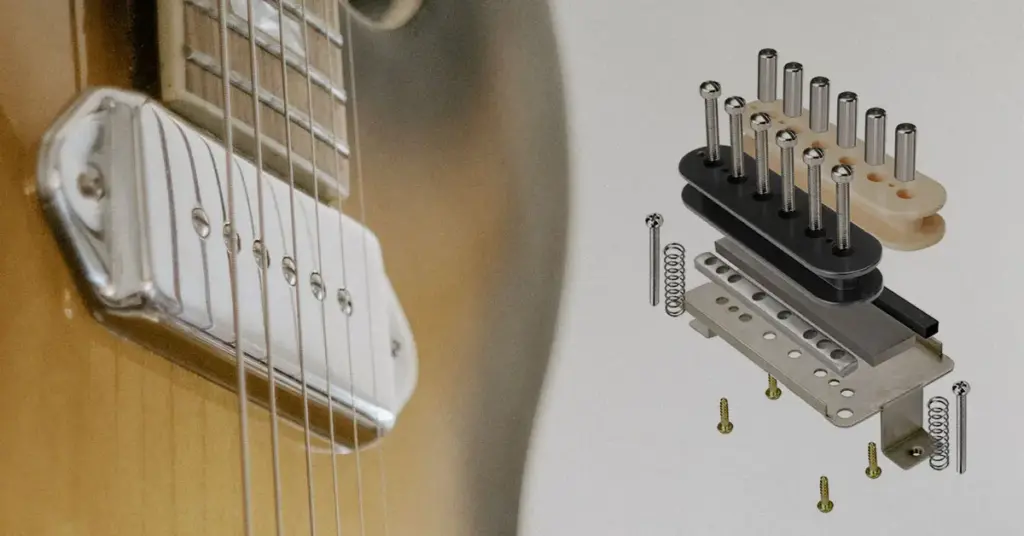
    • Magnetic sensors and pickups
    • Loudspeakers and headphones
    • Refrigerator door seals
    • Motors and generators
    • Magnetic holding and lifting systems

    Understanding Electromagnets

    An electromagnet generates a magnetic field only when an electric current passes through a wire coil. The field disappears when the current is turned off. The strength of an electromagnet can be controlled by adjusting the electric current or the number of wire turns around its core.

    Key Features of Electromagnets

    • Requires electrical power — No magnetism without current.
    • Variable magnetic strength — Easily adjustable by changing voltage or current.
    • Core material — Usually made of soft iron to enhance the magnetic field.

    Applications

    Electromagnets are essential in technologies that require controlled or temporary magnetism, including:

    • Electric motors and transformers
    • Magnetic cranes for heavy lifting
    • Relays and solenoids
    • MRI machines
    • Magnetic sorting and separation equipment
    Electromagnet showing copper wire coil wrapped around an iron core connected to a power supply.

    Major Differences Between Magnets and Electromagnets

    FeaturePermanent MagnetElectromagnet
    Source of MagnetismAlignment of magnetic domains in the materialFlow of electric current through a coil
    Power RequirementNoneRequires continuous electric current
    Magnetic StrengthFixedAdjustable and controllable
    Field DurationPermanentTemporary (exists only when current flows)
    Material TypeHard magnetic materials (NdFeB, SmCo, ferrite)Soft iron or steel core wrapped with wire
    ApplicationsSensors, motors, speakers, holding devicesCranes, transformers, electromagnets, solenoids

    Advantages of Each Type

    Advantages of Permanent Magnets

    • Energy-efficient — no external power required.
    • Simple, durable, and maintenance-free.
    • Ideal for static magnetic applications.

    Advantages of Electromagnets

    • Adjustable strength and polarity.
    • Can be turned on or off as needed.
    • Suitable for dynamic or high-power industrial systems.

    Industrial Relevance

    In modern manufacturing, both permanent magnets and electromagnets play critical roles.
    For example:

    • Permanent magnets are key to compact, energy-efficient electric motors used in consumer electronics and vehicles.
    • Electromagnets power large-scale industrial systems such as cranes, relays, and transformers, where variable magnetic control is essential.

    Together, these technologies form the backbone of countless magnetic and electromagnetic applications worldwide.


    Conclusion

    The difference between a magnet and an electromagnet lies primarily in the source of their magnetic fields. Permanent magnets generate constant magnetism naturally, while electromagnets rely on electric current to create controlled and reversible magnetic effects.

    Both types are indispensable in modern industry — and understanding their distinctions helps engineers and technicians choose the right magnetic solution for each application.


    For high-performance permanent magnets, electromagnetic components, and custom magnetic assemblies, visit HSMAGNET — your trusted partner in advanced magnetic technology.

  • How to Magnetize a Screwdriver

    How to Magnetize a Screwdriver

    A magnetized screwdriver is a simple but powerful tool in any workshop. Whether you’re assembling electronics, fixing appliances, or working in tight spaces, a magnetized tip makes it easy to hold screws securely and prevent drops. If your screwdriver isn’t magnetic, don’t worry — you can magnetize it yourself in just a few minutes using simple tools and basic magnetic principles.

    This guide explains how to magnetize a screwdriver, why it works, and when demagnetization may be necessary.


    Why Magnetize a Screwdriver?

    Magnetizing a screwdriver offers practical benefits, especially in professional and DIY environments:

    • Improves precision: Holds screws on the tip for easy placement.
    • Increases efficiency: Prevents losing small screws in machinery or electronics.
    • Enhances safety: Reduces the risk of dropping screws into sensitive components.

    In short, a magnetized screwdriver makes work cleaner, faster, and more efficient — especially in assembly lines, repair shops, and maintenance operations.


    How Magnetization Works

    Magnetism in metals like steel arises from the alignment of magnetic domains — tiny regions where the atomic magnetic moments point in the same direction. In a non-magnetized screwdriver, these domains are randomly oriented. When exposed to a strong magnetic field, the domains align, creating a lasting magnetic effect in the tool’s tip.

    Most screwdrivers are made from ferromagnetic materials such as carbon steel or chrome vanadium steel, making them ideal candidates for magnetization.


    Step-by-Step: How to Magnetize a Screwdriver

    1. Gather Your Materials

    You’ll need:

    • A strong neodymium magnet (recommended for best results)
    • The screwdriver you wish to magnetize
    • (Optional) A cloth or gloves to protect your hands from the magnet’s strength

    2. Clean the Screwdriver Tip

    Dirt or oil can reduce magnetic contact. Wipe the tip with a dry cloth to ensure a clean metal surface before you begin.


    3. Determine Magnet Polarity

    If possible, identify the magnet’s north and south poles. Consistency in direction is important — do not alternate the magnet’s polarity during the process.


    4. Stroke the Magnet Along the Shaft

    1. Hold the magnet firmly against the screwdriver shaft near the tip.
    2. Stroke it in one direction only — from the handle toward the tip — about 20 to 30 times.
    3. Avoid back-and-forth motion, as it cancels the alignment of magnetic domains.
    4. The magnetic field gradually aligns the screwdriver’s atomic structure, magnetizing it effectively.
    Person stroking a neodymium magnet along a screwdriver shaft in one direction to magnetize it.

    5. Test the Magnetization

    Try picking up a small steel screw or paper clip with the screwdriver tip. If it clings firmly, the tool is successfully magnetized. If not, repeat the process several more times using firm, consistent strokes.

    Magnetized screwdriver picking up a steel screw to test magnetic strength

    How to Demagnetize a Screwdriver (When Needed)

    Sometimes, you may want to remove the magnetism, particularly when working near sensitive electronics or magnetic sensors. To demagnetize:

    • Use a demagnetizer tool (commonly found in hardware stores).
    • Alternatively, stroke the magnet along the screwdriver in alternating directions or heat the tip briefly (carefully, without damaging the metal).
      These actions randomize the magnetic domains, eliminating the magnetic field.

    Alternative Method: Using an Electric Current

    If you have access to a coil of wire and a DC power source, you can magnetize a screwdriver electromagnetically:

    1. Wrap the wire around the screwdriver several times.
    2. Pass a low DC current through the wire for a few seconds.
    3. The resulting electromagnetic field magnetizes the shaft.
      This method provides a stronger, more uniform magnetic effect and is often used in industrial or workshop settings.

    Practical Tips for Best Results

    • Use high-quality neodymium magnets for fast and strong magnetization.
    • Avoid excessive heat near the screwdriver tip — it can reduce magnetic retention.
    • Store magnetized screwdrivers away from magnetic-sensitive tools or digital devices.
    • Periodically re-magnetize as the magnetic field weakens over time.

    Conclusion

    Magnetizing a screwdriver is a quick, cost-effective way to enhance tool performance. By using a simple neodymium magnet and following a few straightforward steps, you can create a screwdriver that holds screws securely and makes every repair or assembly task more efficient.


    For premium-grade neodymium magnets and precision magnetization tools, explore HSMAGNET — your trusted source for advanced magnetic materials and professional magnetic solutions.